










Integrated Busbar Technology Continues To Evolve, With Product Upgrades Driven By The Expansion Of Applications in New Energy And High-voltage Electrical Systems.
Sep 25, 2026
Leave a message
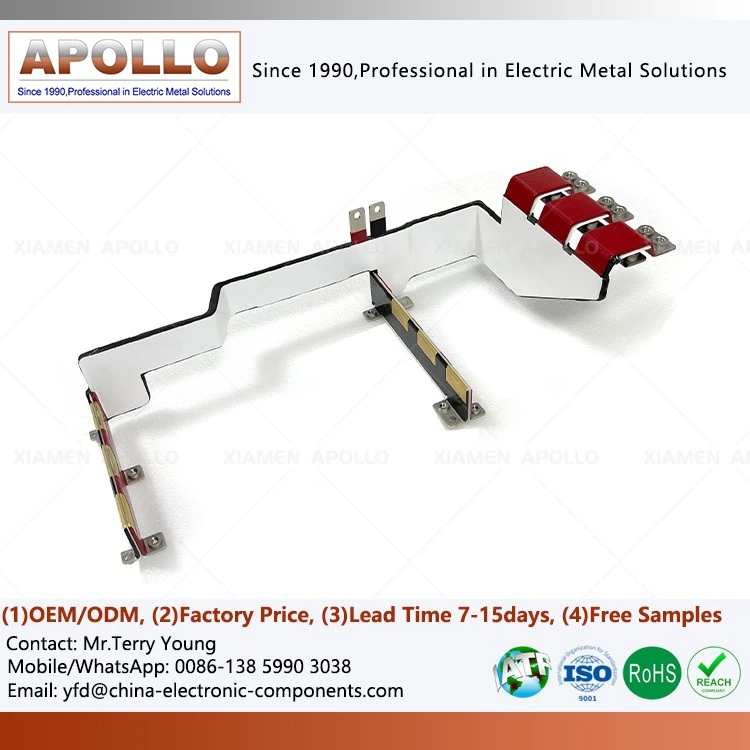
With the rapid development of sectors such as new energy vehicles (NEVs), energy storage systems, and renewable energy generation, battery packs, electric drive systems, and power conversion equipment place increasingly stringent demands on electrical interconnection structures. While traditional busbars primarily handle high-current transmission and electrical interconnection, integrated busbars combine functions-such as conductive busbars, signal acquisition, insulation protection, and structural mounting-into a single unit. This offers significant advantages in terms of space savings, assembly efficiency, and the optimization of internal battery pack layouts.
In terms of product structure, integrated busbars typically consist of conductive busbars, signal acquisition components, and insulating materials, formed into a unified assembly through processes such as hot pressing, heat staking, thermoforming, riveting, or welding. As battery systems evolve toward higher integration, lightweight designs, and automated assembly, integrated busbars have transitioned from simple current-carrying components into multifunctional assemblies that handle electrical interconnection, signal acquisition, and structural integration simultaneously.
NEVs Drive the Growth of Integrated Busbar Applications
In NEV power battery systems, busbars primarily facilitate the series and parallel connections between battery cells while working alongside acquisition circuits to gather operational data such as cell voltage and temperature. Traditional wiring harness solutions require multiple discrete wires to establish signal connections between cells; this not only consumes valuable internal space within the battery pack but also complicates the assembly process. As the number of cells in a battery system increases, so do the number of harnesses and the total length of wiring, creating greater challenges for automated production and subsequent maintenance.
By integrating conductive busbars with signal acquisition circuits, integrated busbar designs reduce the space consumption associated with traditional discrete connection structures and allow for a more organized layout of acquisition lines. For NEV power batteries, this structure improves internal space utilization and reduces the labor involved in manual wiring and connection verification during assembly.
As power battery systems trend toward higher voltages, larger capacities, and greater integration, the structural dimensions, current-carrying capacity, and number of signal acquisition channels of integrated busbars are also expanding. Particularly in high-voltage platforms, the increased number of cells connected in series necessitates a corresponding expansion of connection busbars, acquisition lines, and insulation structures; consequently, product design has shifted from simply matching individual dimensions to the collaborative design of the overall structure.
In electric drive systems, busbars are primarily used to connect high-voltage circuits within the motor controller. By combining multiple layers of conductive and insulating materials, current loops can be shortened and parasitic inductance reduced, thereby meeting the operational requirements of high-frequency switching power devices. For high-power inverter and motor control systems, structural design must not only meet rated current requirements but also comprehensively address insulation clearance, heat dissipation, mechanical strength, and electromagnetic performance.
Energy Storage Systems: A Key Application Area for Integrated Busbars
Energy storage batteries and power batteries for new energy vehicles share technical commonalities regarding cell interconnection and data acquisition; both require connection structures to facilitate the series and parallel arrangement of cells and to monitor parameters such as voltage and temperature. As the capacity of energy storage systems grows-along with the number of cells, modules, and data acquisition channels-traditional wiring harness solutions face increasingly stringent demands regarding routing space, assembly efficiency, and consistency.
Consequently, integrated busbars have emerged as a crucial technical solution for energy storage battery interconnection systems. Product design for energy storage equipment must simultaneously address electrical connections, signal acquisition, insulation protection, and installation space, while customizing dimensions and interfaces to suit the specific arrangement of battery modules.
In high-capacity energy storage systems, integrated busbars require robust structural stability. An increase in the number of cells alters the length of the busbars, the number of sampling channels, and the installation span; therefore, product specifications-such as conductor dimensions, sampling circuit layouts, and insulation materials-must be tailored to the specific battery architecture rather than relying on standardized, one-size-fits-all designs.
Furthermore, energy storage systems demand high reliability during long-term operation. Busbars must withstand continuous current, temperature rises, and mechanical stresses generated during equipment operation; thus, material selection, connection processes, and insulation structures must be validated against actual operating environments.
Renewable Energy Generation and Power Electronics Drive Demand for Composite Busbars
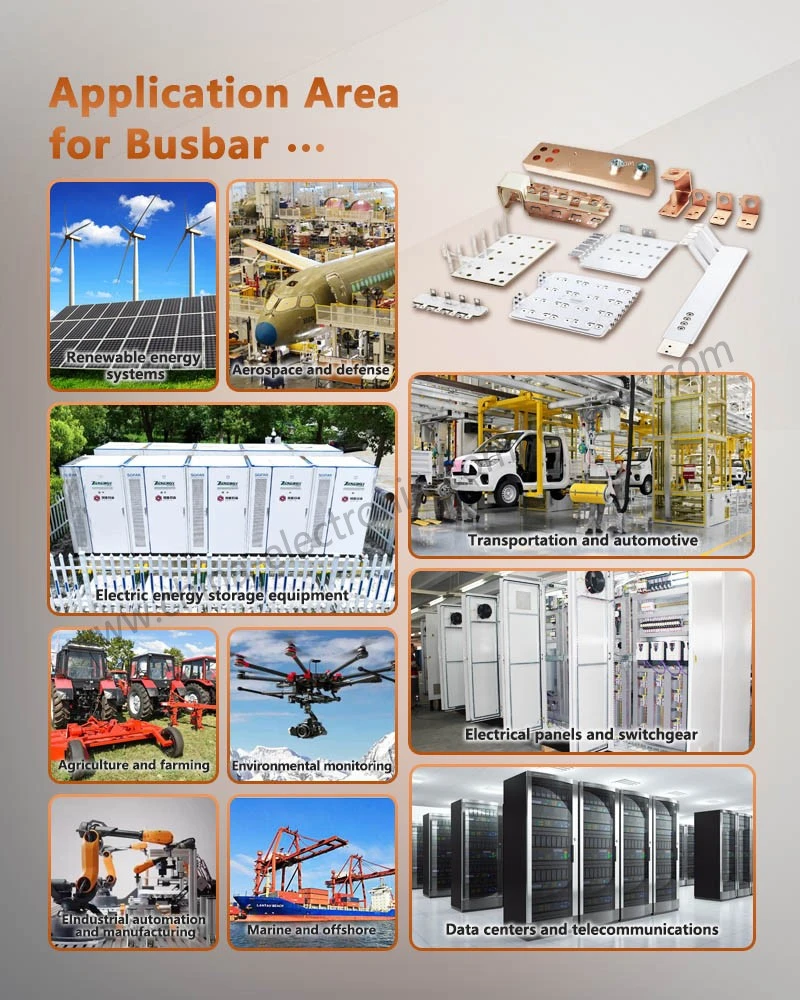
Photovoltaic inverters, wind power converters, and other high-power power electronic devices also require highly reliable electrical interconnection structures. Such equipment typically operates at high voltages and involves significant current fluctuations. Traditional wiring methods may face limitations regarding spatial layout, inductance control, and heat dissipation, leading to the increasing adoption of composite busbars for connections between power modules and main circuits.
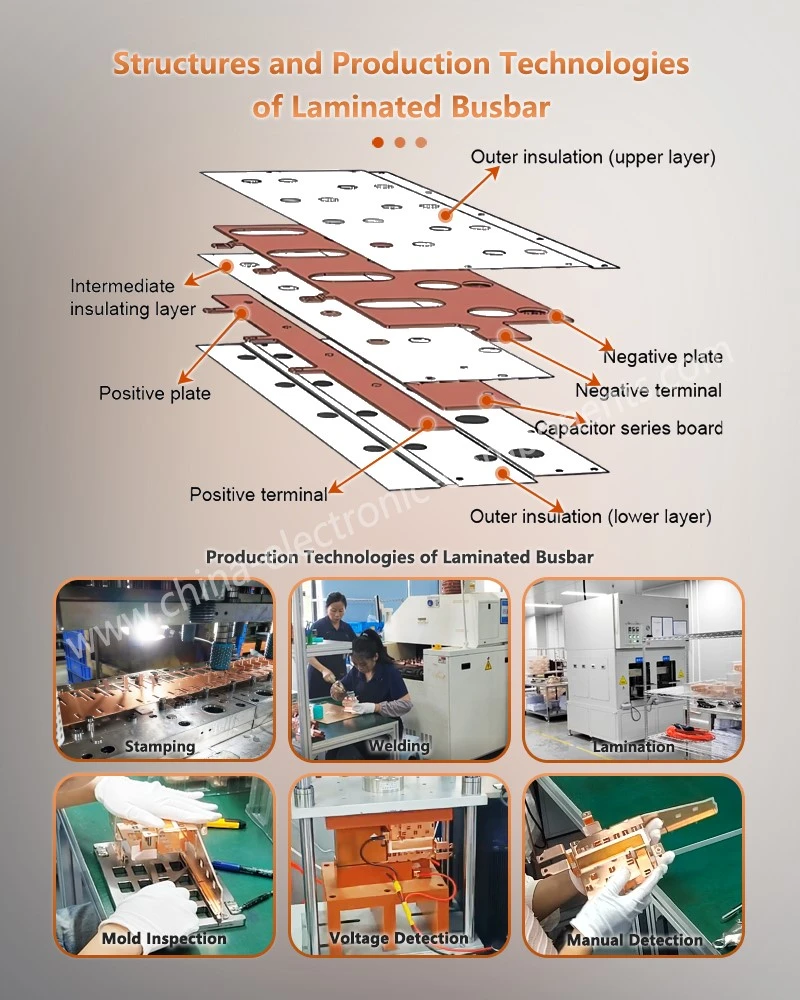
Compared to standard single-layer busbars, multi-layer structures integrate conductive and insulating layers at different potentials, resulting in a more compact current path. For high-frequency switching equipment, shortening loop lengths, optimizing conductive layer layouts, and controlling parasitic parameters help improve the system's electrical performance.
In high-power conversion equipment, busbar design must also account for the mounting requirements of power devices such as IGBTs. For instance, laminated busbars for three-level inverters require a holistic approach that considers insulation distances between layers of different potentials, connection points, and current paths to align with the inverter's internal spatial constraints and electrical topology.
When dealing with complex internal spaces, laminated busbars often require customization based on mounting locations, terminal orientations, and equipment structure. This ensures they can facilitate multi-point connections within limited space while maintaining appropriate insulation clearances and mechanical mounting methods.
Technical approaches continue to evolve regarding signal acquisition, integration methods, and welding processes.
The evolution of integrated busbar technology is primarily evident in three areas: signal acquisition components, structural integration methods, and connection processes. Early power battery systems relied on wire harnesses for signal acquisition, later transitioning to PCB and FPC solutions; currently, lightweight options suitable for continuous production-such as FFC and FDC-are gaining attention.
Regarding structural integration, traditional injection-molded brackets offer high mechanical strength, structural stability, and mature manufacturing processes, though they tend to be bulky and consume significant material and space. Heat-pressed structures, formed by laminating insulation films, acquisition circuitry, and conductive bars into a single unit, allow for reduced component thickness and are suitable for larger battery connection structures.
Thermoformed solutions secure acquisition circuitry and conductive bars within a molded insulating carrier; this approach meets basic structural requirements while offering potential reductions in manufacturing costs. Each solution has distinct characteristics regarding mechanical strength, material costs, production efficiency, and dimensional adaptability; therefore, selection requires a comprehensive assessment based on the specific battery pack structure and production conditions.
In the field of power electronics, partially laminated busbars utilize localized lamination based on potential levels and mounting zones, reducing overall material usage and processing complexity while meeting insulation and electrical connection needs in specific areas. For systems requiring the integration of multiple conductive layers, three-layer laminated busbars combine three layers of conductive and insulating materials to achieve compact, multi-circuit connections.
The welding process is another critical factor influencing the reliability and manufacturing cost of integrated busbars. While traditional methods might use laser welding to join connecting tabs, sensing circuits, and conductive busbars, newer approaches attempt to directly connect sensing circuits to conductive busbars via ultrasonic welding. Although the latter eliminates certain intermediate connectors, it imposes stricter requirements regarding material surface conditions, welding pressure, amplitude, energy input, and equipment control precision.

High-Voltage Fast Charging Drives the Evolution Toward Larger, Highly Reliable Busbars
The development of high-voltage platforms for new energy vehicles necessitates higher system voltages, achieved by connecting more battery cells in series. As the number of cells increases, so does the quantity of conductive busbars, sensing circuits, and connection structures within the integrated busbar assembly, leading to larger product dimensions and greater design complexity.
High-voltage fast charging not only alters the battery system's electrical parameters but also places higher demands on the connection structure's current-carrying capacity, temperature rise control, insulation performance, and mechanical stability. Busbars must facilitate multi-circuit connections within limited space while ensuring adequate electrical clearance and creepage distances between different voltage potentials.
For new energy vehicle powertrains, laminated busbars must be designed in conjunction with the specific architecture of the battery pack, motor controller, and high-voltage connection system. In high-power DC conversion equipment, the design focuses more heavily on high-current paths, low parasitic parameters, and insulation reliability.
As system operating voltages rise, busbar products must also incorporate safety designs to handle abnormal operating conditions. For instance, high-voltage inverters may face issues such as short circuits, arcing, temperature spikes, and pressure buildup; consequently, explosion-proof inverter busbars require comprehensive design considerations regarding conductive structures, insulation materials, mechanical mounting, and protection against abnormal conditions.
Multi-Layer Composite Structures Emerge as a Key Trend for Complex Electrical Connections
As the internal functionality of new energy equipment expands, single-layer planar busbars can no longer meet all complex connection requirements. Multi-layer busbars allow for the arrangement of conductive layers at different potentials within a confined space, utilizing insulation layers to ensure electrical isolation, making them ideal for high-power, high-density electrical connection systems.
The design of multi-layer composite connection bars typically requires determining the number of conductive layers, material thicknesses, insulation media, and terminal configurations based on the equipment's circuit topology. The design process requires not only consideration of rated current but also a comprehensive analysis of thermal accumulation, parasitic inductance, insulation clearance, and installation stress.
For high-power equipment such as rail transit systems, laminated busbars must accommodate high electrical loads, mechanical vibrations, and long-term operating environments; consequently, their materials and interlayer structures require targeted reliability validation. For power modules requiring reduced parasitic inductance, low-inductance laminated busbars focus specifically on the spacing between positive and negative circuits, interlayer layout, and current path design.
IGBT power modules also impose stringent requirements on busbar electrical parameters and mounting structures. Customized laminated busbars for IGBTs are typically designed with dimensions and interfaces based on module terminal locations, current ratings, and installation space to minimize additional connection paths and enhance system integration. IGBT laminated busbars utilize a laminated structure to achieve compact, high-voltage electrical connections between power devices.
Manufacturing Capabilities for Integrated Busbars Evolving Toward Process Synergy
As products increase in size and structural complexity, integrated busbar manufacturing has evolved beyond simple stamping or lamination processes; it now encompasses multiple stages, including conductor processing, insulation material molding, signal acquisition circuit processing, welding, riveting, hot pressing, and final inspection.
For large-format products, factors such as mold dimensions, equipment processing range, and pressure control capabilities directly impact product consistency. For hot-pressed products, critical control points include temperature, pressure, duration, and material positioning; for thermoformed products, focus areas include molded dimensions, material thickness, and structural stability; and for welded products, key validation criteria include weld joint strength, electrical conductivity, and long-term stability.
Simultaneously, as production shifts toward automation, in-process dimensional inspection, electrical testing, and visual inspection are becoming increasingly important. Implementing process controls for conductor dimensions, insulation structures, weld locations, and connection integrity helps minimize dimensional deviations and assembly defects during mass production.
From an engineering procurement perspective, selecting a laminated busbar in a high-power converter requires more than just comparing material costs or unit prices; it necessitates a comprehensive evaluation of the overall structural design and long-term delivery reliability, taking into account current, voltage, layer count, dimensions, insulation requirements, connection technologies, and mass manufacturing capabilities.
contact us

Send Inquiry