










Accelerated Upgrading in The Flexible Copper Connection Industry: New Energy Vehicles, Energy Storage, And AI Computing Power Drive Demand For High-End Busbars
Nov 08, 2026
Leave a message
With the continued development of sectors such as new energy vehicles (NEVs), energy storage systems, AI computing infrastructure, and rail transit, power connection systems are facing increasingly stringent requirements for current-carrying capacity, structural reliability, thermal management, and lightweight design. As a critical component in high-current transmission systems, flexible copper connectors-valued for their excellent electrical conductivity, structural flexibility, and vibration resistance-have emerged as a key connectivity solution for high-voltage electrical equipment and new energy hardware.
While traditional rigid copper busbars are well-established in fixed electrical connections, they often lack the structural adaptability required for applications involving space constraints, frequent vibration, significant thermal expansion, or the need for dynamic compensation. In contrast, flexible connectors-manufactured through the lamination of multiple copper foils, precision welding, and composite insulation processes-can maintain high current-carrying capacity while absorbing mechanical stress and accommodating installation tolerances, offering a more versatile solution for electrical connections in complex operating environments.
Growing Downstream Demand Creates Development Opportunities for the Flexible Copper Connector Market
The transition of new energy vehicles to high-voltage platforms drives the evolution of flexible connection technology.
As new energy vehicles shift toward 800V high-voltage architectures, components such as traction batteries, electric drive systems, inverters, and high-voltage power distribution units place higher demands on connection hardware. These high-voltage systems must not only support high-current transmission but also ensure robust insulation, effective temperature control, vibration tolerance, and long-term operational stability.
Within traction battery modules, traditional rigid connectors can be adversely affected by factors such as cell expansion, vehicle vibration, and assembly tolerances. Flexible copper connectors, with their multi-layered foil structure, allow for a degree of deformation, thereby reducing the mechanical stress exerted on connection points.
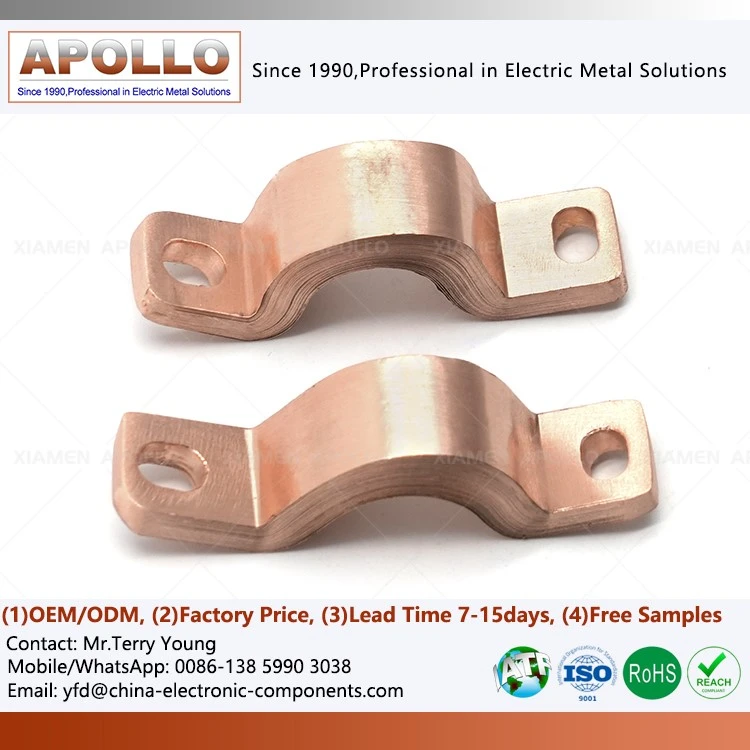
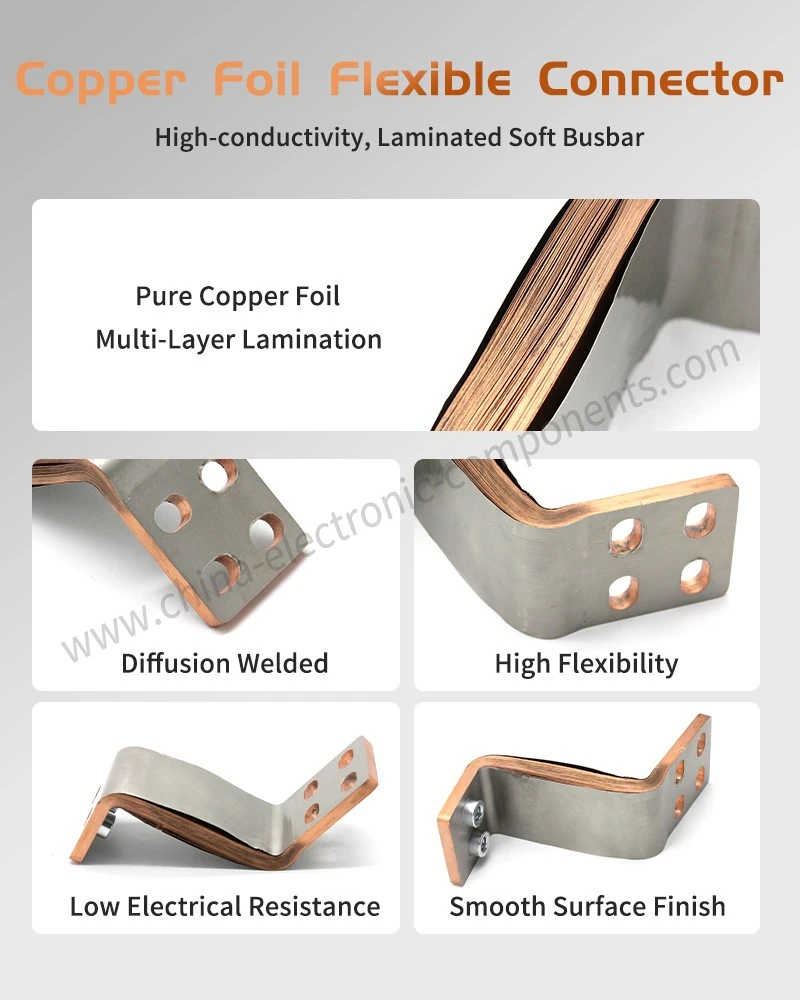
Specifically, copper laminated flexible busbars-constructed by stacking multiple copper foils and bonding the ends through specialized processes-offer a large effective conductive cross-section and high flexibility. They are widely used in traction batteries, electric drive control units, and high-voltage power distribution equipment. As the electrical architecture of vehicles becomes increasingly integrated, the spatial layout, structural dimensions, and insulation design of these connection components will require a greater focus on customization.
The expansion of energy storage systems continues to drive demand for high-current connectivity solutions. As the construction of new energy storage projects continues to advance, there is a growing demand for high-current connection components in battery clusters, power conversion systems (PCS), DC combiner equipment, and energy storage power distribution systems. Energy storage equipment is typically subject to long-term charge-discharge cycles and often operates in complex environments characterized by high temperatures, high humidity, significant outdoor temperature fluctuations, and mechanical vibrations.
Under these operating conditions, connection components must not only possess sufficient current-carrying capacity but also meet stringent requirements for temperature-rise control, insulation reliability, and long-term mechanical stability. Multilayer copper foil structures can accommodate various current-rating requirements by increasing the conductive cross-sectional area, while their flexible design allows them to adapt to the internal installation space and varying connection geometries within the equipment.
For high-voltage energy storage systems, the design of multilayer flexible copper busbars requires a comprehensive evaluation of factors such as rated current, operating voltage, connection length, bending radius, and insulation class. An optimized structural design helps reduce mechanical stress at connection points and enhances the assembly adaptability of electrical connections within the equipment.
The development of AI computing infrastructure is opening up new applications for high-end copper interconnects.
With the rapid expansion of AI servers, data centers, and liquid-cooling infrastructure, the power requirements for power supply modules, server cabinets, and high-power distribution systems are steadily increasing. High-density computing equipment often features limited internal space and highly compact power distribution architectures, placing greater demands on the conductive efficiency, heat dissipation capabilities, and dimensional precision of connection components.
Flexible copper foil interconnects can be custom-designed to match specific equipment layouts, ensuring reliable connections between various electrical components within constrained spaces. Compared to conventional cables, laminated copper foil structures offer superior performance for high-current transmission, with resistance losses effectively managed through optimized cross-sectional design.
In server power supplies and high-power distribution equipment, copper foil busbars can be dimensionally optimized based on current ratings and available installation space. When combined with appropriate insulation materials and surface treatments, they can meet the diverse connection requirements of various systems. As data centers evolve toward higher power densities, precision copper interconnects are poised to become essential components for high-end power infrastructure.
Rail transit and industrial power equipment continue to drive the demand for flexible connection solutions. Traction systems for rail transit, electric locomotives, and industrial power conversion equipment operate in environments characterized by persistent vibration, temperature fluctuations, and complex electrical loads. Consequently, the components used for electrical connections must demonstrate high levels of mechanical reliability and electrical stability.
Flexible copper connectors can absorb vibrations and displacements that occur during equipment operation, thereby reducing the risk of mechanical fatigue at rigid connection interfaces. For equipment with complex spatial layouts or connection points subject to relative motion, well-designed flexible copper foil connectors offer excellent adaptability.
In the context of rail transit, the performance of flexible copper foil connectors-including material properties, weld quality, insulation structure, and fatigue life-must be rigorously verified against actual operating conditions to ensure long-term reliability.
Advancements in Core Manufacturing Processes: Driving Precision in Flexible Copper Connectors
The performance of a flexible copper connector depends not only on the copper material itself but also on factors such as copper foil thickness, the number of layers, the method of joining at the ends, the overall structural design, and surface treatment. As downstream equipment demands greater product consistency, manufacturing processes are evolving from basic lamination and welding toward higher levels of precision, automation, and standardization.
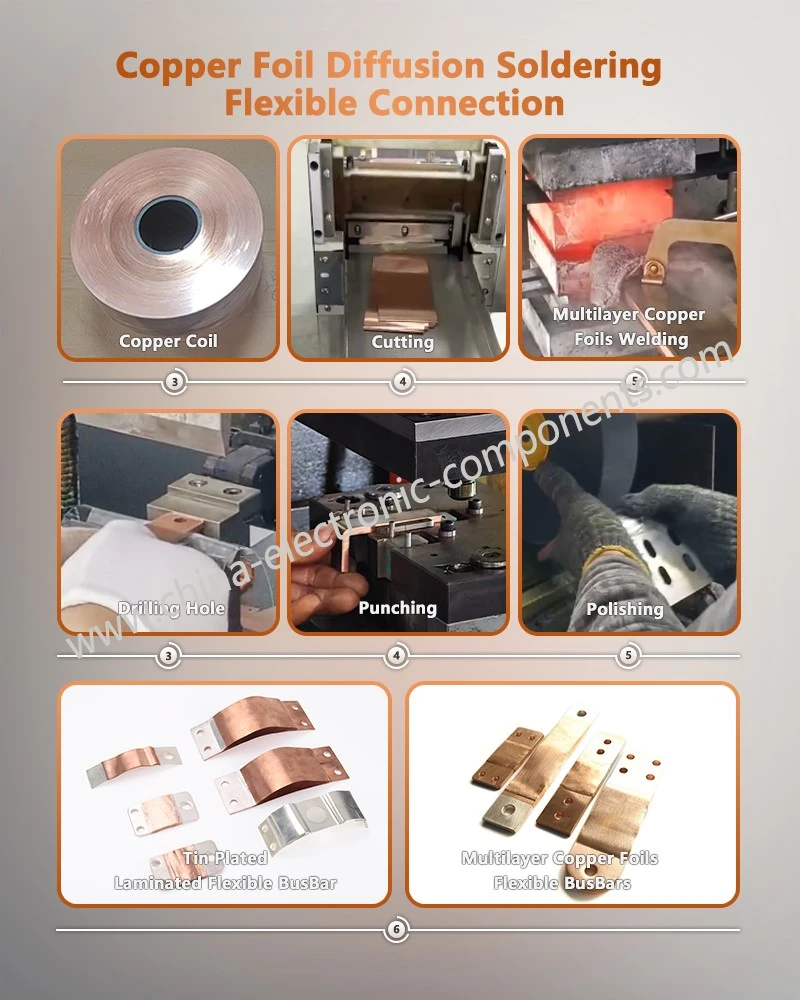
Multi-layer copper foil lamination and precision welding have emerged as core manufacturing processes.
A multi-layer copper foil structure serves as the essential technical foundation for flexible conductive connectors. During production, the thickness of the copper foils, the number of layers, and the total cross-sectional area must be determined based on the product's rated current, available space, and flexibility requirements.
The welding of laminated copper foil busbars is a critical stage that dictates overall product performance. Through an appropriate welding process, the ends of the multiple copper foil layers are joined to create a stable, conductive connection zone. In actual production, strict control over welding pressure, energy input, bonding area, and the heat-affected zone is necessary to prevent defects such as "cold" (weak) welds, incomplete bonding, excessive melting, or abnormal electrical resistance within the welded area.
For high-reliability applications, finished components undergo comprehensive quality checks-including visual inspection, dimensional verification, connection strength testing, and validation of electrical resistance and temperature rise-to ensure consistent quality across different production batches.
Multi-layer composite structures enhance design flexibility.
As the internal architecture of new energy equipment becomes increasingly compact, traditional single-layer copper busbars are often unable to meet the requirements of complex connection scenarios. Multi-layered copper foil composite structures allow for the design of current-carrying solutions tailored to various spatial constraints by adjusting the number of layers, width, length, and terminal geometry.
Flexible laminated copper busbars can be customized to fit specific equipment installation spaces, making them suitable for applications such as battery modules, energy storage inverters, industrial power supplies, and high-voltage power distribution systems. In scenarios involving bending, displacement, or vibration, it is essential to define the bending zones, effective flexible length, and minimum bend radius based on actual operating conditions to prevent fatigue damage to the copper foils during long-term use.
Furthermore, some products require processes such as stamping, bending, precision cutting, and terminal forming to ensure a precise fit with the interfaces of the customer's equipment.
Surface treatment and insulation protection further enhance product performance.
Because copper surfaces are susceptible to oxidation and environmental factors, certain electrical connection applications require surface treatments-such as tin plating, silver plating, or other appropriate methods-to improve the performance of the connection interface.
Customized tin-plated copper laminates can be designed with specific plating specifications based on the intended operating environment and connection requirements. Tin plating enhances the oxidation resistance and connection compatibility of the copper surface; however, the specific plating thickness, bonding quality, and corrosion resistance must be determined in accordance with product specifications.
For products requiring enhanced insulation, materials such as PVC, PET, epoxy resin, or other suitable insulators can be applied as a coating or composite layer. Insulation design must account for factors including operating voltage, creepage distance, electrical clearance, operating temperature, and material flame retardancy to prevent equipment safety issues arising from insulation damage or inadequate structural design.
Diversification of Flexible Copper Interconnects: Customization as a Key Development Trend
As technical requirements across various application fields continue to diverge, flexible copper interconnects have evolved from basic copper foil flexible links into more sophisticated solutions-featuring multi-layer lamination, composite insulation, complex terminal geometries, and specialized surface treatments.
In power battery and energy storage systems, copper laminated foil connectors can be adapted to different battery modules and electrical interfaces by adjusting the number of copper foil layers, connection dimensions, and terminal configurations. For applications requiring high current-carrying capacity, key considerations include the effective conductive cross-sectional area, contact resistance, and long-term temperature rise performance.
For equipment with constrained installation space, multi-layer bent power busbars-which can be custom-formed-are well-suited to complex internal routing requirements. Their design must balance mechanical strength in the bent regions, the conductive cross-sectional area, and spatial clearance post-installation, while ensuring that excessive bending does not damage the copper foils.
In electrical connection systems requiring surface protection, tin-plated copper laminated busbars can undergo specific surface treatments tailored to the operating environment and contact interface requirements, thereby enhancing connection performance under particular service conditions.
Furthermore, laminated flexible foil connectors can be designed by integrating various insulating materials and terminal configurations, allowing the product to simultaneously meet requirements for flexible connectivity, electrical isolation, and equipment assembly.
For shunt connection applications in industrial power supplies and electrical equipment, copper laminated flexible shunts require a focus on conductive cross-sectional area, interface contact resistance, temperature rise, and mechanical fatigue resistance to ensure stable electrical performance during long-term, high-current operation.
Industry Competition Shifts from Price-Driven to Process- and Quality-Driven
As the market for flexible copper connectors expands, industry competition is shifting from a focus on basic material supply and elementary processing toward a competition based on comprehensive manufacturing capabilities.
First, custom design capability has become a critical criterion for evaluating suppliers. Electrical architectures vary significantly across sectors such as new energy vehicles, energy storage, rail transit, and data centers; consequently, clients have diverse requirements regarding product dimensions, bending orientation, mounting hole placement, insulation materials, and connection methods. Manufacturers must possess the expertise to analyze technical drawings, optimize structures, and develop prototypes based on specific client requirements.
Second, consistency in mass production is becoming increasingly important. The production of flexible copper connectors involves processing multiple layers of copper foil and welding the terminals-processes where product quality can be influenced by factors such as raw material thickness, cutting precision, welding parameters, and assembly techniques. Establishing stable process parameters and a comprehensive quality control system helps minimize batch-to-batch variation and enhances the reliability of product delivery.
Finally, testing and inspection capabilities directly influence how products perform in actual engineering applications. In addition to standard dimensional inspections, testing should also encompass-based on specific product requirements-contact resistance, temperature rise, pull-off strength, dielectric withstand voltage, and necessary environmental reliability assessments. For applications involving prolonged vibration or frequent thermal cycling, the product's fatigue durability must also be evaluated through appropriate validation.
Furthermore, green manufacturing and material utilization efficiency have increasingly become key components of supply chain management. Optimizing the layout of copper foils, minimizing processing waste, enhancing production efficiency, and ensuring the compliant disposal of waste generated during surface treatment processes all contribute to improved resource efficiency and supply chain compliance.
Future Development Trends in the Flexible Copper Interconnect Industry
Driven by sectors ranging from high-voltage platforms for new energy vehicles (NEVs) and energy storage systems to computing infrastructure for artificial intelligence, the demand for high-current electrical interconnects continues to grow. The future development of the flexible copper interconnect industry will primarily focus on the following areas:
First, there is a continuous push for enhanced high-voltage and high-current capabilities. As the power density of equipment increases, interconnect components must meet higher current-carrying requirements within constrained spaces, while simultaneously managing temperature rise and electrical energy loss.
Second, manufacturing processes are evolving toward higher precision and greater automation. Techniques such as multi-layer copper foil lamination, precision welding, automated forming, and in-line inspection will further improve product consistency and mass-production capacity.
Third, there is an increasing emphasis on integrated insulation and structural design. Copper interconnect components will increasingly feature designs that combine conductive structures with protective insulation, ensuring they align with the spatial layouts and electrical safety requirements of complex equipment.
Fourth, high-end applications are driving product differentiation. Since technical requirements for interconnects vary significantly across sectors-such as NEVs, energy storage, rail transit, and data centers-manufacturers capable of providing integrated services (encompassing material selection, structural design, process development, and performance validation) will be better positioned to meet the customized needs of clients across diverse industries.
Overall, flexible copper interconnects have evolved from simple auxiliary components in traditional electrical equipment into critical elements that directly influence the efficiency and reliability of high-power electrical systems. As the new energy sector and computing infrastructure continue to expand, manufacturing solutions that integrate precision copper foil processing, reliable welding, insulation, and robust quality control for mass production will find an increasingly broad range of applications.
For purchasers of equipment used in new energy vehicles, energy storage systems, rail transit, and data centers, the selection of flexible copper foil connectors should extend beyond mere considerations of material thickness and procurement cost. Instead, it requires a comprehensive evaluation of factors such as rated current, operating voltage, connection resistance, temperature rise limits, bending radius, insulation class, and the specific operating environment.
Engineering procurement teams can facilitate the development of customized solutions-tailored to the precise requirements of their equipment-by providing manufacturers with product drawings, technical specifications, installation space constraints, and details on actual operating conditions. This collaborative process allows for the refinement of key parameters-including copper foil material, number of layers, welding methods, surface treatments, and insulation schemes-followed by sample development and performance verification.
contact us
Send Inquiry