










Continued Advancement in Diffusion Welding Technology For Copper Foil Flexible Connections: Enhancing Electrical Conductivity And Connection Reliability in New Energy Power Systems
Nov 04, 2026
Leave a message
As new energy vehicles, energy storage systems, rail transit, and industrial power electronics increasingly demand higher current capacity, greater power density, and enhanced reliability, traditional rigid electrical connections are facing new challenges regarding vibration tolerance, thermal stress compensation, and spatial layout. Copper foil flexible connectors-a critical component in high-current transmission systems-are becoming an essential element of electrical connectivity in the new energy sector, thanks to their excellent electrical conductivity, flexible compensation capabilities, and structural adaptability.
Among the various manufacturing processes for flexible connectors, diffusion bonding stands out as a representative solid-state joining technique. Its fundamental principle involves the interdiffusion of atoms at the contact interfaces of copper foils under specific conditions of temperature, pressure, and duration, ultimately creating a continuous metallurgical bond. Compared to conventional mechanical bolted connections, diffusion bonding minimizes resistance fluctuations at contact interfaces while maintaining the structural integrity of the connection, thereby enhancing stability during high-current transmission.
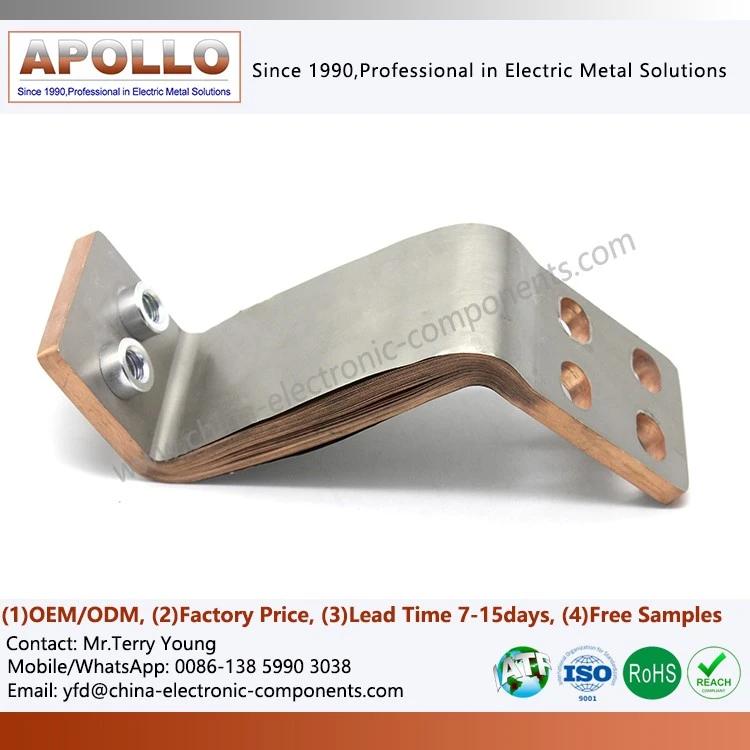
Structure and Manufacturing Principles of Diffusion-Bonded Copper Foil Flexible Connectors
Copper foil flexible connectors are typically composed of multiple layers of thin copper foil. A specialized welding process joins the terminal contact areas into a unified structure, while the unwelded sections retain their flexibility, allowing the component to accommodate vibrations, displacements, and thermal expansion that occur during equipment operation.
Diffusion bonding of laminated copper foils is a key manufacturing process. Its core requirements include precise control over the stacking configuration of the copper foils, the definition of the welded zones, the quality of the interfacial bonding, and the dimensional accuracy of the finished component. Depending on the product design and application requirements, copper foils of varying thicknesses, widths, and layer counts can be combined to meet specific current-rating and installation-space specifications.
Diffusion bonding is generally performed in a vacuum or a protective atmosphere. By carefully controlling heating temperatures, applied pressure, and holding times, a stable metallurgical bond is gradually formed at the contact interfaces. Because this process does not rely on the complete melting and subsequent solidification characteristic of traditional fusion welding, it avoids common issues such as weld spatter, localized melting, and microstructural non-uniformity.
In practical production, factors such as copper foil thickness, surface cleanliness, the arrangement of the stacked layers, and the uniformity of the applied pressure all significantly influence the final quality of the weld. Following the welding process, the components undergo shaping, annealing, cleaning, and essential electrical performance testing to ensure the connection area possesses both excellent electrical continuity and mechanical stability.
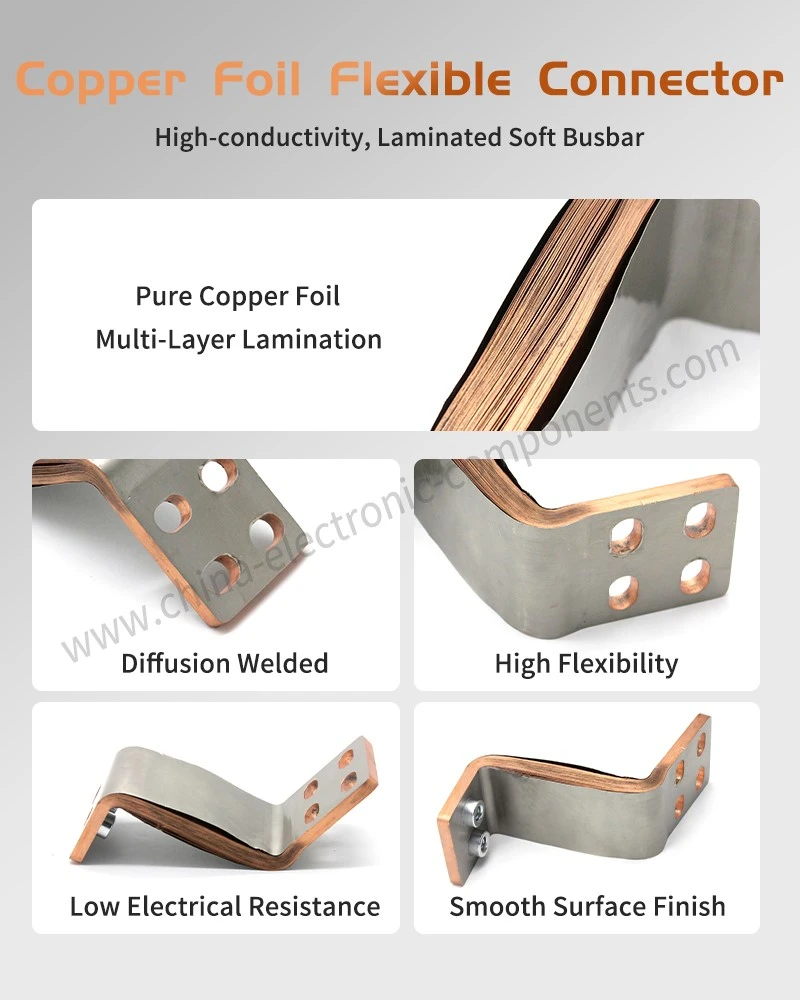
Multi-layer copper foil structures offer a balance between current-carrying capacity and flexible compensation
Compared to traditional rigid copper busbars, multi-layer copper foil structures provide superior bending adaptability, enabling flexible connections between various electrical components within confined spaces. Typically composed of stacked layers of copper foil with localized welded ends, these flexible busbars offer a large conductive cross-sectional area while maintaining a degree of deformability.
This structure effectively mitigates vibration loads and thermal expansion stresses that occur during equipment operation. In the event of slight relative displacement between battery modules, inverters, or power distribution components, the flexible copper foils can absorb a portion of the mechanical deformation through bending, thereby reducing stress concentrations at rigid connection points.
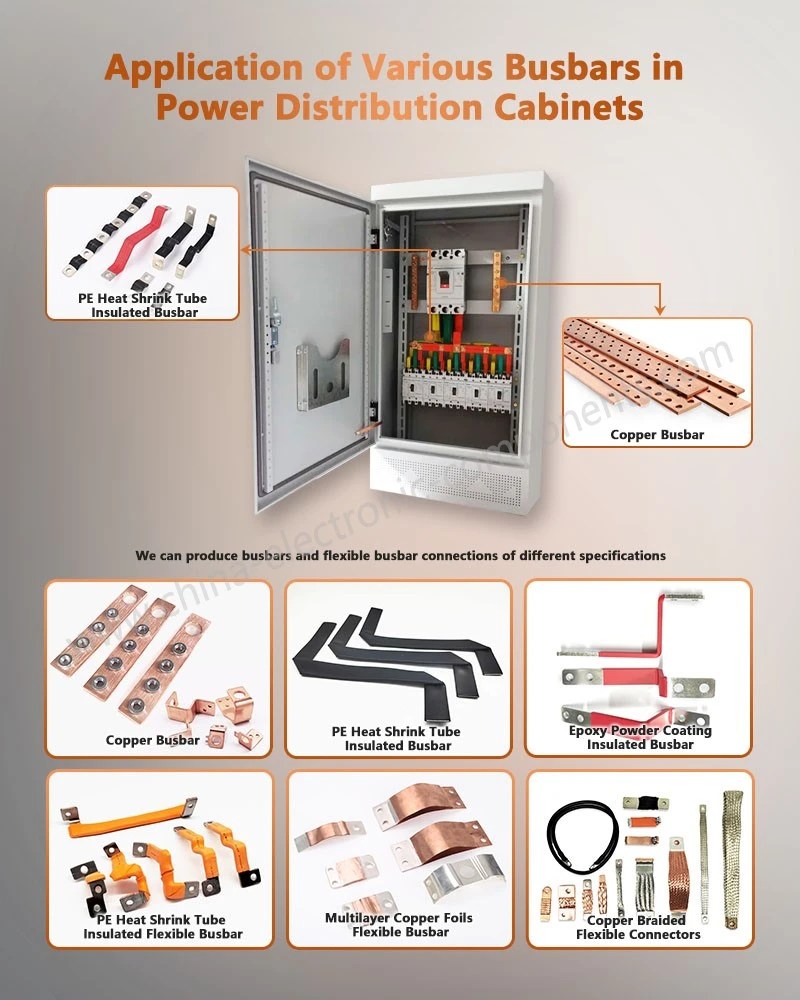
In switchgear applications, multi-layer flexible copper busbars are used to connect various conductive components-an ideal solution for environments with limited internal space, assembly tolerances, or the need to compensate for mechanical displacement. The structural design must account for factors such as rated current, short-time withstand current, installation orientation, bending radius, and insulation clearance to prevent premature failure caused by excessive bending or improper installation.
Furthermore, increasing the number of layers or the cross-sectional area of the copper foil is not always advantageous. Engineering designs must be tailored to specific current-carrying requirements, heat dissipation conditions, and available installation space to achieve an optimal balance between electrical performance, flexibility, and manufacturing costs.
Surface treatment and connection interfaces influence long-term operational performance
While copper exhibits excellent electrical conductivity, its surface is susceptible to oxidation when exposed to air or specific operating environments. For high-current components intended for long-term use, oxidation, corrosion, and changes at the contact interface can compromise connection stability. Consequently, surface treatment is a critical step in the manufacturing of flexible copper foil connectors.
Depending on the specific application requirements, these copper foil connectors can be finished with coatings such as tin, silver, or nickel. Among these, the tin-plating process is widely used; it enhances the oxidation resistance of copper surfaces and improves compatibility at certain connection interfaces. Customized tin-plated copper laminated busbars are specifically engineered to meet diverse installation environments and connection requirements, with tailored specifications for plating thickness, coverage, and surface quality.
In the manufacturing process, surface treatment must be carefully coordinated with welding techniques. For products requiring diffusion welding, the surface condition of the weld zone and the sequence of operations are critical. The decision of whether to apply plating before or after welding must be based on the specific process route to ensure that the plating does not compromise the quality of the interfacial bond.
Furthermore, the flatness and cleanliness of the copper foil surfaces, as well as the uniformity of the plating, must be integrated into the quality control framework. For high-current applications, product performance should be verified through contact resistance testing, temperature-rise testing, and relevant environmental testing.
Applications of Flexible Copper Foil Connectors in New Energy Vehicles and Energy Storage Systems
The traction battery system of a new energy vehicle consists of multiple battery cells, modules, and electrical interconnects, creating a complex internal current-transmission path. As battery capacity and system voltage continue to increase, these interconnects must not only handle continuous current loads but also withstand the vibrations, shocks, and temperature fluctuations that occur during vehicle operation.
Between battery modules, copper laminated foil connectors leverage the flexibility of multi-layered copper foil to compensate for assembly tolerances at various connection points, thereby reducing the additional mechanical stress that rigid connections might otherwise impose on battery structural components. For connections between battery modules and the main busbar, factors such as electrical insulation, available installation space, and the mechanical fastening methods at the connection terminals must also be taken into account.
In energy storage systems, significant current transmission is required between battery clusters, power conversion systems (PCS), and DC power distribution units. Flexible copper foil connectors can accommodate complex installation geometries and help mitigate thermo-mechanical stress during equipment operation. For high-power energy storage equipment, the cross-sectional area of the connectors, the quality of the welds, and their temperature-rise characteristics must be validated against actual operating currents and thermal dissipation conditions.
In the field of industrial power distribution, flexible laminated copper busbars are used in circuit breakers, switchgear, frequency converters, and other high-current electrical equipment. Compared to traditional rigid busbars, flexible busbars offer greater design freedom for internal equipment layouts while mitigating the impact of operational vibrations on connection points.
Higher Demands for Flexible Connections in Rail Transit and High-Power Equipment
Traction systems in rail transit, power converters, and industrial power supply equipment often operate in environments characterized by vibration, temperature fluctuations, and continuous current loads-conditions that necessitate high levels of mechanical reliability and electrical stability for connection components.
Multi-layer flexible power busbars utilize a combination of conductive layers and specific bending geometries to accommodate complex installation spaces, overcoming the spatial constraints imposed by traditional rigid connections. Their specific configuration must be tailored to factors such as installation dimensions, bending orientation, terminal positioning, and current-carrying requirements.
For rail transit applications, copper foil flexible busbars must be designed with careful consideration for the effects of long-term vibration, impact loads, and thermal cycling. The design must ensure sufficient bond strength in welded areas while carefully managing stress distribution across the flexible sections to prevent fatigue or localized damage to the copper foils caused by repeated flexing.
Furthermore, as rail transit and industrial power systems typically mandate specific service life and maintenance intervals, the product development phase must include rigorous validation-covering vibration resistance, temperature rise, mechanical strength, and environmental adaptability-based on actual operating conditions.
Key Quality Control and Inspection Requirements for Copper Foil Flexible Connections
The performance of copper foil flexible connections depends not only on the raw materials but also on the laminated structure, welding process, and the quality of post-processing. For mass-produced components, a comprehensive quality control system must be implemented, spanning raw materials, the production process, and final product inspection.
First, for copper foil materials, critical parameters include purity, thickness, electrical conductivity, and surface condition. Inconsistent material properties can lead to variations in electrical resistance and current-carrying capacity; therefore, materials must undergo systematic inspection and batch management in accordance with technical specifications.
Second, welding quality is a primary determinant of product reliability. Inspections of welded areas should focus on bond integrity, effective weld area, interfacial defects, and dimensional consistency. For products with specific requirements regarding the "weld ratio" (the proportion of the interface that is effectively bonded), evaluation should involve process validation and appropriate testing methods-relying solely on visual inspection is insufficient to assess weld quality. Furthermore, electrical performance testing must focus on DC resistance, contact resistance, and temperature rise under rated operating conditions. For high-current connectors, temperature-rise tests should be conducted based on actual usage conditions to evaluate the thermal stability of the connection points under continuous current-carrying states.
Mechanical performance verification is equally critical. Depending on the application scenario, products must undergo tensile, bending, vibration, and necessary thermal cycling tests to ensure that welded and flexible zones do not suffer from premature or abnormal failure during long-term service.
In practical applications, the performance of copper foil busbars should be evaluated by considering factors such as cross-sectional area, number of copper foil layers, connection length, dimensions of the welded zones, and the operating environment-rather than relying solely on material thickness or nominal current ratings to determine suitability.
The copper foil flexible connector industry is evolving toward customization and high-reliability manufacturing. Driven by ongoing advancements in new energy vehicles, energy storage systems, and industrial power electronics, copper foil flexible connectors are transitioning from basic conductive components into highly precise, functional, and customized solutions. Since different applications impose distinct requirements regarding current-carrying capacity, range of flexible compensation, installation dimensions, and insulation methods, manufacturers are continuously optimizing both product architecture and production processes.
Copper laminated flexible shunts are primarily used in electrical connections that require both current transmission and flexible compensation; their design centers on the structural alignment between the welded ends and the flexible zones. By carefully configuring the number of copper foil layers, the total stack thickness, and the dimensions of the connection ends, these products can be tailored to the specific installation and operational needs of various equipment.
Meanwhile, the adoption of technologies such as automated stacking, precision welding, dimensional inspection, and electrical performance testing helps ensure consistency in mass production. For applications in new energy and high-voltage electrical equipment, manufacturing must go beyond mere adherence to dimensional specifications-it requires the establishment of quality verification standards that align with the realities of actual field use.
Looking ahead, as high-power-density equipment and next-generation energy storage systems continue to develop, flexible conductive connectors will face increasingly stringent requirements regarding structural integration, lightweight design, and long-term operational reliability. Manufacturers must continuously enhance their capabilities in material control, precision machining, welding processes, and product validation to meet the diverse demands of various electrical systems.
For engineering procurement and product development personnel, it is advisable to define the following specifications when selecting a copper foil flexible connector solution: rated operating current, short-time withstand current, copper foil material and thickness, total cross-sectional area, product length, dimensions of the welded areas, surface treatment, and insulation requirements.
Furthermore, providing product drawings or samples-taking into account the actual installation space-will facilitate structural assessment and process validation. For applications such as battery modules for new energy vehicles, energy storage systems, rail transit, and industrial power equipment, further discussions regarding customized design, prototype fabrication, weld quality verification, and mass production requirements can help secure a copper foil flexible connector solution that more precisely aligns with your project's technical specifications.
contact us
Send Inquiry