










Technological Upgrades in Insulating Powder Coatings For New Energy Electrical Equipment: Busbar Insulation Protection And Long-Term Operational Reliability Become Key Factors
Nov 05, 2026
Leave a message
With the continuous development of new energy vehicles, energy storage systems, industrial power distribution, and power electronic equipment, there is an ever-increasing demand for electrical connection components to offer superior insulation, heat resistance, and long-term operational reliability.
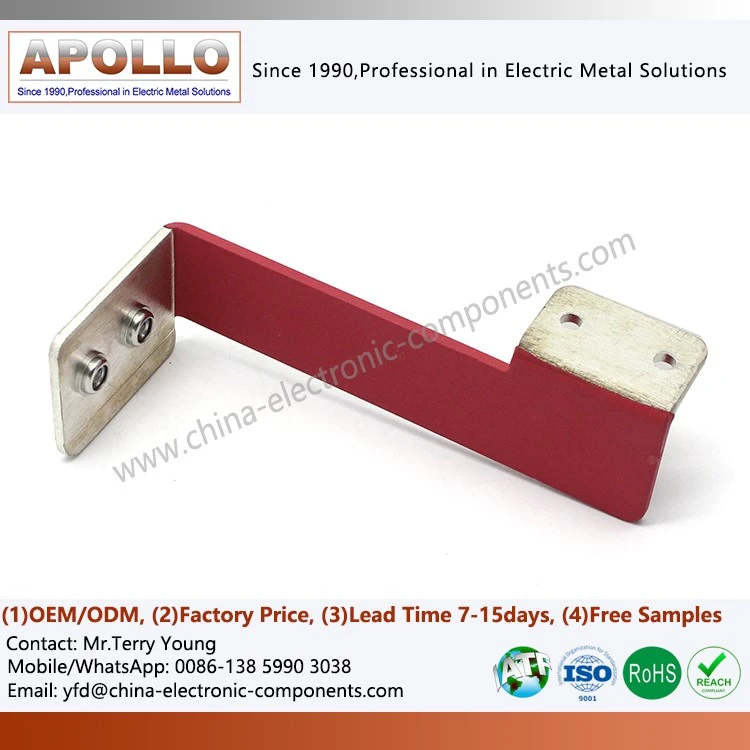
Copper and aluminum busbars, which serve as critical elements in high-current transmission systems, are widely used in switchgear, power distribution cabinets, energy storage inverters, transformers, and various electrical equipment for new energy applications. To mitigate the risk of short circuits or accidental contact between conductors-and to enhance the environmental resilience of metal surfaces-insulating powder coating has emerged as a vital surface treatment solution for busbars.
Unlike conventional decorative powder coatings, the functional powder coatings used in new energy electrical equipment must provide not only excellent adhesion and corrosion resistance but also meet stringent requirements for electrical insulation, temperature resistance, flame retardancy, and resistance to environmental aging. In high-voltage, high-current, and compact electrical configurations, the quality of the coating is directly linked to the electrical safety and operational stability of the equipment.
Insulating Powder Coating as a Key Protective Technology for Electrical Connection Components
In traditional industrial manufacturing, powder coatings are primarily used for the decoration, corrosion protection, and wear resistance of metal surfaces. However, in the context of power equipment and new energy applications, powder coatings have taken on more specialized roles-with electrical insulation being a primary application.
For components such as copper and aluminum busbars, battery trays, and motor parts, the metal substrate is inherently highly conductive. In complex electrical assemblies, however, reliable electrical isolation between different conductors is essential. By applying a continuous insulating layer to the metal surface, the risk of accidental contact between conductors is reduced, while simultaneously allowing for more compact internal equipment layouts.
In practical manufacturing, the powder coating process for busbars must be carefully engineered based on factors such as the busbar material, structural dimensions, operating voltage, and installation environment. Because copper and aluminum possess different thermal conductivity characteristics and surface properties, they require distinct approaches to surface pretreatment, coating application, and curing.
Consequently, the application of insulating powder coatings cannot simply follow the standard procedures used for decorative metal components; instead, it requires a specialized process control system tailored to the specific electrical performance requirements.
The Core Challenge in Busbar Insulation Coating: Achieving Uniform Film Thickness
Busbars are typically manufactured from copper or aluminum. Through processes such as stamping, cutting, bending, drilling, and joining, they are shaped into conductive structures that meet specific equipment installation requirements. Due to the presence of bends at various angles, holes, edges, and complex connection zones, it is difficult to ensure a perfectly uniform coating thickness across the entire surface during the spraying process.
In particular, sharp edges and corners are prone to insufficient local film thickness-a result of how the electrostatic field is distributed and how the powder is deposited, melted, and leveled. If these areas are not adequately covered, they can become weak points in the insulation system.
Conversely, on certain flat surfaces, excessive powder deposition can lead to an overly thick coating, uneven curing, or material waste. Therefore, the key to insulating busbars is not simply increasing the amount of powder used, but rather optimizing process parameters to ensure the formation of a continuous, uniform, and stable insulating layer across all structural features.
The selection of busbar coating powder must also take into account the properties of the substrate and the specific operating conditions. Different powder systems vary in terms of leveling, adhesion, heat resistance, and dielectric properties; they must be matched to the actual structure of the workpiece. For large, complex busbars, it is especially important to verify edge coverage and the integrity of the coating around holes.
Epoxy Powder Coatings Meet Electrical Insulation Requirements for Busbars
In the field of electrical insulation, epoxy resin powders are widely used to protect the surfaces of power connection components, thanks to their excellent adhesion, dielectric properties, and chemical resistance.
Applying epoxy powder coatings to busbars is a classic use case. By forming a cured insulating layer on the surface of copper or aluminum busbars, the risk of electrical contact between conductive components is reduced. The specific coating system and film thickness required for a given application should be determined based on factors such as operating voltage, insulation clearance, ambient temperature, and equipment design.
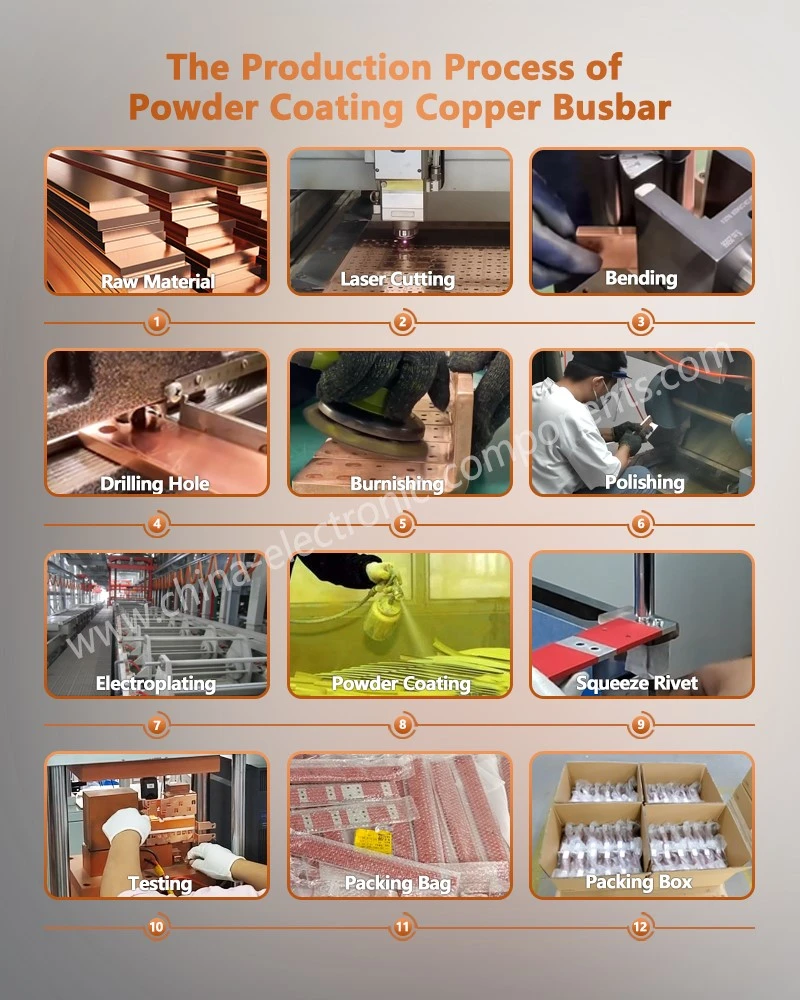
Compared to conventional liquid coatings, powder coating offers several advantages, including lower VOC emissions, higher material utilization, and suitability for automated production. For the mass production of electrical connection components, powder coating can be integrated with pre-treatment, electrostatic application, and thermal curing to establish a stable, continuous manufacturing process.
In practical applications, powder-coated busbars must meet requirements for both electrical insulation and mechanical reliability. During installation, busbars may be subjected to clamping forces, bolting, and friction; if the coating lacks sufficient adhesion or mechanical strength, issues such as scratching or delamination may occur. Consequently, in addition to electrical testing, it is essential to evaluate the coating's adhesion, impact resistance, and wear resistance.
The Impact of Pre-treatment and Substrate Surface Condition on Coating Quality
The final quality of a powder-coated busbar depends not only on the powder material itself but also, to a significant extent, on the condition of the substrate surface.
During processing and storage, the surface of a copper busbar may accumulate oils, oxides, machining residues, or other contaminants. Inadequate pre-treatment can impair the wetting, adhesion, and long-term stability of the powder coating. Therefore, prior to the actual coating process, the substrate must undergo degreasing, cleaning, and any other necessary surface preparation, tailored to the specific material and its surface state.
For tinned copper busbars, the surface condition must be compatible with the subsequent coating process. Factors such as the thickness of the tin plating, surface cleanliness, and the bond between the coating and the plating layer can all influence the quality of the final product. In cases where specific areas must remain conductive, masking techniques are employed to ensure that the insulating coating does not cover bolt-connection points or electrical contact surfaces.
For composite-function components-such as insulated, tinned solid copper busbar connectors-it is necessary to balance the substrate's electrical conductivity, the protective function of the plating, and the specific coverage requirements for the insulated zones. During the engineering design phase, it must be clearly defined which areas require insulation and which must remain conductive, ensuring that the coating process does not interfere with the product's assembly or electrical functionality.
Bent Busbars Impose Stricter Process Control Requirements for Insulating Coatings
As the structures of electrical equipment in the new energy sector become increasingly compact, busbar products are evolving toward complex bent geometries, multi-hole configurations, and non-standard shapes. Compared to straight, flat busbars, bent busbars feature more complex geometries, making them susceptible to edge effects and variations in electrostatic field distribution during the coating process.
For copper busbars that are bent prior to coating, the coating must cover surfaces at various angles while ensuring that the bent regions remain free of noticeable thin spots, pinholes, or localized defects. In manufacturing workflows where coating is applied before bending, particular attention must be paid to whether the powder coating cracks or delaminates during the bending deformation process.
The production of epoxy-powder-insulated bent copper busbars requires an integrated approach that considers material processing, bending radii, coating flexibility, and curing parameters. In actual production, the optimal manufacturing sequence should be determined based on the busbar thickness, bending angle, and structural specifications; the integrity of the coating in the bent regions must then be verified through the use of prototypes.
Furthermore, the quality assessment of epoxy busbar coatings should not be limited to visual inspection alone. It must also incorporate a comprehensive evaluation of factors such as dielectric strength (insulation voltage resistance), adhesion, film thickness distribution, and environmental adaptability. For custom-designed busbars with complex structures, it may also be necessary to perform cross-sectional analysis or localized testing to verify the condition of the coating in critical areas.
Energy Storage and New Energy Equipment Demand Higher Long-Term Reliability for Coatings
As the installed capacity of energy storage systems continues to grow, busbars and related conductive components are increasingly required to operate over long periods in complex environments. Energy storage equipment may be subject to sustained temperature increases, humidity fluctuations, thermal cycling, and mechanical vibrations-all of which can impact the performance of insulating coatings.
Consequently, the performance evaluation of insulating powders for new energy applications must extend beyond their initial state to include long-term environmental adaptability. In addition to standard insulation testing, assessments should also account for specific application requirements, such as performance under high-temperature and high-humidity conditions, thermal cycling, adhesion retention, and flame retardancy. In the practical application of processes such as powder coating for busbars, it is critical to focus on the stability of the bond between the coating and the metal substrate, as well as the ability of the coating to maintain required performance standards after environmental aging.
For electrical components with specific flame-retardancy requirements, the appropriate powder system must be selected in accordance with the applicable product standards and test conditions. It should be noted that a powder material achieving a certain flame-retardant rating does not automatically imply that the entire coated component-or the overall assembly-meets that same rating; final compliance must always be determined based on the results of applicable product testing.
The Evolution Toward Customization and Precision in Insulating Powder Coatings
Requirements for busbar coatings vary significantly depending on the electrical equipment. For instance, standard power distribution equipment primarily prioritizes insulation, temperature-rise management, and mechanical reliability; energy storage systems for new energy applications demand long-term performance stability in hot and humid environments; and highly integrated power electronics require precise control over busbar geometry, insulation thickness, and installation space.
Consequently, the development of epoxy powder-coated copper busbars must be driven by specific application scenarios, taking into account factors such as material grade, busbar thickness, bending geometry, mounting methods, and operating voltage.
For products with specialized grounding or electrical connection requirements, it is essential to clearly define the boundaries between conductive connection zones and insulated areas to ensure that the coating design does not compromise grounding continuity.
In power distribution systems, epoxy powder-coated copper busbars must balance current-carrying capacity, insulation protection, and internal spatial layout. For specific components like neutral busbars, the extent of the coating coverage should be determined based on wiring configurations, mounting structures, and relevant electrical standards.
Furthermore, there is a growing demand for customized powder-coated busbars. Clients may have distinct requirements regarding coating color, film thickness, insulation rating, temperature resistance, masking areas, and physical dimensions. Through customized process design, the busbar structure and its insulation scheme can be more effectively aligned, thereby minimizing compatibility issues during subsequent assembly and operation.
Engineering Procurement: Ensuring Consistency Across Materials, Processes, and Testing
As safety and reliability requirements for power equipment and new energy systems continue to rise, the insulation coating of busbars has evolved from a simple surface treatment into a critical manufacturing stage that influences the overall performance of electrical equipment. When selecting products and suppliers, procurement professionals should look beyond mere coating costs and aesthetics; they must rigorously evaluate factors such as substrate quality, powder coating systems, film thickness control, edge coverage, curing conditions, and consistency in mass production.
For custom busbar projects, it is recommended that the purchaser provide detailed specifications-including the material grade (copper or aluminum), product drawings, dimensions, bending configurations, operating voltage, insulation requirements, and the intended operating environment. If specific testing standards have already been established, the purchaser should also provide the corresponding acceptance criteria-such as those for withstand voltage, flame retardancy, hygrothermal aging, and adhesion-to facilitate material selection, process evaluation, and sample validation.
For bulk procurement of insulated busbars, epoxy-powder-coated copper bars, or electrical connection components for new energy applications, clarifying the conductive contact surfaces, coating zones, film thickness tolerances, and testing protocols in advance helps mitigate the risks of design changes and assembly complications. We invite engineering procurement teams to share product drawings and technical specifications with our professional manufacturing team. Together, we can discuss material selection, bending processes, insulation coating, and mass-production strategies, while assessing the manufacturing feasibility and quality control requirements for your customized busbar solutions.
contact us
Send Inquiry