



Upgrading The Manufacturing Process For Flexible Copper Foil Connections: Diffusion Welding Enhances The Electrical Conductivity And Connection Reliability Of Multi-Layer Copper Foil Busbars
Nov 07, 2026
Leave a message
As new energy vehicles, energy storage systems, and high-voltage power distribution equipment evolve toward higher currents, greater power density, and increased integration, electrical connection components face increasingly stringent performance requirements. While traditional rigid copper busbars offer excellent electrical conductivity and structural strength, they struggle to provide the necessary flexibility and stress buffering required in environments characterized by complex assembly spaces, continuous vibration, or thermal expansion. Against this backdrop, flexible copper foil connectors-leveraging their superior electrical conductivity, flexibility, and structural adaptability-have become a vital component in power connection systems for new energy applications.
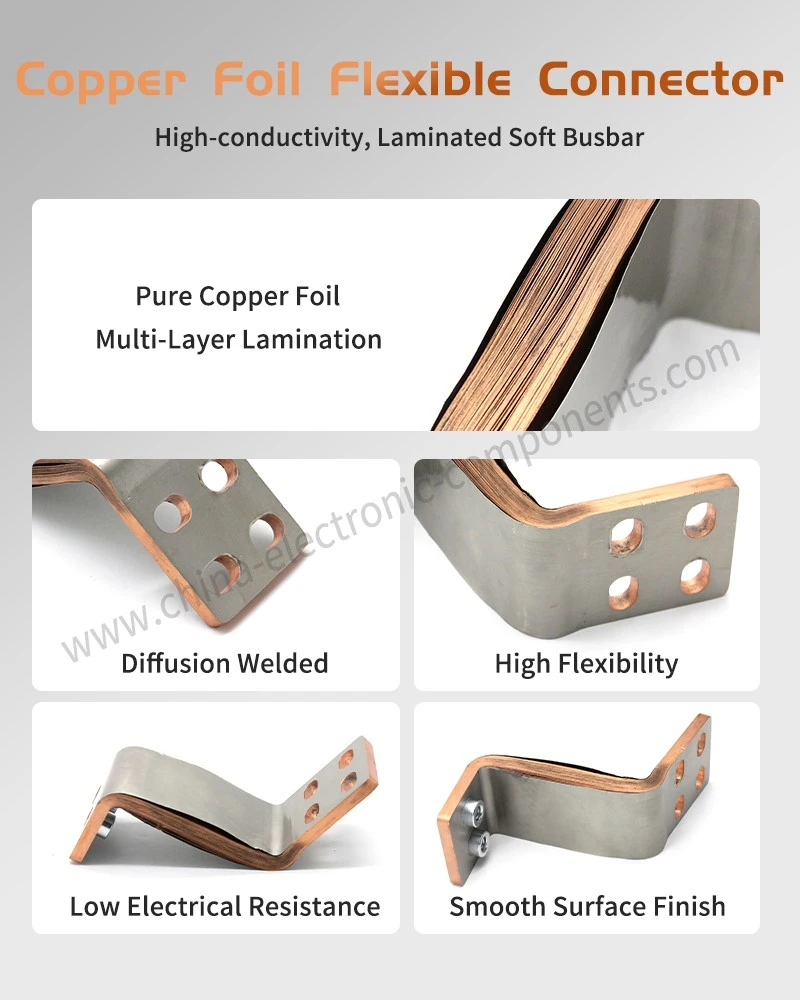
Flexible copper foil connectors are typically constructed by stacking multiple layers of thin copper foil and joining the contact areas at both ends through specialized welding processes, resulting in a component that is both conductive and flexible. The thickness of an individual copper foil layer is generally determined by product design and current-carrying requirements, typically ranging from 0.05 mm to 0.3 mm. By adjusting the number of layers, as well as the width, length, and terminal design, these connectors can be tailored to meet specific current ratings, spatial constraints, and mechanical movement requirements.
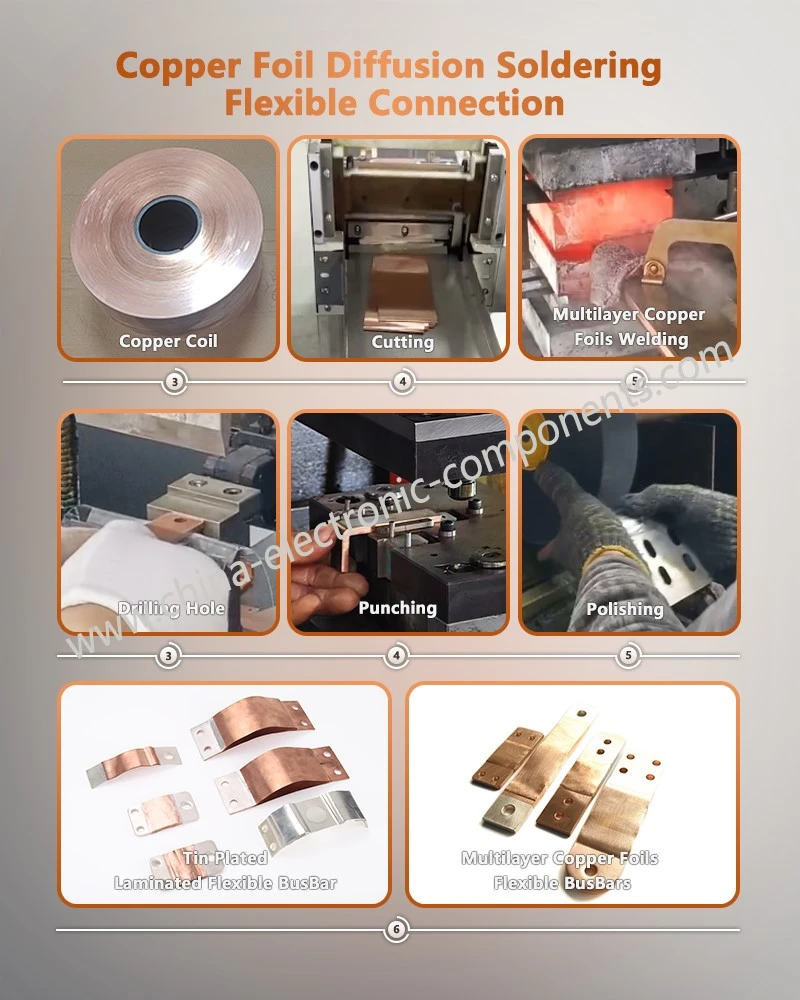
In power battery modules, energy storage battery clusters, inverters, and high-voltage power distribution cabinets, the welding of laminated copper foil busbars is a critical manufacturing step that directly influences the performance of the flexible connector. The welded joints must not only exhibit low contact resistance but also maintain sufficient mechanical strength to prevent issues such as localized overheating, loosening, or material fatigue during long-term operation.
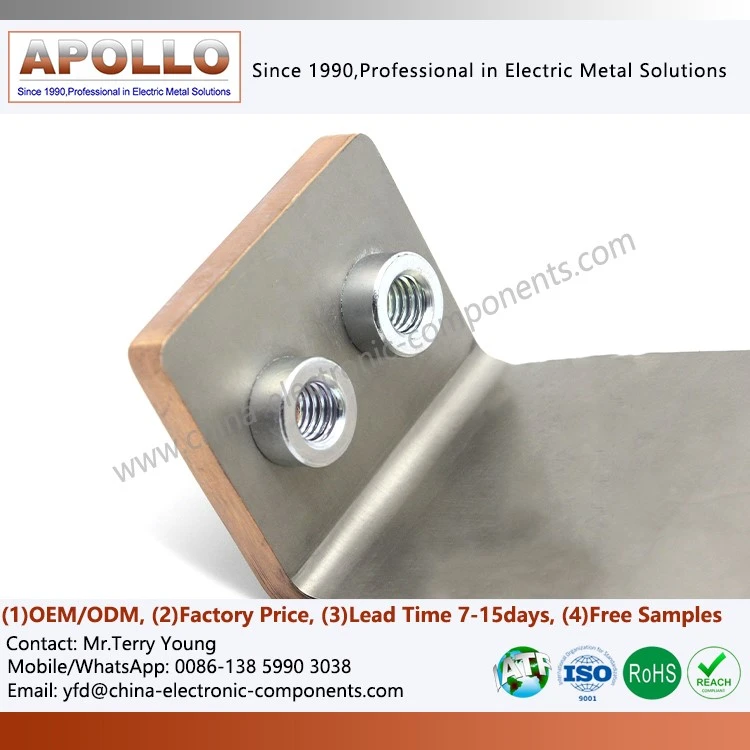
Diffusion welding has emerged as a key manufacturing solution for multi-layer flexible copper foil connectors
Currently, the primary joining methods for flexible copper foil connectors include mechanical crimping, brazing, and diffusion welding. These processes differ in terms of equipment investment, production efficiency, joint performance, and suitability for specific product types.
Mechanical crimping involves applying pressure-typically via molds or fastening structures-to ensure tight contact between the multiple layers of copper foil within the connection zone. This process requires relatively low equipment investment and features a straightforward production workflow, making it suitable for products with well-defined structural requirements and current-carrying specifications. However, as the number of copper foil layers increases, it becomes more challenging to ensure uniform pressure distribution, consistent inter-layer contact, and overall uniformity across the connection area. Brazing involves the addition of a filler metal, which melts upon heating and fills the interface between the materials to be joined.
While this process offers a degree of versatility, it requires careful control over the filler metal composition, wettability, heating temperature, and the management of residues. For high-current applications, the electrical properties of the filler layer, the quality of the interface, and long-term thermal stability must be rigorously verified.
Diffusion bonding is a process that creates a metallurgical bond between materials in a solid state through the combined application of temperature, pressure, and time. Its fundamental principle relies on subjecting contact surfaces to controlled temperature and pressure, causing microscopic asperities (protrusions) to undergo plastic deformation. This increases the actual contact area, subsequently facilitating atomic interdiffusion to form a robust interface.
Unlike traditional brazing, diffusion bonding typically does not require the addition of a filler metal, thereby avoiding the potential impact of foreign filler materials on the electrical properties of the joint. In the case of multi-layer copper foil structures, precise control of bonding parameters helps ensure consistent bonding across the joint area, reducing resistance fluctuations caused by unstable contact between layers.
It should be noted that diffusion bonding is more than just a high-temperature, high-pressure process; its quality depends on a variety of factors, including the surface condition of the materials, temperature uniformity, pressure distribution, dwell time, and the protective atmosphere. Establishing a stable process window is essential to ensuring consistent joint quality in mass production.
Multi-layer copper foil structures impose more stringent requirements on the bonding process
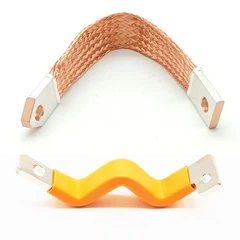
As the current-carrying demands for power batteries and energy storage systems increase, traditional single-layer conductive connections are increasingly being replaced by multi-layer composite structures. Copper laminated flexible busbars consist of multiple layers of copper foil stacked together to form a flexible conductive core. The ends are secured via welding or other joining methods to create fixed conductive terminals, while the central section remains flexible, allowing it to absorb vibrations during equipment operation and accommodate assembly tolerances.
This structure maintains high current-carrying capacity while minimizing the mechanical stress that rigid connections might otherwise exert on battery terminals, busbar interfaces, and other electrical components.
However, an increase in the number of copper foil layers necessitates more precise pressure control during manufacturing. If gaps exist between the layers or if the pressure is unevenly distributed, it can lead to inadequate bonding in certain areas, which in turn compromises the electrical performance and mechanical reliability of the joint. Therefore, the equipment must be adjusted-in terms of applied pressure and temperature profiles-based on factors such as copper foil thickness, the number of layers, and the welding surface area.
For multilayer flexible copper busbars, engineering design must account for more than just the total cross-sectional area of the copper foil; it must also consider the dimensions of the welded ends, the length of the flexible sections, the bending radius, and the available installation space. This is particularly critical for components used within electric vehicle (EV) battery packs, where connectors must fit into constrained spaces while enduring continuous vibration and temperature fluctuations during vehicle operation.
Furthermore, the quality of the final product is influenced by the purity of the raw copper foil, the degree of surface oxidation, and thickness tolerances. During the manufacturing process, it is essential to perform rigorous raw material inspection, ensure precise alignment of the stacked layers, and thoroughly clean the welding zones to minimize the impact of oils, oxides, or foreign contaminants on the bonding interface.
Welding Parameters and Equipment Control Determine Product Consistency
The core process parameters for diffusion welding include welding temperature, applied pressure, holding time, and the protective atmosphere. Specific combinations of these parameters must be tailored to the copper specifications, the number of layers, and the connection surface area.
Temperature control directly influences the diffusion behavior and plastic deformation capacity of the material. Insufficient temperature may lead to inadequate interfacial bonding, while excessive temperature can cause the copper foil to anneal and soften, trigger grain structure changes, or result in deformation within the connection zone. Consequently, an appropriate temperature range must be established based on the specific characteristics of the copper material and the product's structural design.
Pressure control determines the actual contact state of the surfaces to be joined. If the pressure is too low, microscopic gaps may persist, potentially creating unbonded areas; conversely, excessive pressure can lead to over-compression of the copper foil, compromising the dimensions and structural stability of the connection zone. For products featuring large-area, multi-layered copper foil, ensuring uniform pressure distribution across the entire welding zone is of particular importance.
In actual production, digital temperature control, pressure feedback systems, and real-time monitoring of the welding process enhance process repeatability. By maintaining records of process parameters tailored to different materials, thicknesses, and layer configurations, manufacturers can minimize the need for repeated trial-and-error adjustments during product changeovers and establish a foundation for quality traceability.
For products requiring surface coatings-such as custom tin-plated copper laminates-the process design must also account for the specific location of the coating in relation to the welding zones. Tin plating can enhance the surface protection of copper materials; however, when welding, one must carefully consider the impact of the plating on interfacial bonding, thermal conditions, and final contact performance. For products requiring post-welding surface treatment, the process relationship between the welded area and subsequent plating operations must be clearly defined.
Applications of Flexible Copper Foil Connectors in New Energy Vehicles and Energy Storage
Power battery systems in new energy vehicles contain numerous high-current connection points, including cell terminals, module busbars, main circuits within battery packs, and connections for battery management systems. Due to continuous vibration and temperature fluctuations during vehicle operation, rigid conductive connections may transmit mechanical stress to battery terminals and mounting structures.
Flexible laminated copper busbars utilize a flexible copper foil structure to absorb displacement and vibration, helping to reduce mechanical loads at connection points. Furthermore, copper's inherent high electrical conductivity makes it ideal for applications requiring high current-carrying capacity.
In energy storage systems, various types of electrical connections are required-between battery clusters, between power conversion systems (PCS) and battery systems, and within power distribution units. For high-current operations, connection components must balance electrical performance, heat dissipation, and long-term mechanical stability.
In rail transit and industrial power equipment, flexible copper foil busbars can be custom-designed based on specific vibration conditions and installation space, improving the adaptability of connections between various conductive components. Such applications typically require validation based on actual operating current, ambient temperature, vibration levels, and installation methods.
As the power density of electrical equipment continues to rise, flexible copper foil connectors are evolving from simple conductive components into multifunctional connection assemblies. Product design must account for factors such as conductive cross-sectional area, the dimensions of the flexible zone, the size of the connection terminals, and insulation/protection requirements.
Surface Treatment and Structural Design Influence Long-Term Operational Performance
Beyond the welding process, the surface treatment and structural design of flexible copper foil connectors are equally critical. While bare copper offers excellent electrical conductivity, its surface is prone to oxidation when exposed to humid environments or corrosive media. Therefore, selecting an appropriate surface treatment-such as tin plating, nickel plating, or other methods-based on the product's operating conditions helps enhance the environmental adaptability of the connection interface.
For tin-plated copper laminated busbars, the tin coating improves the surface's oxidation resistance and enhances contact adaptability during assembly. Key quality parameters for the coating include thickness uniformity, adhesion, and surface integrity; defects such as incomplete coverage (bare spots), blistering, or localized peeling must be avoided.
Copper laminated foil connectors typically consist of a flexible copper foil body with fixed connection zones at both ends. Depending on the specific equipment interface, these ends can be designed with circular holes, elongated slots, custom-shaped terminals, or bespoke mounting structures to accommodate bolted connections, busbar attachments, or other electrical assembly configurations.
In applications requiring multi-directional bending or spatial compensation, laminated flexible foil connectors can be tailored-by adjusting the number of copper foil layers, the overall length, and the dimensions of the flexible zones-to meet the specific requirements of various installation locations. During the design phase, it is essential to avoid excessively small bending radii and poorly positioned welds, as these can lead to localized stress concentrations that compromise the product's service life.
Product Testing and Quality Control in Mass Production
As functional metal components that participate directly in current transmission, the quality of copper foil flexible connectors cannot be assessed solely through visual inspection or dimensional checks. For mass-produced units, a comprehensive quality control system must be established, covering raw materials, the manufacturing process, and final product inspection.
At the raw material stage, it is necessary to verify the copper grade, thickness, electrical conductivity, and surface condition to ensure the material complies with product drawings and technical specifications.
During the welding process, the connection zones must be inspected for appearance, dimensions, and the integrity of the bond. For critical components, this may involve metallographic analysis of the weld interface, tensile or peel testing to evaluate bond strength, and contact resistance testing as required by the application.
Finally, finished products must undergo dimensional verification, electrical conductivity testing, and temperature-rise testing. For components intended for high-current systems, it is also necessary to evaluate their continuous current-carrying capacity and connection stability following thermal cycling, based on actual operating conditions.
Copper laminated flexible shunts require high standards for electrical conductivity and structural consistency, with particular attention needed to minimize resistance variations between different production batches. Standardizing inspection procedures and maintaining detailed records of production parameters can enhance product traceability and quality.
The manufacturing of copper foil flexible connectors is trending toward greater consistency and customization
Industry trends indicate that new energy vehicles (NEVs) and energy storage systems impose increasingly diverse requirements on connection components. Variations in battery architecture, busbar layouts, and electrical interfaces make it difficult to rely on a single, universal specification; consequently, customized design has become a key development focus.
For multi-layer copper foil busbars, the number of foil layers, the dimensions of the connection terminals, and the welding zones must be determined based on the rated current, available installation space, and mechanical operating conditions. Simultaneously, manufacturers must continuously optimize welding processes, tooling structures, and automated assembly workflows to meet the volume production requirements of various clients.
Looking ahead, technical advancements in copper foil flexible connectors will center on three areas: first, optimizing copper foil materials and lamination structures to enhance electrical efficiency and flexibility; second, employing precision joining techniques-such as diffusion welding-to improve the structural integrity and consistency of the multi-layer assembly; and third, utilizing automated inspection and process data management to ensure consistent quality across mass-produced units.
For copper foil laminated busbars, performance is not determined by any single material or welding step, but rather by the synergy between material selection, structural design, joining processes, and quality control.
When procuring these components, companies in the NEV, battery manufacturing, and energy storage sectors should provide detailed specifications-including product drawings, copper grade, single-layer thickness, number of layers, rated current, installation dimensions, and surface treatment requirements. For projects involving unique operating conditions, it is also essential to specify limits for temperature rise, flexibility/bending requirements, connection strength, and electrical testing standards to facilitate targeted product design and manufacturing assessments.
If you are developing customized copper foil flexible connectors, laminated copper busbars, or high-current flexible connection components, consult with a professional manufacturing team to discuss material selection, welding methods, structural dimensions, and sample validation protocols.
Through preliminary engineering assessment and process validation, it is possible to more effectively align with actual equipment requirements and establish a reliable foundation for subsequent stable, volume-based delivery.
contact us
Send Inquiry