










Server Cabinet Industry Trends in 2026: High-Density Computing Drives Evolution Toward Structural Integration And Intelligent Upgrades
Nov 09, 2026
Leave a message
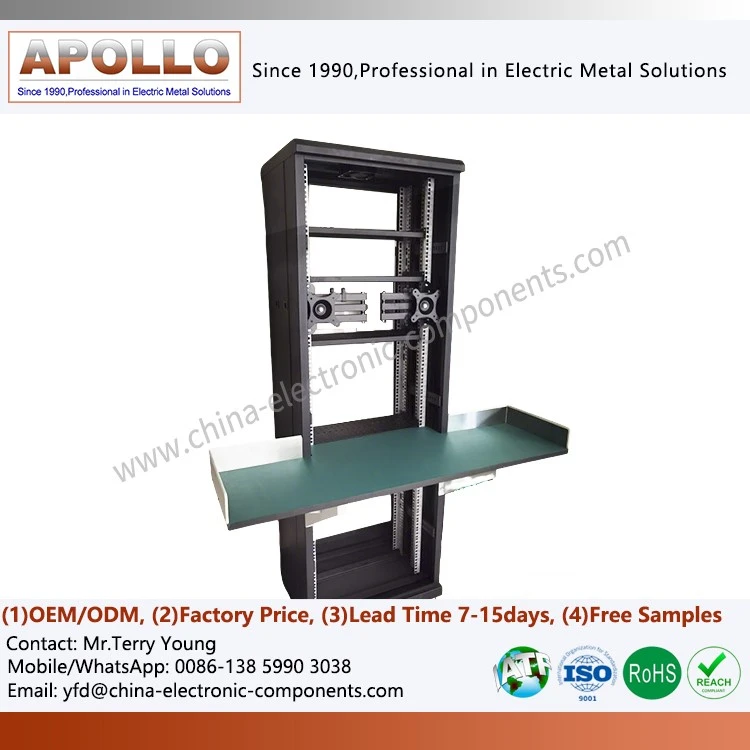
As the demand for artificial intelligence (AI) training and inference continues to grow, global data center infrastructure is undergoing a new wave of upgrades. Server racks-the foundational infrastructure that houses computing equipment, networking hardware, power supply systems, and cooling components-have evolved beyond simple equipment mounting and cable management. They are increasingly shifting toward high-density capacity, thermal management integration, power distribution, and modular deployment.
Traditional data centers have historically relied on general-purpose servers and standard racks, with design priorities centered on structural integrity, mounting space, ventilation, and ease of maintenance. However, as the power density of AI servers, high-performance computing (HPC) equipment, and high-speed network switches rises, individual racks must now accommodate a greater number of compute nodes, power modules, cables, and cooling conduits. Consequently, modern racks must not only meet equipment mounting requirements but also address load-bearing capacity, space utilization, cooling efficiency, power safety, and system scalability.
This shift is driving the server rack industry to evolve from traditional sheet-metal fabrication toward a more integrated approach that combines structural design, power distribution, and thermal management.
AI Computing Demand Drives Structural Upgrades for Server Racks
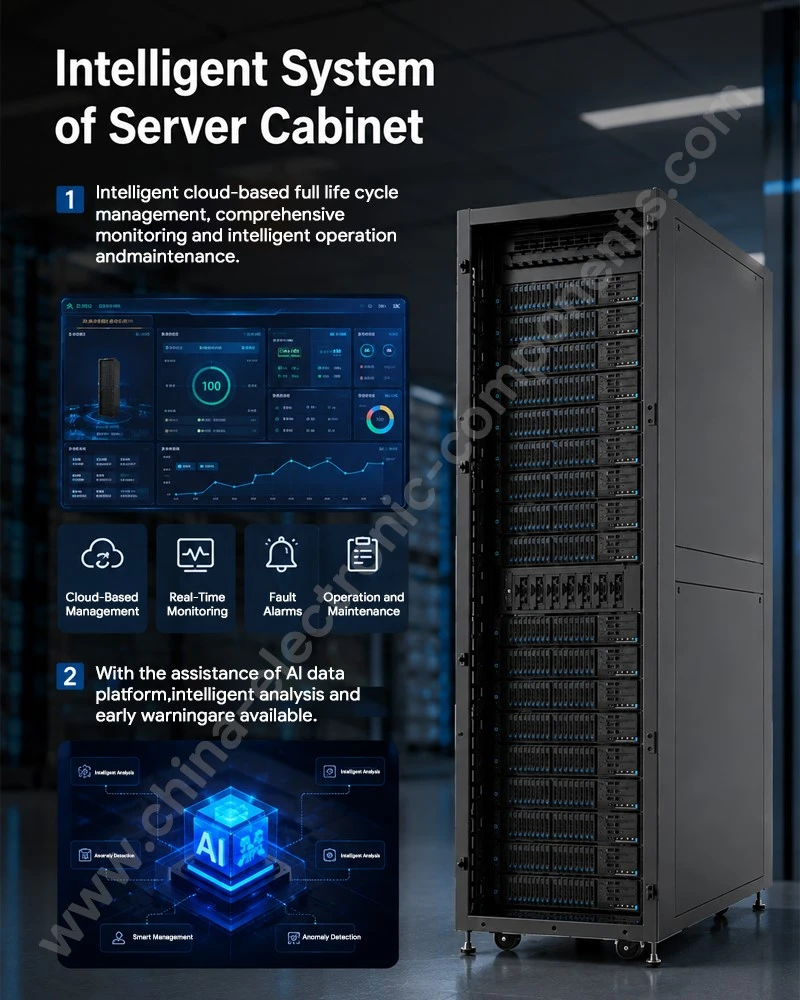
The expansion of AI computing infrastructure has been a primary catalyst for recent technological upgrades in server racks. Large-scale model training and inference tasks place higher demands on GPU servers, switching equipment, and power systems. As both power consumption and heat generation increase, traditional cooling methods-relying on front-to-back airflow and room-level air conditioning-are often insufficient for high-density environments.
High-density server deployments impose more rigorous requirements on rack architecture. With the increasing weight of servers, GPU compute nodes, and their associated power modules, racks must possess sufficient static load-bearing capacity while maintaining structural stability during transport, installation, and long-term operation. The design of vertical posts, crossbeams, mounting rails, bases, and connection points all directly influence a rack's overall load-bearing capacity and resistance to deformation.
In standard data center environments, the 42U server rack remains the most common form factor; however, specific heights and depths are often selected based on the volume of equipment, available floor space, and operational maintenance requirements. For small-scale network server rooms, edge computing nodes, and telecommunications equipment deployments, various rack specifications-such as 12U network racks, 18U data cabinets, 18U server racks, and 9U wall-mount racks-each serve specific operational needs.
Rack dimensions are more than just external specifications; they must align with server rail depths, equipment cooling airflow paths, cable bend radii, and the space required for future maintenance. In data centers housing a large number of devices that operate over extended periods, a well-planned internal layout simplifies equipment installation and maintenance while maximizing the utilization of available space.
The Evolution of Liquid Cooling Technology and Its Impact on Internal Rack Design
The growing prevalence of high-power servers has made thermal management a critical consideration in server rack design. Traditional air-cooling systems rely on fans to generate airflow, which carries heat away from the server components to be dissipated by the facility's cooling infrastructure. However, in high-density computing environments, simply increasing the number of fans or the volume of airflow leads to challenges regarding energy consumption, noise levels, and airflow management.
Consequently, liquid cooling technology is increasingly being adopted in high-performance computing (HPC) and AI-focused data centers. Direct-to-chip (cold plate) liquid cooling circulates coolant through cold plates within the server and an external piping network, transferring heat generated by chips to the cooling system. Immersion cooling, by contrast, involves direct or indirect contact between the equipment and a cooling medium to facilitate heat transfer. These different technical approaches impose distinct requirements on internal rack space, piping layout, interface positioning, and maintenance procedures.
In liquid-cooled racks, the structural design must accommodate cooling pipes, distribution manifolds, quick-connect couplings, and monitoring components. The piping layout must be carefully planned to avoid interference with electrical connections, server slide rails, or maintenance access paths, while also accounting for pipe securing, vibration control, and ease of service.
For outdoor server cabinets, thermal management design must also account for environmental factors such as ambient temperature, solar radiation, wind-blown dust, precipitation, and humidity fluctuations. Such cabinets typically incorporate sealed structures, heat exchangers, filtration components, and temperature control systems to minimize the impact of the external environment on the internal equipment. The design of outdoor network cabinets must be tailored to the specific installation site and required protection rating, with careful attention given to door panels, sealing strips, cable entry/exit points, and the base structure.
Liquid cooling and air cooling are not simply interchangeable; in some data centers, both methods may coexist. Cabinet design must account for server configurations, power density, cooling strategies, and existing facility infrastructure to determine the internal layout, thereby preventing the need for costly retrofitting due to inadequate structural provisions.
The Evolution of Cabinet Manufacturing: From Basic Sheet Metal Processing to Modular Integration
The fundamental manufacturing of server cabinets remains centered on metal sheets, profiles, and structural connectors. Cold-rolled steel, prized for its rigidity and versatility in fabrication, is commonly used for cabinet frames, door panels, side panels, and mounting brackets. Aluminum profiles, meanwhile, offer the advantages of being lightweight and highly adaptable, making them suitable for specific structural frameworks and auxiliary mounting components.
As equipment weight and the number of internal components increase, manufacturers must place greater emphasis on material thickness, bending precision, the mitigation of welding-induced deformation, connection strength, and the quality of surface finishes. The dimensional consistency of column apertures, mounting rails, and connecting brackets is critical, as it directly impacts server installation precision and equipment compatibility.
The fabrication process typically integrates multiple techniques, including laser cutting, CNC punching, bending, welding, riveting, and surface coating.
For mass-produced cabinet components, well-designed tooling and optimized process workflows are essential for ensuring dimensional consistency and minimizing assembly errors. During welding, thermal deformation must be strictly controlled to prevent issues such as loss of frame verticality, uneven gaps between door panels, or misalignment of mounting holes.
Cabinet designs are also becoming increasingly diverse. Floor-standing data cabinets are ideal for the centralized deployment of servers and network equipment in data centers; in-wall network cabinets are designed for environments with limited space, such as low-voltage and network cabling installations; and server rack enclosures prioritize the comprehensive, enclosed protection of equipment, featuring specialized configurations-such as door locks, ventilation vents, and side panels-tailored to specific use cases.
Furthermore, internal mounting accessories for cabinets are trending toward greater standardization and modularity. Components such as adjustable mounting rails, cable management organizers, shelves, blanking panels, grounding kits, and power mounting brackets can be flexibly configured to suit specific equipment requirements. For applications requiring frequent relocation or adjustments to deployment, server racks equipped with casters offer added mobility; however, safety requirements-based on equipment weight, caster load capacity, and the operating environment-must always be verified.
Power Distribution and Cable Management as Key Elements of Rack Design
High-density computing equipment places greater demands on power distribution systems. Server racks typically house power distribution units (PDUs), power cables, grounding connections, and network cabling. As power density per rack increases, factors such as the current-carrying capacity of electrical connections, temperature rise control, insulation, and ease of maintenance become increasingly critical.
Busbars and power connection components provide a compact electrical distribution solution within the rack. Compared to scattered cabling, well-designed copper busbars offer a compact structure, clear connection paths, and facilitate modular installation. Design considerations must encompass rated current, operating voltage, conductor cross-sectional area, connection methods, insulation clearance, and temperature rise limits.
In high-power applications, the choice of busbar material, machining precision, and surface treatment directly impact connection performance. Copper busbars can be customized-through stamping, bending, drilling, tin-plating, or insulation coating-to meet specific application needs. In scenarios involving space constraints, vibration, or potential assembly tolerances, the use of flexible connectors should also be evaluated.
Effective cable management is essential for maintaining safety and operational efficiency within the rack. Power, communication, and control cables should be segregated whenever possible and organized using cable managers, mounting brackets, and designated entry points to minimize interference and unnecessary bending. For high-density network equipment, the design of network server racks and cabinets must account for the installation of switching hardware, fiber-optic and copper cabling, airflow paths, and space for routine maintenance.
For equipment deployed in office environments, monitoring rooms, or other noise-sensitive areas, soundproof server racks-utilizing acoustic insulation structures, sound-absorbing materials, and specialized ventilation designs-can effectively reduce operational noise. However, soundproofing designs must not come at the expense of heat dissipation capabilities; internal temperature rise, airflow distribution, and air-path resistance must be evaluated concurrently.
Diversification of Cabinet Products Driven by Varied Application Scenarios
The market for server cabinets extends well beyond the requirements of large-scale data centers. With the growth of cloud computing, enterprise networks, telecommunications infrastructure, edge computing, and intelligent manufacturing, different application scenarios have created diverse demands regarding cabinet dimensions, structural design, protection levels, and installation methods.
Large-scale data centers prioritize high load-bearing capacity, equipment compatibility, cooling efficiency, and modular deployment. Standardized cabinets facilitate the centralized installation of servers, switching equipment, and power distribution components, while also supporting future capacity expansion and streamlined maintenance.
Enterprise network server rooms typically house a mix of routers, switches, storage devices, and security hardware; in these environments, the focus shifts to space utilization, cable management, and ease of equipment administration. In such settings, the choice of a server rack depends on factors like server depth, the total number of devices, and the specific conditions of the server room.
Small-to-medium-sized offices, retail outlets, and surveillance systems often utilize compact enclosures-sometimes referred to as "home" or small-scale server racks-to house networking gear, storage, and smaller servers. For these products, the primary considerations are footprint, ease of installation, ventilation, and aesthetic design.
Telecommunications and edge computing environments demand higher levels of environmental adaptability. Since some equipment must be deployed outdoors, in industrial settings, or at unattended remote sites, cabinets must incorporate features such as dust and water resistance, anti-corrosion measures, temperature control, and security against theft. In space-constrained telecommunications environments, smaller units-such as 6U communications cabinets-can be used for the centralized management of specific equipment, provided that the cabinet specifications align with the dimensions and installation requirements of the hardware.
This diversity across various scenarios indicates that the server cabinet industry is evolving from a focus on uniform, standardized products toward a more complex ecosystem characterized by a wide range of sizes, structures, and functionalities. Manufacturers must now provide structural designs and fabrication solutions tailored to the specific configurations of end-user equipment and their deployment environments.
Standardization, Quality Control, and Green Manufacturing as Key Industry Priorities
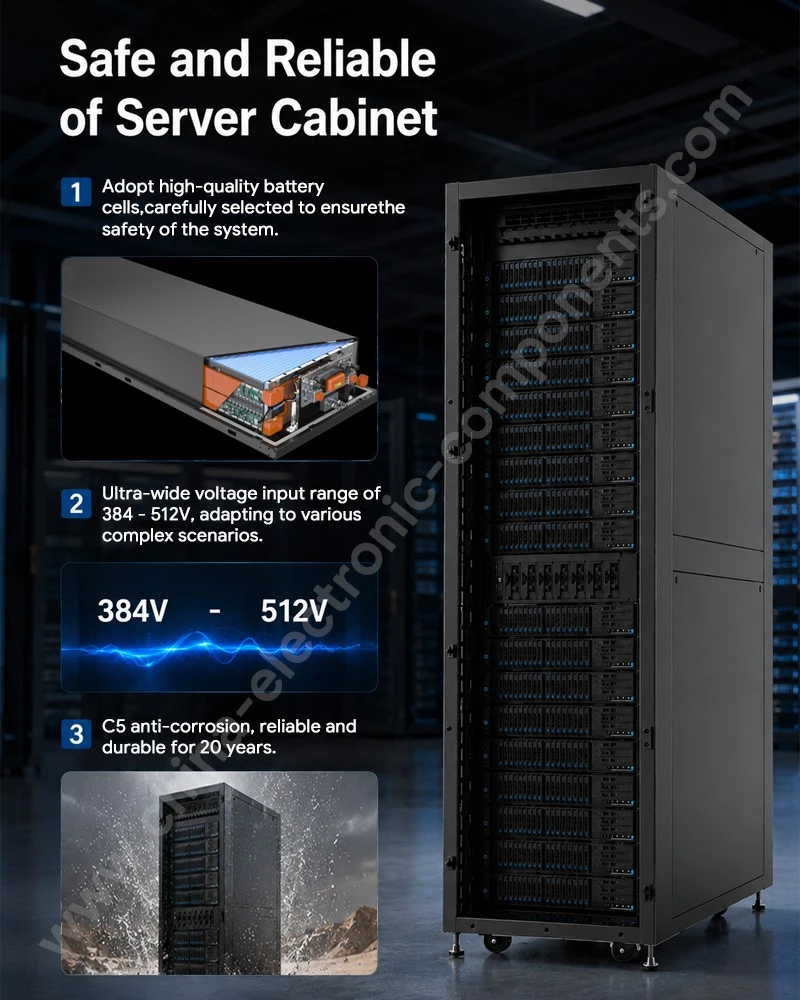
As the application scenarios for server cabinets continue to expand, the criteria for evaluating product quality have moved well beyond mere outward appearance and basic dimensions. Structural strength, installation compatibility, surface protection, electrical safety, thermal management, and long-term operational stability are all critical considerations in engineering procurement and project acceptance.
During the structural manufacturing process, companies must strictly control parameters such as sheet metal thickness, hole-position precision, bending angles, welding quality, and assembly dimensions. For mass-produced items, consistency across different production batches must be ensured through methods such as first-article inspection, in-process sampling, and final product inspection.
Regarding surface treatment, processes such as powder coating, electroplating, or other protective finishes should be selected based on the cabinet's intended operating environment. For indoor cabinets, the primary focus is on wear resistance, corrosion resistance, and visual consistency. For outdoor cabinets, additional attention must be paid to the long-term impact of factors like humidity, heat, ultraviolet (UV) radiation, salt spray, and temperature fluctuations on both the coatings and the underlying metal substrate.
As data centers place an increasing emphasis on energy efficiency and equipment utilization, cabinet manufacturing must also prioritize material efficiency, structural lightweighting, ease of disassembly for maintenance, and the standardization of components. Optimizing sheet metal nesting, eliminating redundant structural elements, and increasing manufacturing automation can help reduce both material waste and resource consumption during production.
Looking ahead, standardized interfaces and modular design will increasingly shape the cabinet industry supply chain. Uniform installation dimensions, electrical interfaces, and liquid-cooling connection specifications will enhance compatibility between different pieces of equipment, thereby simplifying system integration and long-term maintenance. Nevertheless, in practical project deployments, product suitability cannot be determined solely by external dimensions; it must be verified against equipment manufacturer requirements, site conditions, and relevant technical specifications.
The Server Cabinet Industry: Moving Toward High Reliability and System Synergy
Overall, the global server cabinet industry is transitioning from the manufacture of traditional structural components to the production of supporting infrastructure for high-density computing. The ongoing evolution of AI servers and high-performance computing (HPC) equipment is driving continuous upgrades in cabinet load-bearing capacity, thermal management structures, power supply connectivity, cable management, and modular design.
In the future, the competitiveness of cabinet products will increasingly depend on structural design capabilities, manufacturing precision, the ability to integrate auxiliary components, and the stability of large-scale delivery. For manufacturing enterprises, simply expanding sheet metal processing capacity is insufficient to secure a long-term competitive advantage. It requires a deep understanding of the installation requirements for server equipment, power supply system layouts, space allocation for liquid-cooling piping, and the practical demands of ongoing operations and maintenance.
For project procurement teams, selecting a server cabinet supplier involves a comprehensive evaluation of product structure, material specifications, manufacturing processes, load-bearing capacity, surface treatment, installation compatibility, and quality control systems. It is also essential to define the equipment list, cabinet dimensions, installation methods, power requirements, and thermal management solutions during the early stages of a project.
Apollo provides custom manufacturing support for precision sheet metal structural components, metal stampings, bent and welded assemblies, mounting brackets, and electrical connection parts-tailored to the specific needs of server cabinets, network enclosures, and data center infrastructure. Procurement teams can provide product drawings, dimensional specifications, material requirements, surface treatment standards, installation methods, and estimated order quantities.
This enables us to conduct assessments for design-for-manufacturing (DFM), confirm production processes, and validate samples. For volume-based projects, we can further coordinate on dimensional tolerances, assembly interfaces, quality inspection criteria, and delivery schedules, ensuring the delivery of metal component solutions perfectly suited for server cabinets and data center infrastructure.
contact us
Send Inquiry