










Industrial Electrical Connection Solutions: Application and Technical Analysis of Flexible Conductors and Busbar Systems
Apr 08, 2026
Leave a message
In industrial electrical systems, the design of conductive connection structures directly affects the operational stability, current-carrying capacity, and service life of equipment. With the increasing demand for highly reliable connections in fields such as new energy, power systems, and rail transportation, flexible conductive structures, represented by Copper Braided Flexible Connectors, are gradually becoming one of the mainstream solutions. These products form a flexible structure through the braiding of multiple fine-diameter conductors, ensuring conductivity while also providing mechanical compensation capabilities, making them suitable for complex operating environments.
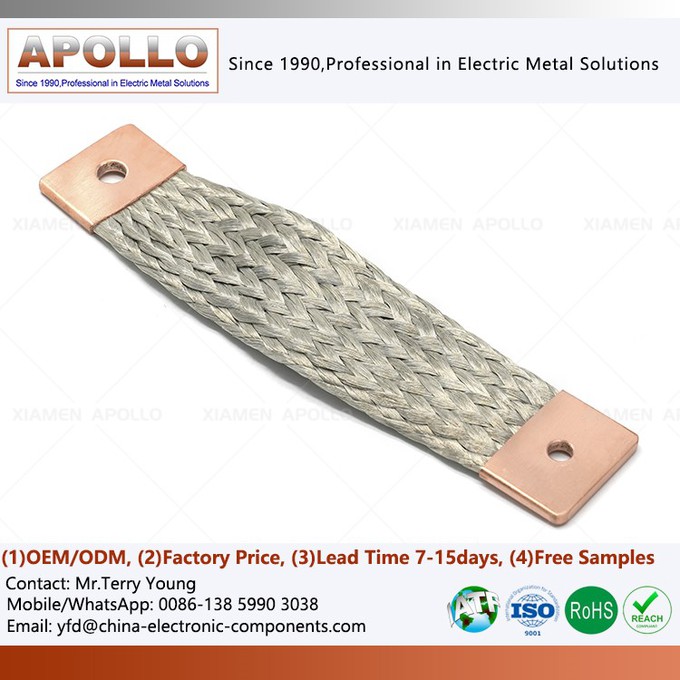
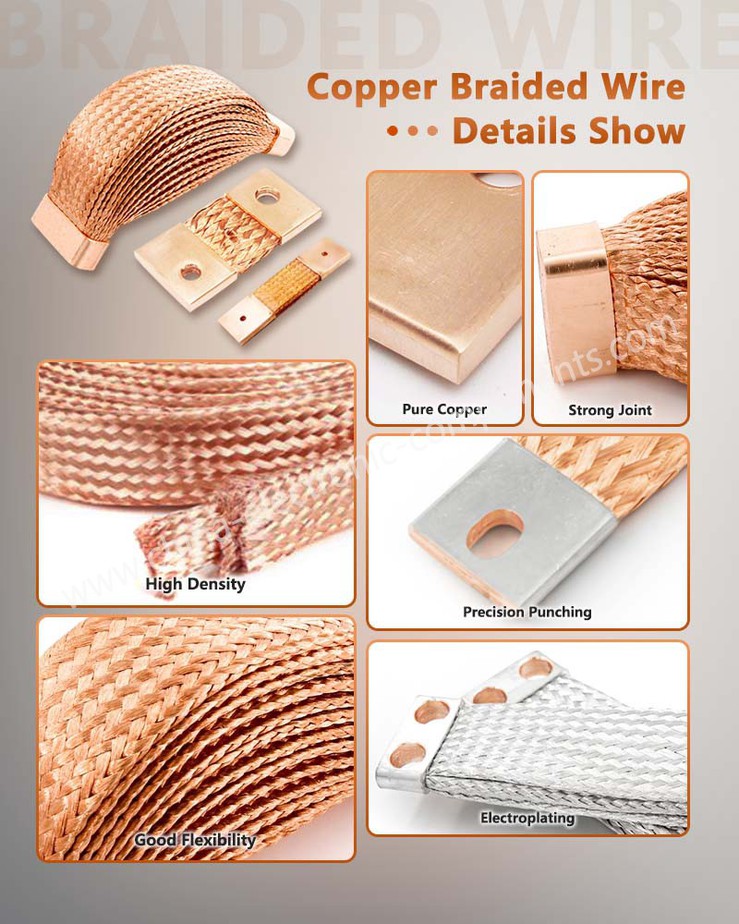
Structurally, flexible connectors are typically built based on Braided Copper Wire or multi-strand stranded conductors, with single-wire diameters typically ranging from 0.05 to 0.3 mm. High-density braiding processes (achieving coverage of over 85%) achieve a stable current transmission path.
Furthermore, combined with the design concept of Flexible Connectors, these products not only possess excellent conductivity but also absorb vibration, displacement, and thermal expansion stress during equipment operation, making them widely used in transformers, generators, and welding equipment.
In high-current transmission scenarios, flexible busbar systems are gradually replacing traditional rigid conductors. Typical structures, such as Flexible Braided Copper Busbar and Braided Flexible Busbar, achieve a balance between high current-carrying capacity and structural flexibility through multi-layered copper strip stacking or braiding structures. These products are particularly critical in low- and medium-voltage systems. For example, Low-to-medium voltage flexible connectors can be used in distribution cabinets, power equipment connections, and industrial automation systems, effectively reducing the risk of connection failures due to mechanical stress.
To address the oxidation problem of conductors during long-term operation, engineering typically employs tin plating or other surface treatment processes, such as using Soft Copper Tinned Wires or Grounding Braids Wire Tin Plated. The plating thickness is generally controlled within the micrometer range, forming a stable anti-oxidation protective layer without significantly affecting conductivity, extending service life, and is particularly suitable for new energy and outdoor electrical environments.
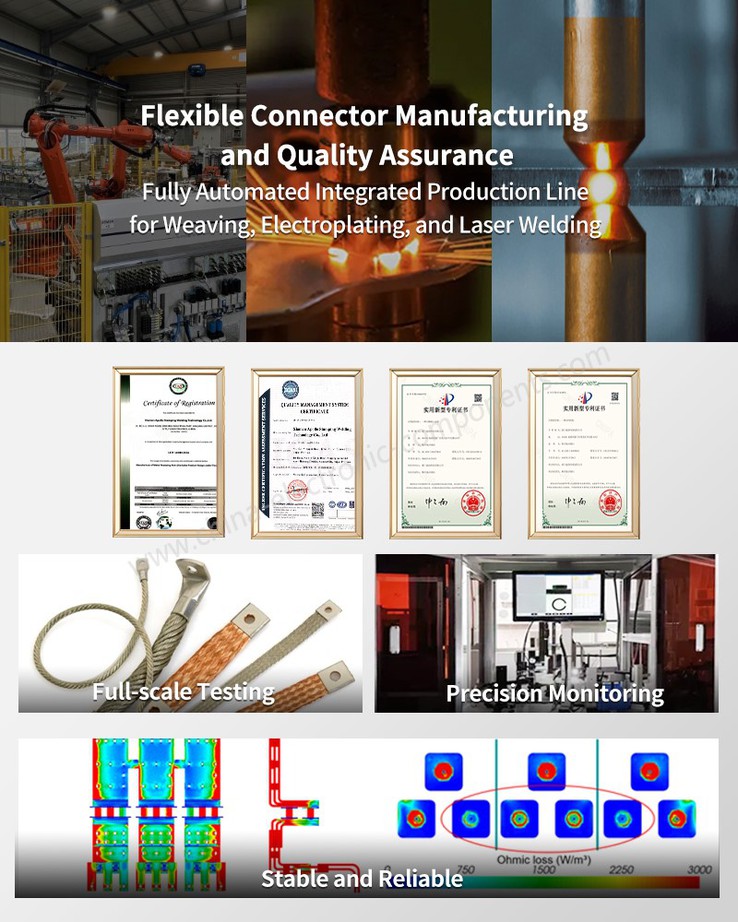
In high-vibration or shock environments, flexible busbar systems often incorporate structural reinforcement designs, such as armored or composite structures like Braided BusBar or Braided Wire Copper BusBar. This type of design enhances resistance to mechanical shock through an outer protective structure, making it suitable for applications such as rail transportation, power equipment, and mining machinery. In such applications, flexible structures not only provide electrical conductivity but also serve as vibration damping and structural protection.
For high-temperature conditions, material selection becomes crucial. By optimizing conductor materials and insulation systems, such as using flexible insulated copper busbars or insulated flexible copper bars with high-temperature resistant insulation layers, products can operate stably in environments exceeding 200°C. These solutions are widely used in metallurgical, power, and high-temperature industrial equipment, effectively preventing conductor performance degradation due to temperature rise.
In modern electrical system design, installation efficiency and system integration capabilities are equally important. Braided Flexible Busbars Customized and Flexible Braided Custom Connectors, developed based on a modular concept, can be customized to the equipment structure, reducing on-site processing and installation time. This "prefabricated + rapid installation" model has become an important trend in large-scale projects such as data centers and industrial parks.
In the new energy field, especially in electric vehicles and energy storage systems, the demand for highly efficient conductive structures has increased significantly. Flexible conductor products, such as Lithium-ion Batteries Connectors and Copper Stranded Flexible Busbars, maintain stable performance under high current density conditions while adapting to structural changes between battery modules. By reducing connection points and optimizing conductive paths, contact resistance can be effectively reduced, improving overall system efficiency.
Furthermore, flexible conductors also play a crucial role in grounding and safety systems. Employing structures such as Flat Copper Braided Wire and Copper Braided Busbars for Electrical, low-impedance grounding connections can be achieved, offering excellent vibration resistance and making them widely used in power systems and industrial equipment grounding networks.
In summary
From an engineering perspective, the development trends of flexible conductive connection systems mainly focus on the following aspects:
Synergistic optimization of high current-carrying capacity and structural flexibility
Surface treatment technology to enhance oxidation and corrosion resistance
Customized design to meet the structural needs of complex equipment
Adaptation to new energy and high-power applications
Product systems represented by flex bus bars, Copper Braided Flexible Busbars, and Flexible Braided BusBars are becoming core components of modern industrial electrical connections.
Further Information: About Our Product Solutions
Based on the aforementioned industry trends, we focus on the research, development, and manufacturing of flexible conductive connection systems.
Our products cover a variety of solutions within the Flexible BusBar Manufacturers system, including high-current-carrying flexible busbars, braided conductive strips, and customized connection components. Leveraging mature processing technology and material control capabilities, we can provide stable and reliable connection solutions for power equipment, new energy systems, and industrial automation scenarios, meeting the comprehensive requirements for conductivity, structural strength, and service life under complex operating conditions.
contact us
Send Inquiry