










Laminated Busbars: More Layers, Better Performance?
Apr 08, 2026
Leave a message
In the fields of power electronics and new energy, there is a common misconception about laminated busbar design-"more layers mean better performance." From an engineering perspective, this view is not rigorous. The choice of the number of layers is essentially a comprehensive trade-off between electrical performance, thermal management capabilities, structural space, and total lifecycle cost. As typical laminated busbar passive electronic components, their design logic leans more towards system matching than simple parameter stacking.
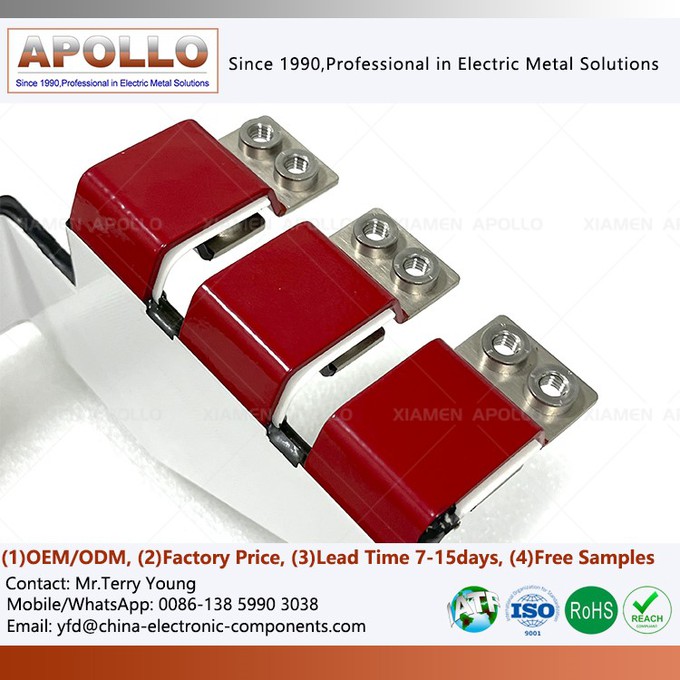
Structural Differences and Performance Characteristics of Laminated Busbars with Different Layer Numbers
Laminated busbars are typically formed by alternating layers of conductive copper and insulating dielectric. Different layers directly affect the current path distribution, electromagnetic coupling, and thermal conductivity. In engineering applications, the mainstream structure is concentrated between 2 and 6 layers.
1. 2-Layer Structure: A Cost-Effective Solution for Basic Applications
The 2-layer structure is a typical partially laminated busbar form, consisting of positive and negative conductors and an intermediate insulating layer. Its manufacturing process is mature, its structure is simple, and it is suitable for applications with relatively basic electrical performance requirements.
From a performance perspective, this structure meets basic conductivity requirements and significantly reduces stray inductance compared to traditional cables. However, due to limited heat dissipation paths, its temperature rise control capability under sustained high current conditions is relatively average. Simultaneously, its electromagnetic interference suppression capability is relatively basic, making it more suitable for low- to medium-power equipment.
Typical applications include small UPS systems, low-voltage inverters, and lightweight energy storage modules.
2. Three-Layer Structure: A Balanced Upgrade in Performance and Function
The three-layer busbar structure typically employs a positive terminal + functional layer + negative terminal layout, such as a shielding layer or neutral layer, representing a typical three-layer laminated busbar design. This structure has high versatility in low- to medium-power applications.
By introducing an intermediate functional layer, electromagnetic compatibility performance can be effectively improved while supporting isolated transmission of multi-loop currents. In terms of electrical performance, its stray inductance is significantly lower than that of a two-layer structure, further enhancing system stability.
This structure is widely used in low-voltage systems for new energy vehicles, photovoltaic inverters, and EMI-sensitive industrial equipment, and is also commonly found in Laminated Busbar for Electric Car applications.
3. 4-Layer and Above Structures: Core Solutions for High-Power and High-Integration Applications
4- to 6-layer structures fall into the realm of high-end design, typically employing a combination of multiple conductive layers, shielding layers, and signal layers to form a complex Multi-Layer Composite Structure Connection Bar. In high-power systems, this type of structure is a key means of achieving performance optimization.
Multi-layer structures, by shortening the current path and enhancing positive and negative electrode coupling, can reduce stray inductance to extremely low levels (approaching nH), significantly improving voltage spikes in high-frequency switching devices (such as SiC and IGBTs). Simultaneously, the multi-layer shunt structure increases the heat dissipation area, forming a three-dimensional heat diffusion path, thereby improving current carrying capacity and reducing temperature rise.
In terms of system integration, multi-layer busbars can significantly reduce the number of connection points, improve reliability, and reduce system size. They are commonly used in high-requirement scenarios such as laminated busbars in high-power converters and subway laminated busbars in rail transit.
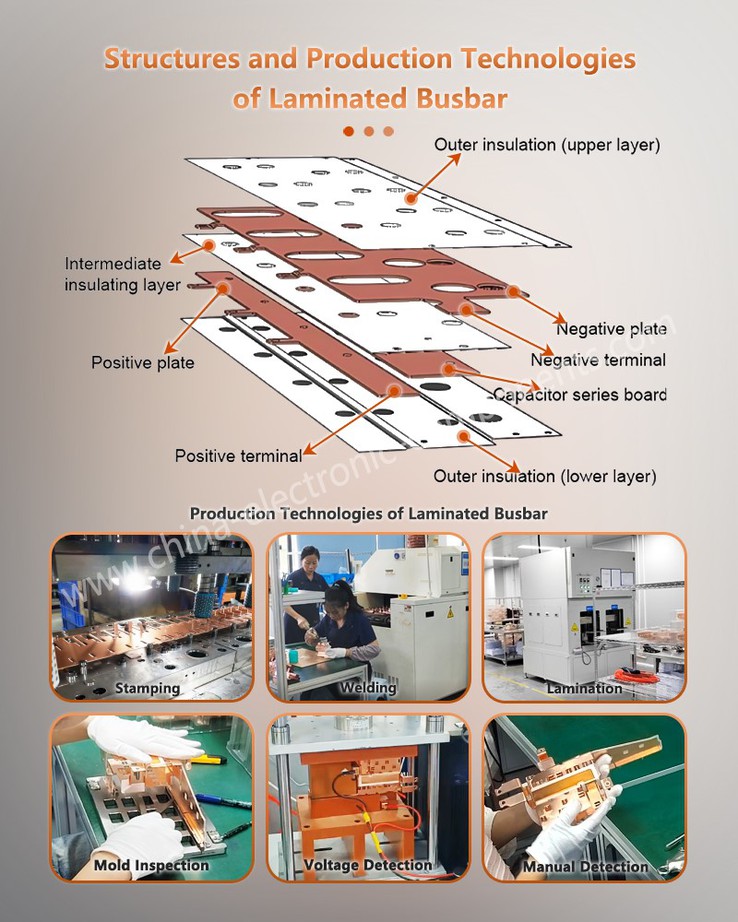
Core Performance Changes Brought About by Increased Layer Count
1. Electrical Performance: Improved Low Inductance and High-Frequency Adaptability
One of the core values of laminated busbars is the reduction of stray inductance. As the number of layers increases, the coupling between conductors strengthens, and the magnetic fields generated by reverse currents cancel each other out, significantly reducing the system inductance. This structural characteristic makes it a typical Laminated Low Inductive Bus Bar solution.
However, it's important to note that increasing the number of layers also increases interlayer capacitance, which may affect signal integrity in high-frequency applications. Therefore, an optimization design based on the specific switching frequency is necessary.
2. Thermal Management Capability: Significantly Improved Heat Dissipation Efficiency
The multilayer structure reduces heat generation per unit area by distributing current to multiple conductors, while simultaneously increasing the heat dissipation area. Combined with thermally conductive insulating materials, a highly efficient three-dimensional heat dissipation network can be constructed.
Under the same current-carrying conditions, the temperature rise of a multilayer busbar can be reduced by 10~20K; under the same volume conditions, its current-carrying capacity can be increased by more than 20%. This characteristic gives it a significant advantage in high-power applications such as IGBT Laminated Busbars.
3. System Integration Capability: Compact Structure and Optimized Connections
As power electronic devices develop towards higher integration, busbars not only perform conductive functions but also need to support multiple current distributions and signal transmissions. Multi-layer structures enable multi-loop integration, reducing the number of connection points and lowering the risk of contact failure.
In complex topologies, such as Laminated Busbars for Three-Level Inverters or Laminated Busbars for Complex Busbar Installations, multi-layer designs effectively improve system stability and space utilization.
4. EMC and Mechanical Stability: Adaptable to Complex Operating Conditions
Multi-layer stacked structures can effectively reduce electromagnetic radiation through built-in shielding layers, while also enhancing anti-interference capabilities. In high-vibration environments (such as automotive or rail transportation), multi-layer hot-pressed structures offer higher mechanical strength and fatigue resistance.
Furthermore, the fully encapsulated structure provides enhanced weather resistance, enabling it to withstand high-temperature, high-humidity, and high-salt-spray environments.
5. Cost and Manufacturing Complexity: Significantly Increased with the Number of Layers
Increasing the number of layers means increased material usage and process complexity. 2-3 layer structures have mature processes and high yields, while products with 4 or more layers place higher demands on equipment precision, lamination control, and quality management.
For example, designs for Customized Laminated Busbars for IGBTs or High Voltage Explosion-Proof Inverter Busbars often require higher manufacturing capabilities and stricter process control.
Layer Selection Recommendations for Different Application Scenarios
In practical engineering, the appropriate layer selection should be based on power rating and application environment:
Small to Medium Power (<100kW): Prioritize 2-3 layer structures to balance cost and performance.
Medium Power (100kW~500kW): 3-4 layer structures are recommended to optimize inductance and heat dissipation.
High Power Systems (>500kW): Use 4-6 layer structures to meet high frequency and high integration requirements.
Complex Topology Systems: Select 3-5 layer structures based on circuit complexity to achieve multi-channel current and symmetrical layout.
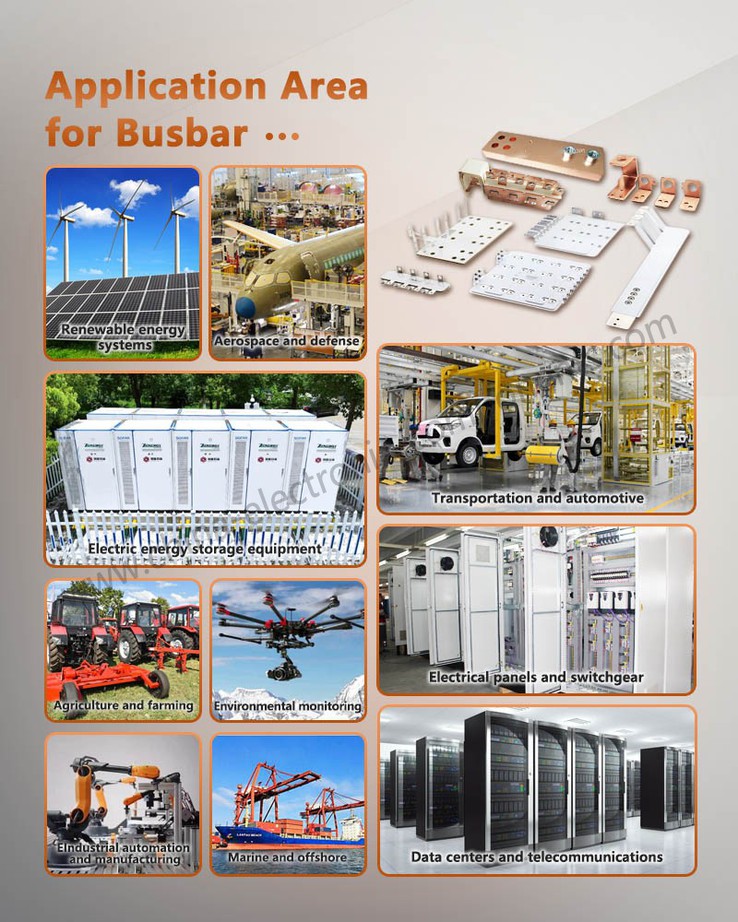
Common Misconceptions
In a laminated busbar design, the following misconceptions should be avoided:
First, increasing the number of layers does not necessarily lead to improved performance. If the application scenario has low power or limited space, too many layers may increase cost and potentially introduce additional capacitance effects.
Second, a low layer count does not necessarily mean insufficient performance. In low-to-medium power applications, a well-designed 2-3 layer busbar offers significant advantages in both stability and cost-effectiveness.
Finally, products with the same number of layers do not necessarily exhibit consistent performance. Conductor thickness, insulation materials, and manufacturing processes all significantly impact the final performance.
Conclusion
The selection of the number of layers in a multilayer busbar is essentially a systems engineering problem, requiring a balance between electrical performance, thermal management, structural integration, and cost. There is no absolutely optimal layer configuration; only solutions best suited to specific application scenarios.
With the development of new energy, electric vehicles, and high-end power electronic equipment, multilayer busbars are continuously evolving towards higher frequencies, higher power densities, and higher integration, further enhancing the importance of their structural design.
Products Description
We offer multilayer busbar solutions ranging from basic structures to high-end customizations, catering to different power levels and application scenarios. These solutions cover new energy vehicles, power electronics, energy storage systems, and rail transportation. Our products include low-inductance busbars optimized for high-frequency applications and customized multilayer structural designs suitable for high-power systems, widely applicable in IGBT module connections and high-voltage converter equipment. Through collaborative design involving material selection, lamination processes, and structural optimization, the optimal balance between performance, reliability, and cost is achieved.
contact us

Send Inquiry