










How corrosion resistant are silver joint contacts?
Apr 08, 2026
Leave a message
Silver Joint Contacts, as the primary application form of silver-based solders, are widely used in various industrial fields such as electronics, refrigeration, and aerospace. Their corrosion resistance directly affects the long-term reliability and overall service life of the welded joint. A systematic analysis of the product's corrosion resistance characteristics can be conducted from multiple aspects, including material composition, product type, and operating environment.
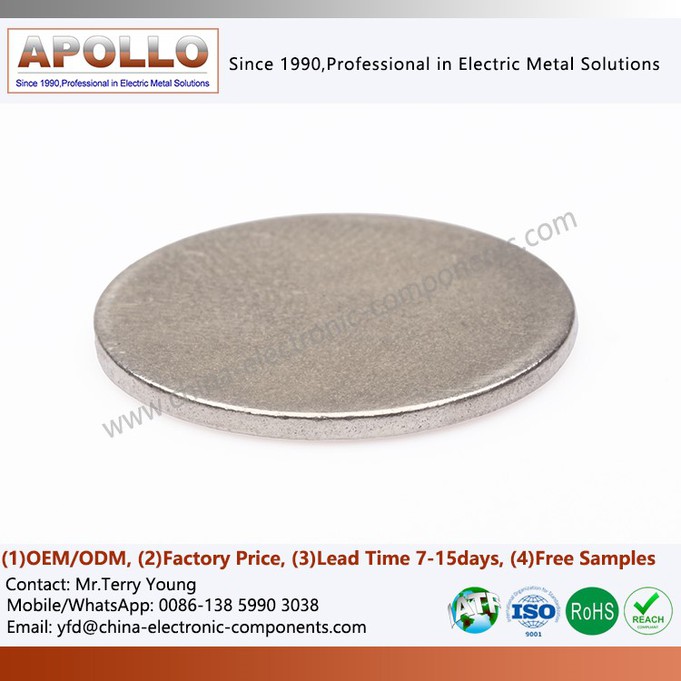
Welded Contacts are generally not made of pure silver, but rather are alloys composed of silver with various metallic elements such as copper, zinc, phosphorus, nickel, and cadmium. Different components have different effects on corrosion resistance. Silver itself has good chemical stability and is not easily oxidized in a dry environment at room temperature, but it easily reacts with sulfides to form silver sulfide, affecting appearance and performance. Copper can improve material strength and thermal conductivity, but it is prone to corrosion in humid or acidic environments. Zinc can lower the melting point and improve solder flowability, but its chemical reactivity makes it susceptible to preferential corrosion in electrochemical corrosion. Phosphorus is often used as a deoxidizer and can also form stable compounds with copper, enhancing the protection of the copper substrate. Nickel significantly improves the stability of materials in high-temperature and sulfur-containing environments, inhibiting sulfidation. While cadmium improves welding process performance, it negatively impacts corrosion resistance and possesses some toxicity; thus, its application is gradually being limited.
Elecricity Buttons with different composition systems exhibit significantly different corrosion resistance. Common silver-copper-zinc-based solders have a wide range of applications, exhibiting moderate corrosion resistance and stability in normal environments, but showing some corrosion in humid or sulfur-containing media. Silver-copper-phosphorus-based solders are mainly used for welding copper and copper alloys, demonstrating excellent corrosion resistance in neutral environments and fresh water, making them a common choice for applications such as refrigeration piping. Nickel-added silver-based solders possess stronger high-temperature resistance and sulfidation resistance, making them suitable for more demanding environments. While cadmium-containing silver solders offer better processability, their corrosion resistance is relatively low, and they are gradually being replaced by cadmium-free solders.
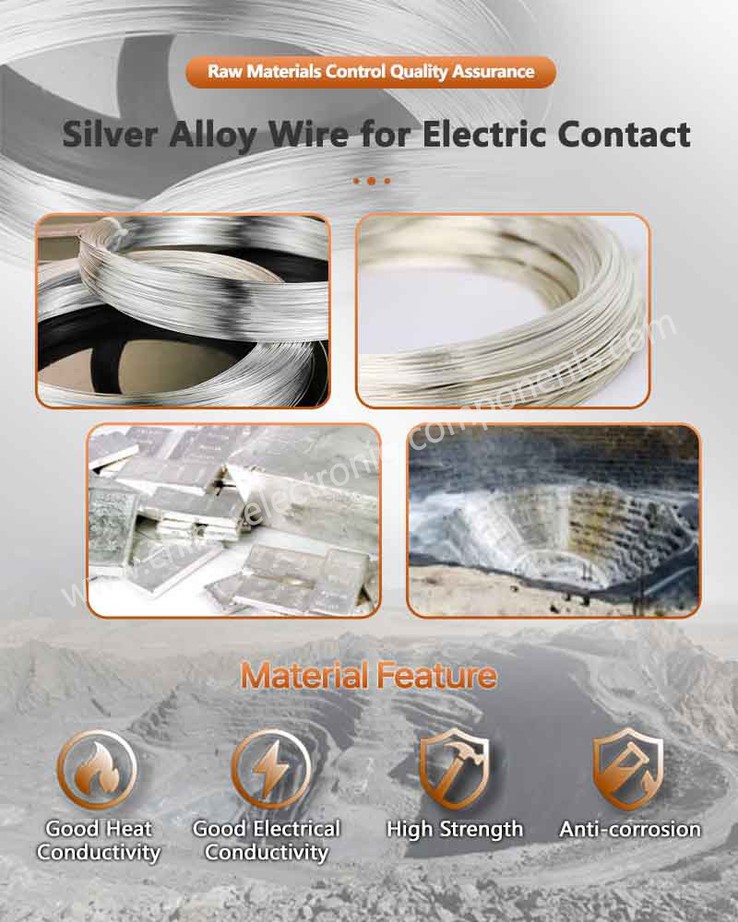
In actual use, besides the inherent properties of the material itself, the welding process and the operating environment also significantly affect the corrosion resistance of Silver Electric Contact Brazed. Improper temperature control during welding, severe oxidation during the welding process, or defects such as porosity and cracks within the weld can all become the starting point for corrosion, accelerating localized damage. In terms of environment, it exhibits better stability in dry air, but humid atmospheres, sulfur-containing atmospheres, seawater, and strong acid/alkali media can all cause varying degrees of corrosion. High-temperature environments can also exacerbate element diffusion, leading to intergranular corrosion and other problems.
The corrosion resistance of Silver Tin Oxide Contact varies across different industry applications. In electronic components, it performs stably under normal temperature and dry conditions, but requires protection in humid and hot environments. Silver-copper-phosphorus solders commonly used in refrigeration equipment can adapt to conventional refrigerants and moisture environments, but specialized models are required in scenarios with high chloride ion content, such as shipbuilding. High-end equipment, such as aerospace, uses high-temperature resistant and corrosion-resistant silver-nickel solders to ensure long-term reliable operation of components under extreme conditions.
To improve the corrosion resistance of Electrical Contact Kits, it is essential to first select the appropriate solder type based on the environmental medium. In sulfur-containing environments, a high-nickel formulation should be used, and silver-copper-phosphorus materials should be selected when joining copper substrates. Simultaneously, the welding process should be optimized to reduce weld defects and mitigate the impact of oxidation. When necessary, surface passivation, plating, or protective coatings can further isolate corrosive media and extend the service life of the welded structure.
Overall, the corrosion resistance of Brazing Electrical Contact is the result of the combined effects of composition, process, and environment. In practical applications, only by selecting the appropriate product based on the working conditions and implementing standardized welding and protective measures can its performance advantages be fully realized, ensuring the long-term stability of the welded joint.
about us
For various high-precision conductive connections and corrosion-resistant welding scenarios, our Silver Joint Contacts utilize an optimized silver alloy formula, combining excellent corrosion resistance, electrical and thermal conductivity, and structural stability. They are suitable for humid, sulfur-containing, and medium-to-high temperature operating conditions, effectively improving joint life and overall system reliability, meeting the stringent requirements of multiple fields.
Customers are welcome to inquire about Contact Bridge details and place orders at any time.
contact us

Send Inquiry