










How to choose the right specifications for copper braided flexible connectors
Apr 08, 2026
Leave a message
In power connection systems and new energy equipment, copper braided flexible connectors are widely used as a key conductive component for compensating for displacement, absorbing vibration, and achieving flexible conductive connections. The appropriate selection of specifications directly affects not only the safety and stability of the system but also its overall conductivity and service life. For products like Copper Braided Flexible Connectors, the selection process requires a comprehensive evaluation from multiple dimensions, including electrical parameters, mechanical performance, environmental adaptability, and installation compatibility.
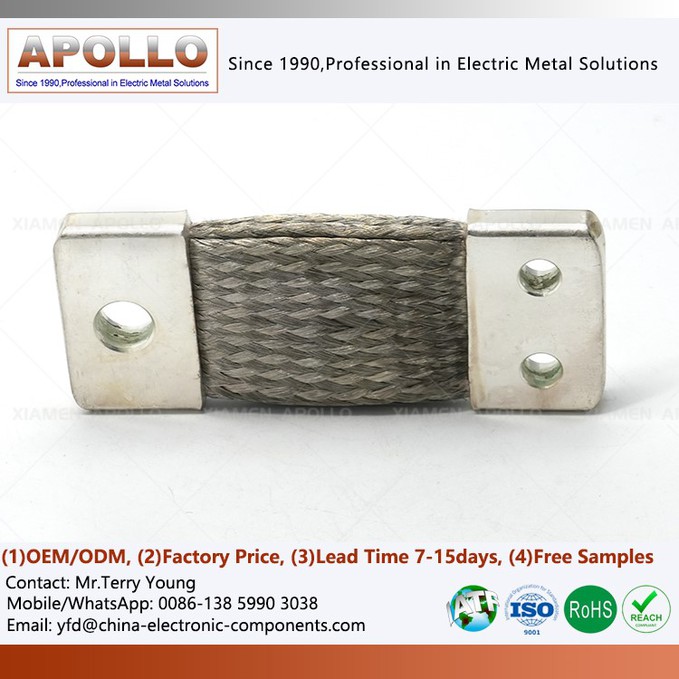
First, the current load is the core parameter determining the specifications of copper braided flexible connectors. In practical applications, the required cross-sectional area should be calculated based on the continuous operating current and the instantaneous peak current. Typically, the current-carrying capacity of copper conductors can be estimated at 3–5 A/mm², while short-term peak currents can reach approximately 10 A/mm². For high-current conditions, such as Flexible Braided Copper Busbars in energy storage or battery systems, it is recommended to appropriately increase the cross-sectional area redundancy to reduce resistance and temperature rise risks.
Simultaneously, under high-temperature or long-term operating conditions, tin-plated conductors can be prioritised to enhance oxidation resistance, such as using a Soft Copper Tinned Wires structure to ensure long-term stable conductivity. Secondly, voltage rating is also a crucial factor that cannot be ignored during the selection process. Conventional copper braided wire is typically suitable for low- or medium-voltage systems below 600V. However, in higher-voltage scenarios such as photovoltaics, energy storage, or industrial power distribution, products with insulation layers or enhanced withstand voltage designs should be selected, such as Low-to-medium Voltage Flexible Connectors or Flexible Insulated Copper Busbars with insulation structures, to ensure system insulation safety and operational reliability.
Regarding mechanical performance, the flexibility and structural strength of copper braided wire connections directly determine their performance under dynamic conditions. A reasonable length design typically recommends allowing a 10%–20% margin to avoid stress concentration during installation. In equipment requiring vibration or displacement compensation, such as motors or transformers, braided copper wire or flat copper braids with multi-strand fine filament braiding structures should be selected to improve flexibility and fatigue resistance. Furthermore, for high mechanical stress scenarios, overall strength can be improved by increasing the braid layer thickness or introducing reinforcing structures, such as using copper-stranded flexible busbars to enhance tensile strength.
Environmental adaptability is also a crucial factor in product selection. In humid, salt spray, or corrosive environments, tin-plated copper or products with protective layers, such as grounding braids or wire tin plated, should be preferred to prevent oxidation and subsequent degradation of conductivity. In high-temperature environments, structures using high-temperature resistant insulation materials (such as silicone or special PVC sheaths) can be selected, such as designs with braided copper bus bars and heat-shielded PVC sleeves, to ensure stable performance under extreme temperature conditions. Furthermore, in outdoor or high-dust environments, flexible braided bus bars with protective sheaths can be chosen to improve protection levels and service life.
Matching of connection terminals is critical to ensuring reliable electrical connections. Copper braided flexible connections are typically equipped with copper tube terminals or stamped terminals at both ends, and their specifications must be strictly matched to the equipment interface (such as bolt hole diameter). For example, an M8 connection point requires a terminal structure with a corresponding hole diameter. In high-current applications, a combination of crimping and welding processes is recommended to reduce contact resistance and improve connection stability. For applications with high customisation requirements, Flexible Braided Custom Connectors or customised solutions provided by Flexible BusBar Manufacturers can be selected to ensure a perfect match between structural and electrical parameters.
From typical applications, copper braided flexible connectors are widely used in several key areas. In new energy battery systems, large-section copper braided flexible busbars are often used, combined with insulating sheaths to meet safety and corrosion resistance requirements. In power grounding systems, bare copper or tin-plated flat copper braided wires or soft bar copper wires are more commonly used. In industrial equipment, such as motors and transformers, highly flexible braided wire, copper bus bars or copper straightened wires are preferred to adapt to dynamic operating environments.
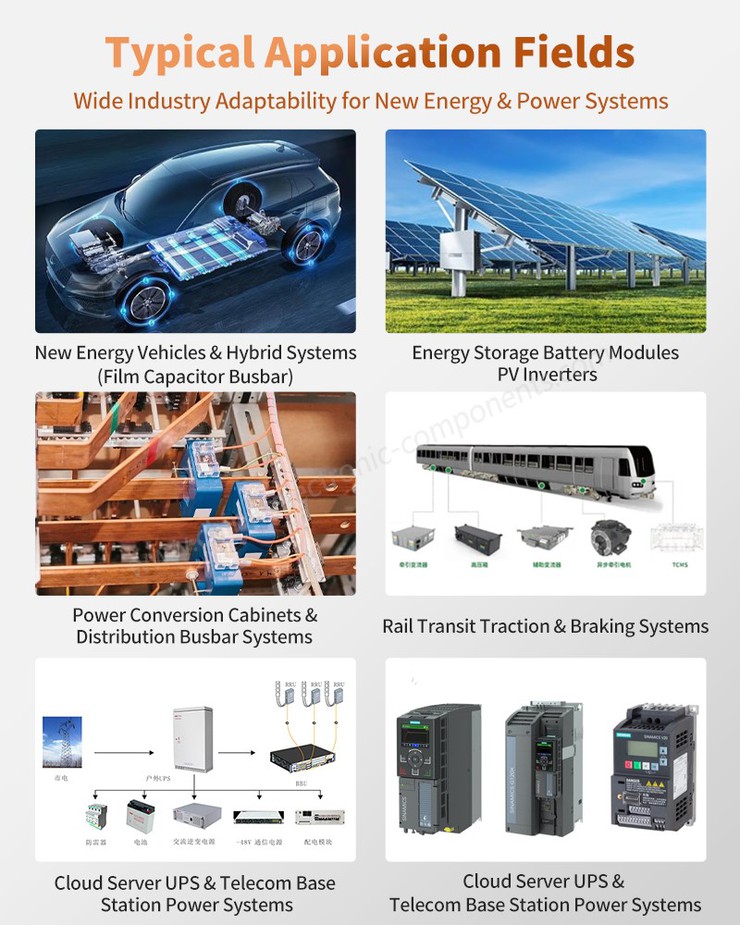
Furthermore, in the energy storage and electric vehicle fields, copper braided flexible connectors are also an important component of lithium-ion battery connectors.
In summary, the selection of copper braided flexible connectors is essentially a comprehensive trade-off between conductivity, structural reliability, and environmental adaptability. Whether standardised flexible connectors or highly customised braided flexible busbars, system design and parameter matching must be based on specific application conditions to ensure the safe, efficient, and long-term stable operation of electrical systems.
In actual projects, with the rapid development of new energy, power electronics, and energy storage industries, the performance requirements for flexible conductive connections are constantly increasing. Optimising product structures such as insulated flexible copper bars and flex bus bars to meet the demands for high current density, low temperature rise, long lifespan, and high reliability has become an important direction for industry technological development. Selecting appropriate material systems and manufacturing processes for different application scenarios is key to achieving high-performance conductive connections.
Based on this, we focus on the development and manufacturing of highly reliable flexible conductive connection solutions, covering various specifications of copper braided flexible connectors, flexible braided busbars, and customised braided busbar products, widely used in new energy, power equipment, and industrial automation fields. Through mature crimping, welding, and surface treatment processes, we can provide stable, highly conductive, and long-life connection solutions according to different operating conditions, meeting diverse engineering application needs.
How to Choose the Right Copper Busbar
In actual projects, copper busbar selection typically follows this order:
Determine rated current
Calculate cross-sectional area
Confirm installation space
Select copper grade
Confirm surface treatment
Design a connection structure
Verify temperature rise requirements
Conduct sample testing
This selection logic aligns better with the engineering development processes of new energy vehicles, energy storage systems, and industrial power equipment.
contact us
Send Inquiry