










Bi Metal Electrical Contact Point Material Industry Knowledge
Apr 08, 2026
Leave a message
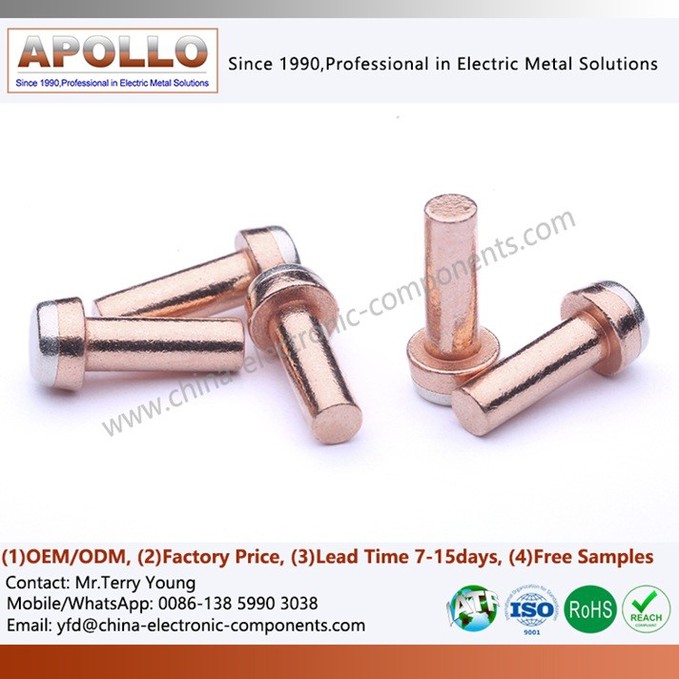
These materials are specialized functional materials adapted to the circuit connection and disconnection requirements of various electrical and electronic devices. As core interface components for current conduction and signal transmission, Bi Metal Electrical Contact Points need to withstand the mechanical and electrical stresses generated during circuit switching. Therefore, they have stringent and comprehensive performance requirements, simultaneously possessing high conductivity, excellent thermal conductivity, wear resistance, and corrosion resistance. In high-voltage, high-current applications, the material's resistance to arc erosion is a critical performance indicator.
From a global market development perspective, the related materials industry is showing steady growth. It is projected that by 2031, the global market size for these materials will reach US$7.27 billion, with a compound annual growth rate of 4.0% in the coming years. Regarding market competition, the industry exhibits a certain degree of concentration. In 2024, the top five manufacturers in the global market collectively held approximately 40.0% of the market share, indicating that leading companies in the Cold Headed Electrical Contact field occupy a significant market position.
The related materials industry exhibits a clear segmentation, with silver-based materials currently being the most mainstream category, holding approximately 88.0% of the market share and being the most widely used category within the industry. In terms of application areas, relays are the primary source of demand for this type of material, accounting for about 36.9%. In addition, switches, circuit breakers, and electrical connections are also important application scenarios for Normally Open Contactor Electrical Contacts, covering multiple core components of electrical and electronic equipment.
The development of the related materials industry benefits from multiple driving factors from downstream industries and technological aspects. The expansion and upgrading of the power equipment industry have brought continuous demand. The ongoing construction, renovation, and upgrading of power grids, along with the large-scale growth of power generation, transmission, and distribution infrastructure, have driven increased demand for high-performance materials suitable for high-voltage, large-capacity, and intelligent power equipment. The trend towards electrification and intelligentization in the automotive industry has significantly increased the number of onboard electrical and electronic components, thereby driving demand for materials with high reliability, miniaturization adaptability, and long service life to adapt to the complex working environment of automobiles. The development of consumer electronics and industrial electronic equipment towards miniaturization, high precision, and high power density requires related materials to possess better conductivity, lower contact resistance, and stronger resistance to mechanical wear under microscale conditions, further promoting material performance upgrades. Spring Loaded Electrical Contacts are therefore facing higher performance requirements.
With increasing focus across industries on the operational safety and lifespan of electrical and electronic equipment, manufacturers are increasingly favoring high-quality materials to reduce equipment failures caused by contact wear, arc damage, and corrosion. This has created market opportunities for high-quality materials. Simultaneously, continuous innovation in advanced manufacturing processes such as powder metallurgy, vacuum sintering, and surface coating has optimized the overall performance of these materials, expanding their application range and providing solid technical support for meeting diverse downstream demands. This has also further broadened the application scenarios for Switch Electrical Contact.
While the industry is developing steadily, the related materials sector also faces numerous challenges. Balancing material performance and cost is a common challenge. Improving the overall performance of these materials, such as conductivity, wear resistance, and arc resistance, often requires high-performance raw materials and advanced manufacturing processes. This directly increases production and application costs, making it difficult to simultaneously achieve both performance and economic efficiency. The corrosion and wear problems caused by harsh working conditions also affect the industry's development. Related materials are highly susceptible to oxidation, corrosion, and mechanical wear in harsh working environments such as high humidity, high temperature, corrosive gases, and dust. This not only shortens the material's lifespan but also further affects the operational stability of the entire electrical and electronic equipment, directly impacting the reliability of Contactor Contacts.
Environmental protection and sustainable development policies also put pressure on the industry. The production of some traditional types of related materials uses rare or toxic metals, facing strict environmental regulations. Furthermore, the recycling and reuse of waste materials has not yet formed a mature industrial chain, hindering the industry's sustainable development. High-end related materials suitable for special scenarios such as ultra-high voltage, ultra-high frequency, and extreme environments still face many technical challenges during research and development, including component design optimization, performance testing and verification, and long-term reliability assessment. This hinders rapid industrialization and also creates a bottleneck in the research and application of high-end Contactor Electrical Silver Contacts.
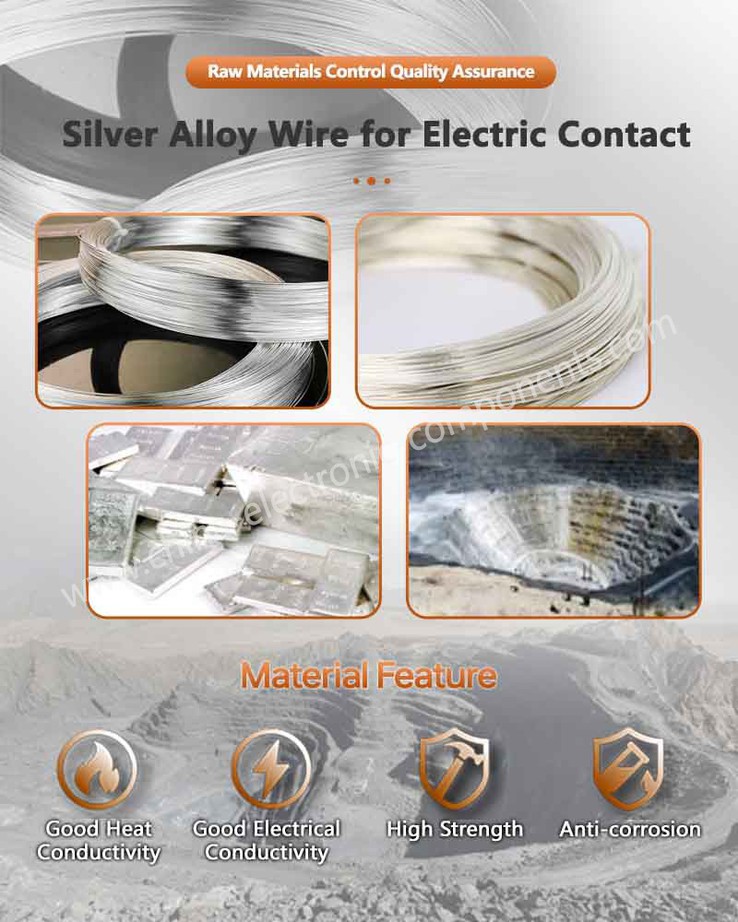
In addition, the industry also faces the vulnerability of the core raw material supply chain. The production of related materials is highly dependent on key metal raw materials such as silver, copper, and nickel. The supply of these resources is easily affected by various factors such as resource distribution, international trade policies, and market price fluctuations, resulting in insufficient stability of the industry supply chain, bringing uncertainty to the production and operation of enterprises, and posing challenges to the large-scale and stable production of Rotating Electrical Contacts.
about us
We are launching Bi Metal Electrical Contact Points, manufactured using advanced composite processes. These points combine excellent conductivity, wear resistance, and arc erosion resistance, making them suitable for harsh operating conditions and the needs of miniaturized, high-precision equipment. They effectively balance performance and cost, aligning with environmental protection and sustainable development requirements, and can be widely used in various core electrical and electronic devices such as relays, switches, and circuit breakers.
Our Silver Electrical Contacts products can be precisely matched to various industry application scenarios, effectively solving existing pain points. We welcome customers to inquire about detailed product parameters, customized solutions, and order placement, working together to seize new opportunities for industry development.
contact us
Send Inquiry