










Energy Storage Cabinet System Structure And Technology Analysis
Oct 18, 2025
Leave a message
What is an Energy Storage Cabinet?
An energy storage cabinet (ESC) is a comprehensive device used to store electrical energy and regulate the operating status of power systems. It typically consists of battery modules, a power converter (PCS), a battery management system (BMS), a control chip, a cooling system, and a protective casing. Energy storage cabinets store energy during periods of low grid load and release it during peak loads, thereby facilitating peak load shaving, frequency and voltage regulation, and backup power.
In modern new energy systems, battery energy storage cabinets are crucial supporting equipment for photovoltaic power plants, wind farms, and industrial microgrids. They effectively smooth out fluctuations in the flow of intermittent energy sources (such as photovoltaic and wind power) connected to the grid, maintaining grid stability and improving the overall power factor.
Main Components of an Energy Storage Cabinet
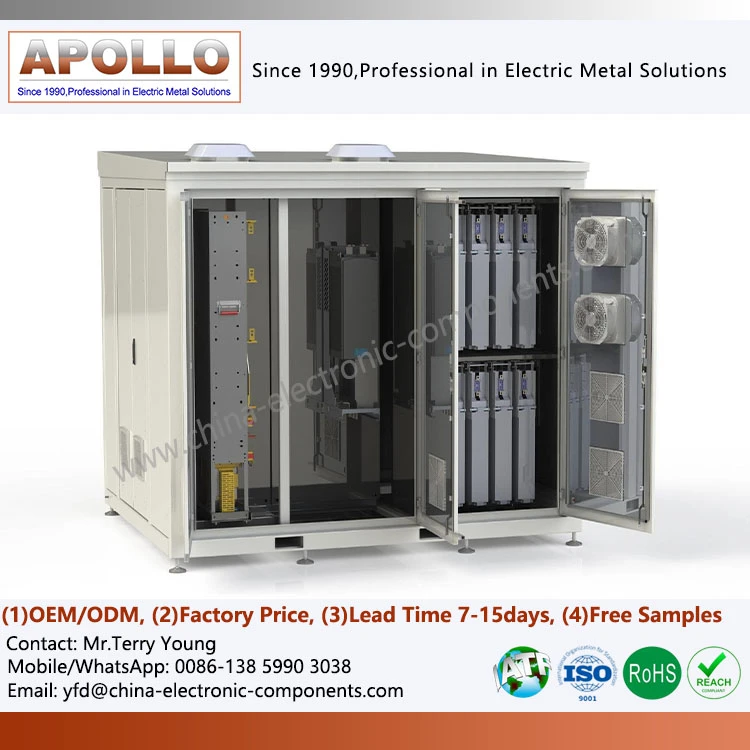
The design of an energy storage cabinet depends on the application scenario and battery system type, but generally includes the following key components:
Battery Module
As the core energy storage unit, the battery module determines the system's capacity and lifespan. Common types include lithium iron phosphate batteries, ternary lithium batteries, and lead-acid batteries. The modular design facilitates expansion and maintenance, making the battery bank cabinet a standardized solution for large-scale energy systems.
Battery Management System (BMS)
The BMS monitors battery temperature, voltage, current, and health status, providing overcharge, over-discharge, and overcurrent protection to ensure stable battery operation.
Power Converter (PCS) and Control System
The PCS is responsible for DC/AC energy conversion; the control system (EMS) monitors power flow and implements energy distribution strategies, serving as the "brains" of the entire energy storage system cabinet.
Cooling System
For high-power energy storage units, temperature control is critical. Liquid-cooled energy storage cabinets use circulating coolant to precisely control battery temperature, making them more efficient and safer than traditional air-cooled solutions.
Enclosure and Safety Protection Structure
The enclosure of an energy storage cabinet generally has a high protection rating (IP54 or higher) and integrates electrical insulation, fire and heat insulation, and shockproofing. For outdoor applications, an outdoor cabinet energy storage system can be deployed directly in complex environments and support 24/7 operation.
Connection System (CCS Cabinet / Cell Connection System Cabinet)
The connection system is responsible for the electrical and communication connections between modules, ensuring reliable signal and energy transmission. This is particularly critical in high-voltage and high-current scenarios.
Typical Classifications and Applications of Energy Storage Cabinets
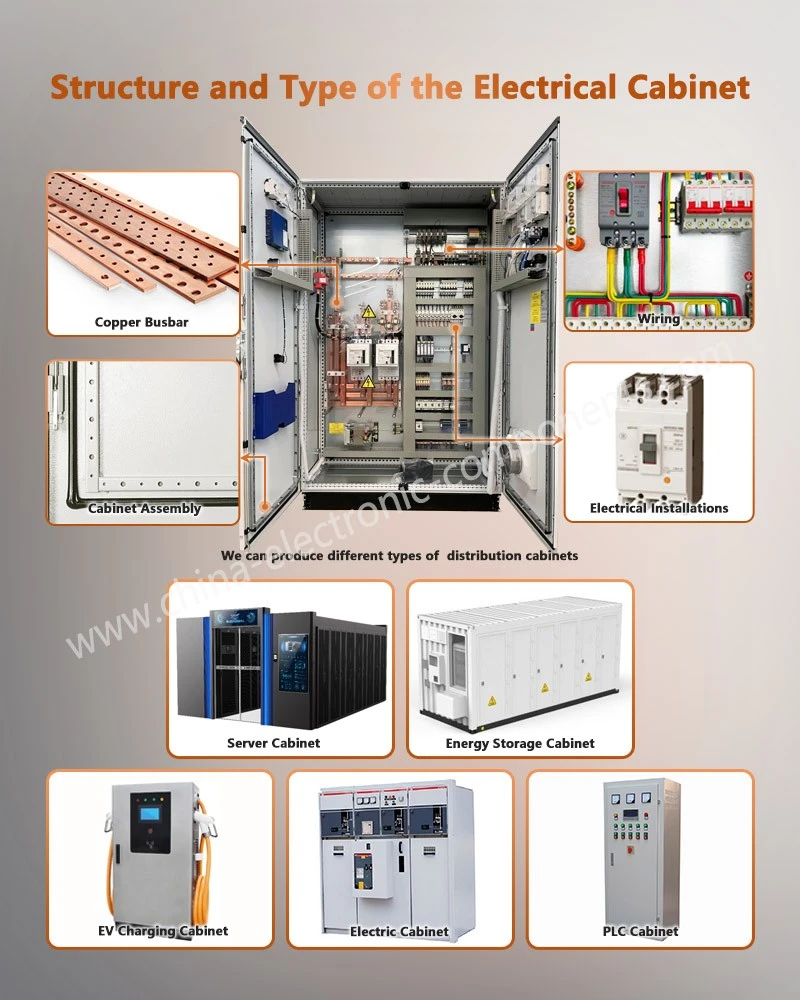
Discrete Energy Storage Cabinets
Each component is independently installed, making it easy to maintain and suitable for industrial and large-scale factory power distribution systems.
Combined Energy Storage Cabinets
Different capacity units can be flexibly combined to form a modular energy storage integrated cabinet to meet different voltage requirements.
Base-Mounted Energy Storage Cabinets
With an integrated battery and inverter design, they can be deployed directly in outdoor environments. This is a typical outdoor cabinet energy storage system.
The Integrated Energy Storage Cabinet (IESC) integrates the battery pack, PCS, BMS, cooling system, and communication control system into a single cabinet, making it easy to install and taking up a small footprint. This solution is widely used in industrial and commercial applications, emergency power supplies, and microgrid systems.
The Photovoltaic Energy Storage Cabinet (PESC) integrates with PV panels and inverter systems and can be deployed centrally in large power plants or distributed in home or commercial energy storage systems. It is a typical example of a solar battery storage cabinet.
The Liquid Cooled Energy Storage Cabinet (LCESC) utilizes liquid cooling temperature control technology and is suitable for high-power density battery applications. Compared to air-cooled systems, it offers higher thermal management efficiency and longer cycle life, making it widely used in new energy power plants and integrated energy storage projects.
Common Faults and Maintenance Points
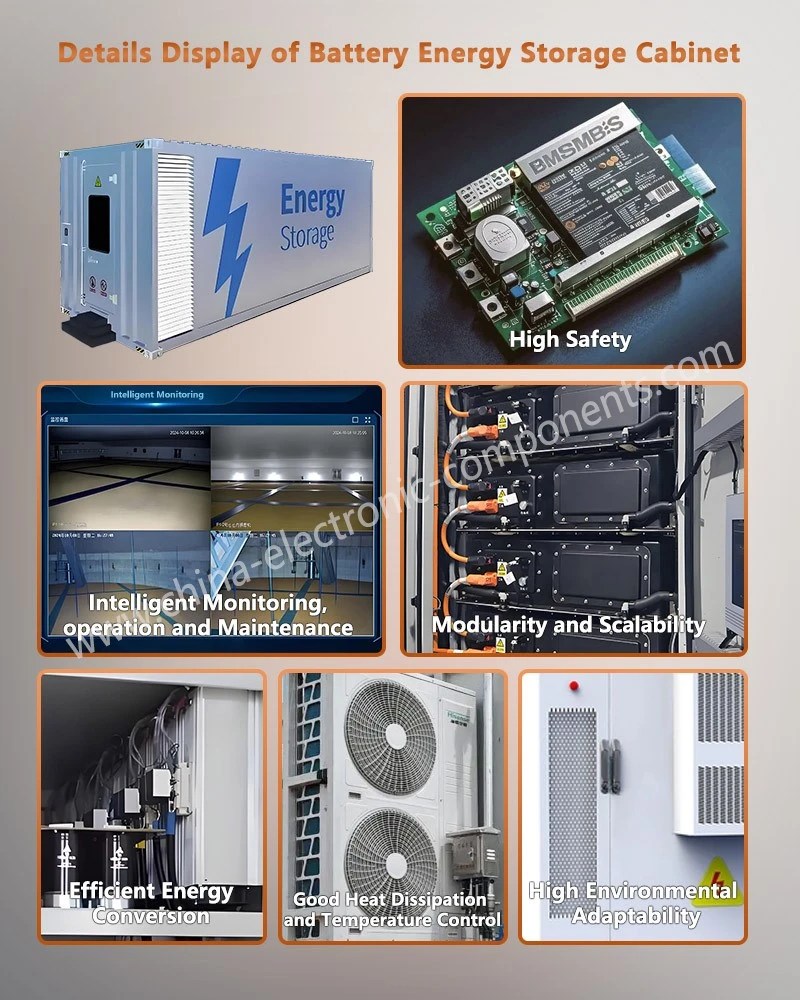
Battery abnormalities: These include aging, overcharge, over-discharge, and internal short circuits. The battery management system (BMS) should monitor the battery cell status in real time.
Electrical faults: Overcurrent, undervoltage, or insulation damage can be addressed through isolation protection and redundant design.
Environmental impacts: Humidity, temperature, and corrosive gases can reduce system lifespan. Therefore, outdoor cabinet energy storage systems must have strong protection and temperature control capabilities.
Structural vibration or looseness: These can occur during transportation or long-term operation. Regularly check the stability of supports and wiring.
Energy Storage Cabinet Standards and Specifications
The design and manufacture of energy storage cabinets should comply with the following national and industry standards:
GB/T 40090-2021 "Operation and Maintenance Regulations for Energy Storage Power Stations"
GB/T 36558-2022 "General Technical Requirements for Electrochemical Energy Storage Systems in Power Systems"
GB/T 36549-2022 "Operational Indicators and Evaluation of Electrochemical Energy Storage Power Stations"
GB/T 42288-2022 "Safety Regulations for Electrochemical Energy Storage Power Stations"
GB/T 36276-2018 "Lithium-ion Batteries for Power Energy Storage"
These standards provide a systematic basis for the safe design, testing, and operation of CCS Cabinets and Cell Connection System Cabinets.
Industry Applications and Development Trends
With the continuous growth of photovoltaic and wind power installed capacity, energy storage cabinets are playing an increasingly important role in new energy grid-connected systems. From large-scale energy storage power stations to residential solar-energy storage systems, integrated energy storage cabinets (ESCs) have become essential equipment for efficient energy utilization.
In the future, intelligence, modularization, and liquid cooling will be three major trends in the development of energy storage cabinets. Integrated Energy Storage Cabinets (ESCs) utilize standardized interfaces and automated management systems to enable rapid deployment and expansion of energy storage systems. Solutions combining solar battery storage cabinets with photovoltaic energy storage cabinets are driving the evolution of green energy towards greater efficiency and safety.
Summary
Energy storage cabinets are not only the core unit of energy storage systems but also key equipment driving the intelligent and modular development of the new energy industry. From battery bank cabinets to liquid-cooled energy storage cabinets, from industrial and commercial systems to distributed photovoltaic applications, the evolution of energy storage technology is providing solid support for future energy systems.
contact us
Send Inquiry