





What Factors Should Be Considered When Choosing A Server Rack?
Feb 21, 2026
Leave a message
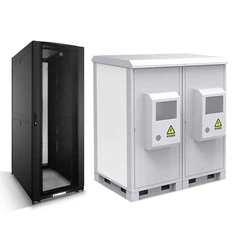
With the continuous upgrading of digital infrastructure, the demand for server hosting and self-built data centers is constantly growing. As the core carrier of IT equipment, server racks are not only the installation structure but also directly affect system stability and lifespan. Whether deploying floor-standing data cabinets or integrated rack systems, scientifically selecting server racks has become a crucial prerequisite for ensuring the safe and efficient operation of data centers. The following is a professional overview of the key factors to consider when selecting server racks.

First, specifications and space planning. Rack height is usually measured in U (1U = 44.5mm). Before selection, it is necessary to accurately calculate the dimensions of servers, switches, PDUs, and auxiliary equipment, and reserve space for cabling and maintenance. For example, a standard 42U server rack is suitable for large-scale deployments, while smaller environments can choose different height configurations based on actual needs. Reasonable capacity planning can avoid difficulties in future expansion while ensuring unobstructed airflow.
Second, load-bearing capacity. With increasing equipment density, the weight that a single rack can bear increases significantly, especially when deploying high-performance computing nodes or centralized storage devices. Compliant network rack cabinets must have clearly defined static and dynamic load capacity indicators, and the frame structure should be constructed of high-strength steel and structurally reinforced. Insufficient load-bearing capacity not only affects equipment safety but also poses potential risks to the data center floor structure.
Temperature control systems are also a core consideration. Servers operate continuously year-round, generating constant heat. Inadequate cooling design can lead to performance degradation and even hardware damage. Enclosed server racks with cooling systems, employing a well-designed airflow system, can separate hot and cold aisles, improving overall heat dissipation efficiency. Furthermore, combining this with independent server rack fans or precision air conditioning systems can further optimize temperature and humidity control, ensuring equipment operates in a stable environment.
Power supply directly determines business continuity. High-availability architectures typically require dual power supplies, UPS redundancy, and emergency power support. The PDU layout within the rack must be scientifically sound to ensure balanced power distribution and avoid localized overload. Standardized network server racks are usually designed with multiple power management interfaces to meet the deployment requirements of different data center tiers.
Network bandwidth and cabling management are also crucial components. High-traffic environments demand high bandwidth resources and link stability, requiring server racks with robust cable management and fiber optic cable control. Modular 12u network racks or larger offer significant advantages in densely cabled environments, improving maintenance efficiency and reducing the risk of misoperation.
Interference resistance and security are equally crucial. High-quality racks typically feature dustproof, anti-static, and electromagnetic shielding designs, along with multi-point locking systems to prevent unauthorized physical access. For specialized environments, server rack enclosures with enhanced structural integrity can be selected to improve overall protection. In distributed network nodes or office deployments, in-wall network cabinets balance space utilization and security.
Furthermore, installation methods and ease of maintenance impact the user experience. For scenarios requiring flexible layout adjustments, server racks with casters improve mobility and maintenance efficiency. Small communication nodes can utilize 6u comms cabinets or 18u data cabinets, saving space while ensuring stability. For office or presentation environments with a uniform aesthetic, customized white server cabinets are gaining market attention. In general, server rack selection involves multiple dimensions, including structural strength, heat dissipation design, power redundancy, cabling management, and security, all of which are interconnected. A well-designed rack solution not only improves equipment operating efficiency but also provides ample space for future expansion.

As a manufacturer specializing in data infrastructure products, we offer complete solutions encompassing floor-standing data cabinets, 42U server cabinets, and custom racks in various sizes to support deployment needs across different scenarios. We welcome further discussion of your specific project requirements, and we will provide structural design and configuration recommendations based on your application environment.
contact us

Send Inquiry