


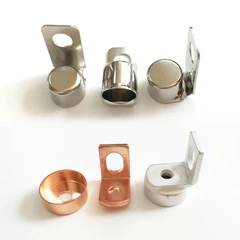

Self Clinching Riveting Screw Head Selection Guide
Jun 24, 2026
Leave a message
In the fields of sheet metal processing and complete machine electronic assembly manufacturing, the failure of thin plate connection fasteners is a common problem in high-frequency production. After the components are used, problems such as loosening and insufficient bearing capacity may occur, which can easily lead to equipment failures. The root cause of most assembly failures lies in the practitioners' lack of familiarity with the forming mechanism and selection standards of connection components. The Self Clinching Riveting Screw Head achieves permanent locking of the sheet metal through extrusion deformation, without the need for additional nuts for assembly, and relies on pressure equipment to complete the sheet metal clamping. Its mechanical parameters and material specifications directly determine the long-term stability of the thin plate assembly structure.

This type of fastening component relies on the tail structure to cause plastic deformation of the inner wall of the sheet metal, forming an irreversible locking structure. The three core mechanical indicators that determine the assembly quality are the installation pressure, anti-pulling force, and anti-torsion force. The installation pressure ensures that the component is fully embedded in the sheet metal, the anti-pulling force measures the anti-detachment ability under tensile conditions, and the anti-torsion force avoids loosening due to rotational force. The head structure, raw material, and size specification of the Zinc Plated Carbon Steel Self Clinching Screw will simultaneously affect the three mechanical properties, and are also the core basis for different application scenarios for differential selection.
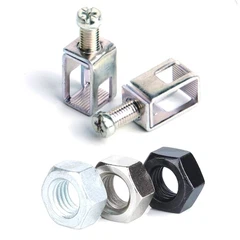
The mainstream fastening components in the market are divided into two structural series: hexagonal head and standard round head. Different substrates are suitable for various working conditions. 304 and 316 stainless steel are corrosion-resistant and suitable for outdoor high-humidity equipment; carbon steel has high cost performance and is treated with galvanization and passivation for rust prevention; aluminum and copper materials have obvious lightweight advantages and are mostly used in small and precise electronic equipment. The product size is in accordance with the ISO1207 standard specification, and the thread diameter and component length must match the thickness of the sheet metal. If the Passivated Clinching Stud Screw is too short, it will not bite firmly, and if it is too long, it will interfere with the overall machine assembly. The surface coating will also affect the long-term rust prevention effect.
The first step in selection is to match the sheet metal thickness and component specifications. 0.5 to 1 millimeter-thin sheets are suitable for short specifications, and sheet metals with a thickness of 2 millimeters or more should be selected for the extended version. Selection cannot be solely based on cost, and it is necessary to combine the equipment operating environment to select the substrate. For humid outdoor conditions, stainless steel is preferred, while for indoor conditions, ordinary sheet metal or galvanized carbon steel can be selected. For conductive electronic components, copper components can be used. The specification model of the Stainless Steel Rivet Self-Clinching Screw needs to correspond to the opening size of the sheet metal to ensure a uniform and complete locking area during extrusion forming.
During the procurement stage, it is necessary to verify the product's execution standards and mechanical test data. Products that comply with the ISO1207 international standard should be preferred. Uniform size tolerances and mechanical properties should be adopted, and the supplier can be requested to provide anti-pulling and anti-torsion performance test reports. At the same time, attention should be paid to surface protection processes such as galvanization and passivation, as the complete coating can delay oxidation and rusting. Product packaging should be well protected to avoid wear on the threads and extrusion teeth during transportation, ensuring the stable forming effect of the Self Clinching Rivet Bolts Screws during machine assembly.

Understanding the forming principle of fastening components and the standardized selection logic can prevent assembly loosening and insufficient bearing capacity defects from the source. At present, thin panel enclosures, precision electronics, and industrial equipment are continuously demanding higher reliability of their connection structures. Reasonably selecting a Pressure Rivet Head Self-clinching Screws based on the thickness of the sheet material, the working environment, and mechanical indicators is a crucial step in ensuring the long-term stable operation of various sheet metal equipment.
We can provide a full range of standardized and customized Self Clinching Riveting Screw Heads, supporting various base materials such as stainless steel, carbon steel, copper, and aluminum, along with surface anti-corrosion treatments like galvanization and passivation. We strictly follow the ISO1207 standard, ensuring stable mechanical performance, and are suitable for various thin sheet assemblies. We can offer sample testing and stable large-scale supply services. Customers with various fastening connection component samples or bulk purchase requirements are welcome to communicate, inquire, and place orders at any time for cooperation.
contact us

Send Inquiry