










Industrial Riveting Technology Development And Silver Rivet Electrical Connections Industry News
Jul 06, 2026
Leave a message
In modern mechanical manufacturing systems, metal connection technology is a core component of machine assembly. Riveting, with its advantages of high strength, lightweight, and resistance to high and low temperatures, is widely used in the automotive, aerospace, and precision electrical equipment manufacturing industries. Riveted structures can withstand tensile, shear, and impact loads without the need for additional filler materials, making them suitable for complex and harsh working environments. Silver Rivet Electrical Connections, based on mature riveting technology, are core foundational components for achieving stable conductive paths in various electrical switches and control elements.
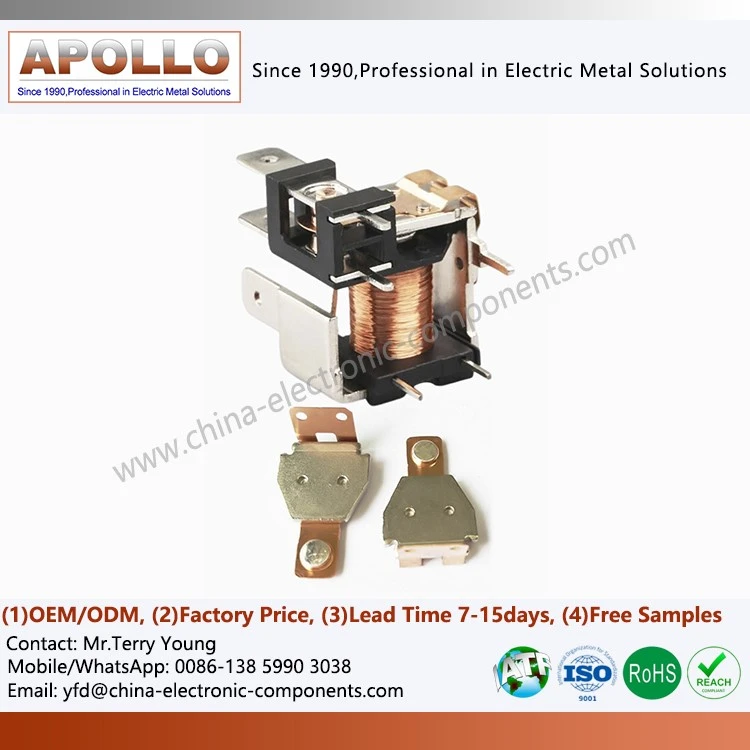
Continuous industrial upgrading has driven the steady expansion of the riveting-related industrial chain. In 2023, the global riveting equipment market achieved stable growth, and the downstream electrical component industry's requirements for riveting precision and durability have been increasing year by year. Riveting solutions vary significantly under different working conditions; cold riveting, hot riveting, and sealing riveting processes each have their applicable boundaries, directly affecting the long-term stability of conductive components. Rivet Components
matches the appropriate riveting process according to the product's usage scenario, balancing mechanical locking strength and electrical conductivity.
Cold riveting completes the plastic deformation of rivets at room temperature, making it suitable for small, highly ductile metal components. The process is simple and cost-effective, making it the mainstream processing method for civilian electrical components. Cold-riveted joints exhibit balanced fatigue resistance, making them suitable for mass-produced small to medium-sized electrical components, with lower requirements for rivet dimensional tolerance control. Riveted Assembly employs standardized cold riveting solutions, widely adaptable to lightweight electrical products such as consumer electronics and small control switches.
Hot riveting involves softening the rivet at high temperatures and then pressing it into shape. It is often used for large-diameter, high-hardness metal rivets, resulting in a tighter joint and higher surface smoothness. This process is complex and has higher production costs, generally used for conductive components in large electrical equipment operating under heavy loads and high vibration conditions. Relay Moving Spring Assembly with Armature offers hot riveting adapters for heavy-duty industrial equipment, addressing issues such as joint loosening and resistance drift under high current conditions.
Based on the forming structure, riveting processes are divided into three categories: movable, fixed, and sealing. Movable riveting allows for component rotation and is only suitable for low-load, simple tools; fixed riveting provides a rigid connection with high load-bearing capacity; sealed riveting prevents moisture leakage and is suitable for outdoor and marine electrical equipment. Relay Moving Spring Terminal Beryllium Copper prioritizes fixed and sealed riveting solutions to meet the long-term stable operation requirements of industrial control and automotive electrical systems.
Solid and hollow rivets are the two most commonly used base materials for electrical riveting. Solid rivets are high-strength and impact-resistant, suitable for high-power components in aerospace and automotive applications; hollow rivets are lightweight and corrosion-resistant, and are often used in lightweight precision sensing equipment. In addition, special processes such as broaching and press riveting are increasingly being applied to electrical assembly scenarios in confined spaces. Silver Contact Riveting Assembly simultaneously offers both solid and hollow silver rivet structures, covering various electrical assembly needs for both high and low current applications.
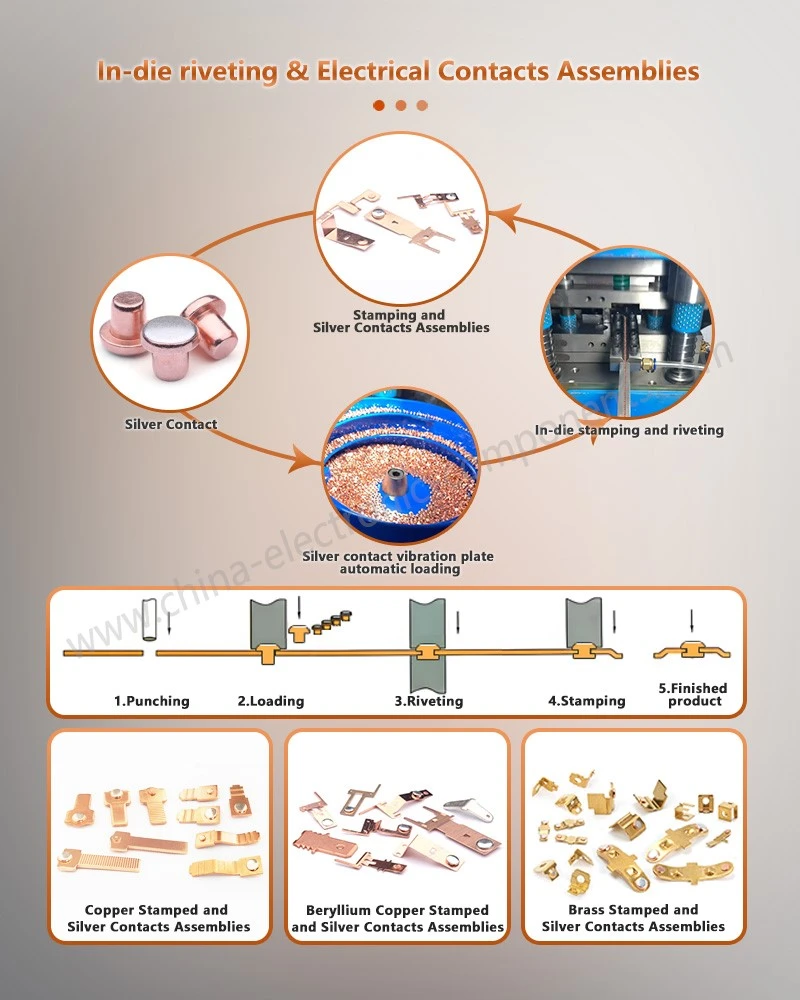
Currently, the manufacturing industry is undergoing a comprehensive digital and intelligent transformation. Riveting production is increasingly adopting automated equipment and online testing systems, with green environmental protection and low loss becoming the core directions for process upgrades. The continuous expansion of emerging industries, such as new energy and high-end precision equipment, is constantly setting new standards for the oxidation resistance and low resistance performance of conductive riveting components. Silver Rivet Electrical Connections continuously iterates its alloy materials and riveting adaptation designs to keep pace with the industry trends in intelligent electrical equipment.
To address the diverse riveting and conductivity requirements of various electrical devices, we offer standardized, customized Silver Rivet Electrical Connections. Cold riveting, hot riveting, and sealed riveting adaptation structures are available as needed. Solid and hollow specifications are readily available. The silver alloy substrate is oxidation-resistant and offers stable conductivity, making it suitable for automotive, industrial control, consumer electronics, and aerospace applications. It effectively avoids faults such as loose connections, excessive temperature rise, and signal drift.
For in-mold Silver Riveting Contacts sample testing or bulk customization inquiries, please provide your equipment operating parameters to discuss cooperation.
contact us

Send Inquiry