










Analysis Of Technological Development And Application Trends in The High-Voltage DC Relay Industry
Jun 23, 2026
Leave a message
High-voltage DC relays are critical electromagnetic components used for control and switching in high-voltage DC circuits; they are widely applied in sectors such as new energy vehicles, power systems, industrial automation, and energy storage equipment. Their core function is to safely connect and disconnect circuits under high-voltage and high-current conditions, necessitating high standards for voltage withstand capability, arc-extinguishing performance, electrical conductivity stability, and long-term reliability. As electrical systems evolve toward higher voltages and power ratings, high-voltage DC relays are increasingly becoming fundamental control components in modern energy and electrical systems.
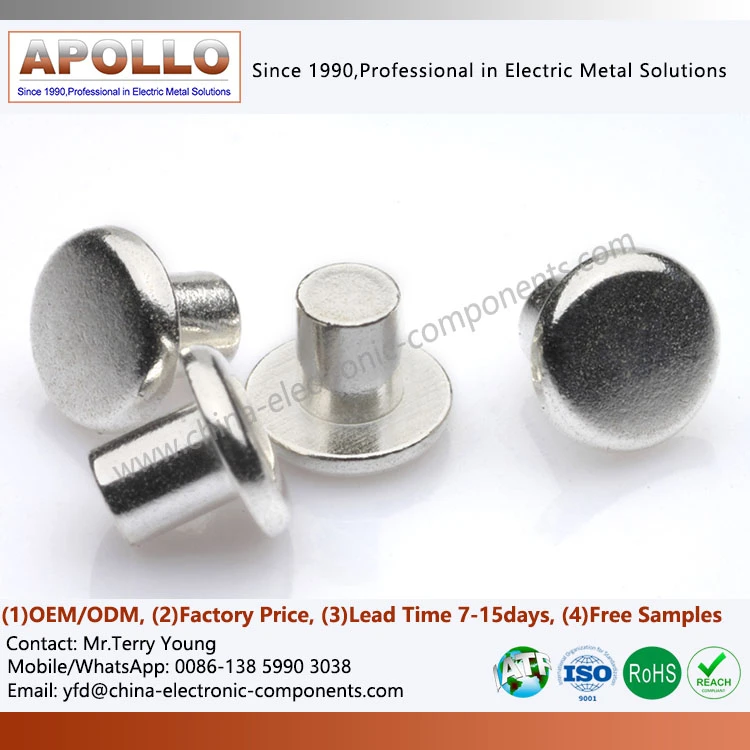
Structurally, high-voltage DC relays typically consist of an electromagnetic drive system, a contact system, an arc-extinguishing structure, and a sealed housing. The contact system is the core component determining performance, directly influencing conductivity and service life. In high-end applications, contact materials often utilize solid silver contacts or solid silver contact rivets to enhance electrical conductivity and resistance to arc erosion. Meanwhile, high-reliability designs may employ fine silver contacts or silver alloy point contacts to meet the demands of high-frequency switching and high-load scenarios.
Within electrical contact systems, different material systems are employed for varying operating conditions. For instance, solid electrical contacts and solid silver contacts are commonly used in high-current conduction structures, whereas monometallic contact rivets are utilized in designs requiring high structural stability. To suit diverse application environments, silver contacts are widely used in contactor and relay systems to reduce contact resistance and extend electrical life. In certain standardized industrial modules, pure silver contacts are also frequently used in high-end conductive contact designs.
In specific relay applications, contact configurations are optimized based on the load type. For example, AgNi contacts are often used in DC systems requiring high arc resistance, while AgCdO and AgSnO2 contacts are common in medium-to-high power switching scenarios to improve resistance to contact welding and material stability. For miniature control and high-density electronic systems, silver contacts for MCBs (Miniature Circuit Breakers) and pure silver solid contact rivets for switches offer superior reliability and reduced contact losses.
In terms of manufacturing technology, contact structures are evolving toward greater consistency and precision; for instance, silver contact rivets for PCBs and solid silver contact rivets for relays have become vital components in high-density circuits and modular relay systems. Simultaneously, silver contact points play a crucial role in compact relay control units, ensuring low-resistance, highly stable electrical conduction.
Regarding industrial applications, high-voltage DC relays have emerged as critical control components in the high-voltage systems of new energy vehicles, serving primarily in battery management systems, motor control systems, and charging circuit protection. As high-voltage platforms are upgraded, operating voltage levels have risen, imposing stricter requirements on contact materials, arc-extinguishing structures, and insulation systems, while driving the overall device toward higher reliability and longer service life.

Technologically, high-voltage DC relays are trending toward higher voltage ratings, miniaturization, intelligence, and energy efficiency. The shift toward higher voltages drives the development of devices capable of withstanding higher voltage levels to suit electrical systems with greater power density. Miniaturization-achieved through structural optimization and material upgrades-reduces size and weight without compromising performance.
Intelligence is being enhanced by incorporating condition monitoring and lifespan prediction mechanisms to improve system safety and maintenance efficiency. Finally, energy efficiency is realized by reducing coil power consumption and optimizing electromagnetic structure designs, thereby improving overall energy utilization.
In summary, as core switching components in high-voltage DC systems, the performance of high-voltage DC relays relies heavily on Solid Ag Contact material systems and structural design. Driven by the continued growth of new energy vehicles and renewable energy power systems, this sector will keep evolving toward higher reliability, the use of high-performance materials, and intelligent control, playing an increasingly important role in future energy systems.
contact us

Send Inquiry