










Why is the relay core of a DC electromagnet made of pure iron, while the core of an AC electromagnet is made of silicon steel sheets?
Apr 07, 2026
Leave a message
In electromagnetic device design, the choice of core material directly determines magnetic properties, energy consumption, and temperature rise. Whether in DC or AC systems, energy loss in the magnetic circuit primarily originates from two types: eddy current losses and hysteresis losses.
Therefore, under different operating conditions, the material selection for the Electromagnet Core requires a systematic analysis considering the frequency of magnetic field changes, current type, and thermal management requirements.
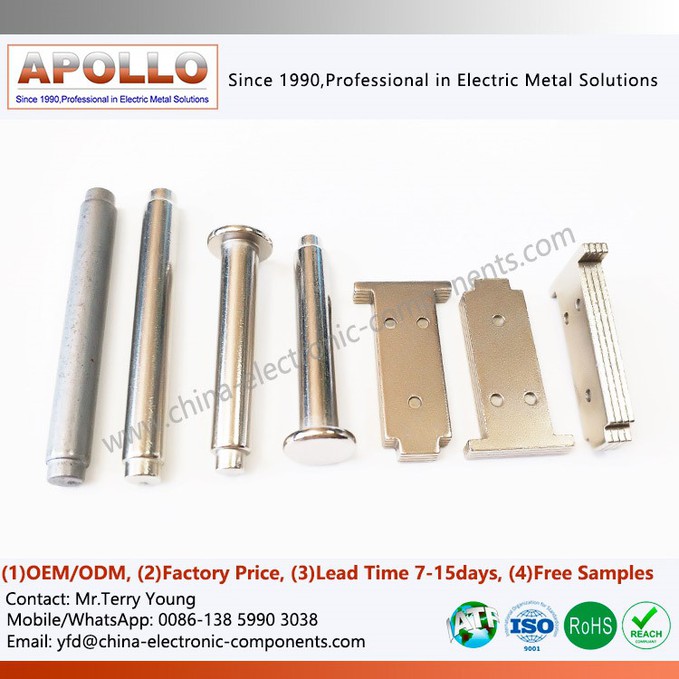
For DC electromagnets, the magnetic field is generally a stable or slowly changing magnetic field with a low flux change rate, so eddy current and hysteresis losses are negligible. Under these conditions, the design focus shifts to permeability and magnetic saturation characteristics. Pure iron, due to its high permeability and low coercivity, can quickly establish and release magnetic fields, making it an ideal material choice and widely used in Pure Iron Cores and various precision drive structures. Furthermore, pure iron possesses excellent magnetic response characteristics, making it a core material for high-sensitivity electromagnetic actuators (such as relays).
In contrast, the magnetic field of an AC electromagnet is in a high-frequency alternating state. The continuous change in magnetic flux generates significant eddy current loops within the core, leading to additional heat loss. Meanwhile, hysteresis losses also increase significantly with increasing frequency. To reduce losses, a high-resistivity silicon steel sheet laminate structure is typically used, dividing the core into multiple insulating sheets to effectively suppress eddy current paths. This type of structure is common in relay steel cores or AC-driven magnetic components and is a standard loss reduction solution in the electrical engineering field.
In the actual operation of DC electromagnets, even with theoretically low losses, the core may still experience heating. This problem mainly stems from the copper losses in the conductor coils being conducted to the core, as well as the additional eddy current losses that gradually appear under high-frequency operation or pulse drive conditions. Especially in high-frequency switching applications, such as relay iron core structures, the heat accumulation problem is more pronounced. Therefore, core heating is not only related to materials but also closely related to the overall design of the electromagnetic system.
To address the core heating problem of DC electromagnets, engineering typically involves optimization from multiple dimensions. First, copper losses are reduced by optimizing coil design (lowering current density and optimizing turns distribution). Second, heat dissipation paths are improved through structural design, such as increasing the heat dissipation area or using structural materials with better thermal conductivity. Additionally, permanent magnet auxiliary magnetic circuits can be introduced to reduce excitation current requirements. In some high-end applications, such as Core for Electromagnetic Relay, thermal stability is further enhanced through material composites or surface treatments.
Regarding pure iron itself, its manufacturing and material selection also have strict requirements. As a typical soft magnetic material, pure iron must possess high purity (low carbon, low impurities), uniform microstructure, and good machinability. Commonly used materials include industrial pure iron or DT4 series materials, with DT4C Iron Core being a typical example. These materials are characterized by high permeability, low loss, and a narrow hysteresis loop, making them suitable for high-performance relays and precision electromagnetic systems. Furthermore, during manufacturing, processes such as cold forging can significantly improve material density and mechanical strength. For example, in the DT4C Relay Iron Core cold forging process, it effectively improves magnetic property consistency and dimensional accuracy.
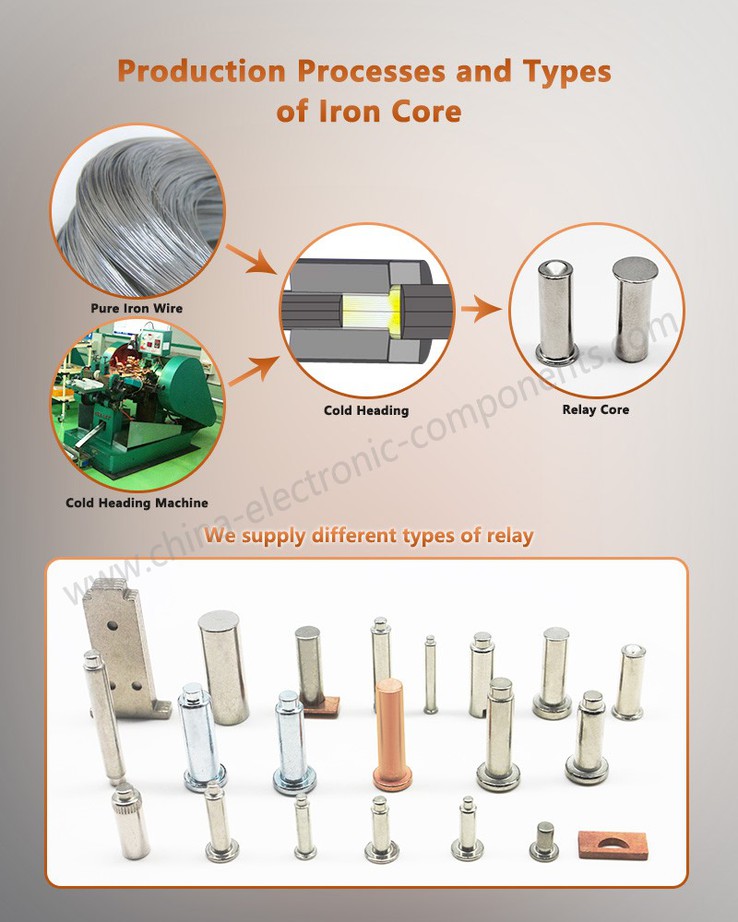
Furthermore, stress control and annealing are crucial during the processing of pure iron cores. Work hardening significantly reduces magnetic properties; annealing is necessary after stamping or cold forging to restore magnetic permeability. This is particularly critical in high-precision structural components, such as miniature magnetic components like Core Pins or Relay Pins, where performance stability directly impacts the overall response speed and reliability of the device.
From an application perspective, soft magnetic pure iron materials are widely used in relays, solenoid valves, and industrial control equipment. Especially in scenarios requiring high response, Soft Magnetic Iron Cores for Relays and Pure Iron Relay Cores have become mainstream choices due to their excellent magnetization and demagnetization properties. Simultaneously, in industrial automation systems, products such as Iron Cores for Industrial Control Relays place even higher demands on material consistency and batch stability.
Conclusion
With the continuous trend towards higher frequencies, higher efficiency, and higher reliability in electromagnetic systems, the importance of core materials and manufacturing processes is increasingly prominent. From basic Electrician Pure Iron Cores to high-precision Cold Forging Relay Cores, different applications place varying demands on material performance. For the relay and electromagnetic actuator field, we offer a range of Soft Magnetic Iron Cores for Relay and customized solutions, encompassing complete manufacturing capabilities from material selection and cold forging to heat treatment optimization, meeting the stringent performance and reliability requirements of high-end electromagnetic components.
contact us

Send Inquiry