










The manufacturing process of an electromagnetic relay
Apr 07, 2026
Leave a message
Electromagnetic relays, as key fundamental components in automatic control and power systems, rely heavily on the standardization of manufacturing processes and the rationality of material selection for performance stability. Structurally, a relay mainly consists of three parts: an electromagnetic system, a contact system, and a mechanical structure. The magnetic circuit system is the core, typically using pure iron cores or soft magnetic iron cores with high permeability as the magnetic carrier to ensure magnetic flux efficiency and response speed.
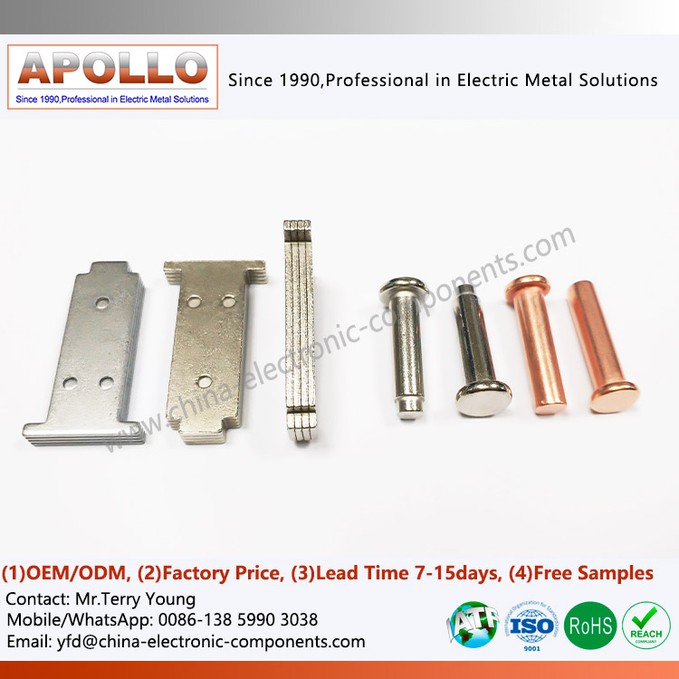
In the manufacturing process of the electromagnetic system, the matching design of the coil and the iron core is particularly critical. The coil is usually wound with multiple turns of enameled copper wire with a diameter of 0.05–0.3 mm, ranging from 1000 to 5000 turns, to meet different rated voltage and power requirements. The coil winding must precisely match the relay coil core to ensure uniform magnetic field distribution and stable resistance.
The iron core often uses low-coercivity materials, such as DT4C iron core or Electrician pure iron core, and undergoes turning and annealing treatments to reduce internal stress, thereby improving magnetic response sensitivity and long-term stability.
The contact system is the key execution unit for relays to achieve electrical control functions, and its materials and structure directly affect conduction performance and lifespan. In conventional designs, low-power relays often use silver alloy contacts, while high-power applications use tungsten copper to improve arc erosion resistance. Contact spacing is typically controlled between 0.5 and 2 mm, and a spring structure provides stable contact pressure.
For structural support, contact assemblies are often designed in conjunction with a Core for Electromagnetic Relay, using Relay Pins or Core Pins to achieve precise positioning and electrical connection, thereby ensuring conduction reliability and mechanical strength.
In the assembly stage, the matching accuracy between the electromagnetic system and the mechanical structure directly determines the relay's operating performance. The air gap between the armature and the iron core typically needs to be controlled within the range of 0.1–0.3 mm to balance engagement efficiency and release speed. In this process, using highly consistent materials such as Relay Iron Core or Relay Steel Core helps reduce hysteresis loss and improve product consistency. Simultaneously, the insulating support must be made of high-voltage-resistant material to ensure the overall structure meets electrical safety standards.
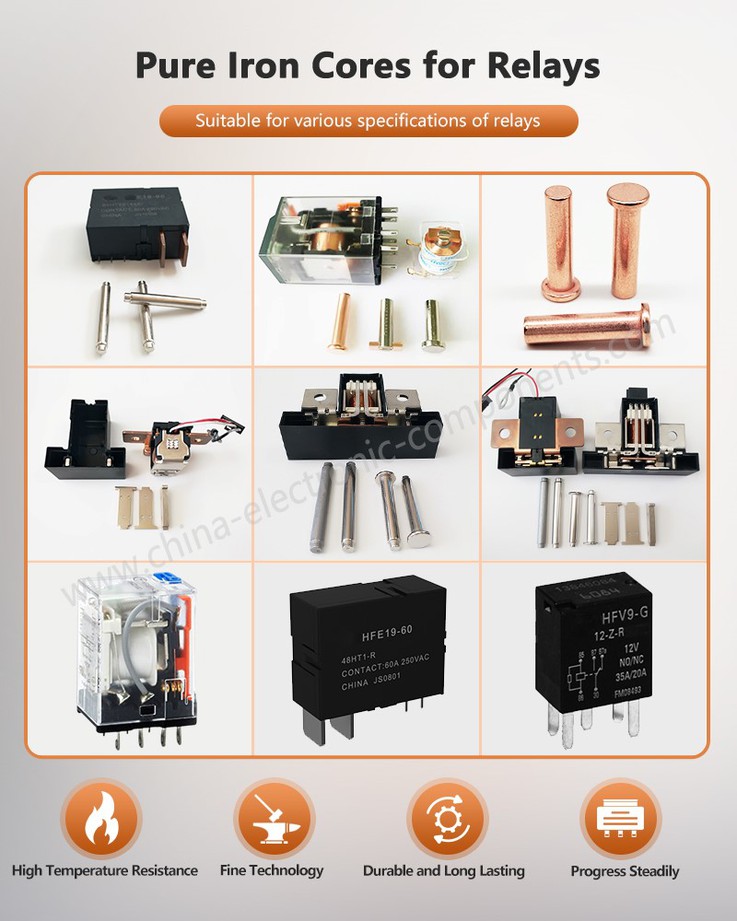
Electrical performance testing is a core quality control step in the relay manufacturing process. The pull-in voltage typically needs to be controlled within 75% of the rated voltage to ensure low-power startup capability; the operating time is generally required to be within the range of 5–20ms to meet rapid response requirements. At this stage, the performance stability of the magnetic circuit components (such as Pure Iron Relay Core or Iron Core for Industrial Control Relay) directly affects the test results, thus placing high demands on material purity and processing precision.
During mass production, environmental control and lifespan verification are equally crucial. The humidity in the production workshop generally needs to be maintained between 40% and 60% to prevent oxidation of metal components or degradation of insulation performance. Relays must pass at least 100,000 switching life cycles to verify contact wear resistance and structural reliability. Currently, some high-end manufacturers in the industry have adopted Cold Forging Relay Core or DT4C Relay Iron Core Cold Forging processes to improve core density and consistency, while combining automated testing technology to achieve high-precision and high-reliability mass production.
With advancements in manufacturing technology, electromagnetic relays are evolving towards higher performance, miniaturization, and greater consistency. Among these advancements, optimizing magnetic circuit design using Electromagnet Cores and employing high-quality Soft Magnetic Iron Cores for Relays have become crucial technological pathways for improving relay response speed and reducing energy consumption.
Further Explanation (Company Product Connection): In the field of electromagnetic relay core component manufacturing, we focus on the research, development, and production of high-performance soft magnetic materials and precision iron cores. Our products encompass various specifications of Pure Iron Relay Cores, high-precision Cold Forging Relay Cores, and Iron Cores for Industrial Control Relays suitable for various industrial control scenarios. Through rigorous material control and advanced molding processes, we can provide customers with highly consistent, high-magnetic-performance relay core component solutions, helping to improve the reliability and lifespan of the entire product.
contact us

Send Inquiry