










Basic principles and process flow of metallization of alumina ceramics
Apr 07, 2026
Leave a message
Ceramic materials are often classified as inorganic non-metallic materials, and they differ significantly from metals in physical and chemical properties. However, the excellent high-temperature stability, electrical insulation, corrosion resistance, and dimensional stability of ceramic materials complement the good electrical and thermal conductivity and machinability of metallic materials. In high-end applications such as electronic packaging, power modules, aerospace, and military equipment, ceramic-metal composite structures have become an ideal solution to meet the demands of harsh operating conditions. Metallized Ceramics technology is the key process for achieving this combination and has been a research hotspot in materials science and engineering for many years.
Basic Principles
The essence of ceramic metallization is to form a metal layer on the ceramic surface that is firmly bonded to the substrate and possesses solderability or electrical conductivity, thereby achieving a reliable connection of Precision Metallized Alumina Ceramic Components. This process involves the synergistic effects of multiple physical and chemical reactions, including plastic flow of matter, particle rearrangement, atomic diffusion, and interfacial reactions.
During high-temperature sintering, oxides, non-metallic oxides, and other additives in the metallization slurry undergo a series of chemical reactions and mass diffusion migrations at different temperature stages. As the temperature increases, the components react to form intermediate compounds, forming a liquid phase at the eutectic temperature. This liquid glassy phase has a certain viscosity and undergoes plastic flow driven by surface tension, while metal particles rearrange under capillary action. Driven by surface energy, atoms or molecules diffuse and migrate, grains gradually grow, and pores gradually shrink and eventually disappear, achieving densification of the ceramic-to-metal layer. This series of complex physicochemical processes determines the bonding strength and density of the metallized ceramic.
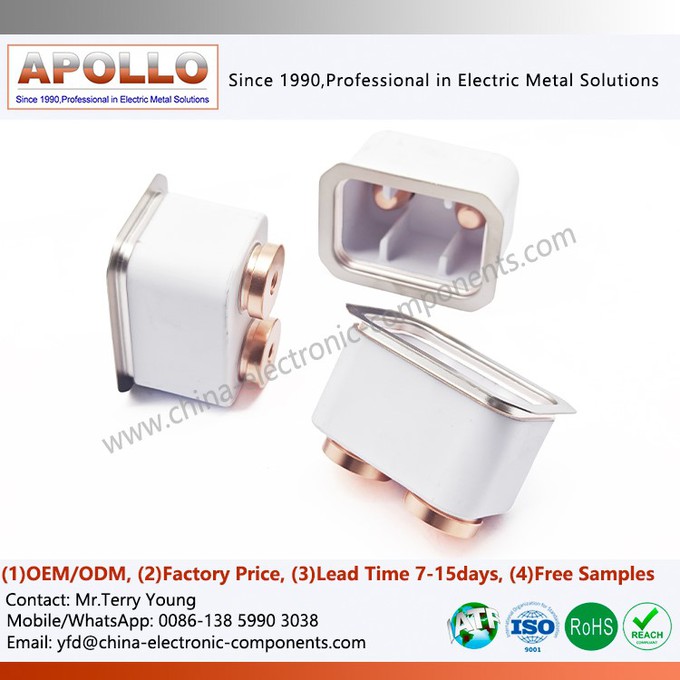
Ceramic Metallization Process
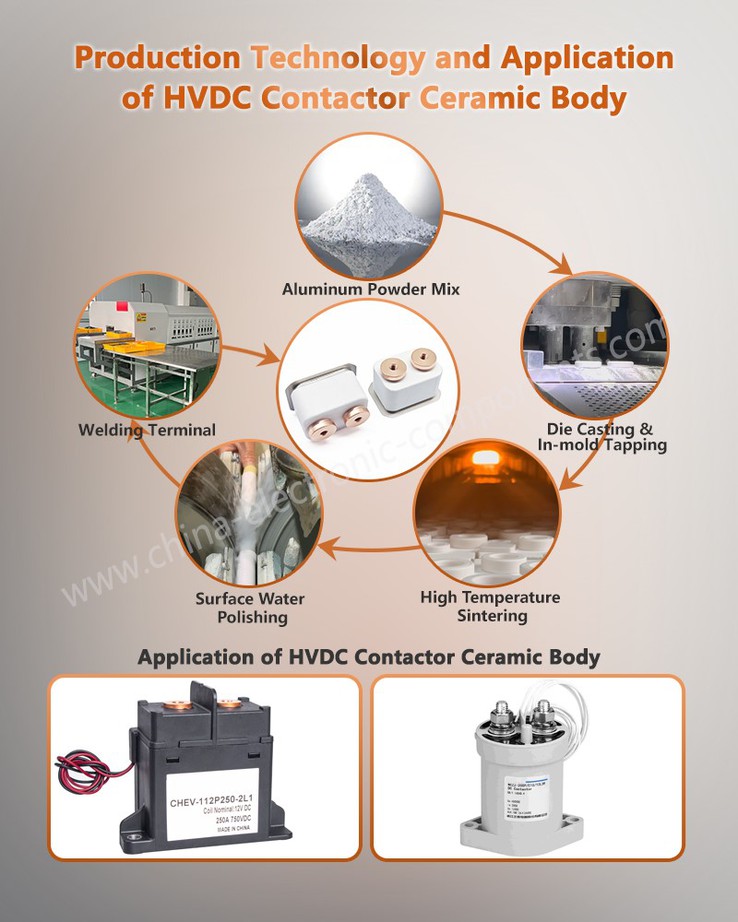
Substrate Pretreatment: The surface condition of the ceramic substrate has a decisive influence on the metallization quality. Typically, diamond polishing paste is used to polish the surface of pressureless sintered ceramics to an optical smooth finish, ensuring the surface roughness is controlled below 1.6 μm. Subsequently, the substrate is sequentially placed in acetone and alcohol, and ultrasonically cleaned at room temperature for 20 minutes to thoroughly remove surface oil and impurities. Insufficient cleanliness can lead to decreased adhesion of the precision machining layer in Alumina ceramic parts or the formation of pinhole defects.
Metallization Paste Preparation: Based on the composition and performance requirements of the target metallization layer, metal powder, glass powder, and organic carrier materials are weighed according to a specific formula. After ball milling and mixing for a certain period, a Precision Metalized Ceramics paste of suitable viscosity is prepared. The rheological properties of the paste directly affect the uniformity of screen printing and the consistency of the metallization layer thickness.
Coating and Drying: The metallization paste is coated onto the pretreated High Purity Alumina Precision Advanced Ceramic Metallization Parts surface using screen printing technology. Precise control of the slurry thickness is crucial: too thin a layer will cause excessive solder penetration into the metallization layer during subsequent brazing, affecting connection reliability; too thick a layer will hinder the uniform migration and densification of components during sintering. After coating, the substrate is placed in an oven for low-temperature drying to remove organic solvents from the slurry.
Heat treatment (sintering): The dried Alumina Metallized Ceramics substrate is placed in a reducing atmosphere (such as hydrogen or decomposed ammonia) and sintered at high temperature according to the set temperature profile. During sintering, the glassy phase in the metallization layer softens and flows, the metal particles sinter and densify, and an interfacial reaction occurs with the ceramic substrate, forming a strong chemical bond. Sintering temperature, holding time, and atmosphere control are key parameters determining the quality of the metallization layer.
Metallized Ceramics prepared using the above process exhibit a good bonding interface between the metallization layer and the ceramic substrate, meeting the requirements of subsequent brazing and sealing processes.
Alumina Metallized Ceramics for Bonding technology serves as a crucial bridge connecting the two major material systems of ceramics and metals, playing an irreplaceable role in fields such as electronics, power, aerospace, military equipment, and medical devices. From matrix pretreatment, slurry preparation, screen printing to high-temperature sintering, process control at every stage directly impacts the reliability and lifespan of the final product. As power modules evolve towards higher voltage, higher current, and higher reliability, the Metallization of Alumina will continue to evolve towards higher bonding strength, better thermal fatigue resistance, and greater process consistency. Simultaneously, the precision manufacturing capabilities of Metallized Ceramics for Electrical Components will provide solid technical support for the localization and performance improvement of high-end electrical equipment.
contact us
For more information about Metallization of Alumina and customized solutions, please contact us. We will provide you with professional technical support and application advice to help your projects be implemented efficiently.

Send Inquiry