










Metal Fastener Selection Guide for Severe Corrosion Environments
Apr 07, 2026
Leave a message
In marine engineering, wind power equipment, and petrochemical applications, fasteners are subjected to prolonged exposure to high salt spray, high humidity, and highly corrosive media. Their reliability directly impacts structural safety and system lifespan. Therefore, how to rationally select high-performance fasteners such as stainless steel screws under complex operating conditions has become a key issue in engineering design.
Failure Mechanisms in Severe Corrosion Environments
Severe corrosion environments typically include chloride ions, high-humidity and heat cycling, and acidic/alkaline media. These factors have multiple effects on fasteners. For example, in marine environments, salt spray easily induces pitting and crevice corrosion; in chloride-containing environments, stress corrosion cracking may be induced. Furthermore, the combined effects of mechanical loads and corrosion accelerate material fatigue failure.
Under such conditions, even common Hex Bolts or steel screws cannot guarantee long-term stable operation if the material or surface treatment is inadequate.
Basic Applications and Limitations of Stainless Steel Fasteners
Stainless steel fasteners are widely used in industrial fields due to their excellent corrosion resistance. For example, Pan Head Screw Stainless Steel and Machine Screw with Phillips Head are commonly used in general industrial connection scenarios. 304 stainless steel is suitable for normal environments, while 316/316L, due to the addition of molybdenum, performs better in terms of resistance to chloride ion corrosion.
However, in high salt spray or highly corrosive environments, even 316 stainless steel may experience pitting corrosion or long-term performance degradation. For more demanding applications, such as offshore structures or chemical equipment, relying solely on conventional stainless steel materials is insufficient to meet the full lifecycle requirements.
Technical Advantages of Duplex Stainless Steel
With the development of materials technology, duplex stainless steel has gradually become an important solution for heavily corrosive environments.
This type of material possesses both austenitic and ferritic structures, making it significantly superior to traditional stainless steel in terms of strength and corrosion resistance.
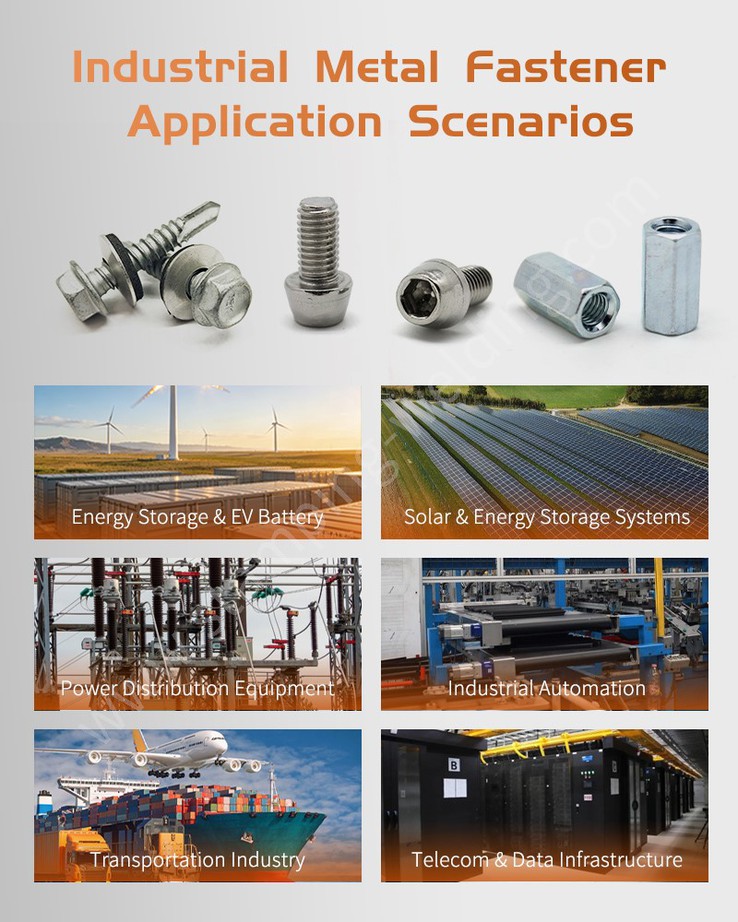
Its typical advantages include: approximately twice the strength of ordinary stainless steel, stronger resistance to chloride ion corrosion, and higher stability in complex media. In practical applications, using duplex steel in Flanged Hexagon Head Bolt Screws or Flat-head Hexagon Socket Stainless Steel Screws can significantly improve connection reliability, especially suitable for offshore wind power and highly corrosive pipeline systems.
Typical Application Scenarios Analysis
The performance requirements for fasteners vary across different industrial sectors due to their highly corrosive environments:
In the power and wind power sectors, large-size connections typically utilize high-strength Hexagon Head Machine Screw Metric Thread Flat Spring Lock Washer Bolt 304 Stainless Steel or upgraded material versions to ensure structural stability. In the chemical industry, corrosion resistance is a primary consideration; stainless steel set screws or set screws with Hollow Head Bolt Base are commonly used for internal equipment fastening.
In building and external structures, such as curtain walls and roofing systems, stainless steel roofing screws or stainless steel cladding screws are more commonly used to withstand long-term exposure to environments. Furthermore, countersunk flat head screws and stainless steel pan head screws also play an important role in precision connections or auxiliary structures.
Synergistic Optimization of Materials and Surface Treatments
Current industry trends indicate that single materials are no longer sufficient to meet the demands of complex environments, and fastener design is gradually moving towards synergistic optimization of "materials + surface treatments." For example, plating or coating technologies can further enhance the corrosion resistance of stainless self-drilling screws or stainless steel sheet metal screws.
Simultaneously, for special applications, such as concrete or substrate fixing, stainless tapcon-type products can be used to improve connection stability. In high-demand scenarios, it is even necessary to conduct systematic selection based on size specifications (e.g., 100mm stainless steel screws) and structural design.
Summary of Key Selection Considerations
When selecting fasteners for heavily corrosive environments, the following aspects should be emphasized:
First, the material grade should be prioritized based on the corrosive medium, choosing 316 or duplex stainless steel. Second, the structural design, such as combined structures like M6 Hexagon Socket Head Screw 304 Stainless Steel Knurling or M10 304 Stainless Steel Hex Bolt Screw Nut Flat Washer Combination, can improve connection stability. Third, the application environment should be considered; for example, in electrical connections, functional fasteners such as M10 Clamp Wire Terminal or M8 Socket Head Cap Screws Terminal with Spacer can be selected.
Furthermore, for special applications, such as decorative or light-load connections, stainless steel trim screws or stainless steel license plate screws can be selected to balance appearance and durability.
A Systematic Selection Approach for Heavy Corrosive Environments
With the development of marine engineering, new energy, and high-end manufacturing, the performance requirements for fasteners are constantly increasing. From traditional stainless steel to duplex stainless steel and then to composite surface treatment technologies, the industry is gradually forming systematic solutions. The rational selection of materials, structures, and processes not only affects product lifespan but also directly impacts overall engineering safety and maintenance costs.
About Us
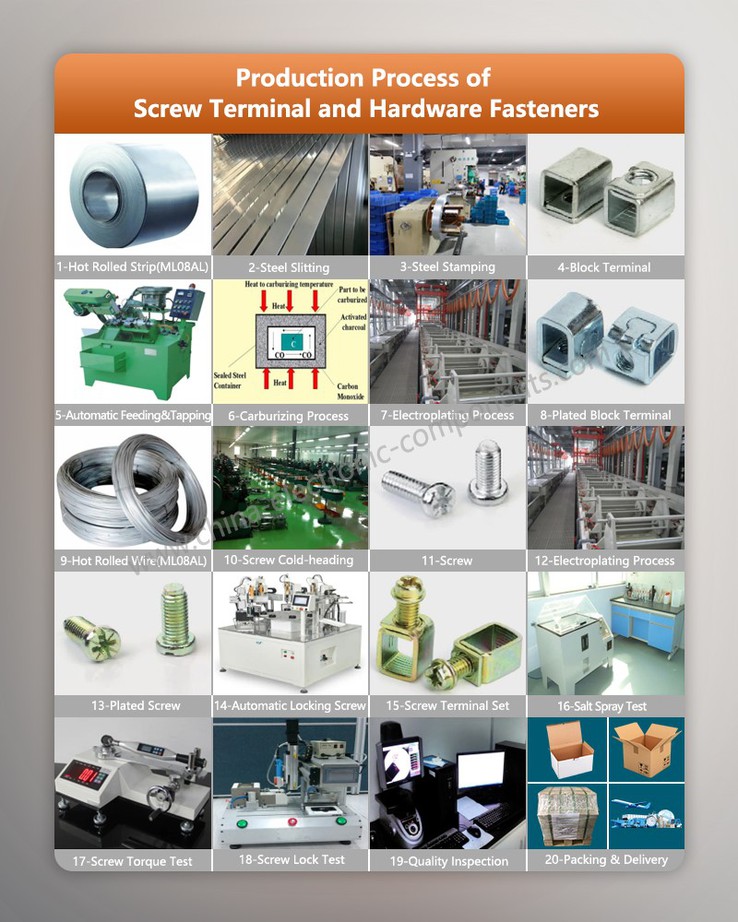
We specialize in the research, development, and manufacturing of high-performance fasteners, covering a wide range of specifications and structural forms, including SS screws, high-strength connectors, and various customized solutions. For heavily corrosive environments, we provide integrated support from material selection to process optimization, ensuring that our products maintain excellent corrosion resistance and long-term stability under complex operating conditions, meeting the stringent application requirements of new energy, power, and industrial equipment sectors.
contact us
Send Inquiry