










What role does the screw terminal play in photovoltaic fuses?
May 15, 2026
Leave a message
In today's era of booming green energy, photovoltaic (PV) fuses play a pivotal role as the "safety guardians" within the electrical protection systems of PV power stations. They are primarily utilized to safeguard core components-such as solar panels, combiner boxes, inverters, and charge controllers-shielding them from the catastrophic damage that can result from DC-side overcurrents and short-circuit faults. The basic structure of a PV fuse typically comprises a high-strength insulating housing, highly conductive metal contacts, precision springs, and a central fuse element (fuse wire). To ensure low resistance and high stability at connection points during sustained high-current flow, the external terminals often require the use of high-quality terminal screw connectors, thereby guaranteeing the efficiency and safety of current transmission.
In terms of operating principles, a PV fuse is essentially a normally closed protective device that functions based on a thermal response mechanism. When the current flowing through the circuit exceeds the fuse element's rated capacity, the element rapidly heats up and melts due to the Joule heating generated within itself, thereby forcibly interrupting the faulty circuit. Unlike standard AC fuses, PV systems operate within a challenging environment characterized by high voltages, elevated temperatures, and DC arcs that lack natural zero-crossing points; this places extremely rigorous demands on both arc-extinguishing capabilities and response speeds. When integrating fuses into complex distribution cabinets or combiner boxes, engineers typically select robust screw-in terminal blocks to establish reliable electrical connections, ensuring compatibility with standardized DIN rail mounting systems while guaranteeing excellent vibration resistance.
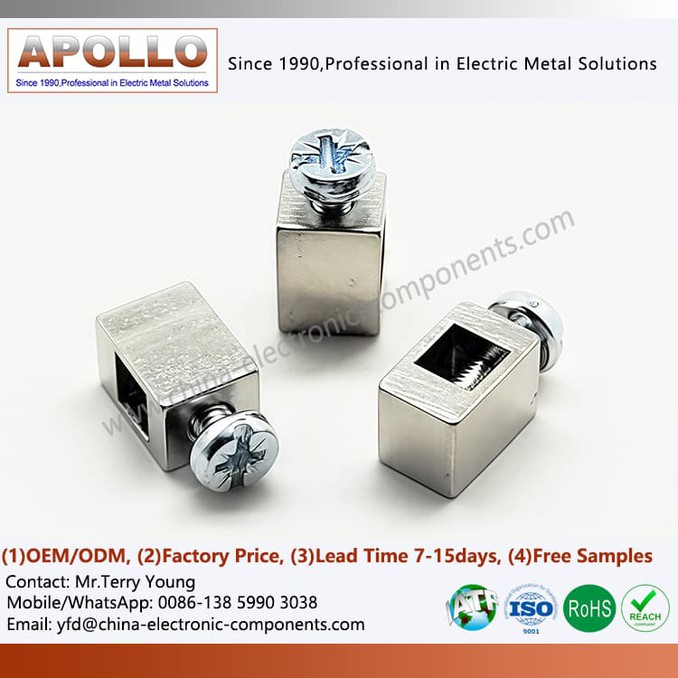
Compared to traditional circuit breaker protection, photovoltaic (PV) fuses offer significant advantages in DC-side protection applications. First is their highly efficient protection capability: they can rapidly interrupt extremely high short-circuit currents within a matter of microseconds. Second are their high reliability and long service life; lacking complex internal mechanical transmission structures, they are maintenance-free. Finally, they feature low voltage drop and low power consumption characteristics, effectively minimizing energy loss during line transmission and directly boosting the overall power generation efficiency of the PV power plant. To translate these advantages into practical wiring implementations, the use of high-performance Screw Fastener Terminals ensures that contact surfaces consistently maintain optimal clamping force, thereby preventing potential hazards such as localized overheating caused by loose connections.
As PV system voltage levels advance toward 1500V-or even higher-fuses and their accompanying connection components face increasingly rigorous demands regarding insulation performance and current-carrying capacity. Modern PV fuse designs are placing growing emphasis on miniaturization and modularity, necessitating wiring solutions that are significantly more compact. In this context, a scientifically sound and rational design for Terminal Screw Combinations becomes paramount; such a design not only optimizes creepage distances and electrical clearances but also greatly facilitates installation and maintenance operations for field personnel, thereby reducing overall system construction costs.
Within PV combiner boxes and DC distribution cabinets, fuses typically operate in conjunction with devices such as DC circuit breakers and disconnect switches to collectively establish a comprehensive circuit protection network. To ensure the consistency and integrity of connections throughout the entire electrical circuit, the industry widely adopts Clamp Screws for Circuit Breakers-fasteners specifically engineered for protective electrical devices. These fasteners feature precision mechanical designs capable of delivering constant and secure contact pressure across a wide range of wire gauges, representing a critical detail in ensuring zero-fault electrical connections on the PV system's DC side.
Beyond circuit breakers, fuses within a system frequently require integration with various high-current contactors-particularly in control circuits for PV arrays that undergo frequent switching operations. To ensure the absolute reliability of the connection between the contactor's main circuit and the fuse's output terminal, selecting the appropriate Clamp Screws for Contactors is of paramount importance. This specialized clamping screw effectively withstands electromagnetic vibrations generated during equipment operation, preventing wiring from loosening due to prolonged vibration, thereby eliminating the risk of arcing or burnout accidents caused by poor electrical contact.
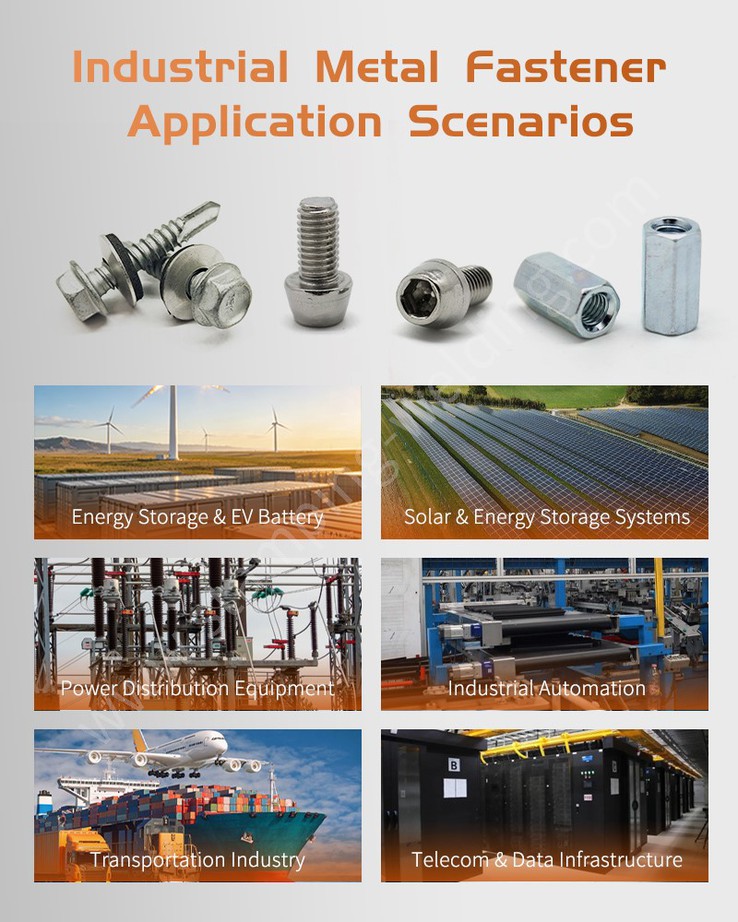
Finally, in the main circuit connections of high-power string inverters or large-scale combiner boxes, high-current bolted connections represent the mainstream solution. To meet the high-current fastening requirements for specifications of M5 and above, standardized high-current connection components-such as the M5 Electrical Crimping Frame-are widely utilized. These components feature extremely low contact resistance and robust pull-out strength, enabling the safe and stable transmission of the high-output electrical energy from PV fuses to downstream electrical equipment, thereby safeguarding the smooth operation of the PV power plant throughout its entire lifecycle.
If you are seeking Screw-in Terminal Block solutions that meet high standards of electrical performance, please feel free to contact us at any time for professional technical support!
contact us

Send Inquiry