










How to Correctly Select Braided Flexible Busbars ?
May 15, 2026
Leave a message
In modern electrical systems, Copper Stranded Flexible Busbars serve as critical flexible conductors, fulfilling the vital roles of equipment safety grounding and equipotential bonding. Fundamentally, these products fall under the category of Flexible Braided Custom Connectors, allowing for the customization of dimensions and structural configurations to suit diverse application scenarios. Ranging from precision instruments to large-scale power distribution equipment, these busbars have become indispensable core components within grounding systems, distinguished by their exceptional electrical conductivity and mechanical flexibility. For electrical engineers and procurement specialists, gaining a comprehensive understanding of their technical specifications and selection criteria is the bedrock for ensuring the safe and reliable operation of any project.
Copper Stranded Wire manifests in various physical forms, among which Flat Copper Braids represent the most prevalent structural configuration within the industrial sector. Based on width, these braids are broadly categorized into three mainstream specifications: 15mm narrow strips, 25mm medium-width strips, and extra-wide strips exceeding 50mm. The 15mm narrow strips are typically utilized for grounding connections within precision instruments and control cabinets; the 25mm medium-width strips are widely deployed in standard power distribution boxes and switchgear; while the extra-wide strips-measuring over 50mm-primarily address the grounding requirements of large-scale equipment such as transformers and generators. Regarding materials, pure copper inherently possesses superior electrical conductivity, characterized by low resistivity and excellent ductility. Furthermore, tin plating creates a protective layer on the conductor's surface, effectively preventing oxidation and corrosion; in humid or chemically corrosive environments, this treatment can extend the product's service life by three to five years.
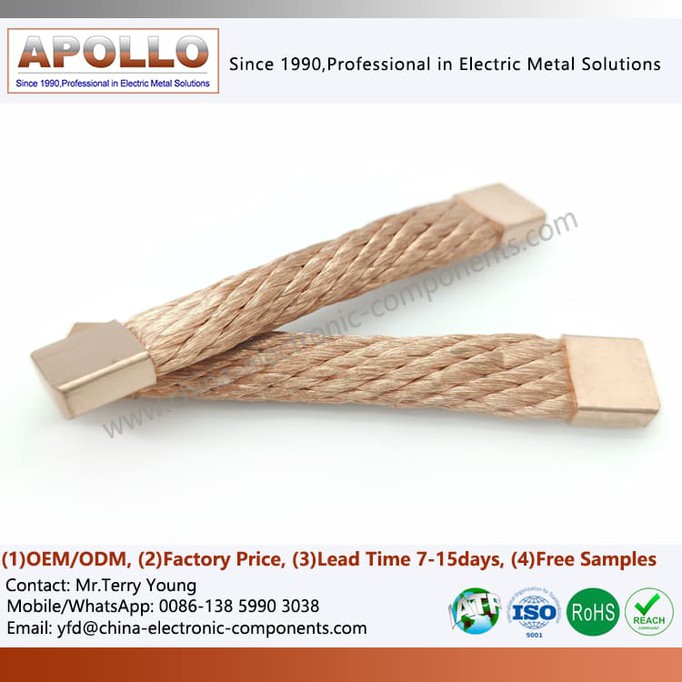
The manufacturing of twisted copper wire involves far more than the simple coiling of copper strands; it entails striking an optimal balance between mechanical and electrical properties-a fundamental distinction that sets braided copper wire apart from ordinary conductors. The diameter of individual copper strands directly dictates the flexibility of the braided tape; products woven from fine 0.1mm strands exhibit a bending radius approximately 30% smaller than those made from coarser 0.3mm strands, making them ideally suited for installation in space-constrained environments. In terms of current-carrying capacity, given an identical cross-sectional area, a high-density braided structure offers a current-carrying capability approximately 20% greater than that of a loose structure, thereby enabling the transmission of higher currents within the same physical footprint. Furthermore, the braiding technique itself is of paramount importance; a bi-directional braiding process, as opposed to a uni-directional one, can withstand up to five times the number of bending cycles, significantly extending the product's service life in dynamic application scenarios.
When selecting a braided flexible busbar, three core principles should be observed. The first is the principle of environmental compatibility: for humid workshops, outdoor settings, or corrosive environments, tinned copper variants should be prioritized; conversely, standard dry equipment rooms can utilize bare copper versions to minimize procurement costs. The second is the principle of motion dynamics: equipment subject to frequent movement, vibration, or repeated bending requires the selection of ultra-flexible models, whereas standard models suffice for fixed-installation applications. The third is the principle of thermal margin: when deployed in high-temperature zones, a safety margin of at least 15% should be added to the rated current-carrying capacity to prevent the conductor from softening due to sustained heat generation-a condition that could otherwise lead to insulation breakdown or connection failure.
In practical engineering applications, soft tinned copper wires are highly favored for their exceptional resistance to oxidation. Particularly within highly corrosive industries-such as chemical processing, metallurgy, and shipbuilding-tinned copper braided tape has become the de facto standard choice for grounding systems. Compared to bare copper, the tin plating layer not only effectively resists sulfidation and oxidation reactions but also maintains a stable contact resistance over extended periods of use, thereby ensuring the reliability of the grounding circuit. This specific attribute proves especially critical in scenarios demanding long-term maintenance-free operation or involving extended inspection intervals.
Beyond the selection of the braided tape itself, the accompanying protective measures are equally indispensable and must not be overlooked. Braided Copper Bus Bar Heat Shrink PVC Sleeves represent a widely adopted insulation and protection solution within the industrial sector. By encasing the connection points at both ends of the braided strap with heat-shrink tubing, this method effectively mitigates the risks of short circuits and electric shock associated with exposed conductors. When routing wiring inside power distribution cabinets, this protective approach not only satisfies relevant safety regulatory requirements but also preserves the inherent flexibility of the product itself, making it an ideal choice that harmonizes both safety and flexibility.
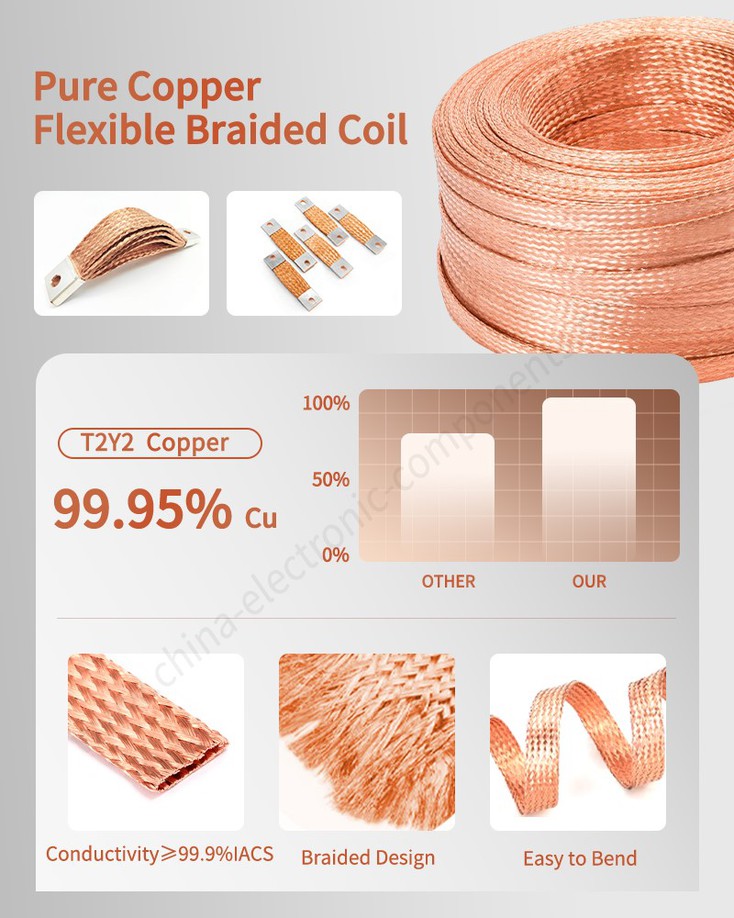
Although Braided Copper Busbars may appear unassuming, every stage-from material selection and structural design to the actual specification process-directly impacts the performance and operational safety of the grounding system. As a vital member of the Flexible Connectors family, a firm grasp of their core principles enables technical professionals to make more precise judgments during project implementation. Should you require further details regarding specifications or wish to obtain a customized technical solution, please do not hesitate to contact us; our expert team is ready to provide you with personalized technical support and selection guidance.
contact us
Send Inquiry