










Analysis of Key Applications of Ceramic Materials in the New Energy Vehicle Sector
May 15, 2026
Leave a message
As new energy vehicles rapidly develop towards higher voltage, higher power, and greater intelligence, traditional metal materials are facing increasing challenges in terms of insulation, high temperature resistance, corrosion resistance, and high-frequency stability. Advanced ceramic materials, with their excellent electrical insulation properties, mechanical strength, thermal stability, and arc resistance, are playing an increasingly important role in the new energy vehicle industry chain and are widely used in core components such as high-voltage relays, IGBT modules, high-voltage contactors, electric drive systems, and precision insulating structural components.
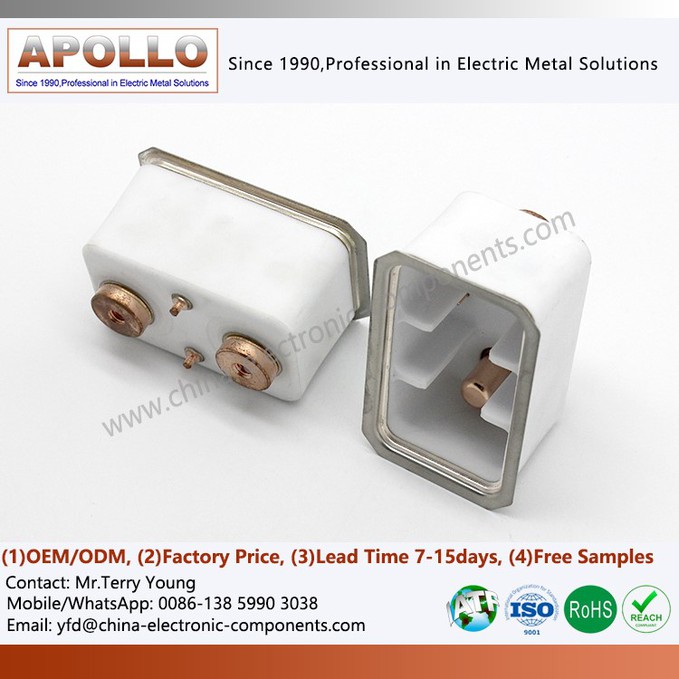
In the high-voltage electronic control system of new energy vehicles, ceramic relays are one of the crucial components ensuring the safety of the entire vehicle. Traditional relays are prone to arcing, contact erosion, and adhesion failure under high-voltage DC environments. However, using ceramic insulation structures can effectively improve arc extinguishing capabilities and electrical isolation performance. Currently, the industry widely uses 95% alumina ceramic as the relay housing material, which possesses excellent insulation properties, heat resistance, and structural stability, meeting the long-term operational requirements of new energy vehicles under complex operating conditions.
In the field of high-voltage relays, HVDC contactor ceramic enclosures have become an important structural component in new energy high-voltage switch systems. Internally, these devices typically employ a vacuum-sealed structure, using ceramic and metal sealing processes to create a highly reliable sealed cavity, effectively reducing the impact of electric arcs on the system. Meanwhile, EV Alumina Ceramic Housings and EV Alumina Ceramic Relay Housings are also widely used in high-voltage relays and high-voltage DC contactors in new energy vehicles to meet the insulation safety requirements under high voltage, high current, and high-frequency switching conditions.
With the continuous upgrading of power modules in new energy vehicles, the requirements for heat dissipation efficiency and packaging reliability of IGBT modules are constantly increasing. Ceramic copper-clad substrates, as an important material for power semiconductor packaging, have the core advantages of combining high thermal conductivity, high insulation, and low thermal expansion characteristics. Compared with traditional materials, silicon nitride and alumina ceramic substrates can effectively improve the stability of power devices in high-temperature cycling environments and reduce the risk of thermal fatigue.
Currently, Metallized Ceramic Housings for Power Semiconductors are widely used in new energy vehicle inverters, charging modules, and motor control systems. Through metallization, the ceramic substrate can achieve reliable welding and high-strength connections, further improving the overall packaging reliability. Meanwhile, metallized ceramics for electrical components are gradually becoming an important development direction for the packaging of electronic components in new energy vehicles, especially showing significant advantages in high-voltage, high-frequency, and high-power applications.
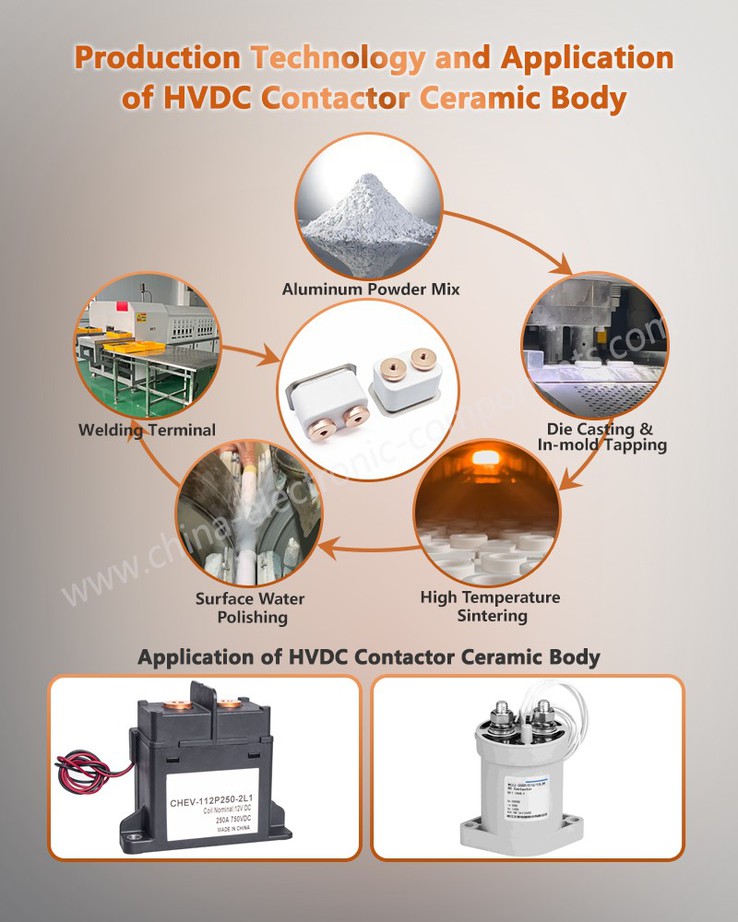
In the field of high-voltage contactors for new energy vehicles, ceramic materials also play a crucial role. High-voltage contactors need to achieve rapid arc extinguishing when instantly interrupting large currents, thus requiring extremely high standards for the material's high-temperature resistance, airtightness, and structural stability. Ceramic sealed cavities manufactured using vacuum brazing technology can effectively improve the contactor's arc extinguishing efficiency and service life.
Currently, high-temperature metallized ceramic relay cases have become one of the important packaging forms for high-voltage DC relays, maintaining stable insulation performance under high-temperature and high-pressure environments. At the same time, relay alumina ceramic components are also widely used in the internal insulation support structure of new energy vehicle relays to improve the overall safety and reliability of the system.
In the electric drive systems of new energy vehicles, the application of ceramic ball bearings is also growing rapidly. Compared to traditional steel bearings, ceramic balls have lower density, higher hardness, lower coefficient of friction, and stronger corrosion resistance, effectively reducing wear and heat generation during high-speed rotation. Meanwhile, ceramic materials possess natural insulating properties, which can reduce electrocorrosion in motor bearings and improve the stability of electric drive systems.
Especially in high-speed motor applications, hybrid bearings using silicon nitride ceramic balls can effectively improve motor operating efficiency and reduce noise and vibration. Currently, the demand for highly reliable ceramic bearings in new energy vehicle drive motors continues to grow, driving the expanding application of advanced ceramic materials in electric drive systems.
Besides structural ceramics, metallized ceramic technology is also rapidly developing in the new energy vehicle industry. Alumina Metallized Ceramics achieves reliable welded connections between ceramics and metals by forming a metal layer on the surface of alumina ceramics, thereby meeting the requirements for high airtightness, high insulation, and high-strength packaging. These materials are widely used in relay housings, sensor packaging, power electronic modules, and high-voltage systems in new energy vehicles.
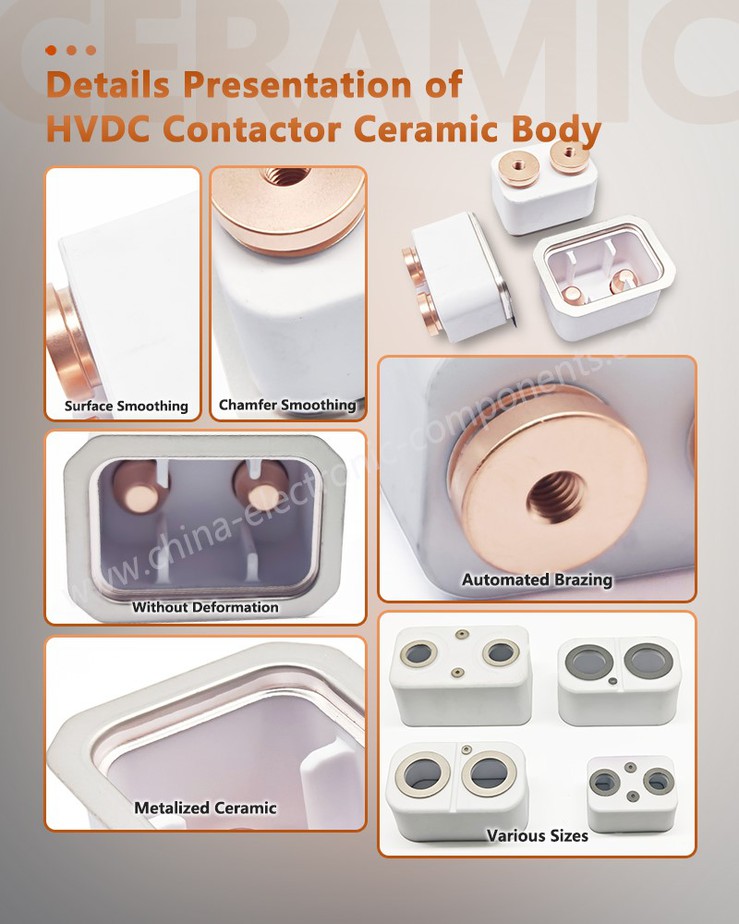
As the precision requirements for components in new energy vehicles continue to increase, the market demand for Precision Metallized Ceramics is also expanding. Through precision metallization processes and high-precision machining technologies, the consistency and reliability of ceramic structural components can be significantly improved. Meanwhile, precision machining of aluminum ceramic parts has become a key process in advanced ceramic manufacturing, meeting the miniaturization and high-precision requirements of complex structural components.
In high-voltage connection systems for new energy vehicles, metallized aluminum ceramics for electrical components and metallized ceramic insulating tubes with metalized ceramic parts are widely used in insulation connections, conductive isolation, and high-voltage protection structures. These products combine excellent insulation performance with mechanical strength, effectively improving the safety and stability of high-voltage systems in new energy vehicles.
Furthermore, high-strength metallized ceramic components are increasingly being applied to new energy vehicle charging systems, energy storage systems, and high-voltage power distribution modules to meet the long-term stable operation requirements under high mechanical loads and complex operating conditions.
Overall, advanced ceramic materials are playing an increasingly important role in the new energy vehicle industry chain. From high-voltage relays and IGBT power modules to electric drive systems and high-voltage connection structures, ceramic materials not only improve the safety, reliability, and durability of new energy vehicles but also drive the development of vehicles towards higher voltage, lighter weight, and higher power density. In the future, with the continuous upgrading of the new energy vehicle industry, the market demand for high-performance ceramic components such as EV Relay Alumina Ceramic Housing and High Voltage DC Ceramic Contactor will continue to expand, and high-reliability metallized ceramic materials will also become an important development direction for core components of new energy vehicles.
contact us
Send Inquiry