



Ceramic materials in new energy vehicles
May 15, 2026
Leave a message
As new energy vehicles continue to develop towards higher voltage, higher integration, and greater intelligence, advanced ceramic materials are becoming key foundational materials for power systems, electronic control systems, and high-voltage safety systems. Compared to traditional metals and polymers, ceramic materials possess excellent characteristics such as high temperature resistance, high insulation, high strength, corrosion resistance, and dimensional stability. Their application in core components of new energy vehicles is constantly expanding, and they are gradually becoming an important support for improving the safety, reliability, and lightweighting of the entire vehicle.
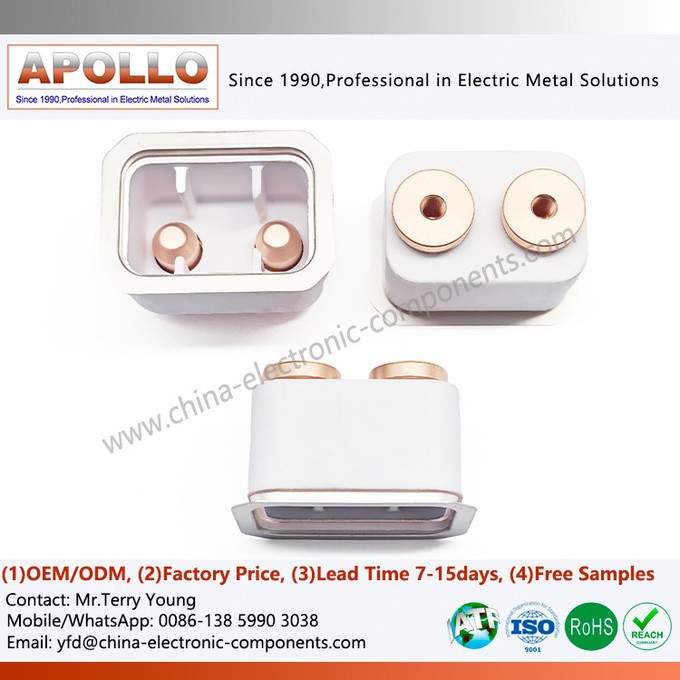
In the electric drive system and power module of new energy vehicles, ceramic substrates undertake multiple functions, including heat dissipation, insulation, and structural support. Because IGBTs, SiC power devices, and high-voltage inverter systems generate a large amount of heat under high-frequency operating conditions, the substrate material not only needs to have high thermal conductivity but also excellent thermal shock resistance and mechanical strength. Currently, widely used ceramic substrate materials include alumina, aluminum nitride, and silicon nitride. Among them, silicon nitride, due to its combination of high reliability and high thermal conductivity, is widely considered an important development direction in the field of power electronics for new energy vehicles. Meanwhile, the demand for Metallized Ceramics for Electrical Components in the power control systems of new energy vehicles continues to grow, as their metallized structure effectively improves the stability of conductive connections and the reliability of packaging.
In high-voltage DC control systems, ceramic materials also play an irreplaceable role. High-voltage relays and contactors in new energy vehicles need to operate stably for extended periods under high voltage and high current conditions, thus placing extremely high demands on insulation performance, arc resistance, and sealing performance. High-voltage ceramic insulation components manufactured using Alumina Metallized Ceramics can effectively ensure that relays maintain stable insulation performance during frequent switching and reduce the impact of arcing on system safety. Especially in the field of high-voltage DC relays, HVDC contactor ceramic enclosures have become a key component of high-voltage safety systems, and their excellent heat resistance and insulation performance effectively improve the operational stability of high-voltage systems in new energy vehicles.
With the accelerating trend of high-voltage platformization in new energy vehicles, the performance requirements for high-voltage fuses are also constantly increasing. Due to their high-temperature resistance, impact resistance, and stable insulation properties, ceramic materials are widely used in the fuse protection systems of new energy vehicles. High-voltage fuse components manufactured using high-strength metallized ceramic components can achieve rapid disconnection under short-circuit or overcurrent conditions, effectively maintaining system stability and safety. In high-power fast charging scenarios, these ceramic components are crucial for ensuring the reliable operation of high-voltage systems.
The increasing electrification of new energy vehicles has also driven the rapid growth in demand for automotive-grade electronic components. Numerous onboard control modules, sensing systems, and autonomous driving systems require electronic packaging materials with higher reliability. Metallized Alumina Ceramics for Electrical Components, with their excellent insulation properties, thermal stability, and dimensional accuracy, are widely used in automotive electronic packaging, relay assemblies, and high-voltage control modules. Meanwhile, the application of Precision Metallized Ceramics in high-precision electronic components for new energy vehicles continues to expand, and its stable dimensional tolerance control capabilities meet the stringent requirements of intelligent vehicles for high-precision electronic components.
In high-voltage relay systems for new energy vehicles, the ceramic housing not only serves an insulating function but also directly affects the product's sealing performance and durability. The adoption of the EV Relay Alumina Ceramic Housing High Voltage DC Ceramic Contactor structural solution effectively improves the thermal shock resistance and long-term stability of high-voltage relays. Meanwhile, the High Temperature Metallized Ceramic Relay Case maintains stable mechanical performance under high-temperature environments, making it suitable for complex operating conditions such as high-voltage DC control systems in new energy vehicles. For new energy vehicle relay manufacturing, Relay Alumina Ceramic Components have gradually become an important structural foundation for high-reliability products.
New energy vehicle motor systems place higher demands on bearing performance. Compared to traditional bearing materials, ceramic bearings have lower density, higher hardness, and superior insulation properties, effectively reducing electrocorrosion problems during high-speed operation. Silicon nitride ceramic bearings, due to their low friction, high wear resistance, and long lifespan, have significant advantages in new energy vehicle drive motor systems, helping to improve overall vehicle transmission efficiency and reduce system energy consumption.
In new energy vehicle braking systems, carbon-ceramic composite materials are also gradually becoming an important direction for high-performance braking systems. Carbon-ceramic materials combine the performance advantages of carbon fiber and silicon carbide, possessing high-temperature stability, high thermal conductivity, and lightweight properties, effectively shortening braking distance and improving vehicle dynamic response performance. With the increasing demands for lightweighting and high performance in new energy vehicles, carbon-ceramic braking systems have broad application prospects.

The safety of power batteries has also driven the development of advanced ceramic materials. As the energy density of power batteries continues to increase, the requirements for heat resistance, safety, and electrolyte compatibility of battery separators are constantly rising. Ceramic-coated separators, due to their lower thermal shrinkage rate and better thermal stability, can effectively reduce the risk of thermal runaway and improve the overall safety performance of power batteries.
Furthermore, transparent ceramics, ceramic-aluminum composites, and high-performance structural ceramics are also finding wider application in the intelligent systems of new energy vehicles. Transparent ceramics, with their high light transmittance, high strength, and high-temperature resistance, can be used in vehicle cameras, LiDAR windows, and optical sensing systems. Ceramic-aluminum composites, combining lightweight and high strength, can be used in chassis structural components and high-strength body components of new energy vehicles.
The widespread application of advanced ceramic materials in the field of new energy vehicles is closely related to their manufacturing processes. Ceramic materials are typically composed of ionic or covalent bonds, thus possessing high hardness, high heat resistance, and high corrosion resistance. However, this also places higher demands on the sintering process. Currently, the industry is continuously optimizing sintering technology to achieve lower sintering temperatures, higher density, and finer grain structures, thereby further improving the overall performance of ceramic materials.
In the manufacturing of core components for new energy vehicles, precision machining of Alumina ceramic parts is crucial for product dimensional accuracy and structural stability. High-precision machining capabilities not only improve the assembly consistency of ceramic parts but also contribute to enhancing the long-term operational reliability of high-voltage systems. Simultaneously, the application demand for Metallized Ceramic Housings for Power Semiconductors in new energy vehicle power modules continues to grow. These housings combine insulation, heat dissipation, and mechanical support performance, providing stable protection for the power electronic systems of new energy vehicles.
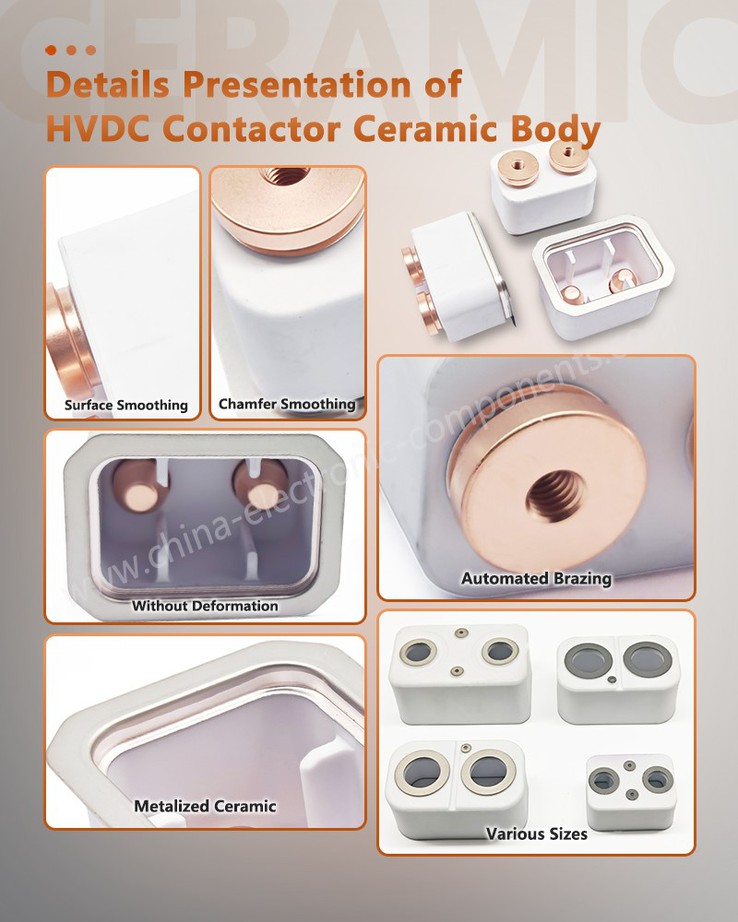
As new energy vehicles continue to develop towards higher voltage, higher efficiency, and higher safety, the market demand for advanced ceramic structural components such as EV Alumina Ceramic Housings and Alumina Relay Ceramic Envelopes for Electric Automobiles will continue to expand. In the future, advanced ceramic materials will play an increasingly important role in high-voltage safety systems, power electronic systems, and intelligent sensing systems of new energy vehicles, and will become one of the important basic materials for promoting the upgrading of the new energy vehicle industry.
contact us
Send Inquiry