


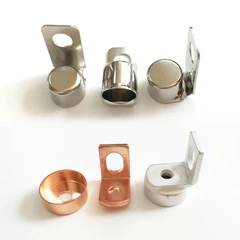

Research Progress and Applications of Electrical Contact Materials
May 15, 2026
Leave a message
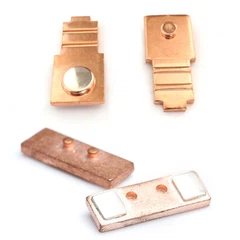
With the development of power systems, industrial automation, new energy equipment, and intelligent control technology, electrical contact materials play an increasingly important role in low-voltage electrical appliances, relays, circuit breakers, and industrial control systems. As a core component for current conduction, interruption, and switching, electrical contact materials directly affect the conductivity, service life, temperature rise control, and operational stability of equipment. Currently, silver electrical contacts are widely used in industrial switches, power control systems, and automation equipment, and are gradually developing towards higher reliability, longer lifespan, and environmental friendliness.
During operation, electrical contacts need to withstand frequent switching, arc impacts, mechanical friction, and thermal stress. Therefore, materials not only need to possess excellent electrical and thermal conductivity, but also good resistance to welding, arc erosion, and stable contact resistance.
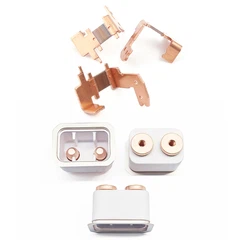
Modern Electrical Contacts for Industrial applications place higher demands on material performance, especially in high-frequency switches, high-current loads, and new energy control systems, where the comprehensive performance requirements for contact materials are more stringent.
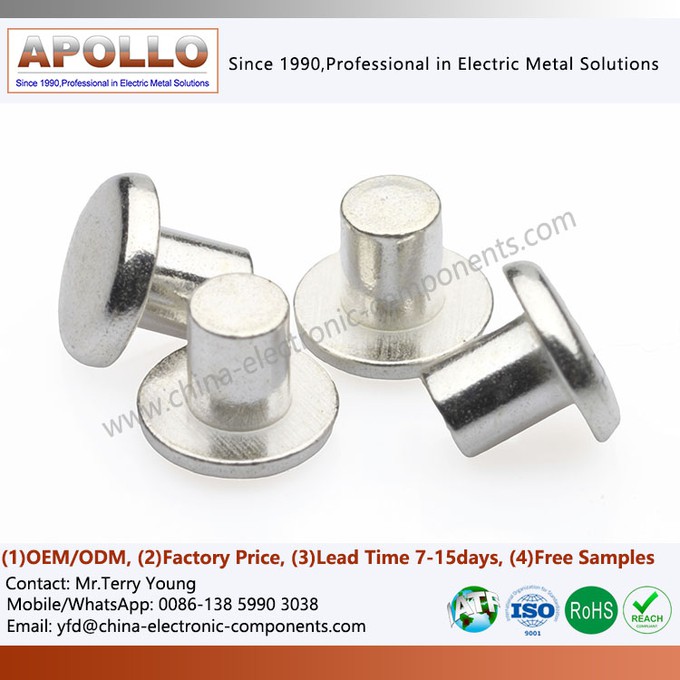
Development of Copper-Based Electrical Contact Materials
Copper-based materials occupy an important position in the medium- and high-voltage electrical appliance field due to their high conductivity, moderate cost, and excellent processing performance. Common copper-based contact materials include copper-tungsten, copper-bismuth, and copper-chromium series.
Copper-tungsten materials possess strong resistance to arc erosion and welding, making them suitable for high-load breaking applications. This material combines high strength with good thermal stability; thus, it is widely used in the Silver contacts for Breaker components of vacuum circuit breakers and high-voltage switchgear. Adding elements such as nickel can further improve the material's wear resistance and arc resistance.
Copper-bismuth materials have lower current-cutting values and good welding resistance, making them suitable for medium- and low-voltage vacuum switchgear systems. Compared to traditional materials, they exhibit better stability in low-current switching environments, but due to their relatively lower strength, they are typically used under medium-load conditions.
Copper-chromium materials are among the most widely used medium- and high-voltage contact materials. These materials possess high voltage withstand capability, excellent arc-extinguishing performance, and strong corrosion resistance, making them widely used in vacuum circuit breakers and industrial power distribution systems. With advancements in powder metallurgy and smelting processes, the microstructure uniformity and density of copper-chromium materials have been significantly improved, further enhancing contact life and stability. Application Trends of Silver-Based Electrical Contact Materials
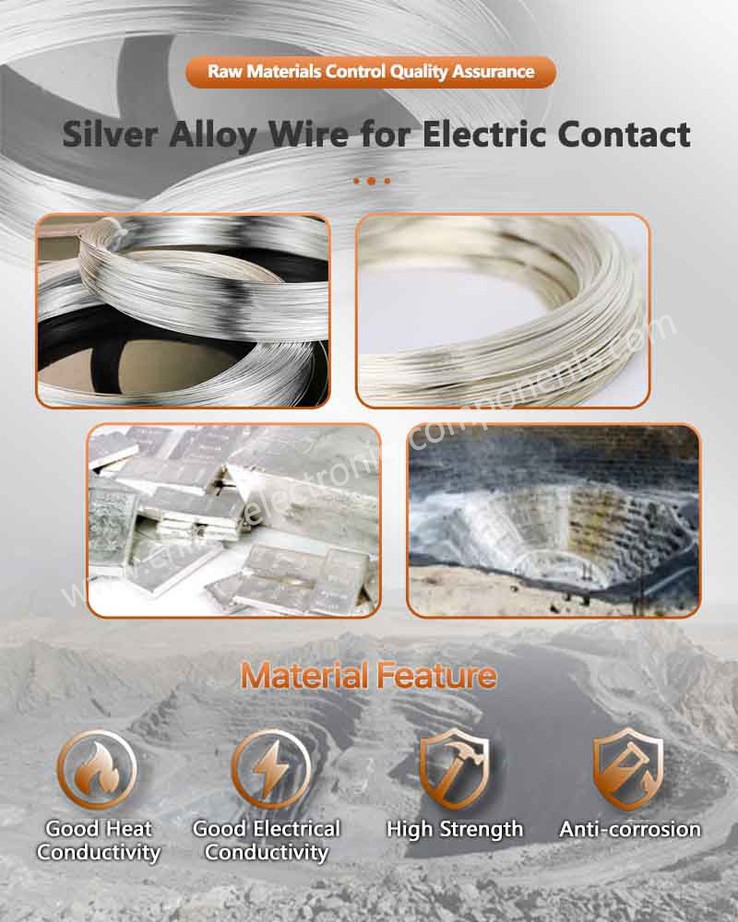
In modern low-voltage electrical systems, silver alloys remain one of the most widely used core materials. Silver-based materials offer high conductivity, low contact resistance, and good thermal conductivity, giving them a significant advantage in high-frequency switches and precision control systems.
Silver-tungsten series materials combine the conductivity of silver with the high-temperature resistance of tungsten, making them suitable for high-load, high-frequency breaking applications. These materials exhibit excellent wear resistance and strong resistance to arc erosion, making them widely used in silver contacts for MCCBs and industrial circuit breaker systems. To improve contact resistance stability, elements such as nickel, iron, and zinc are often added for performance optimization.
Silver-nickel materials are currently one of the most common solutions for silver contacts for relays. This material offers good conductivity, low and stable contact resistance, and good mechanical strength. Under DC load conditions, its material transfer rate is low, leading to its widespread use in relays, contactors, and automatic control equipment. Some high-performance silver nickel contacts further enhance their resistance to welding and high-temperature performance by adding refractory metals such as tungsten and molybdenum. Silver-graphite materials are renowned for their outstanding resistance to welding, resisting fusion even under short-circuit current conditions. They offer good conductivity, making them suitable for high-current instantaneous switching environments. However, due to their high arc erosion rate, they are typically used as auxiliary contacts or in combination with other materials.
Development Direction of Silver Oxide Contact Materials
With increasingly stringent environmental requirements, traditional cadmium-containing materials are gradually being replaced by new, environmentally friendly contact materials. Silver Tin Oxide Contact has become one of the key environmentally friendly materials currently under development.
Silver tin oxide materials possess excellent resistance to welding, arc erosion, and high thermal stability. In the medium to high current range, their overall performance surpasses that of traditional silver cadmium oxide materials, making them particularly suitable for AC contactors, automotive relays, motor control systems, and new energy electrical equipment. Because they do not contain toxic cadmium, silver tin oxide solid contact is rapidly gaining popularity in the field of environmentally friendly electrical appliances.
Meanwhile, silver cadmium oxide solid contact has long been used in the low-voltage electrical industry. Its characteristics include low contact resistance, good wear resistance, and strong resistance to welding, making it widely used in traditional industrial control systems. However, with increasingly stringent environmental regulations, its market share is gradually being replaced by silver tin oxide and other environmentally friendly materials.
Silver zinc oxide solid contact materials are also used in some special scenarios. These materials have good arc resistance and low material transfer rate, making them suitable for medium loads and high-frequency operating conditions.
Pure Silver and Composite Contact Materials
Pure silver solid contact, due to its extremely high conductivity and thermal conductivity, is suitable for low-current, high-sensitivity, and precision control scenarios, such as instrumentation, communication equipment, and miniature relays. However, pure silver has low hardness and is prone to welding; it is generally not suitable for high-current load environments.
To meet the needs of complex operating conditions, modern silver electrical contacts increasingly adopt composite structure designs. For example, double-layer, triple-layer, or multi-layer composite material structures can simultaneously achieve conductivity, wear resistance, and arc resistance.
Silver Nickel Electrical Contacts for Contactors are a typical composite material application solution, effectively improving the stability of contactors in high-frequency operating environments.
Furthermore, Agni Electrical Contacts for Contactors are increasingly being applied in industrial automation and new energy control fields. This type of material combines good conductivity with resistance to welding, making it suitable for frequent operation scenarios.
Development of Electrical Contact Manufacturing Processes
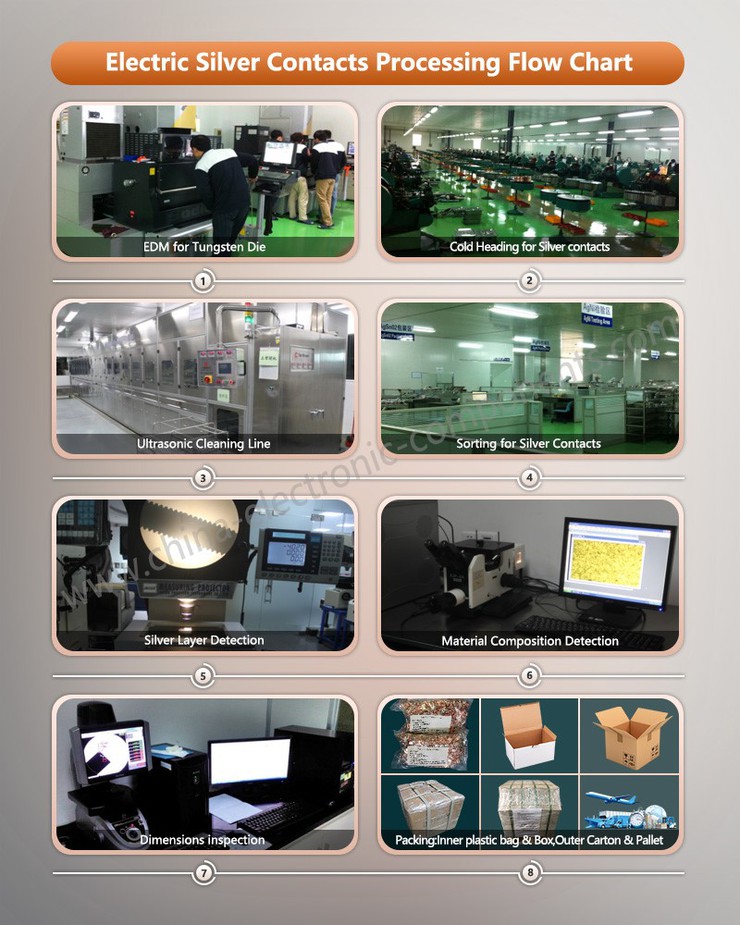
With the upgrading of industrial manufacturing technology, traditional powder metallurgy processes have gradually evolved towards higher density and higher homogeneity. Currently, common processes include sintering, melt infiltration, internal oxidation, sintering extrusion, and arc melting.
Internal oxidation is mainly used to manufacture silver oxide contacts, effectively improving material density and arc resistance. This process allows the oxide to be uniformly distributed within the alloy, thereby improving material stability.
Sintering extrusion, through the combined action of high temperature and pressure, improves the uniformity of material structure and mechanical strength. This process is widely used in the manufacturing of customized electrical contacts, effectively improving product consistency and processing performance.
Arc melting further improves the material's grain structure, increases density and corrosion resistance, and has become an important direction for high-end contact manufacturing for high-performance silver electrical contact manufacturers.
Development Trends of Electrical Contact Materials
In the future, electrical contact materials will continue to develop towards higher reliability, environmental friendliness, miniaturization, and longer lifespan. With the development of new energy, electric vehicles, energy storage systems, and smart grids, the market demand for high-performance Electrical Silver Contact Points continues to grow.
In the low-voltage control field, the application of silver contacts for switches will place greater emphasis on high-frequency operating life and contact stability. In high-voltage systems, contact materials will focus more on arc resistance and thermal stability.
Meanwhile, silver-saving and silver-substitution technologies will also become key research directions in the industry. By optimizing material structure, reducing silver content, and developing new copper-based composite materials, production costs can be effectively reduced, and resource utilization improved. In the future, multilayer composite materials, nanostructured materials, and high-performance, environmentally friendly contact materials will become important directions for technological upgrading in the industry.
contact us
Send Inquiry