




Technical parameters and applications of manganese copper shunt for ammeters
Apr 17, 2026
Leave a message
A manganese-copper shunt for ammeters is a precision resistive element used to extend the current measurement range. Its core principle is to convert a large current into a small voltage signal detectable by the instrument by shunting it with a low resistance. These devices are typically made of copper-manganese alloy, characterized by a low temperature coefficient of resistance, high stability, and good long-term consistency, making them widely used in power measurement, industrial control, and metering systems. In practical applications, these devices can also be used as standard sampling resistors; for example, the common Manganin Shunt for electricity meters is a typical application in energy metering systems.

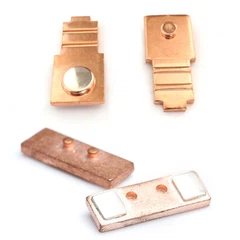
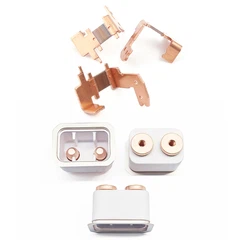
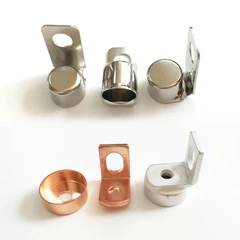
From a structural and functional perspective, a shunt typically consists of an alloy resistive element, copper terminals, and connection structures. Some products achieve an integrated structure through stamping processes; for example, the Manganese Copper Stamping process effectively improves conductivity consistency and mechanical strength. In relays and control systems, integrated terminal structures also appear, such as shunt terminals or shunt terminals for magnetic latching relays, to achieve integrated current sampling and connection design. This type of structure is particularly common in Latching Relay Manganin Shunt applications, helping to reduce contact resistance and improve system reliability.
In terms of technical performance, manganin shunts typically offer high measurement accuracy, achieving 0.5-class accuracy in the low-current range (e.g., several amperes to several thousand amperes) and adjusting to Class 1 accuracy in the high-current range depending on application requirements. Their rated voltage drop is generally designed to be 50mV, 75mV, or 100mV to accommodate different types of ammeters or measurement systems. Regarding thermal performance, the temperature rise of the shunt must be controlled within a reasonable range when operating at rated current to ensure stable resistance and avoid measurement error drift. High-quality products typically feature excellent heat dissipation designs, keeping temperature rise controllable under stable conditions.
Environmental adaptability is one of the important indicators for this type of product. Standard shunts can operate stably over a wide temperature range and possess a certain degree of moisture resistance and mechanical durability, capable of withstanding vibrations and shocks during transportation and use. This makes them suitable not only for laboratory or instrumentation equipment but also for complex environments such as industrial sites and power systems. Furthermore, as a component of the shunt assembly, its structural design must also consider both ease of installation and electrical safety.
During selection and application, two core parameters need to be emphasized: rated current and rated voltage drop. The rated voltage drop of the shunt should be consistent with the input characteristics of the ammeter it is paired with, such as the common 75mV system. Once selected, the full-scale range of the ammeter corresponds to the rated current value of the shunt, thereby expanding the measurement range. In multi-range testing scenarios, different specifications of shunts can be configured for flexible switching to meet the accuracy requirements under different operating conditions. For customized needs, the Customizable Copper Manganin Shunt Resistor solution can be adopted, designed according to the specific current range, structural dimensions, and installation method.

From an application perspective, manganin shunts are widely used in DC measurement systems, including power supply equipment, industrial automation systems, and energy metering equipment. In the electricity meter industry, Electricity Meter Shunt and Manganin Shunt Resistor for Current Measurement are often used in the current sampling stage to convert the primary current into a stable voltage signal for processing by the back-end circuitry. In the fields of new energy and power electronics, its stability and high precision are also of great value.
Overall, as a key current-sensing element, the performance of the manganese-copper shunt directly affects the accuracy and reliability of the measurement system. Through reasonable material selection, structural design, and parameter matching, high-precision, long-term stable current measurement solutions can be achieved in various application scenarios.
contact us

Send Inquiry