










Comprehensive Guide to Fastener Basics
Apr 17, 2026
Leave a message
Fasteners are fundamental mechanical components that enable reliable connections between two or more parts. They are widely used in building structures, machinery manufacturing, electrical equipment, and new energy systems. Their core value lies in achieving controllable connections, disassembly (in some types), and structural stability.
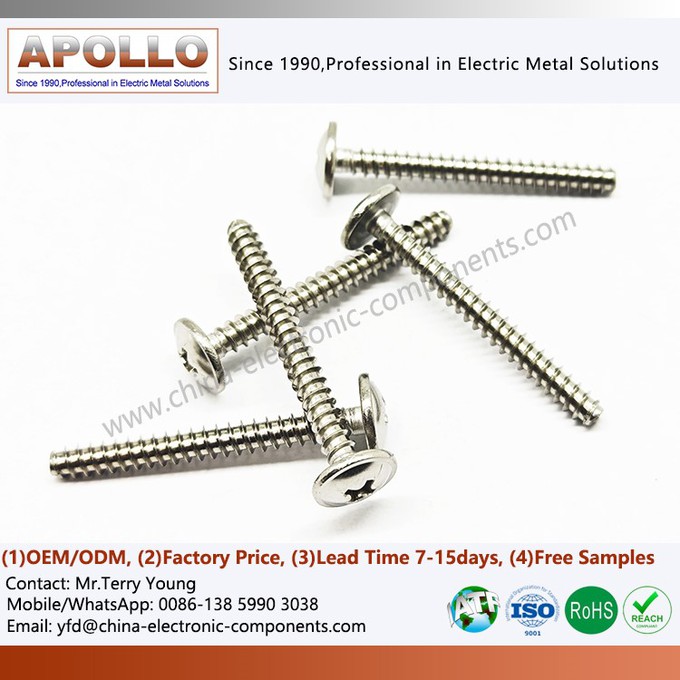
Fastener Classification System
From an engineering application perspective, fasteners are generally classified into the following 12 categories:
1. Bolts
Composed of a head and a threaded shank, they require a nut for use. Suitable for through-hole connections, they are typical disassembly connections. Common products include Hex Bolts and Flanged Hexagon Head Bolt Screws, widely used in steel structures and equipment installation.
2. Studs
Headless structures with external threads at both ends. One end screws into the nut, and the other end is secured with a nut. Suitable for high-intensity or frequent disassembly scenarios.
3. Screws
Can be screwed directly into threaded holes or used with nuts. Based on construction, they include:
Machine Screw with Phillips Head
Pan Head Screw (Stainless Steel)
Countersunk Flat Head Screws
Stainless steel pan head screws are suitable for corrosion-resistant environments.
4. Nuts
Internal threaded fasteners that form a complete connection pair with bolts or studs, such as:
M10 304 Stainless Steel Hex Bolt Screw Nut Flat Washer Combination
5. Self-tapping Screws
They form their own internal threads within the material and are commonly used for thin sheet metal connections, such as:
Stainless steel sheet metal screws
6. Wood Screws
Specifically designed for wood structural connections, they have deep threads and a large lead.
7. Washers
Used to distribute loads, prevent loosening, or protect contact surfaces, such as spring washers and flat washers. 8. Retaining Rings
Used in shafts or holes to restrict axial movement of parts.
9. Pins
Used for positioning or load transfer.
10. Rivets
Form a permanent, non-removable connection.
11. Assemblies
Pre-assembled fasteners, such as:
Bolt + Washer Combination (Hexagon Head Machine Screw Metric Thread Flat Spring Lock Washer Bolt 304 Stainless Steel)
12. Weld Studs
Fixed onto the base material by welding for subsequent assembly.
Basic Thread Knowledge
1. Functions of Threads
Threads are the core structure of fasteners, primarily serving the following functions:
Fastening connections
Force transmission
Sealing connections (pipe threads)
Their advantages lie in their simple structure, high reliability, and ease of assembly and disassembly.
2. Thread Classification
(1) Classification by Application
Ordinary Threads (for fastening): Triangular tooth profile, most widely used
Transmission Threads: Trapezoidal, rectangular, etc.
Sealing Threads: Pipe Threads
Special Threads
(2) Classification by Standard System
Metric Thread
Unified Thread (British/American)
3. Key Terms
Major Diameter
Minor Diameter
Pitch Diameter – determines fit performance
Pitch
Thread Angle
Left-hand/Right-hand
Thread Inspection and Fit
1. Inspection Methods
Common inspection tools include:
Thread ring gauge (external thread)
Thread plug gauge (internal thread)
Used to simulate assembly conditions for qualification judgment.
2. Pitch Diameter Measurement
The pitch diameter directly affects the fit performance. Common methods include:
Three-needle method; Pitch micrometer
3. Thread Fit Grades
(1) Imperial System
1A/1B: Loose fit
2A/2B: General fit
3A/3B: High precision
(2) Metric System
Common combinations:
6H/6g (Standard fit)
6G/6e (Thick coating)
4H/4h (High precision)
Material and Performance Requirements
The fastener material directly determines its mechanical properties and environmental resistance.
1. Common Materials
Carbon Steel (High Strength, Low Cost)
Stainless Steel (Corrosion Resistant)
Alloy Steel (High-Strength Applications)
Typical Products:
M6 Hexagon Socket Head Screw 304 Stainless Steel Knurling
Flat-head Hexagon Socket Stainless Steel Screws
2. Heat Treatment Requirements
Including:
Quenching
Temperature Hardening
Used to improve:
Tensile Strength
Fatigue Life
Wear Resistance
3. Mechanical Performance Indicators
Key Parameters:
Tensile Strength
Yield Strength
Hardness

Typical Structural Applications
1. Steel Structure Connections
Commonly used high-strength bolt connections, emphasizing:
Preload Control
Friction-type Connections
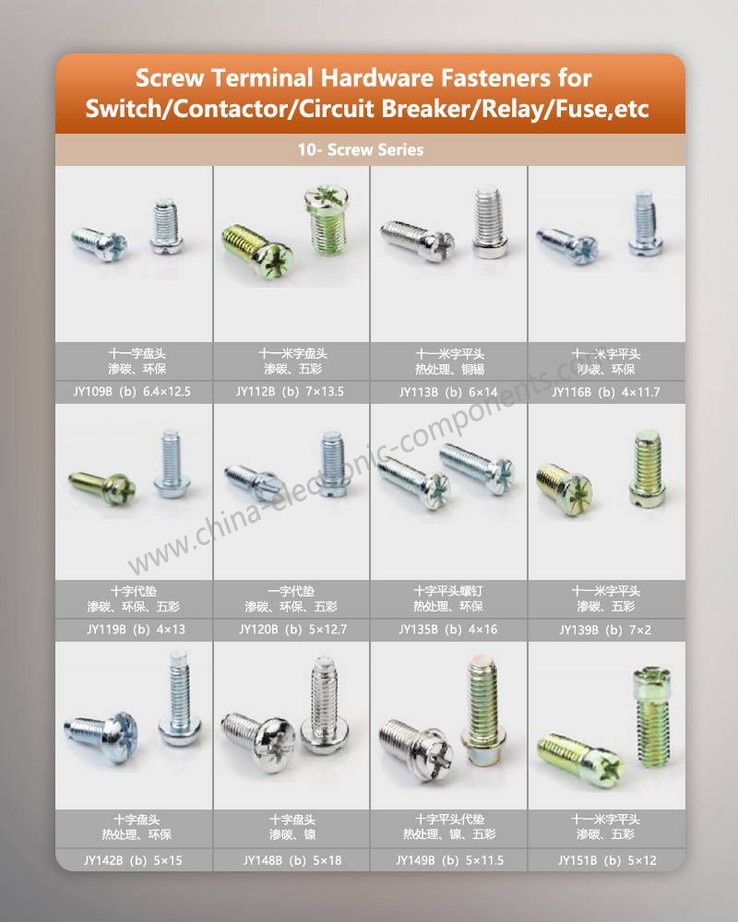
2. Electrical and Connection Terminals
Examples:
M10 Clamp Wire Terminal
M8 Socket Head Cap Screws Terminal with Spacer
Used for conductive connections and structural fixation.
3. Precision Equipment
Usage:
Set Screw with Hollow Head Bolt Base for position locking and fine-tuning.
Selection and Application Recommendations
In engineering procurement and design, the following parameters should be given special attention:
Connection type (removable)
Load type (static/dynamic)
Environmental conditions (corrosion, temperature)
Assembly space limitations
Standards and certification requirements
Basic general-purpose products such as steel screws can meet routine needs, while stainless steel or high-strength grade products should be prioritized in high-reliability scenarios.
Summary
Although fasteners are basic components, their design, selection, and application directly affect the safety and reliability of the overall structure. From classification systems and thread principles to material properties and fit grades, each aspect involves clear engineering logic. For procurement personnel and engineering technicians, mastering this basic knowledge is key to achieving efficient selection and quality control.
contact us

Send Inquiry