










Basic knowledge of electromagnetic relays
Apr 17, 2026
Leave a message
An electromagnetic relay is a core electrical component that controls the on/off state of a circuit based on electromagnetic effects. Essentially, it's an automated switching device that controls a high-power circuit using a low-power signal. In modern electrical systems, electromagnetic relays are widely used in control, protection, and signal conversion processes, playing a crucial role, especially in power systems, industrial automation, and metering equipment. They are often used in conjunction with current sensing elements such as the Electricity Meter Shunt and the Manganin Shunt for the Electricity Meter to achieve precise measurement and control.
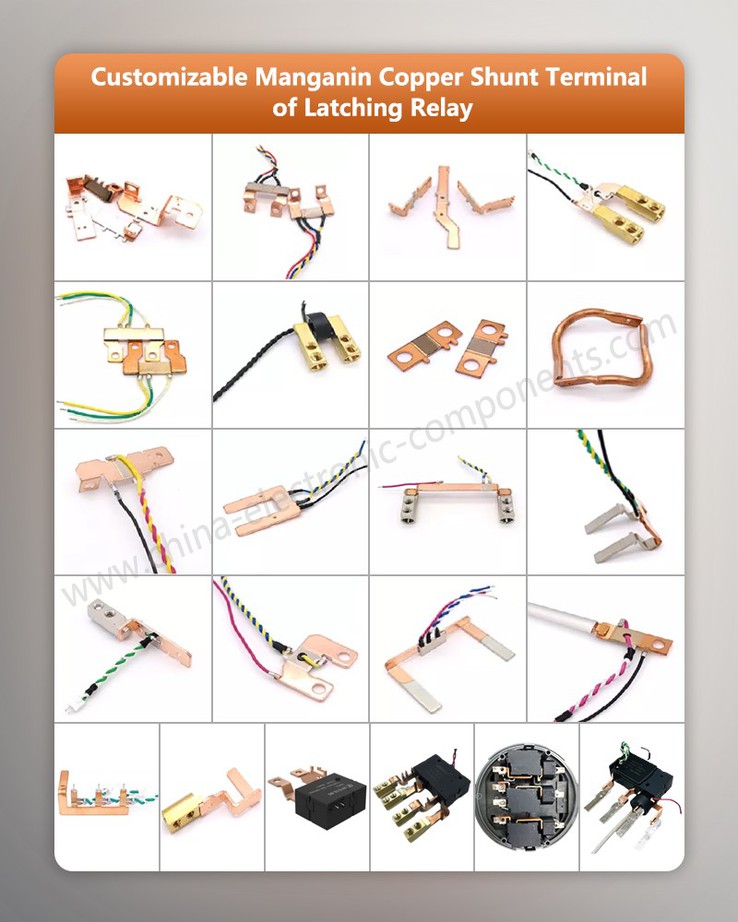
Structurally, an electromagnetic relay mainly consists of an electromagnetic system and a contact system. The electromagnetic system includes a coil and an iron core; when the coil is energized, it generates a magnetic field that drives the armature. The contact system is responsible for closing and opening the circuit. Contact types typically include normally open, normally closed, and changeover contacts to meet different control logic requirements. In high-precision metering or current sampling scenarios, they are often used in conjunction with a Manganin Shunt Resistor for Current Measurement or a Copper Manganin Shunt to achieve stable current detection, thereby improving the overall reliability of the system.
Its working mechanism can be summarized as an "electric-magnetic-mechanical-electric" conversion process: an energized coil generates a magnetic field, which attracts the armature, driving the contacts to actuate and thus connecting or disconnecting the main circuit. This process not only achieves electrical isolation but also effectively protects the control system from high-voltage surges. In energy metering equipment, such as when used in conjunction with Electrical Meter Shunts or Energy Meter Shunts, relays can safely switch between the sampling circuit and the main circuit.
Regarding key performance parameters, electromagnetic relays mainly involve rated voltage, coil resistance, pull-in current, release current, and contact capacity. Contact capacity directly determines its controllable load capacity, while coil parameters affect drive power consumption and response characteristics. In systems involving precision current measurement, such as those using a Customizable Copper Manganin Shunt Resistor or a Relay Resistor Shunt, special attention must be paid to temperature drift characteristics and long-term stability to ensure measurement accuracy.
In actual testing and quality control, relays require multiple tests, including contact resistance, coil resistance, and pull-in/release characteristics. These tests determine whether the relay meets design requirements and ensures reliable operation under complex conditions. For example, in systems integrating shunt assemblies or Manganin copper shunts, the matching performance between the relay and the shunt is particularly critical.
From an application perspective, electromagnetic relays are widely used in industrial control, power protection, automotive electronics, and home appliances. In smart meters and energy management systems, relays are often used in conjunction with Electric Meters, Manganin Shunt, Shunt Terminal, or Shunt Terminal for Magnetic Latching Relay to achieve coordinated load control and current sampling. In magnetic latching relay systems, such as Latching Relay Manganin Shunt or Manganin Shunt for Single Phase Latching Relay, the contact position can be maintained in the absence of power, thus significantly reducing energy consumption.
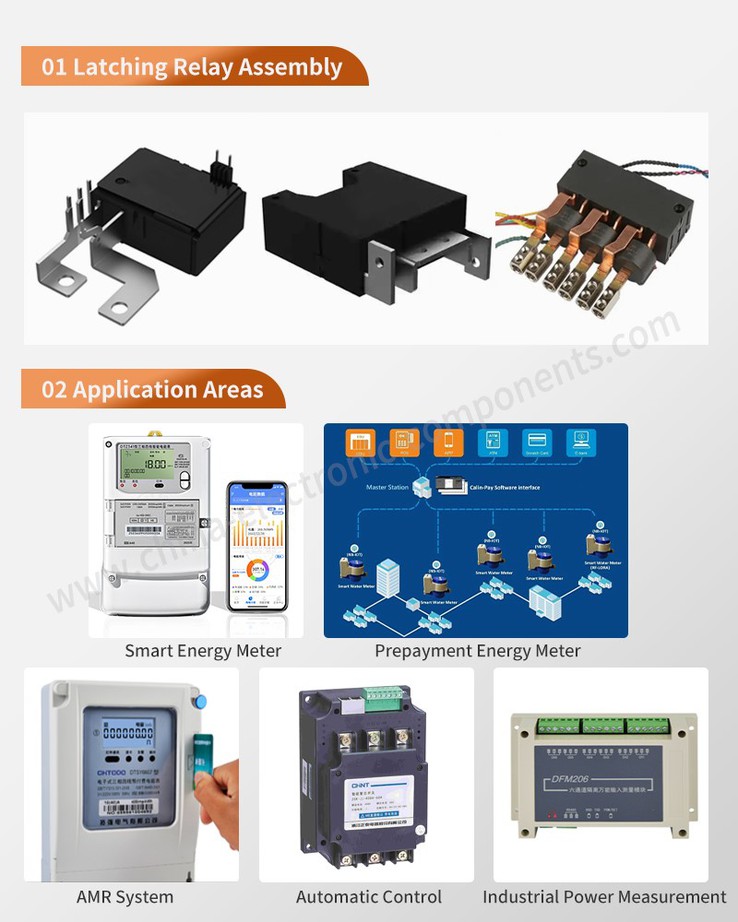
During the selection process, factors such as control voltage, load type, number of contacts, and installation space need to be comprehensively considered. For high-current applications, such as systems involving 100A Magnetic Latching Relay Shunts or Manganese Copper Shunts, contact load capacity and temperature rise control should be carefully evaluated. Furthermore, in structural component manufacturing, employing Manganese Copper Stamping and Static Copper Plate with Manganese processes can further improve conductivity and mechanical strength.
In addition, relay products are constantly evolving with technological advancements. Besides traditional electromagnetic relays, new devices such as solid-state relays and thermistor reed relays are increasingly being applied to specific scenarios. Solid-state relays offer advantages such as contactless operation and fast response, while traditional electromagnetic relays maintain their advantages in high reliability and surge withstand capability. In high-end metering, combining EBW (Electron Beam Welding) Manganese Shunt technology can achieve current detection solutions with higher accuracy and lower resistance drift.

Overall, electromagnetic relays, as fundamental actuators in electrical control systems, are combined with various shunts (such as Copper Manganese and Copper Manganin Shunt) to construct a complete "control + measurement" system, which has irreplaceable engineering value in the fields of new energy, power metering, and industrial automation.
contact us

Send Inquiry