










Power Distribution Cabinet Industry Accelerates Transformation: Intelligence, Modularity, and Customization Drive Upgrades in the Electrical Equipment Market
Nov 03, 2026
Leave a message
By 2026, the continued development of the new energy sector, data centers, intelligent manufacturing, and modern power infrastructure is driving a new round of structural adjustment within the power distribution equipment market. As competition for standardized, conventional products intensifies, relying solely on economies of scale and price advantages is no longer sufficient to meet the requirements of complex engineering projects. Meanwhile, intelligent monitoring, modular design, remote operation and maintenance, and customized production have emerged as key industry trends, shifting the focus of power distribution cabinet manufacturing from the mere supply of equipment toward the provision of comprehensive electrical solutions.
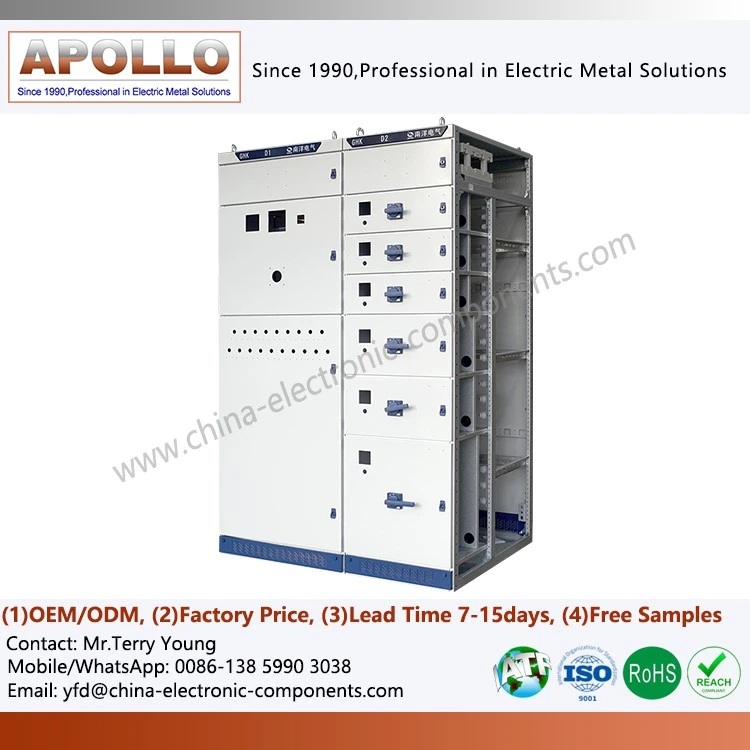
As critical components for power distribution and control, power distribution cabinets are widely utilized across industrial facilities, commercial buildings, residential developments, transportation infrastructure, new energy power plants, and data centers. With rising demands for power supply reliability, equipment safety, and operational efficiency across these diverse sectors, the market now requires more sophisticated approaches to structural design, internal component layout, thermal management, and protection ratings.
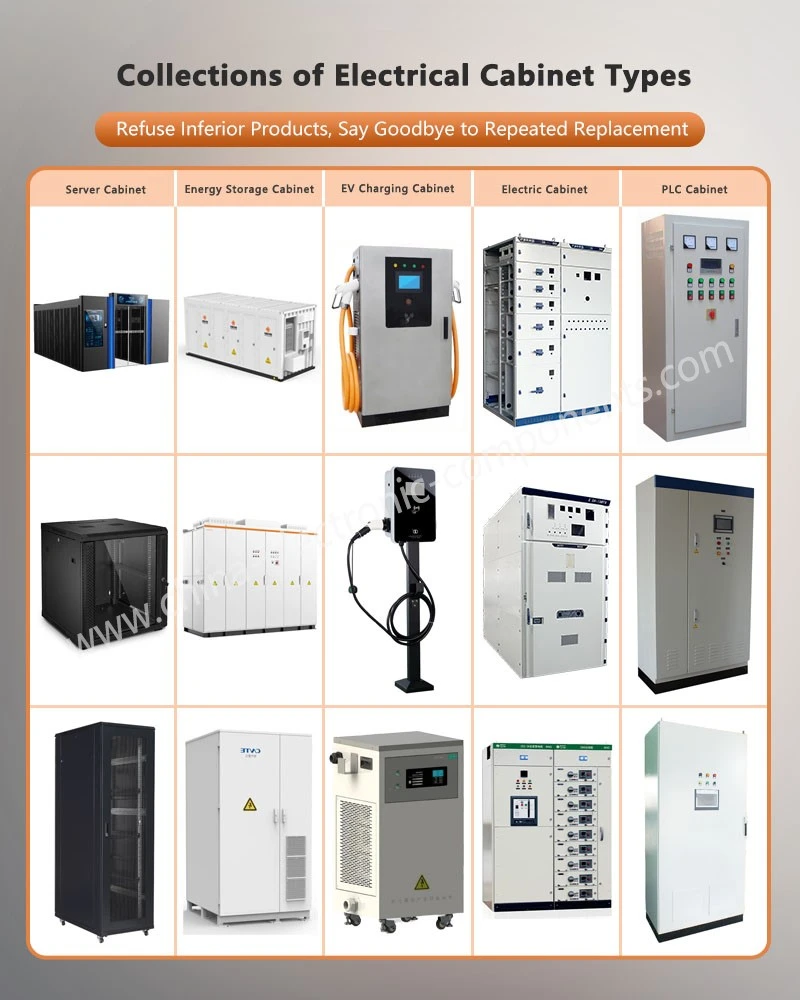
Modern power distribution equipment now encompasses a comprehensive product ecosystem, including low-voltage distribution cabinets, high-voltage switchgear, power control cabinets, cable distribution cabinets, and various specialized electrical control units. Cable distribution cabinets, in particular, facilitate the connection, distribution, and management of cables; their design must carefully account for factors such as cable volume, entry and exit configurations, available installation space, and future maintenance requirements. For large-scale industrial and infrastructure projects, an optimized cabinet layout enhances the efficiency of line management while simplifying on-site installation and maintenance.
Shifting market demands-driven largely by the expansion of new energy and digital infrastructure-have become a primary growth engine for the power distribution cabinet industry. The rapid advancement of photovoltaic power generation, energy storage systems, electric vehicle charging infrastructure, and data centers has placed higher demands on the stability and integration capabilities of power distribution equipment. In the context of data centers, in particular, server racks, power supply systems, and distribution equipment must be integrated into a highly coordinated electrical architecture to ensure a continuous power supply and reliable load distribution.
As the scale of data center construction continues to grow, there is increasing focus on the specific requirements for power distribution cabinets designed for these environments. Such units must not only fulfill standard power distribution functions but also accommodate high-density cabling, ensure broad equipment compatibility, and incorporate features for temperature monitoring and ease of maintenance. Under high-load operating conditions, factors such as the layout of busbars, the configuration of circuit breakers, cable management, and thermal design within an electrical enclosure significantly influence the performance of the entire power supply system.
Meanwhile, intelligent technology is transforming the functional role of traditional power distribution equipment. While conventional distribution cabinets rely primarily on circuit breakers, contactors, and protective relays to handle basic power distribution and control, a new generation of intelligent equipment integrates modules for monitoring current, voltage, power, temperature, and switch status. Through sensors, communication modules, and intelligent control units, these devices collect operational data and transmit it to a backend management system, enabling remote monitoring, early fault warning, and operational status analysis.
Intelligent distribution cabinets have increasingly become a preferred choice for smart factories, commercial buildings, and large-scale infrastructure projects. By monitoring critical electrical parameters in real time, operations and maintenance personnel can promptly identify potential issues-such as abnormal temperature rises, overloads, or circuit faults-thereby minimizing the impact of unexpected power outages on production and business operations. As the Industrial Internet and energy management systems become more widespread, intelligent power distribution equipment will place an even greater emphasis on data acquisition, compatibility with communication protocols, and system integration capabilities.
In terms of product structure, modular design has emerged as a key trend in the manufacturing of distribution cabinets. Since different projects vary significantly in terms of voltage levels, circuit counts, installation space, and operating environments, traditional fixed-structure designs often struggle to meet such diverse requirements. Modular distribution cabinets-featuring standardized functional units, configurable structures, and flexible internal layouts-allow for adjustments tailored to specific project needs. This design approach enhances production efficiency, shortens delivery lead times, and facilitates future system expansion and maintenance.
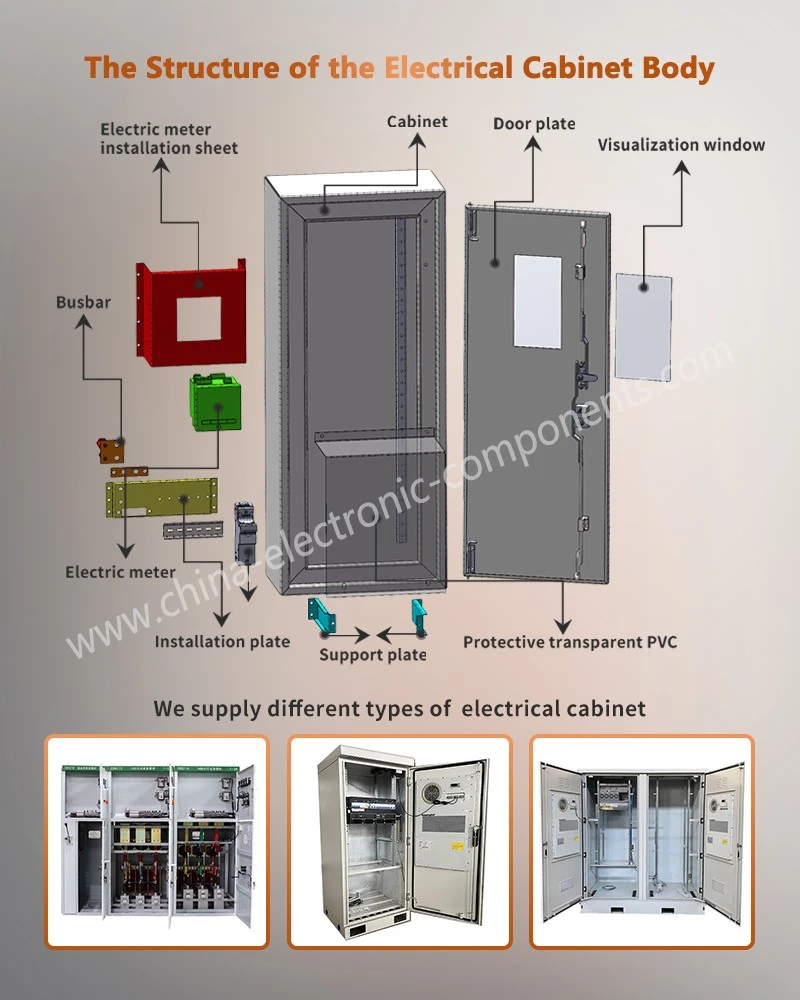
Regarding manufacturing processes, the structural quality of a distribution cabinet directly determines its mechanical stability and long-term performance. Enclosures are typically fabricated from cold-rolled steel, stainless steel, or other suitable metals, undergoing processes such as laser cutting, CNC punching, bending, welding, grinding, and surface coating. Depending on the intended operating environment, materials and surface treatments must be carefully selected to meet specific requirements for corrosion resistance, dust and water protection, and mechanical durability. For instance, wall-mounted metal distribution enclosures are primarily suited for building power distribution and control applications where installation space is limited.
Their design must balance ease of installation, the arrangement of internal components, and space for routine maintenance. In industrial facilities or outdoor infrastructure, steel distribution cabinets must prioritize structural strength, rigidity, and surface corrosion resistance to ensure the equipment can withstand environmental changes over long-term operation.
Beyond power distribution, the ongoing development of telecommunications infrastructure has driven the market for fiber optic distribution equipment. With the advancement of 5G communications, fiber-to-the-home (FTTH) deployments, cloud computing, and data center network construction, the centralized management, connection protection, and branching of fiber optic lines have become increasingly critical. Fiber optic distribution cabinets are typically used for the termination, splicing, distribution, and protection of fiber optic cables; their internal architecture must meet technical requirements regarding fiber bend radii, connector installation, and line labeling.
Outdoor fiber optic distribution cabinets are primarily used for the termination and distribution of outdoor fiber optic lines. Depending on the installation environment, they must provide adequate protection against water, dust, and corrosion. Unlike indoor telecommunications equipment, outdoor units must endure complex environmental conditions-including temperature fluctuations, precipitation, ultraviolet (UV) radiation, and dust-making the cabinet's sealing structure, material selection, and internal spatial design particularly important.
As fiber optic networks continue to scale, the application of outdoor fiber distribution cabinets increasingly emphasizes capacity expansion and the efficiency of line management. A well-planned internal modular layout facilitates fiber splicing, patching, and ongoing maintenance, while simultaneously reducing operational risks such as fiber crossing or tangled cabling.
In telecommunications network nodes and regional centralized distribution hubs, fiber distribution hub cabinets serve to aggregate, distribute, and manage fiber optic connections. Their design must account for factors such as cable entry and exit methods, distribution capacity, the number of adapters, and on-site installation conditions to meet the deployment requirements of various network architectures.
For projects requiring the centralized management of multiple fiber optic connections, modular fiber cabinets allow for capacity configuration and functional expansion through the use of modular units. This type of design allows for the adjustment of internal wiring configurations based on the actual scale of the network, enhancing space utilization and future expansion capabilities, while also helping to minimize structural variations across different projects.
Regarding the development trends for outdoor equipment, structures such as cable distribution cabinets with specialized top sections must be carefully designed to align with specific installation methods and functional requirements. Factors such as the top-section structure, cable entry/exit points, and internal layout must account for cable bending radii, rainwater drainage, and maintenance accessibility-ensuring that poor structural design does not hinder on-site installation or long-term operational use.
Overall, the market for power distribution cabinets and related electrical enclosures is currently exhibiting three distinct trends as we approach 2026.
First, there is a continuous increase in the level of product intelligence. Features such as electrical parameter monitoring, remote communication, fault early warning, and energy management are increasingly becoming standard components of high-end power distribution equipment.
Second, product architecture is shifting toward modularity and customization. Since different application scenarios impose varying requirements on dimensions, internal layouts, installation interfaces, and protection levels, manufacturers must possess flexible structural design capabilities and high-precision machining expertise.
Third, greater emphasis is being placed on manufacturing quality and full-lifecycle management. Enclosures must not only meet initial installation requirements but also maintain structural integrity, reliable surface protection, and ease of maintenance for internal components throughout their long-term operational lifespan.
When procuring power distribution equipment for engineering projects, one should look beyond mere dimensions and procurement costs. It is essential to conduct a comprehensive evaluation of technical parameters, including rated voltage, rated current, short-circuit withstand capacity, ingress protection (IP) ratings, material thickness, surface treatment, and the configuration of internal components. For customized projects, it is also necessary to verify the installation environment, cable entry/exit methods, reserved space, and future expansion requirements well in advance.
If you are planning projects in sectors such as industrial power distribution, data centers, telecommunications networks, or new energy infrastructure, you can provide product drawings, dimensions, material specifications, environmental details, and technical requirements to a professional manufacturing team. This facilitates collaboration on structural design, sheet metal fabrication, welding processes, and surface finishing. Through early-stage engineering assessment and sample validation, you can ensure that the equipment is perfectly suited to its intended application, thereby improving project delivery efficiency and long-term operational reliability.
contact us
Send Inquiry