










Analysis of Epoxy Powder Insulated Busbar Technology: A Mainstream Insulation Solution for High-Density Power Electronic Systems
Jun 16, 2026
Leave a message
With the rapid development of new energy vehicles, energy storage systems, industrial automation equipment, and high-power power electronic products, busbars have evolved beyond simply transmitting current; they now require consideration of insulation safety, thermal management, mechanical strength, and long-term environmental reliability. Especially given the continuously increasing power density of equipment and shrinking installation space, insulation design has become a crucial factor affecting busbar system performance.
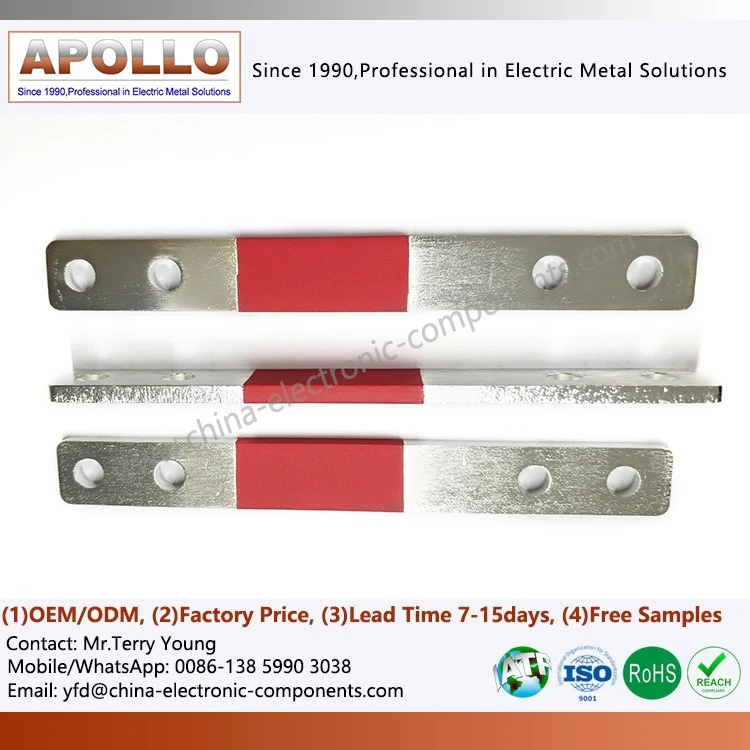
Currently, epoxy powder coating insulation technology, with its excellent electrical performance, environmental resistance, and adaptability to complex structures, has become one of the most widely adopted busbar insulation solutions in the industry. Whether in general power distribution equipment or high-voltage power systems, busbar products using Electrical Copper Bar Epoxy Resin Powder Coating technology exhibit good insulation reliability and long-term stability.
Buses typically use copper or aluminum as the conductor material, with copper busbars being the most widely used due to their excellent conductivity, thermal conductivity, and machinability. Compared to traditional cables, busbars can carry higher currents, reduce system impedance and parasitic inductance, and allow for compact layouts, thus finding wide application in new energy, power electronics, rail transportation, and industrial power distribution.
As system structures become increasingly complex, traditional heat-shrink tubing, insulating tape, and plastic sheaths are no longer sufficient to meet the demands of high-performance equipment. In this context, the Copper Busbar with Epoxy Powder Coating solution, with its uniform and stable insulation layer structure, has become a crucial choice for modern power distribution systems.
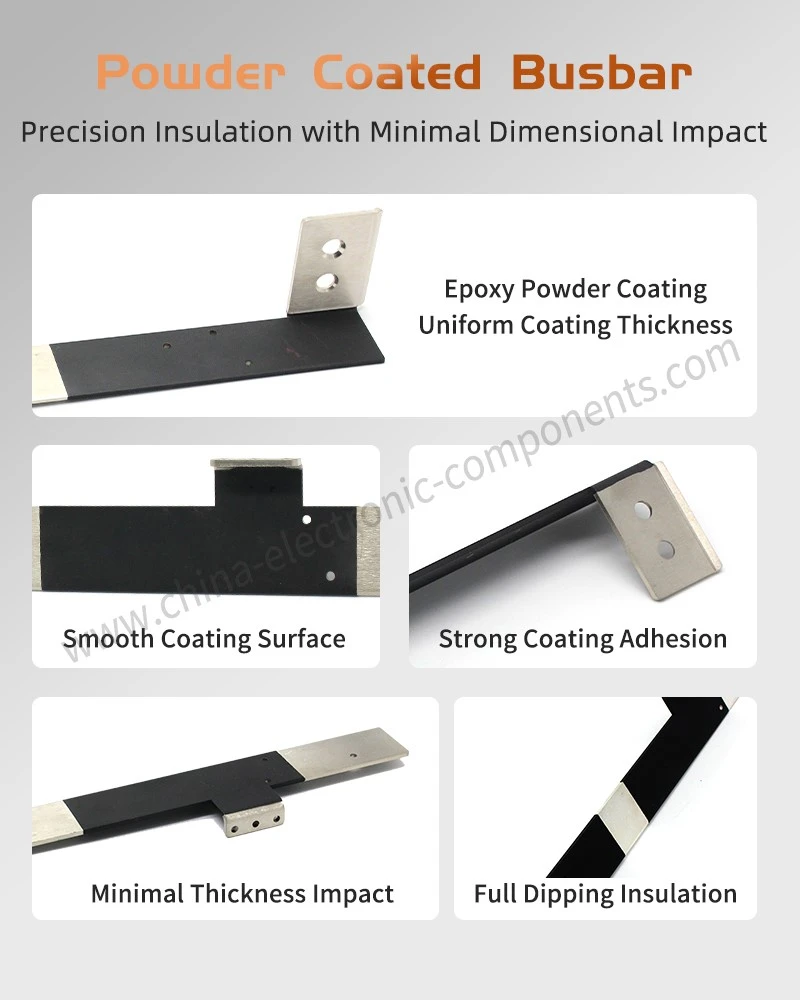
Structurally, single-conductor busbars are the most common application type. These products are typically manufactured using stamping and bending processes for high-current transmission and low-inductance connections. Employing the Epoxy Powder Coating Copper Busbars process creates a uniform insulation layer in complex bending areas, effectively improving withstand voltage performance and service life.
For multi-terminal busbars, multiple branch connection points are often integrated into the main body, widely used in new energy vehicle power distribution modules, industrial control systems, and internal connections of electronic equipment. These products require precise masking of the connection areas during the coating process; therefore, the Epoxy Powder Coating Custom Copper Busbar solution can balance insulation protection and installation connection requirements.
In high-power power electronic equipment, multi-layer stacked busbars have become an important structure for reducing inductance and optimizing current paths. These products typically employ a multi-layered composite of conductors and insulation materials. Some designs also incorporate a Busbar Bonded Powder Coating protective layer on the outer surface of the component to enhance overall resistance to moisture and heat, corrosion, and mechanical protection.
Currently, powder materials used for busbar insulation coating primarily include epoxy resin, polyester resin, nylon, and polyurethane. Among these, epoxy resin, with its high insulation breakdown strength and excellent adhesion, has become one of the most mainstream materials in the Epoxy Bus Bar Coating field. The resulting insulation layer not only meets high-voltage withstand requirements but also exhibits good wear resistance and impact resistance.
In high-voltage power distribution equipment, the design concept of Custom Insulated Copper Busbar for High Voltage Equipment has gradually become an industry trend. By rationally controlling the coating thickness and creepage distance, the system safety level can be effectively improved, and insulation requirements under complex operating conditions can be met.
Compared to traditional insulation methods, epoxy powder coating also offers good repairability. When the coating is damaged due to transportation, installation, or subsequent modifications, the original coating can be treated and recoated, preventing conductor failure and thus reducing overall manufacturing costs. This is one of the key reasons why Busbar Epoxy Coating technology continues to be favored by the industry.
Depending on different application scenarios, busbar powder coating processes are mainly divided into two methods: fluidized bed dip coating and electrostatic spraying. Fluidized bed dip coating is suitable for special applications requiring ultra-thick insulation layers, while electrostatic spraying, due to its advantages such as uniform film thickness, controllable dimensions, and adaptability to complex structures, has become the mainstream production process for modern customized powder-coated busbar products.
In the new energy field, power battery systems and energy storage systems have placed higher demands on insulation performance. Especially in the high-voltage platforms of new energy vehicles, powder-coated EV busbars have become an important solution for key connection components. Their insulation layer can not only withstand long-term voltage stress but also adapt to vibration, shock, and complex temperature and humidity environments.
Furthermore, in power distribution systems, many specialized structures have been developed to meet the different functional requirements of grounding busbars, neutral busbars, and distribution busbars. For example, Coating Spray Copper Earth Ground Bus Bars can be used in grounding protection systems; Epoxy and Powder Coated Neutral Copper Busbars are widely used in neutral line distribution scenarios; and Copper Bus Bar Epoxy Powder Coating for Power Distribution products are widely used in industrial and commercial power distribution equipment.
For applications requiring additional corrosion resistance, tinned copper busbars are also a common choice. By tinning the surface of the copper conductor and combining it with an insulating spray coating process, a Tinned Copper Busbar or Insulated Coating Tinned Solid Copper Busbar Connector structure can be formed, thereby improving oxidation resistance and long-term conductivity stability.
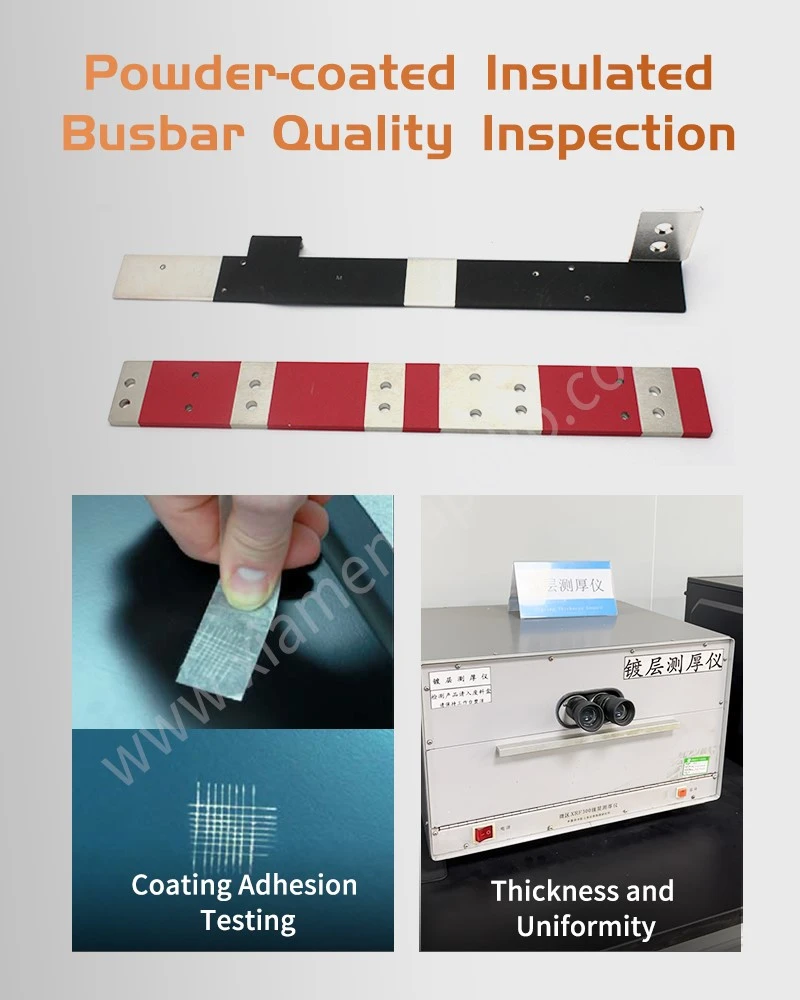
In terms of product quality control, the industry typically uses methods such as withstand voltage testing, insulation resistance testing, coating thickness inspection, and pinhole inspection to verify product performance. Withstand voltage testing can assess the insulation breakdown strength, while surface defect inspection can detect potential risks such as micro-holes and cracks.
Overall, busbar products employing Insulated Epoxy Powder Coating technology have been widely used in new energy vehicles, energy storage equipment, industrial automation systems, rail transportation, power equipment, and data centers. As equipment evolves towards higher power and greater integration, Copper Busbars with Epoxy Powder Insulation will continue to play a crucial role, providing reliable, efficient, and safe current transmission and insulation protection solutions for modern power electronic systems.
contact us
Send Inquiry