










Analysis of the copper busbar dip coating process for power batteries: material selection, process control, and insulation performance optimization
Jun 16, 2026
Leave a message
With the rapid development of new energy vehicles and energy storage systems, copper busbars, as a crucial carrier of electrical energy transmission, have received increasing attention for their insulation protection technology. In high-voltage battery systems, battery busbars not only bear the burden of high-current transmission but also require excellent insulation performance, corrosion resistance, and long-term reliability. Dip-coating, as one of the more mature insulation treatment solutions, is widely used in energy storage systems, high-voltage power distribution components, and some power battery assemblies.
What is Copper Busbar Dip-Coating?
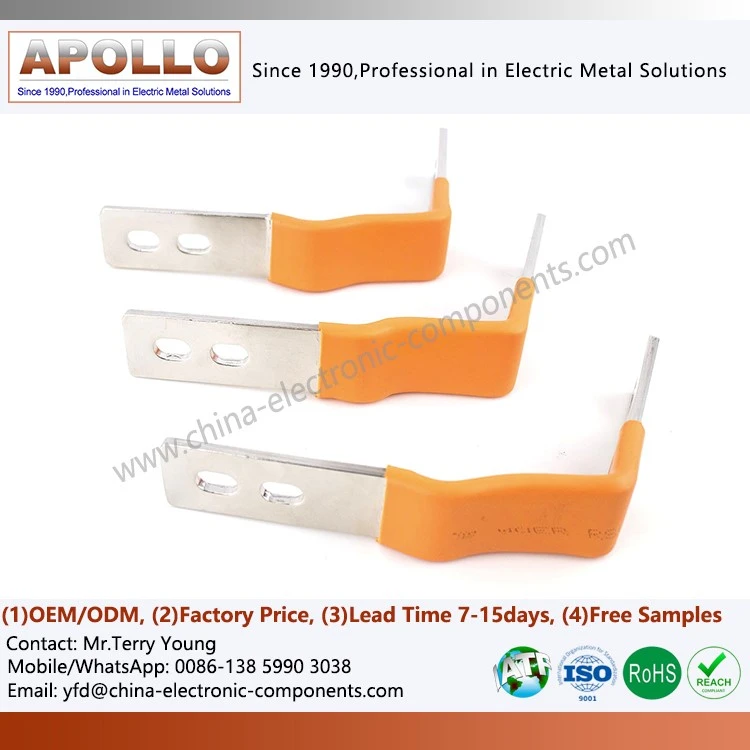
Copper busbar dip-coating refers to immersing pre-treated copper or aluminum busbars in liquid insulating material. Through heating and plasticizing, the insulating layer is uniformly adhered to the metal surface, forming a stable insulating protective layer. Insulated busbars treated with dip-coating effectively improve their withstand voltage rating, moisture resistance, and corrosion resistance.
Compared to traditional coating processes, PVC-coated busbars offer advantages such as high production efficiency, good insulation layer integrity, and low mass production costs. For electrical connection systems requiring long-term stable operation, dip-coating significantly improves busbar isolation performance and reduces the risk of insulation failure.
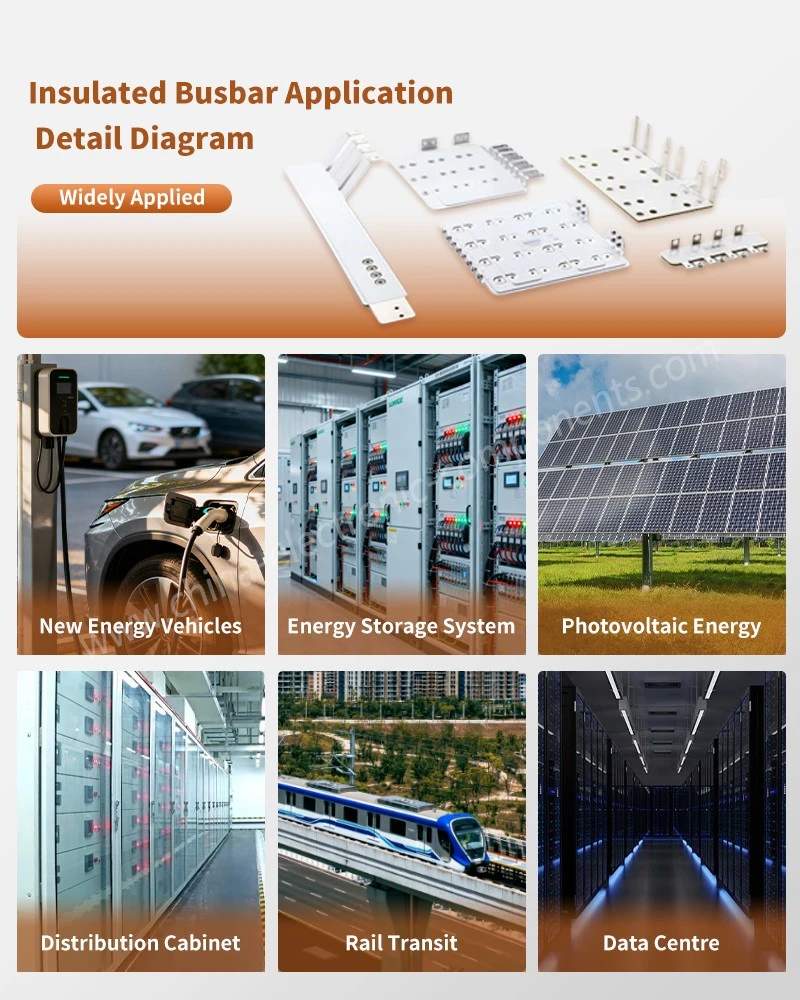
This technology is currently widely used in energy storage battery systems, industrial power equipment, high-voltage power distribution systems, and some high-voltage connection components for new energy vehicles. Among these, PVC Insulated Copper Busbar and Insulated Flat Copper Busbar have become common application forms.
Core Flow of the Dip Coating Process: Surface Pretreatment
The pretreatment stage directly affects the adhesion of the insulation layer and subsequent reliability.
First, degreasing is required to thoroughly remove residual oil, oxide layers, and impurities from the processing. Subsequently, sandblasting or mechanical roughening processes are used to increase surface roughness, improving the bonding strength between the insulation material and the copper busbar.
For Pure Copper Insulated Busbar products, the preheating process is equally crucial. A reasonable preheating temperature can improve the fluidity of the molten plastic, resulting in a more uniform and stable coating.
Dip Coating Molding
The dip coating stage is the core step in forming the insulation layer.
The copper busbar is immersed in the insulating adhesive at a constant speed and then slowly lifted to ensure a uniform coating layer is formed on the surface. For products such as PVC Dipping Insulated Battery Busbar Connectors, immersion time, lifting speed, and adhesive viscosity must be strictly controlled; otherwise, problems such as bubbles, sagging, or uneven thickness may occur.
In actual production, the adhesive circulation system needs to maintain continuous and uniform stirring to ensure the stability of the insulating material composition and prevent sedimentation from affecting product quality.
Plasticization and Curing
After impregnation, the product undergoes a plasticization and curing process.
Under heating conditions, the insulating material gradually melts, flows, and completes the cross-linking reaction, forming a stable and dense insulating layer. For PVC Dipping Cover Copper Busbar products, the accuracy of temperature control directly determines the final insulation performance and appearance quality.
If the local temperature is too high, problems such as discoloration and embrittlement may occur; insufficient temperature may lead to incomplete curing, affecting long-term service life.
Post-processing and Inspection
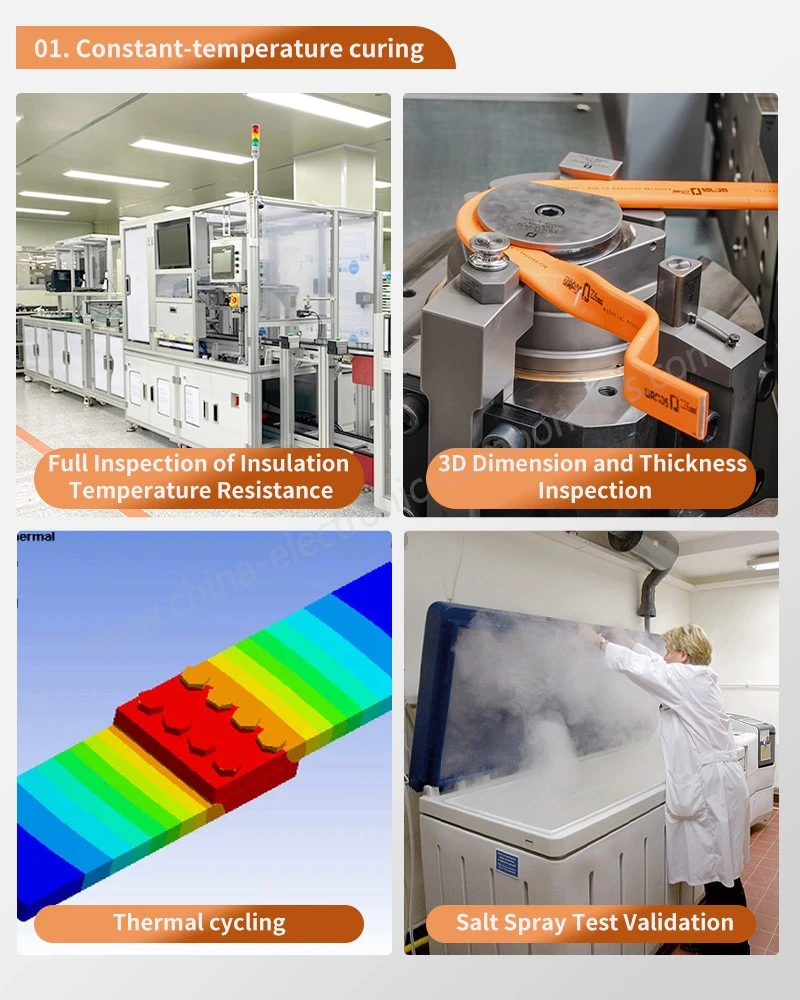
After curing, a gradient cooling process is required to reduce internal stress and prevent cracking of the insulation layer.
Subsequent processes include laser edge cutting, withstand voltage testing, insulation resistance testing, and appearance inspection to ensure that product quality meets design requirements. For high-voltage battery bus bar systems, insulation integrity is a key indicator of product safety.
Performance Advantages of PVC-Insulated Copper Busbars
PVC-insulated copper busbars achieve superior overall performance.
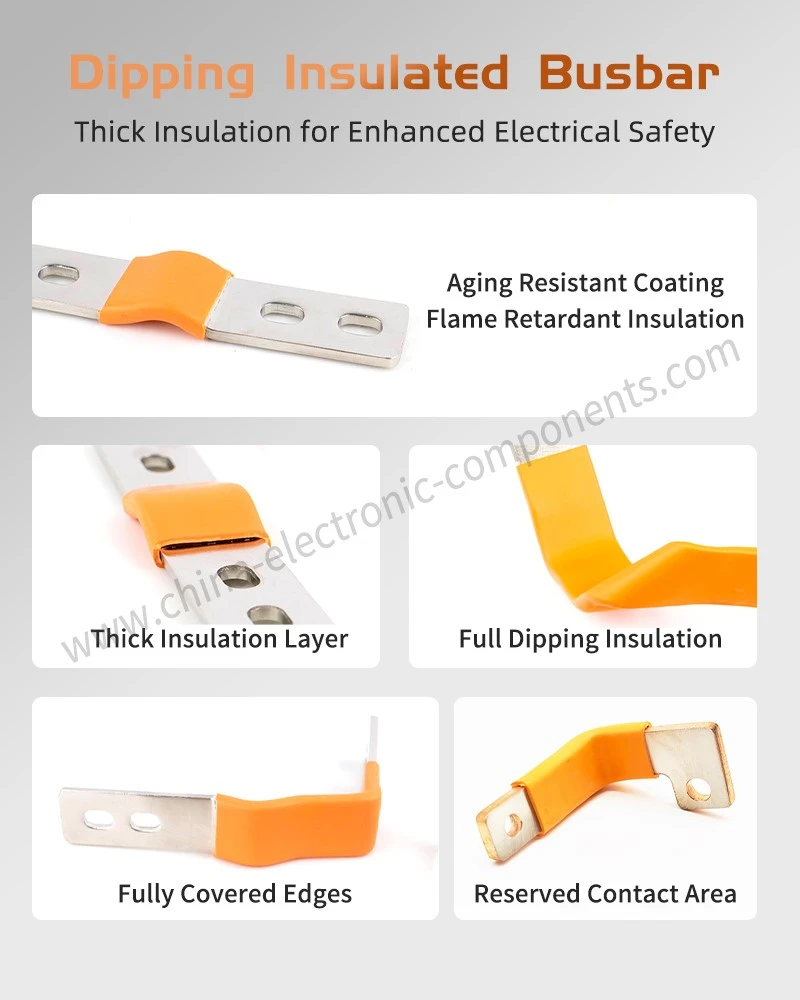
Firstly, insulation performance is improved. A high-quality PVC-insulated layer provides stable dielectric strength, effectively meeting the safety requirements of high-voltage battery systems.
Secondly, environmental resistance is enhanced. PVC-insulated copper busbars for electrical connections effectively resist the effects of complex environments such as humidity, salt spray, and dust, making them suitable for energy storage systems and outdoor power equipment.
Furthermore, the PVC-insulated layer reduces the oxidation rate of the copper busbar surface, improving long-term operational reliability and reducing maintenance costs.
For custom solid power bus bars with insulated dipping tubes requiring special structural designs, the PVC-insulated process can also achieve insulation coverage for complex, irregular structures, increasing overall design freedom.
Application Differences Between Power Batteries and Energy Storage Systems
While the PVC-insulated process provides excellent insulation protection, the requirements for copper busbars differ significantly between power batteries and energy storage systems.
Power batteries prioritize lightweight design and heat dissipation performance. Because insulation layers increase thermal resistance, a partial insulation approach is typically used, applying dip-insulated busbar treatment only in critical connection areas to balance safety and heat dissipation requirements.
In some high-voltage systems of new energy vehicles, PVC-dipped nickel-plated copper bus bars for EV batteries are used in high-voltage connection components to improve corrosion resistance and connection reliability.
In contrast, energy storage systems have lower space utilization requirements and prioritize long-term insulation reliability, making full-coverage dip-coating solutions more suitable. Dipping busbars for connections commonly used in these systems typically employ a thicker insulation layer design to improve environmental adaptability.
Common Dip-Coating Material Analysis
PVC Material
PVC is one of the most widely used dip-coating materials.
It possesses excellent insulation properties, good flame retardancy, and low manufacturing costs, thus being widely used in PVC dipped lambded flexible copper and various high-voltage connection copper busbar products.
However, PVC has relatively limited thermal conductivity; excessively thick coatings may affect system heat dissipation efficiency.
Epoxy Resin
Epoxy resin has high mechanical strength and adhesion.
Compared to traditional PVC, it can achieve higher insulation performance with a thinner coating, making it suitable for power battery systems with high lightweight requirements.
Simultaneously, its high insulation stability makes it an important choice for some high-voltage insulated busbar solutions.
PPA High-Performance Engineering Plastics
PPA material possesses excellent high-temperature resistance and mechanical properties.
Its continuous operating temperature is significantly higher than that of traditional PVC, making it suitable for copper busbar insulation protection under high-temperature and high-vibration conditions. However, due to the higher cost of raw materials, it is more commonly used in high-end new energy vehicle electrical systems.
Key Parameters in Process Control
To ensure the quality of the final product, the following parameters require close monitoring:
Adhesive viscosity directly affects coating uniformity;
Preheating temperature affects the adhesion strength of the insulation layer;
Plasticizing temperature determines the degree of material cross-linking;
Cooling rate affects internal stress release;
Insulation layer thickness determines the final withstand voltage and heat dissipation performance.
For high-reliability products such as Tin Coated Insulated Flat Copper Bus Bar for Battery, all of the above parameters must be monitored and recorded throughout the entire process to ensure that the product meets long-term operational requirements.
Future Development Trends
With the development of 800V high-voltage platforms, battery energy storage systems, and smart power distribution technologies, copper busbar insulation technology is evolving towards higher performance.
Future dip-coating technology will gradually achieve ultra-thin insulation layer designs, further optimizing heat dissipation while ensuring insulation performance. Simultaneously, the insulation layer will integrate multiple functions such as thermal conductivity, electromagnetic shielding, and flame retardancy, achieving multi-functional integrated development.
Furthermore, with the continuous optimization of busbar support structural design and the emergence of new products such as plated PVC dipped insulated copper busbars, high-voltage electrical connection systems will achieve further improvements in safety, lightweight design, and reliability, providing more stable solutions for new energy vehicles, energy storage devices, and industrial power systems.
contact us
Send Inquiry