










The Precision Blood Vessels Of The Heart Of Electric Drive: New Energy Vehicles And Energy Storage Ignite The Laminated Bus Bar Market
Apr 05, 2026
Leave a message
Driven by the ongoing "dual-carbon" goals and the electrification wave, power electronic systems are rapidly evolving towards higher frequencies, higher power densities, and higher integration. As the core carrier connecting power devices and power systems, laminated bus bars (LBBs), with their low parasitic inductance, high reliability, and compact structure, are gradually extending from traditional industrial power distribution to new energy vehicles and energy storage systems, becoming the "precision blood vessels" of electric drive systems. Especially in electric vehicle high-voltage platforms, applications such as Laminated Bus Bars for Electric Vehicle Power Distribution have become a crucial foundation for achieving efficient power distribution and stable system operation.
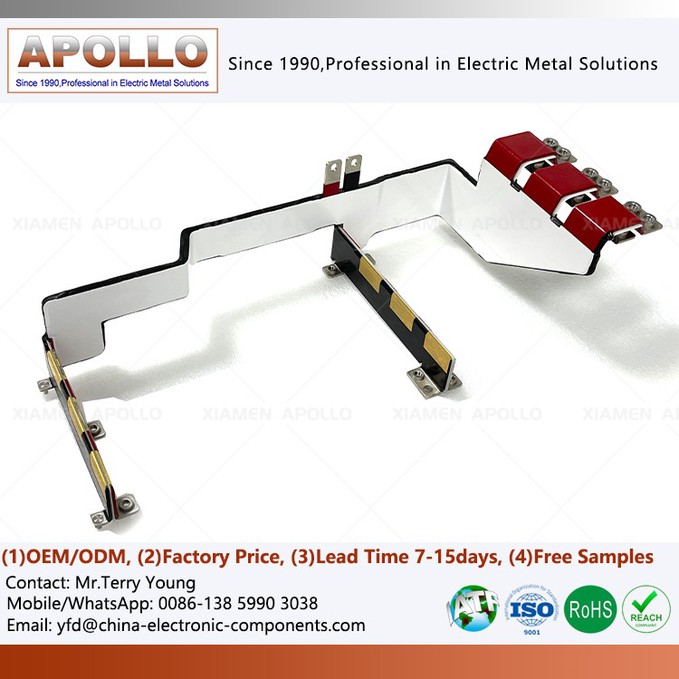
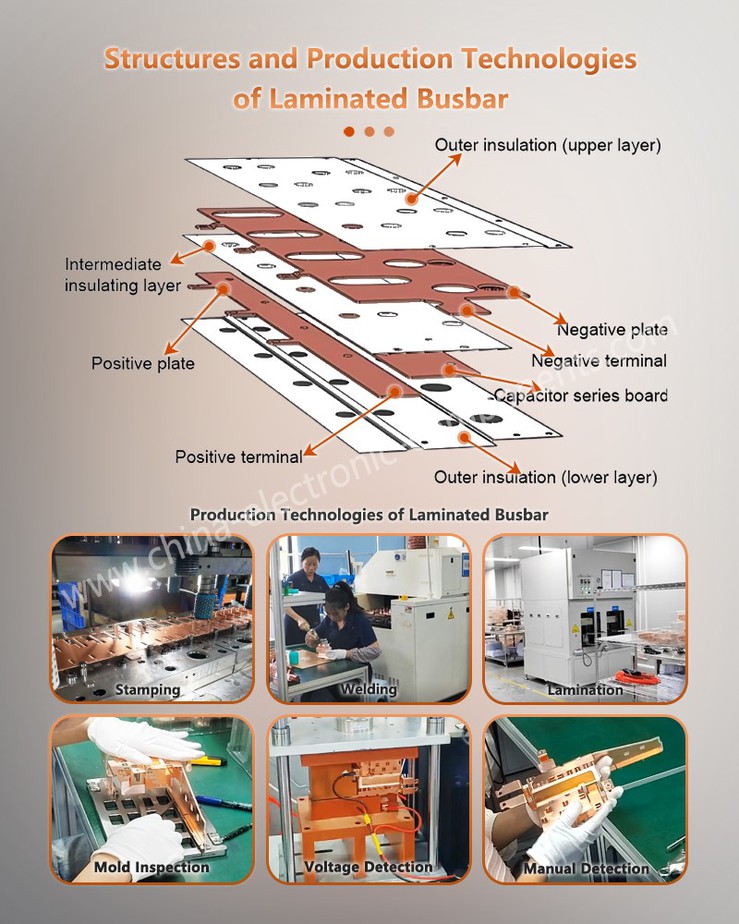
From a product structure perspective, laminated bus bars are composed of multiple layers of conductors and insulating materials laminated together to form an integrated structure. Essentially, they belong to a "multilayer electrical interconnection system" oriented towards power circuits. They not only effectively reduce voltage spikes and electromagnetic interference generated during switching but also optimize current paths and heat distribution, demonstrating significant advantages in high-frequency power modules. In electric drive controllers and power modules, solutions similar to Laminated Bus Bars for Electric Vehicle Power Electronics are gradually replacing traditional wiring harness structures, achieving higher system consistency and reliability.
From a market size perspective, industry research data shows that the global laminated bus bar market has maintained steady growth in recent years. With the continuous increase in the penetration rate of new energy vehicles and the rapid expansion of energy storage installations, the demand for laminated bus bars has increased accordingly. Especially in high-current applications, Laminated Busbars for High-Current Power Electronics, with their high current-carrying capacity and low-loss characteristics, have become a key component in power electronic system design, driving the continued expansion of the market.
The new energy vehicle sector is currently the core driver of the growth in demand for laminated bus bars. With the accelerated popularization of 800V high-voltage platforms, higher requirements are being placed on low inductance and high-frequency adaptability, leading to a rapid increase in the application of laminated bus bars in motor controllers, on-board chargers, and battery systems. Meanwhile, in the rail transit sector, the stringent requirements for stability and environmental resistance in traction converter systems have made Laminated Bus Bars for High Horsepower Locomotive Traction Drives a key solution, further expanding the application boundaries of laminated busbars.
Laminated busbars also play an irreplaceable role in wind, solar, and energy storage applications, as well as grid-side applications. With the large-scale deployment of photovoltaic inverters and energy storage converters, systems are placing higher demands on efficient power conversion and low-loss connections. Products such as Laminated Busbars for Photovoltaic Inverters and BusBars for SVG Static Synchronous Compensators are gradually becoming standard configurations in power systems. Furthermore, in the field of power quality management, the application of BusBars for APF Active Power Filters has significantly improved system stability and response efficiency.
Equipment upgrades in the industrial sector have also driven the growth in demand for laminated busbars. In frequency converters, switchgear, and welding equipment, laminated busbars significantly improve system reliability and assembly efficiency by reducing connection nodes and optimizing structural design. For example, in industrial power supply systems, the application of BusBar for Transformers and BusBar for Electric Welding Machines can effectively reduce energy loss and improve equipment operational stability, while BusBar for Switches plays a crucial role in high-frequency switching equipment.
From a technological development perspective, laminated busbars are evolving towards higher integration and modularity. On the one hand, by integrating current paths, signal lines, and monitoring components, a unified structural design is achieved; on the other hand, standardized module combinations reduce customization costs. In battery systems, Integrated Laminated Busbar Cell Contact Systems are becoming an important development direction for cell connection. Meanwhile, composite laminated busbars and Laminated Shunt and Busbars, among other composite structure products, are also showing greater potential in improving electrical performance and functional integration.
In terms of application expansion, laminated busbars are gradually developing towards multi-scenario universality. From new energy vehicles to rail transit, and then to data centers and energy storage systems, their cross-domain adaptability continues to strengthen. For example, in urban rail and high-speed rail systems, the application of laminated busbars for rail traffic not only meets high reliability requirements but also improves system operating efficiency; while in large-scale power electronic devices, laminated power bars are gradually becoming an important carrier for efficient power distribution.
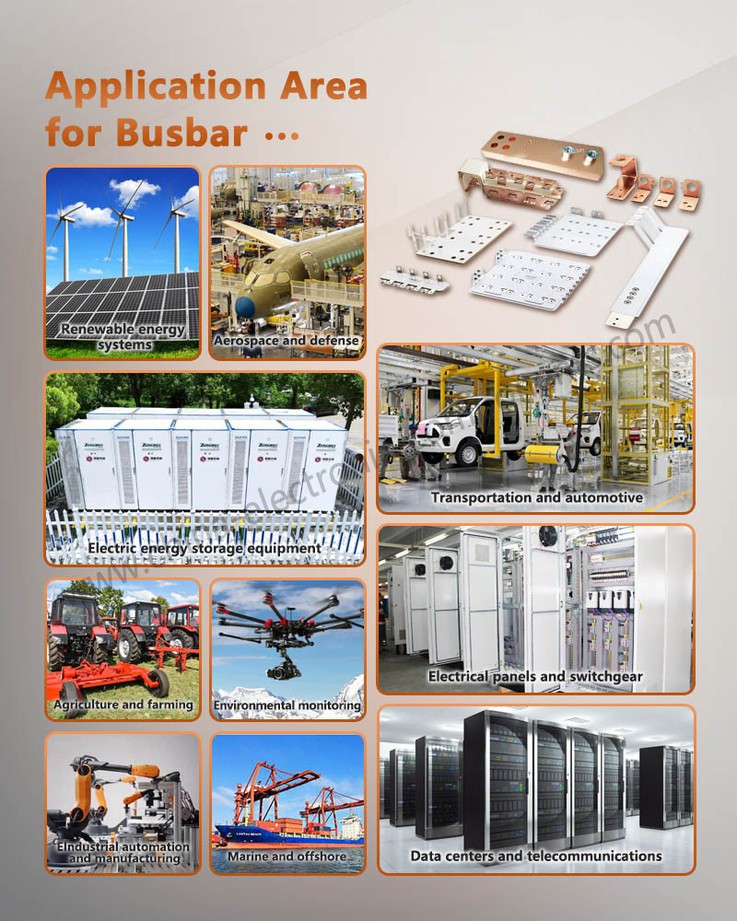
Despite the broad market prospects, the laminated busbar industry still faces multiple challenges. On the one hand, industry standards are not yet fully unified, and significant differences exist between different application scenarios; on the other hand, there is still a certain degree of external dependence on high-performance insulation materials and high-purity conductor materials. Furthermore, customized production models lead to higher costs, and small and medium-sized enterprises still need to continuously invest in core processes and technology R&D to improve product consistency and long-term reliability.
Overall, with the continued development of new energy vehicles, grid upgrades, and the energy storage industry, laminated busbars, as a key connection carrier in power electronic systems, will see their market size and technological value continue to increase. Driven by the trends of high power density, miniaturization, and intelligence, laminated busbars are evolving from "connection components" to "system-level functional units," becoming an important basic component supporting future energy systems.
About Us
As a manufacturer deeply rooted in the field of electrical connections and precision conductive components, we focus on research and development, and manufacturing of laminated busbars and related solutions. Our products cover core application scenarios such as new energy vehicles, power electronics, rail transit, and energy storage systems. With a focus on high reliability and high consistency in manufacturing capabilities, we continuously optimize material selection and structural design to provide customers with stable and efficient electrical connection solutions, contributing to the safe and efficient operation of next-generation energy systems.
contact us
Send Inquiry