



Technical Analysis Of Frame Screw Terminal Block: Connection Principle, Structural Model And Standard Wiring Requirements
Nov 25, 2026
Leave a message
With the continuous development of industrial automation, power distribution equipment, and electronic control systems, the role of electrical connection components in equipment operation has become increasingly prominent. Terminal blocks are important connecting components between wires and electrical equipment. Their structural design, clamping method, and contact performance directly affect the stability and maintenance efficiency of circuit connections. Among them, frame-type screw terminal blocks are widely used in electrical control boxes, power distribution cabinets, industrial equipment, and electronic devices due to their simple structure, reliable connection, and wide application range.
Frame-type screw terminals usually consist of conductive metal frames, clamping screws, and insulating shells. Its basic working principle is to use the mechanical pressure generated by screws to fix the wire conductors between metal conductive parts, so that the wires and terminals form stable electrical contact. This structure is a typical Screw Clamp Terminal connection method, which can adapt to a variety of common wire specifications and facilitate equipment assembly, line adjustment, and later maintenance.
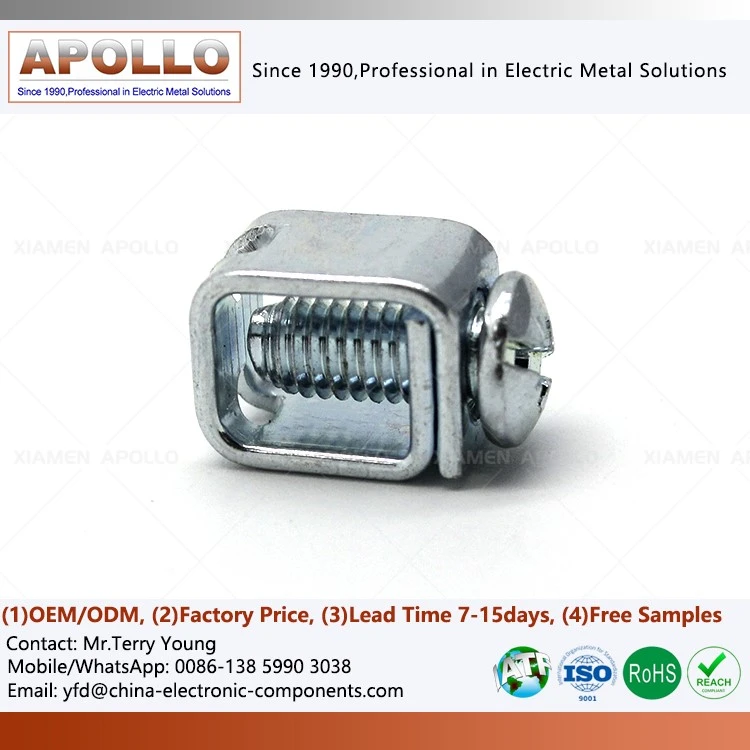
Structure and working principle of frame screw terminal block
The core of the frame screw terminal block lies in the screw clamping structure. After the wire is inserted into the terminal, the compression component is pushed by tightening the screw to form a certain contact pressure between the conductor and the conductive frame. Compared with the connection method that relies solely on wire plugging, this mechanical clamping structure can provide a more stable contact state under reasonable installation conditions.
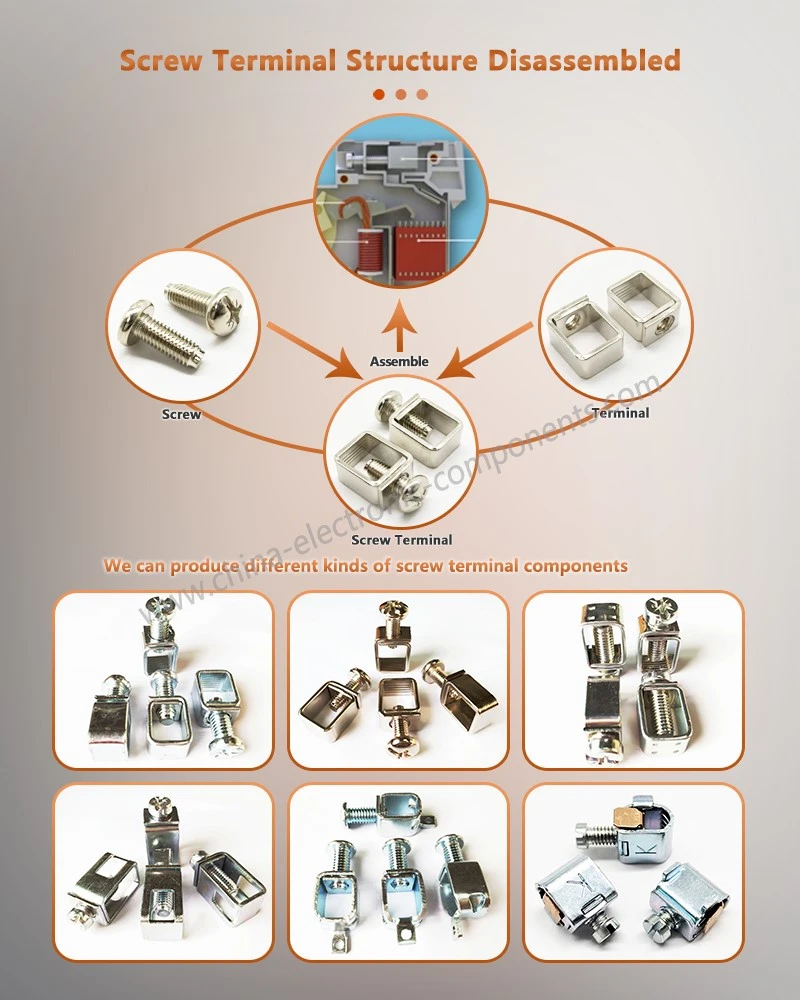
From the perspective of structural form, common products are mainly composed of conductive frames, clamping screws, insulating bases, and external protective structures. The conductive frame is usually made of metal materials with good conductivity and is responsible for the current transmission function; the screws are responsible for providing clamping force; the insulating shell is used to isolate adjacent conductive parts to reduce the risk of accidental short circuit.
In actual electrical systems, Screw Terminal Block is usually installed in the wiring area inside the control cabinet, power distribution device, or equipment to complete the connection of power lines, control lines, and signal lines. For equipment that requires centralized management of multiple groups of lines, the terminal structure can also help engineers distinguish different circuits and improve wiring clarity and maintenance efficiency.
Main functions of frame screw terminals
The primary function of frame screw terminal blocks is to establish reliable electrical connections. With appropriate clamping force, the wire conductor can maintain stable contact with the conductive parts of the terminal, thereby reducing problems such as local heating, increased voltage drop, and abnormal connections caused by insufficient contact. For application scenarios with large currents, the conductive material, contact area, structural strength, and temperature rise performance of the terminal are particularly worthy of attention.
Secondly, terminals can improve the organization and management of electrical circuits. Centrally connecting different wires according to loops and functions can reduce line crossovers and wiring confusion, making the electrical structure inside the control system clearer. For multi-channel power input, device control, and signal distribution scenarios, rational configuration of terminal strips can help improve assembly efficiency.
In terms of equipment maintenance, the screw connection structure has a certain degree of adjustability. Maintenance personnel can cut off the power and confirm safety, loosen the screws according to the product operation requirements, and complete wire inspection, replacement, or reconnection without having to disassemble the entire electrical component. For industrial control equipment that requires regular maintenance, this structure can reduce the complexity of line maintenance.
In addition, the terminal also plays a certain role in electrical isolation and safety protection. The risk of short circuits or accidental contact between adjacent terminals can be reduced through insulating housings and proper creepage and clearance design. In the ground connection scenario, a Ground Terminal Block that meets the system requirements is required to ensure a reliable connection between the protective ground conductor and the ground loop.
Common structural types and application scenarios
Frame-type screw terminal blocks are not a single structure, but form a variety of product types based on installation methods, wire specifications, rated current, number of connections, and application environments. When selecting a project, you need to make a judgment based on the electrical parameters of the equipment and the actual installation space.
Common screw-type terminal blocks mainly use screw compression to fix wires, and are suitable for control cabinets, power distribution equipment, and industrial electronic devices. According to the differences in the internal clamping structure of the terminal, it can be further divided into frame-type pressing, pressure plate-type pressing, and other screw-fixing forms. For scenarios where multiple wires need to be connected, you should focus on confirming whether the terminal supports the corresponding number of wires, cross-sectional area, and conductor type.
In a fuse connection system, the terminal structure needs to match the fuse base, fuse clip, and supporting conductive parts. For example, Screw Clamp for Fuse Terminal is usually used at fuse-related connection locations, and its design needs to consider wire clamping capabilities, contact stability, and installation space. For the special connection structure inside the fuse base, the Screw Clamp for Fuse Holder Terminal needs to be matched according to the base specifications and electrical requirements.
Fuse Terminal Block is mainly used for wire connection and circuit distribution of fuse circuits. In addition to meeting the basic mechanical fixing requirements, such products should also consider the heat that may be generated during the operation of the fuse, as well as the electrical coordination relationship between the terminal and the fuse. When selecting, you should not only judge based on the appearance size, but also check the rated voltage, rated current, applicable conductor range, and related safety requirements.
For electricity meters, power metering equipment, and larger-sized electrical connection structures, some products will use larger-sized threaded connection designs. For example, the M10 Screw Electric Meter Iron Terminal can be used with specific meter connection structures, and its specific suitability needs to be confirmed based on conductor specifications, connection methods, and equipment design requirements. A structure similar to the double-cage terminal with an M5 screw realizes specific wire-fixing requirements through double frames or double clamping areas, and is suitable for applications that require independent connections or partitioned wiring.
Screw specifications and design requirements for connecting parts
Screw specifications are an important factor affecting terminal connection performance. Screws of different sizes differ in load-bearing capacity, clamping force, installation space, and adapted conductor range. M4 Screw Terminal is usually used for terminal connection structures in the corresponding size range, but the actual selection cannot only be based on the thread specification; it also requires comprehensive consideration of the terminal material, screw length, thread engagement depth and product rated parameters.
In some electrical equipment, the Terminal Screw is an independent fastening component and needs to maintain good dimensional cooperation with the terminal frame and the pressing structure. The material strength, surface treatment, and thread accuracy of the screws affect stability during assembly. If the screw surface treatment is uneven, the thread size deviation is too large, or the fastening structure does not match, it may cause assembly difficulties, unstable clamping force, and other problems.
For products that require screws to be combined with other connecting parts, the design of the Terminal Screw Combination should focus on dimensional consistency between parts, assembly sequence, and connection reliability. Some equipment also uses specific specifications or series of fasteners such as AMP Terminal Screws. The specific model should be based on the technical documentation of the corresponding product.
Clamp Screw for circuit breakers need to meet the corresponding mechanical fixing and electrical connection requirements within the circuit breaker and related distribution connection structures. Since the circuit breaker connection part may be affected by factors such as current load, temperature rise, and mechanical vibration, the tightening performance and material suitability of the screws need to be reasonably verified.
Terminal wiring process and installation steps
The wiring quality of frame screw terminal blocks not only depends on the product itself, but is also closely related to wire handling, installation tools, and fastening processes. Standardized wiring procedures can reduce problems such as poor contacts, conductor damage, and loose connections.
Before wiring, you should first cut off the relevant power supply and confirm that the line is in a power-free state in accordance with equipment safety regulations. Then check the rated voltage, rated current, applicable conductor cross-sectional area, and conductor type of the terminal to confirm that the terminal can meet the actual application requirements. For Block Terminal Electrical structures of different specifications, the terminal installation direction, wiring location, and insulation spacing between adjacent circuits should also be checked.
During the wire processing stage, an appropriate length of insulation layer should be stripped according to the terminal requirements to avoid stripping the wire too short, causing the conductor to not fully enter the clamping area, and avoiding stripping the wire too long, causing the exposed conductor to be exposed. For multi-stranded flexible wires, you should judge whether you need to use cold-pressed terminals according to the product instructions. Do not directly twist the wires and insert them into the clamping position without confirmation.
After completing the wire processing, insert the conductor into the designated position of the terminal, ensuring that the conductor enters the effective clamping area. Then tighten the screws using a matching screwdriver or torque tool. When tightening, the torque requirements specified by the manufacturer should be followed to avoid loose connections caused by insufficient torque. Over-tightening should also be avoided to prevent damage to conductors, threads, or clamping structures.
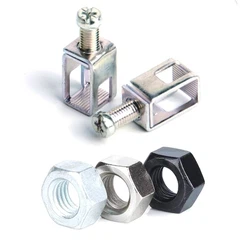
Some terminals adopt a Crimping Frame structure, and the wires are compressed through the cooperation of the frame and screws. For this type of product, the frame size, compression stroke, and screw fit will all affect the final connection state. If the product adopts surface treatment such as Crimping Frame Screw Color Galvanized, it is also necessary to pay attention to the uniformity of the coating, corrosion resistance, and adaptability to the use environment.
After the wiring is completed, check whether the wires are firmly fixed, whether the insulation layer enters areas that should not be clamped, whether there is abnormal exposure of conductors, and whether the specified safety distance is maintained between adjacent terminals. For important electrical circuits, connection inspection and necessary electrical testing should also be carried out in accordance with equipment inspection requirements.
Performance advantages and quality control of frame screw terminal blocks
The main advantages of frame-type screw terminal blocks are the intuitive connection method, mature assembly process, and easy subsequent inspection and maintenance. The screw clamping structure can provide corresponding mechanical fixing capabilities according to the wire specifications, and helps maintain stable electrical contact under the conditions of correct selection and standardized installation.
Compared with some non-detachable connection methods, Screw Terminal Wire Connectors are more convenient for in-line adjustment and wire replacement, and are suitable for equipment that requires frequent maintenance or adjustment of wiring schemes. However, screw connections also need to pay attention to the fastening state in long-term operation, especially in industrial environments with vibration, temperature changes, or continuous thermal cycles, and should be inspected according to equipment maintenance requirements.
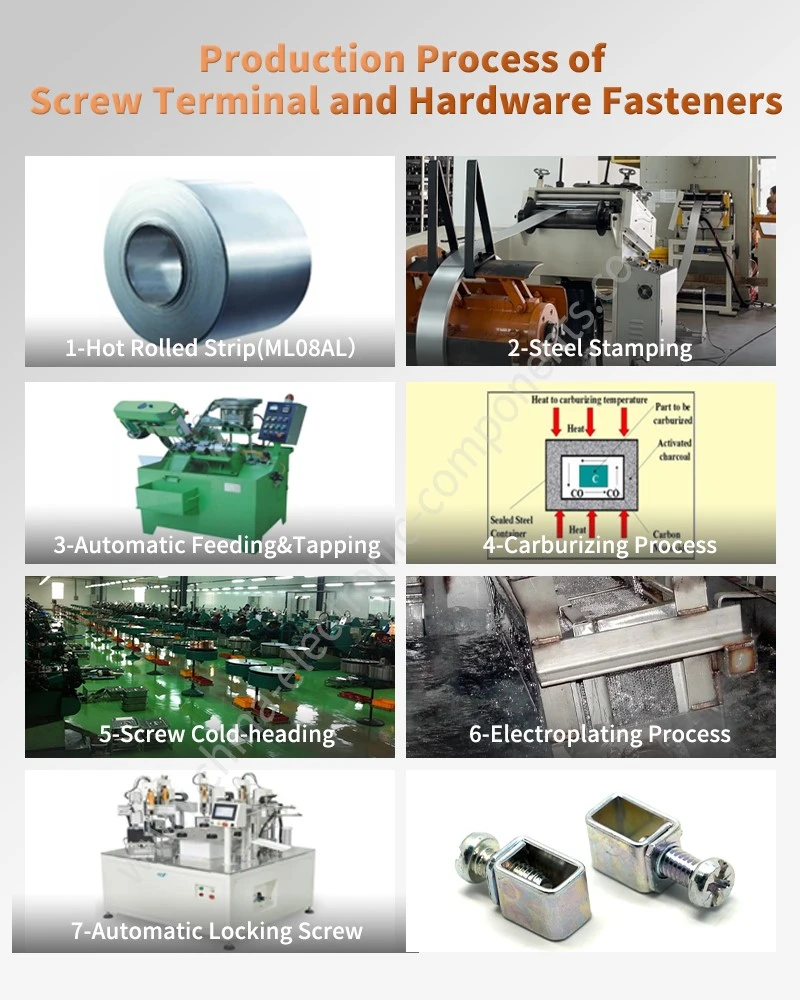
From a product manufacturing perspective, terminal quality control mainly involves conductive materials, stamping and forming, thread processing, surface treatment, and assembly inspection. The conductive frame needs to have stable material properties and dimensional accuracy, and the screws and compression components should meet the corresponding mechanical strength and coordination requirements. For Screw Fastener Terminals, thread accuracy, force performance during tightening, and anti-loosening design are all items that need to be focused on.
In addition, the structural size of the Terminal Screw Block, the wire insertion depth, the clamping area, and the coordination of the insulating shell will also affect the final use of the product. During the engineering manufacturing process, dimensional inspection, assembly verification, and necessary electrical performance testing should be carried out in conjunction with drawings and technical specifications to ensure that the product meets the usage requirements of the target equipment.
For terminal products that need to be customized, the installation method, wire type, number of terminals, screw specifications, surface treatment, and usage environment should also be comprehensively considered during the design stage. The performance of the Electrical Screw Terminal Block cannot be judged solely by a single component parameter, but should be evaluated in conjunction with the complete connection structure and actual working conditions.
Focus on selection and customization in engineering procurement
For electrical equipment manufacturers, power distribution system integrators, and industrial control equipment purchasers, when selecting frame-type screw terminal blocks, prioritize clarifying the rated voltage, rated current, applicable conductor cross-sectional area, conductor type, installation space, and usage environment. At the same time, it is also necessary to check the terminal material, screw specifications, surface treatment method, insulation performance, and related product standards to avoid making alternative selections based solely on appearance or thread size.
If the existing standard models cannot meet the equipment structural requirements, customized designs can be carried out based on actual application requirements. The purchaser can provide product drawings, samples, or key dimension information, and describe wire specifications, number of connections, operating current, installation method, and usage environment. Manufacturers can use this to evaluate the feasibility of processing and assembly of Crimping Frame, Terminal Screw Combination and related clamping structures, and further confirm material selection, dimensional tolerances, surface treatment and sample verification plans.
For bulk purchase projects, it is recommended to complete sample assembly, wire clamping verification, dimensional inspection, and necessary electrical performance testing before formal mass production, and clarify key quality control requirements. Through early engineering communication and product verification, the matching degree between terminals and complete equipment can be improved, providing a reliable foundation for subsequent stable supply and batch assembly. If you have purchasing requirements for frame-type screw terminals, fuse terminals, or customized screw clamping components, you are welcome to provide drawings, specifications, and application scenarios to further discuss structural design, processing technology, and sample development plans.
contact us

Send Inquiry