





Continuous Upgrades in New Energy Battery Casing Technology: Material Innovation, Precision Manufacturing, And Structural Integration Drive Industry Development
Nov 23, 2026
Leave a message
As the markets for new energy vehicles (NEVs), energy storage systems, and electric transport continue to grow, the requirements for lithium-ion batteries-in terms of safety, energy density, cycle life, and manufacturing consistency-are steadily increasing. As a critical structural component, the battery casing serves not only to encapsulate and provide mechanical protection but also plays a vital role in sealing, thermal management, and overall structural stability.
From the simple metal enclosures once used for consumer electronics to the precision-engineered components now employed in NEVs and large-scale energy storage systems, the design and manufacturing of battery casings have evolved toward greater lightweighting, higher strength, increased precision, and enhanced integration. Particularly in the sectors of power and energy storage batteries, factors such as casing materials, stamping processes, welding/sealing techniques, and surface treatments have become key determinants of both product performance and manufacturing costs.

Basic Functions and Structural Characteristics of Battery Casings
A battery casing is an external structural component designed to house battery cells and their internal constituents, providing mechanical protection, environmental sealing, and structural support. In practical applications, the casing must withstand mechanical loads-whether during production, assembly, transport, or actual operation-while preventing the ingress of moisture, dust, and other external contaminants, thereby minimizing the risks of electrolyte leakage and internal structural damage.
For power batteries, the casing must strike a balance between lightweight design and structural strength. The weight of the casing directly impacts the total mass of the battery system, while its structural rigidity, dimensional precision, and connection reliability are essential for cell assembly, module integration, and the stable operation of the entire battery pack. As battery systems move toward higher levels of integration, the casing has evolved from a simple containment vessel into a multifunctional component that provides load-bearing support, protection, and thermal management capabilities.
Typical metal battery casings generally consist of a main housing, a cover plate, structures for mounting electrode terminals, and a safety pressure-relief mechanism. The main housing accommodates the battery cells; the cover plate facilitates encapsulation and external connections; the terminal structures enable electrical connectivity; and the pressure-relief mechanism provides a controlled pathway for venting pressure should it reach a predetermined threshold. Structural configurations vary depending on the specific battery chemistry and packaging scheme; final designs are determined based on factors such as cell dimensions, operating voltage, capacity, and the intended operating environment.

Main Classifications and Application Scenarios of Battery Casings
Based on their packaging format, lithium-ion batteries are primarily categorized into three types: prismatic, cylindrical, and pouch (soft-pack). Each type entails distinct casing structures and manufacturing processes.
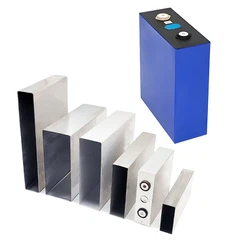
Prismatic batteries typically utilize aluminum alloy or steel for their casings. They are characterized by a regular, geometric shape, high space utilization, and ease of integration into battery modules. Prismatic aluminum casings are a common packaging solution for power batteries in new energy vehicles; their design must balance structural rigidity, formability (via stamping), welding integrity (sealing), and internal space efficiency.
Manufacturers can develop customized prismatic casings tailored to specific cell dimensions and assembly requirements, with designs differentiated based on battery capacity, external dimensions, and connection configurations.
In practical projects, the engineering design of customized prismatic battery cell casings must account for cell specifications, cover plate structures, terminal positioning, wall thickness, and welding zones. Beyond meeting basic packaging requirements, these casings must also be adapted to the internal layout, mounting methods, and thermal management structures of the battery pack.
Cylindrical batteries generally employ steel or aluminum casings. Steel casings offer superior mechanical strength and benefit from mature manufacturing processes, while aluminum casings provide advantages in terms of reduced weight and improved thermal conductivity. The structure of cylindrical batteries is relatively standardized, making them well-suited for large-scale production; their manufacturing involves processes such as deep drawing, grooving, cleaning, and dimensional inspection. With the advancement of large-format cylindrical battery technology, factors such as forming depth, wall thickness uniformity, roundness, and sealing quality have become increasingly critical.
Pouch (soft-pack) batteries are encapsulated in an aluminum-laminated film, which differs significantly from rigid metal casings in terms of both structure and manufacturing. Their primary advantages include lower weight, flexible form-factor design, and high space utilization; however, they impose specific requirements regarding the encapsulation process, edge sealing, and external protective structures. In applications involving aluminum-based external structures-such as those used for pouch-type LiFePO4 batteries-it is essential to distinguish between the aluminum-laminated film that encapsulates the individual cell and the metal protective housing used for the battery module or pack; these should not be conflated as the same structural component. In terms of materials, battery enclosures primarily consist of aluminum alloy, steel, or, in some cases, engineering plastics and composite materials.
Aluminum alloys-favored for their low density, excellent formability, and high thermal conductivity-are widely used for the casings of prismatic power batteries. Steel, meanwhile, remains a viable choice for certain cylindrical batteries and specific energy storage products, thanks to its strength and cost-effectiveness in processing. Engineering plastics and composite materials are typically employed when there is a need for electrical insulation, weight reduction, or the realization of complex structural designs.

Material Selection and Performance Requirements for Battery Enclosures
Selecting the right material is a critical step in the design of battery enclosures, requiring a comprehensive evaluation of factors such as density, strength, ductility, corrosion resistance, thermal conductivity, weldability, and cost. For aluminum alloy enclosures, common grades include 1060, 3003, 5052, and 6061; the specific choice depends on the enclosure's structure, the forming process, and the intended operating conditions.
Among these, 1060 aluminum offers superior electrical and thermal conductivity, making it suitable for structures that demand high material purity and specific processing characteristics. 3003 aluminum alloy provides excellent formability and corrosion resistance, making it ideal for various battery enclosures and stamped cover plates. 5052 aluminum alloy offers a strong balance of mechanical strength and corrosion resistance, suited for applications that require higher structural load-bearing capacity. 6061 aluminum alloy is frequently used for structural components and profiles that require a combination of high strength and good machinability.
In the new energy vehicle (NEV) sector, the design of aluminum enclosures for lithium battery packs must account for factors such as vehicle vibration, impact loads, temperature fluctuations, and the conditions of long-term operation. Beyond ensuring a stable environment for the battery cells, the enclosure must also integrate effectively with the battery pack's mounting structure, cooling system, and electrical safety components.
For power batteries used in passenger and commercial vehicles, material selection must also take into account cell dimensions, total pack weight, and structural layout. For instance, the development of aluminum enclosures for automotive batteries typically focuses on structural strength, sealing integrity, the control of welding-induced deformation, and consistency in mass production. For large vehicles such as electric buses, which utilize battery systems with significant capacity and physical dimensions, the design of aluminum casings for LiFePO4 battery packs must prioritize load-bearing capacity, connection methods, and structural reliability under long-term vibration.
Lithium iron phosphate (LiFePO4) batteries are widely used in new energy vehicles and energy storage systems due to their advantages in safety, cycle life, and cost. The design of casings for these battery packs-including those for stationary energy storage systems (such as "Powerwall"-style lithium battery packs)-requires careful selection of materials, wall thicknesses, cover plate configurations, and sealing processes, all tailored to the specific cell chemistry and packaging architecture. For stationary energy storage, factors such as installation space, external protection, thermal management, and long-term maintenance requirements must also be considered.
Continuous Evolution of Core Battery Casing Manufacturing Processes
The manufacturing quality of a battery casing depends not only on the raw materials used but also on critical processes such as stamping, deep drawing, welding, surface treatment, and inspection. As cell dimensions increase and structural complexity grows, the manufacturing process demands higher precision in tooling, greater equipment stability, and more rigorous quality control.
Stamping is a primary method for producing prismatic battery casings and certain cover plate components. During production, aluminum or steel sheets undergo uncoiling, cutting, positioning, and stamping to achieve the required casing profile. For deep-cavity structures, multi-stage deep drawing and reshaping processes are typically employed to manage material flow, thereby minimizing risks such as wrinkling, cracking, or uneven wall thickness.
Factors including die design, blank-holder force, stamping speed, and lubrication conditions all directly influence the dimensional accuracy and surface quality of the final product.
Deep drawing is particularly well-suited for casings with significant depth or complex contours. When processing aluminum alloys, it is essential to control the degree of deformation and material flow to prevent excessive localized thinning or the formation of cracks. For thin-walled battery casings, wall-thickness uniformity is critical-it not only affects the overall weight of the unit but also determines its mechanical strength and the stability of subsequent welding operations.
Extrusion is primarily used for the production of battery pack frames, side rails, and various load-bearing structural components. Aluminum alloy extrusion allows for the production of long, structural components with specific cross-sectional profiles, which can then be assembled through processes such as cutting, machining, and welding. This approach is well-suited for battery pack components that feature complex geometries and require a balance between lightweight construction and load-bearing capacity.
Welding is a critical step in the manufacturing of metal battery enclosures, particularly regarding the reliability of the joint between the housing and the cover plate. Laser welding-characterized by concentrated heat input, high welding speeds, and suitability for automated production-is frequently used to join aluminum alloy housings and cover plates. During the welding process, parameters such as laser power, welding speed, focal position, and assembly gap must be carefully controlled to minimize the risk of defects, including porosity, cracks, lack of fusion, and deformation.
Friction stir welding (FSW) is another method applicable to certain aluminum alloy structural components within battery packs. This process achieves a solid-state bond through frictional heat and the plastic flow of material generated by a rotating tool; for appropriate structural applications, it can help mitigate some of the defects often associated with conventional fusion welding. The selection of a specific welding process should be validated based on factors such as material thickness, joint configuration, available equipment, and product design.
Following forming and welding, the enclosure may undergo cleaning, passivation, electrocoating, or other surface treatments-depending on the intended operating environment-to enhance corrosion resistance, surface quality, or electrical insulation. For structures requiring electrical isolation, the chosen surface treatment must be coordinated with subsequent assembly steps, grounding design, and the operational environment.
Quality inspection typically encompasses dimensional measurement, visual inspection, weld examination, airtightness (leak) testing, and, where necessary, verification of material properties. For battery enclosures with stringent sealing requirements, airtightness testing serves as a vital quality control measure. Through in-process inspections, sampling, and the monitoring of critical manufacturing steps, manufacturers can ensure greater consistency across batches and reduce assembly issues stemming from dimensional deviations or welding defects.

Applications of Battery Enclosures in New Energy Vehicles and Energy Storage
New energy vehicles (NEVs) represent a major market for battery enclosures. Traction batteries must achieve high energy density within a constrained space while simultaneously withstanding the vibrations, mechanical shocks, and temperature fluctuations encountered during vehicle operation.
Consequently, the design of battery enclosures must be developed in tandem with cell specifications, battery module architecture, and the overall vehicle layout. In the passenger vehicle sector, prismatic aluminum-cased batteries offer high space utilization, making them well-suited for various battery pack integration schemes. The design of an aluminum case for an automotive LiFePO4 battery pack must account for cell capacity, overall pack dimensions, mounting locations, and connection methods-with a focus on controlling case dimensions, lid sealing, and assembly interfaces. For electric vehicle (EV) powertrains, the case must also accommodate cooling structures and safety pressure-relief mechanisms; it is critical to avoid compromising essential mechanical protection in the pursuit of weight reduction.
For electric bicycles and light electric vehicles, battery weight, volume, and cost are highly sensitive factors. An aluminum case for an electric bike battery pack typically requires a balance between lightweight construction, external protection, and ease of installation. In the case of Li-ion battery systems for electric bikes, the structural design must also account for factors such as vibrations during daily use, exposure to rain, the processes of installation and removal, and potential external impacts.
Within battery systems for electric mobility, the external casing must align with the arrangement of the battery cells, protection circuitry, and electrical interconnects. Since dimensions, mounting methods, and internal layouts can vary significantly based on capacity and voltage ratings, structural development must be tailored to the specific product definition.
In the energy storage sector, the primary focus shifts toward long-term operational stability, environmental adaptability, and ease of maintenance. For residential, commercial/industrial, or grid-scale energy storage systems, the battery casing design-including its ingress protection rating, thermal management approach, and structural connections-is determined by the cell format, system layout, and installation environment. For smaller energy storage units, the casing must balance a compact footprint with robust external protection; for large-scale systems, considerations must extend to module securing, thermal management channels, and system-level safety design.
Consumer electronics and other specialized battery applications also impose distinct requirements on casing design. For instance, the structural and material specifications for an MnO2 battery case differ from those used for EV power batteries; designs must be customized based on the specific battery chemistry, dimensions, and intended usage. It is not feasible to simply apply a uniform casing structure or set of manufacturing parameters across different types of battery products.
Industry Development Trends: A Convergence of Lightweighting, Integration, and Precision Manufacturing
Driven by the global growth of the new energy vehicle (NEV) and energy storage markets, the demand structure for battery enclosures is evolving.
While power batteries remain a primary application, the expansion of the energy storage sector is generating new manufacturing requirements for prismatic, cylindrical, and large-scale structural enclosures. Concurrently, shifts in cell dimensions, packaging formats, and battery pack integration strategies are compelling manufacturers to achieve higher precision and more complex structural designs.
Lightweighting remains a key focus in materials technology. Aluminum alloys-valued for their low density, excellent formability, and high thermal conductivity-are already widely used for power battery enclosures. In the future, magnesium alloys, engineering plastics, and metal-matrix composites may also find applications in specific structural components. However, any material substitution must be evaluated holistically-considering factors such as mechanical strength, corrosion resistance, joining processes, cost, and recyclability-rather than relying solely on density as a metric for suitability.
Structural integration represents another significant trend. With the emergence of battery integration technologies like CTP (Cell-to-Pack) and CTC (Cell-to-Chassis), the traditional boundaries between battery enclosures and the broader pack structure are blurring. Components that once stood alone may now be integrated into larger load-bearing or protective frameworks. Consequently, enclosure design must simultaneously address cell packaging, module securing, thermal management, and the overall structural integrity of the battery pack. Manufacturers must evolve from producing individual parts toward managing multi-stage, coordinated processes and delivering integrated component assemblies.
Emerging battery technologies are also reshaping enclosure design. Large cylindrical cells, for instance, impose new requirements regarding deep-drawing, dimensional consistency, and sealing quality. Meanwhile, solid-state batteries and other novel battery chemistries may alter internal structural configurations, operating pressures, and packaging requirements. At this stage, the optimal enclosure solution depends on the specific technical pathway and product validation results; it cannot be assumed that traditional metal enclosures will be entirely supplanted by any single alternative material.
Furthermore, the global supply chain landscape is driving a shift toward regionalized battery enclosure manufacturing. Different markets impose distinct requirements regarding raw material sourcing, product certification, carbon footprint, recycling, and localized supply. Manufacturers must stay attuned to regulatory and standards-related shifts in their target markets, while simultaneously strengthening their capabilities in material traceability, production process documentation, and quality verification.
Key Challenges in Battery Case Manufacturing
The development of the battery case industry continues to face various technical and supply chain challenges.
First, there is the challenge of balancing lightweight design with structural strength. Reducing the wall thickness of the casing helps lower weight; however, excessive thinning can compromise impact resistance, molding stability, and welding quality. Engineering design must strike an optimal balance between weight, strength, and manufacturing feasibility through careful material selection, structural optimization, and process validation.
Second, there are the complexities of welding and sealing aluminum alloys. Due to their high thermal conductivity and surface oxidation characteristics, aluminum alloys are sensitive to material conditions, assembly gaps, and process parameters during welding. For battery casings that require long-term hermetic sealing, quality validation must encompass weld continuity, airtightness, and the control of deformation.
Third, raw material pricing and supply stability pose ongoing concerns. Fluctuations in the costs of aluminum, steel, and surface treatment materials directly impact product costs. Manufacturers must manage overall production costs by optimizing material utilization, extending tool life, improving process cycle times, and implementing robust supply chain management.
Furthermore, different battery technology pathways impose distinct requirements on casings. Structures designed for prismatic, cylindrical, and pouch cells are not interchangeable; similarly, applications ranging from electric vehicle (EV) batteries and energy storage systems to batteries for light electric vehicles each entail unique operating conditions. Casing manufacturers must gain a thorough understanding of cell specifications, packaging methods, and end-use environments during the product development phase to prevent quality issues arising from a misalignment between design and manufacturing.

Customization and Manufacturing Requirements for Battery Casings in Engineering Procurement
For battery manufacturers and system integrators, the procurement of battery casings extends beyond mere material and dimension selection. It encompasses structural design, tooling development, forming processes, welding and sealing, surface treatment, and mass-production quality control. Prior to procurement, it is essential to define the cell type, external dimensions, material grade, wall thickness range, structural strength requirements, weld locations, sealing specifications, and surface treatment protocols-while also establishing inspection standards tailored to the specific application environment.
For various types of lithium-ion battery packs, casing suppliers must evaluate material compatibility, the feasibility of stamping or deep-drawing processes, tooling architecture, and welding techniques-all based on the provided product blueprints and technical specifications. For products such as aluminum cases designed for 12V LiFePO4 battery packs (using prismatic cells), it is essential to carefully verify the cell arrangement, terminal positions, cover plate interfaces, and available installation space to ensure the casing aligns with the overall design of the battery system.
During the engineering development phase, the manufacturing approach should be systematically defined through design reviews, material validation, trial tooling, first-article dimensional inspection, and sample verification. Once mass production begins, the focus shifts to ensuring consistency in critical dimensions, weld quality, airtightness, surface condition, and the traceability of production batches.
If you are developing metal casings for power batteries (for new energy vehicles), energy storage systems, or light electric vehicles, please provide your product drawings, material requirements, dimensional specifications, cell packaging configuration, and the intended operating environment. Apollo can conduct comprehensive engineering evaluations-covering aluminum alloy selection, precision stamping and deep drawing, cover plate machining, welding/joining, and surface treatment-to ensure the product structure is well-matched with the manufacturing process, while also facilitating sample validation and mass production planning. Please feel free to share your drawings or technical requirements so we can discuss the feasibility of customizing and manufacturing your battery casings.
contact us

Send Inquiry