










Silver Contact Brazed Assemblies: From Tradition To Innovation, Leading The Future Of Precision Connections
Sep 26, 2025
Leave a message
Products introduction
Brazing uses a filler metal (or brazing material) with a lower melting point than the parent metal. The workpieces and filler metal are heated to a temperature above the filler metal's melting point but below the melting point of the other metals. The liquid filler metal wets the weld metals, fills the gaps between them, and diffuses into the parent metal, effectively joining the parts-this principle is key to manufacturing Silver Contact Brazed Assemblies, where the reliable bonding of silver contacts to base metals relies on the precise wetting, gap-filling, and diffusion processes of brazing to ensure stable electrical and mechanical performance.
Butt Welding produces minimal deformation and smooth, aesthetically pleasing joints, making it suitable for welding complex components composed of dissimilar materials, such as honeycomb panels, turbine blades, carbide tools, and printed circuit boards. Before brazing, the workpieces must be carefully processed and rigorously cleaned to remove oil, dirt, and excessive oxide films, ensuring a consistent assembly clearance. This clearance is generally required to be between 0.01 and 0.1 mm.
Classification of Resistance Welding Techniques
Spot welding: This method uses cylindrical positive and negative electrodes to pre-press, discharge, and compact the desired weld material, forming a concentrated, point-shaped nugget (weld spot). Spot welding is primarily used for welding thin sheets.
Seam welding: Similar to spot welding, seam welding uses a rotating disc-shaped roller or ring electrode instead of a cylindrical electrode to generate discharge and form a continuous weld seam. It can be divided into roll welding and one-shot welding, both of which produce continuous welds. It is primarily used for welding structures with relatively regular weld seams that require a tight seal, typically with plate thicknesses below 3mm. Seam welding is used extensively in metal component packaging.
Butt welding: Also known as butt welding, this is a resistance welding method that welds the workpieces together along the entire contact surface. It is commonly used for welding metals with large contact surfaces.
Projection welding: It is a variation of spot welding. A prefabricated projection is used on a workpiece. During projection welding, one or more nuggets are formed at the joint.
Applications of Brazing
Resistance Welding is used for applications such as pipes, connectors, and valves that require airtightness; pressure vessels that require a certain level of pressure resistance and airtightness; and components for vehicles, including automobiles and motorcycles, that require corrosion and heat resistance. Furthermore, soldering, which uses conductive solder (solder paste) with a low melting temperature, is widely used in electronic circuits, electrical connectors, and precision electronic components.
Resistance Brazing is a process in which a wire-like brazing material is placed between the base materials and melted using light energy (laser) to create a joint. Since the base materials are essentially non-melting, thermal deformation is kept to an ideal range. This allows for lightweight, highly rigid joints without affecting the product's appearance.
Previously, Furnace Brazing was commonly used to join parts such as automotive roofs, side panels, and trunk lids. For example, when joining the roof to the body, a grooved roof connection is created and spot-welded. After joining, a molding is required to conceal the groove and weld marks.
However, Butt Welding maintains the aesthetic appearance of the base materials, eliminating the need for machining, molding, and other components and steps. In addition, the joint strength and joining speed can be increased by about twice that of resistance spot welding, and it is being used more and more widely in both Europe and Japan, mainly in the automotive industry.
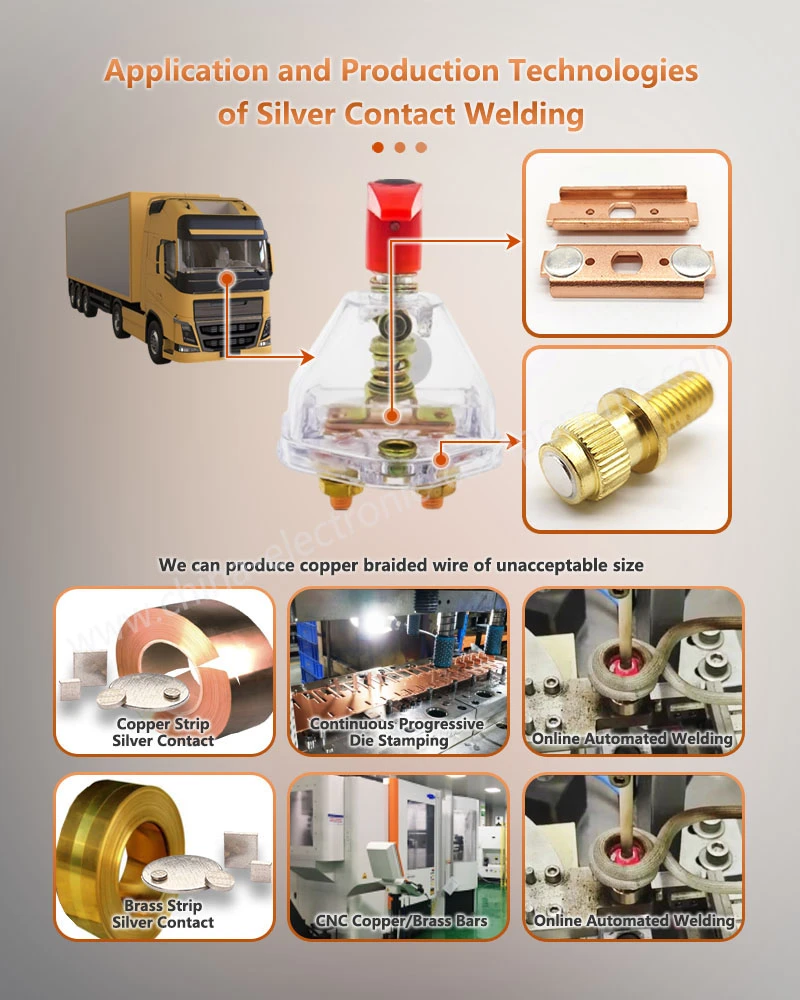
our Products
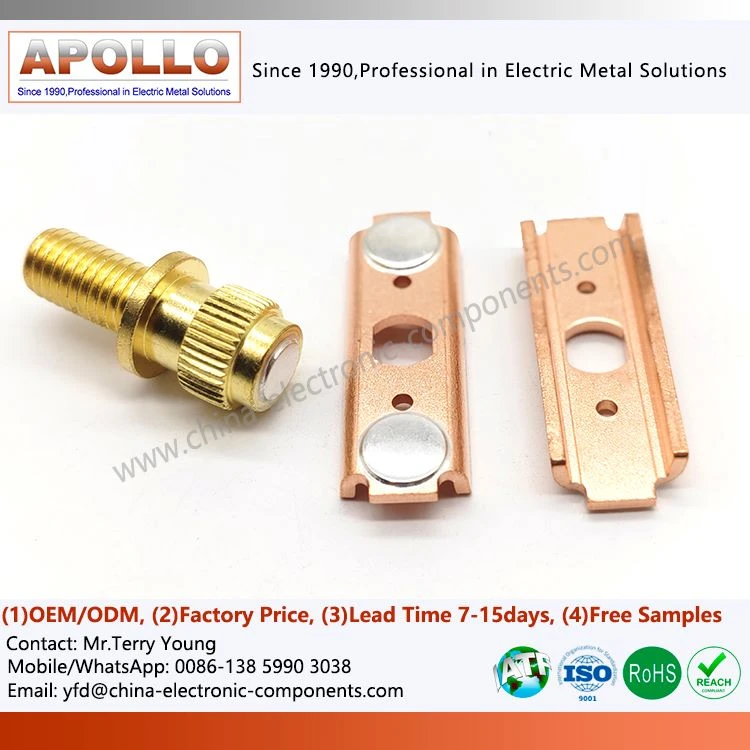
Among numerous brazing applications, our Silver Contact Brazed Assemblies are a benchmark. They utilize advanced brazing technology combined with high-quality silver contact materials to ensure high conductivity, reliability, and exceptional durability. Whether used in high-precision electronic equipment or safety-critical automotive electronic systems, they meet the most demanding requirements with their superior performance. Our products are not only technologically advanced but also exceptionally high-quality, providing the most reliable connection solutions for your projects.
contact us
Send Inquiry