


Dual-engine Growth From The New Energy Vehicle (NEV) And Wind-solar-storage Markets: The Shift Toward Higher Voltage Systems Expands Demand For Fuses, While Ceramic Insulating Components Gain New Development Opportunities.
Nov 10, 2026
Leave a message
With the continued development of the new energy vehicle (NEV), photovoltaic (PV), wind power, and advanced energy storage industries, power systems increasingly demand superior short-circuit protection, overcurrent protection, and high-voltage insulation performance. As critical components in circuit protection systems, fuses are expanding their reach-moving beyond traditional power equipment into the high-voltage power distribution systems of NEVs, PV inverters, and energy storage battery systems. Simultaneously, the widespread adoption of 800V high-voltage architectures, DC fast-charging, and large-capacity energy storage systems is driving the evolution of fuses toward higher voltage ratings, enhanced breaking capacity, and more reliable insulation structures.
Within a fuse, the ceramic tube body serves vital functions, including providing insulation, structural support, and arc containment. As high-voltage DC applications become more prevalent, the heat resistance, mechanical strength, and electrical insulation properties of ceramic materials have become key considerations in product design and manufacturing.
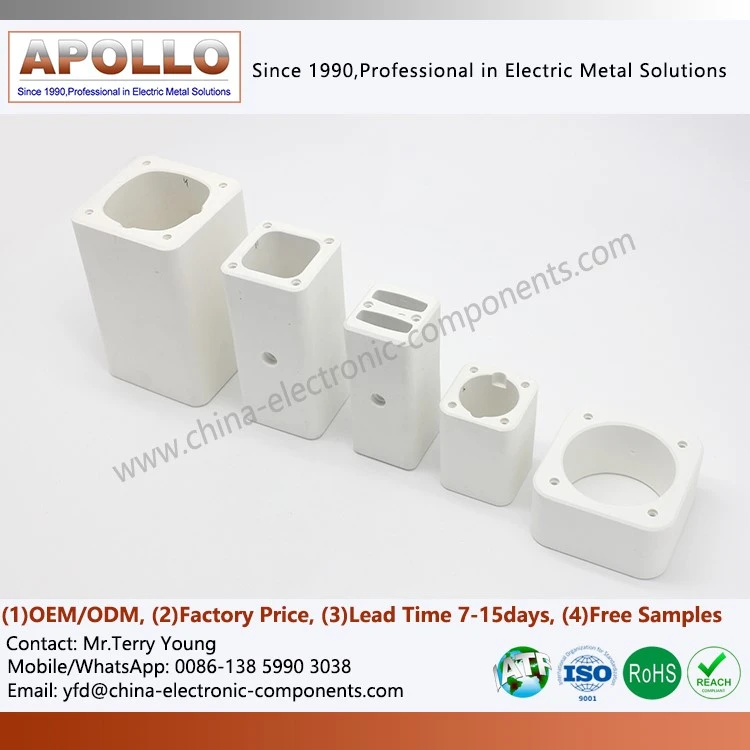
The shift toward higher voltages in NEVs is fueling growth in the fuse market
As the high-voltage electrical architectures of NEVs continue to evolve, components such as traction batteries, electric drive systems, on-board chargers, DC-DC converters, and high-voltage power distribution units all require dedicated circuit protection devices. With vehicle voltage platforms transitioning from the traditional 400V to 800V, fuses must not only meet higher voltage ratings but also deliver greater reliability in terms of short-circuit interruption, thermal stability, and long-term operational performance.
Industry research forecasts that the global market for NEV fuses will reach approximately 3.082 billion RMB by 2025, with the Chinese market accounting for about 1.929 billion RMB. This growth is driven not only by the rising production and sales of NEVs, but also by an increase in the number of fuses used per vehicle, the upgrading of product specifications, and the implementation of active protection technologies.
In conventional NEV electrical architectures, fuses primarily provide overcurrent protection for main and auxiliary circuits. With the transition to 800V high-voltage platforms, systems now impose stricter requirements for insulation clearance, arc-extinguishing capability, and voltage withstand performance, necessitating the use of higher-specification protection components for certain high-voltage circuits. Meanwhile, active protection solutions-such as pyrotechnic (or "active") fuses-are increasingly being integrated into the high-voltage systems of new energy vehicles (NEVs). This marks a shift in circuit protection from traditional, passive fusing toward active control and rapid disconnection.
Such developments have also driven upgrades to the internal architecture of fuses. For ceramic-housed fuses used in automotive DC applications, the ceramic tube must maintain structural stability under high-voltage and short-circuit fault conditions. Working in tandem with the fuse element, end caps, and other internal components, it facilitates the isolation and extinction of the electric arc. Factors such as material selection, dimensional precision of the ceramic tube, and the quality of end-cap processing all directly influence the overall performance of the fuse.
800V High-Voltage Platforms Increase the Value of Fuses per Vehicle
The advancement of high-voltage fast-charging technology has introduced more complex operating conditions for the high-voltage protection systems of NEVs. Compared to conventional voltage platforms, 800V systems offer advantages in reducing current and cable losses during high-power transmission; however, they also impose more rigorous technical requirements on fuses-specifically regarding rated voltage, breaking capacity, insulation structure, and thermal management.
Industry estimates suggest that the value of fuses per vehicle in traditional NEVs is approximately 130 RMB. With the adoption of high-specification power fuses in 800V-platform vehicles, this value is expected to rise to roughly 169 RMB. If an active (pyrotechnic) fuse is also included-assuming one unit per vehicle at a price of approximately 90 RMB-the total value of fuses per vehicle could reach about 259 RMB, representing an increase of approximately 99% over traditional configurations.
It should be noted that these figures are based on industry research scenarios; actual configurations and values will vary depending on vehicle architecture, circuit design, supply chain pricing, and the specific protection strategy employed. For fuse manufacturers, the focus of market competition is shifting from the supply of individual products toward material performance, structural design, manufacturing consistency, and system integration capabilities.
Growth in Wind, Solar, and Energy Storage Expands Application Scenarios for Power Fuses
Beyond the NEV sector, the growth of photovoltaic (PV) power, wind energy, and energy storage systems is providing a sustained, expanding market for the fuse industry. In photovoltaic (PV) systems, fuses are typically used to protect PV strings, DC combiner boxes, and associated power conversion circuits, thereby mitigating electrical risks arising from component failures or short circuits. In wind power systems, fuses are employed in converters and related electrical circuits to safeguard power devices and power distribution components. In energy storage systems, battery clusters, DC buses, charge/discharge circuits, and power conversion equipment all require the integration of appropriate protective devices, as dictated by the system design.
Industry research forecasts that by 2025, the global market for fuses in the PV sector will reach approximately 1.956 billion RMB, the wind power sector will reach about 281 million RMB, and the energy storage sector will reach roughly 611 million RMB-a combined total of approximately 2.848 billion RMB. When the market for fuses used in new energy vehicles (NEVs) is also included, the total market for fuses in the new energy sector approaches 6 billion RMB.
The growth of energy storage systems is particularly noteworthy. As battery capacity, system voltage, and the power rating of individual units continue to increase, the management of short-circuit currents and fault energy within energy storage electrical circuits has become increasingly complex. Fuses must be selected based on factors such as system voltage levels, prospective short-circuit currents, time-current characteristics, and the installation environment. Different application scenarios impose varying requirements regarding rated voltage, breaking capacity, temperature rise, and insulation performance, driving the development of fuses toward greater product diversification and customization.
Ceramic insulation structures represent a critical technical component in high-voltage fuses
During the fault-clearing process in high-voltage DC fuses, an electric arc is generated once the fuse element melts. Because DC lacks a natural zero-crossing point, extinguishing the arc and interrupting the fault current relies on the internal design of the fuse and the use of arc-extinguishing media.
Consequently, the ceramic tube body serves not only as an external support structure for the fuse element but also as a vital component that influences the fuse's insulation and arc-extinguishing capabilities.
Commonly used materials, such as electrical-grade steatite ceramics and alumina ceramics, offer excellent electrical insulation and heat resistance, making them suitable for a wide range of fuse specifications. For high-voltage applications, ceramic materials must remain stable under conditions of thermal shock, mechanical stress, and fluctuating electrical loads, ensuring that material defects or structural damage do not compromise the reliability of the protective device.
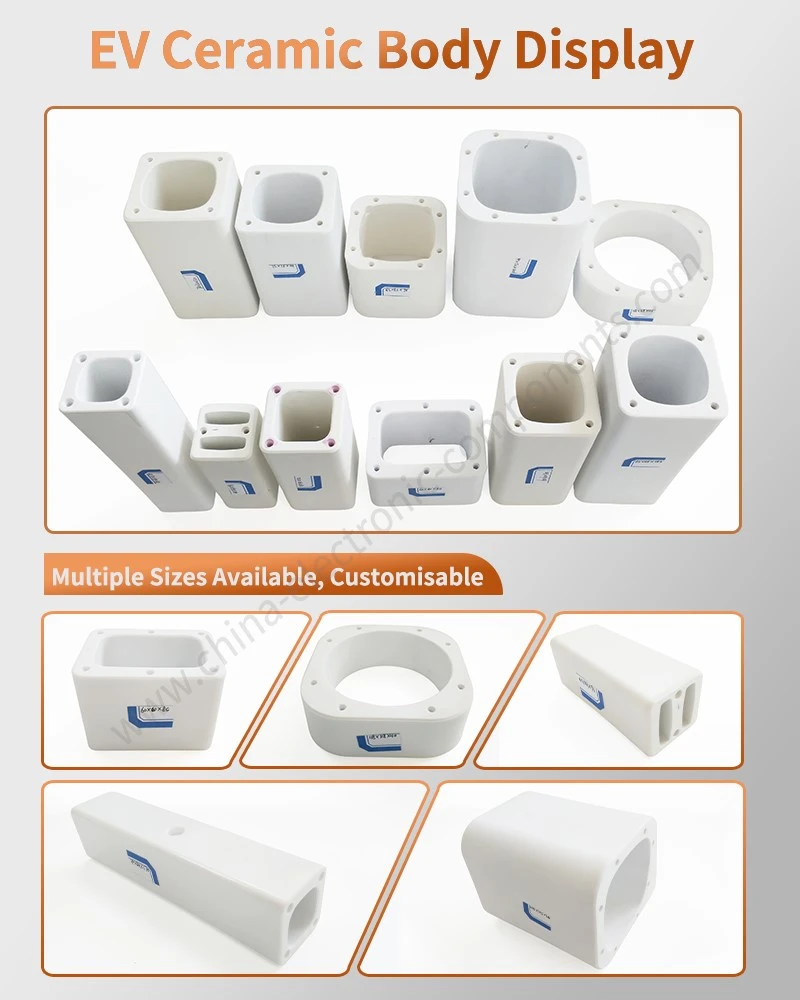
In product design, the ceramic casing for a fuse link must be dimensioned-in terms of overall size and wall thickness-based on the fuse's rated voltage, rated current, breaking capacity, and available installation space. Dimensional parameters such as the inner diameter, outer diameter, length, concentricity, and end-face flatness of the ceramic tube influence the arrangement of the internal fuse element, the integrity of the end connections, and the consistency of the final assembly.
Alumina ceramic materials are well-suited for high-voltage fuses used in new energy vehicles (NEVs). Due to their excellent electrical insulation, high-temperature resistance, and mechanical strength, alumina ceramics are widely employed in electrical insulating components and high-voltage fuse assemblies. Depending on specific application requirements, alumina ceramic tubes for high-voltage EV fuses can be manufactured with varying alumina content and structural specifications to accommodate different voltage ratings and design configurations.
In the context of new energy vehicles, fuses must withstand the vibrations, temperature fluctuations, and complex electrical environments encountered during vehicle operation. Consequently, alumina ceramic tubes for automotive electrical fuses must not only meet fundamental insulation requirements but also adhere to strict standards regarding material density, dimensional tolerances, surface quality, and batch-to-batch consistency.
For high-voltage DC applications, the design of alumina (Al₂O₃) ceramic tubes for high-voltage fuses must account for the material's dielectric properties, thermal expansion characteristics, and mechanical strength. In the event of a short-circuit, the ceramic tube must endure transient thermal loads and internal pressure spikes; therefore, its structural integrity is critical to the safe operation of the device.
Furthermore, the quality of the end-face processing of the ceramic insulator tube is of significant importance. As the ceramic tube is typically integrated with metal end caps, a fuse element, and filler material, factors such as end-face flatness, end-dimension precision, and assembly clearances directly affect the overall quality of the finished component. For mass-production projects, product consistency must be ensured through rigorous dimensional measurement, visual inspection, and necessary electrical performance verification.
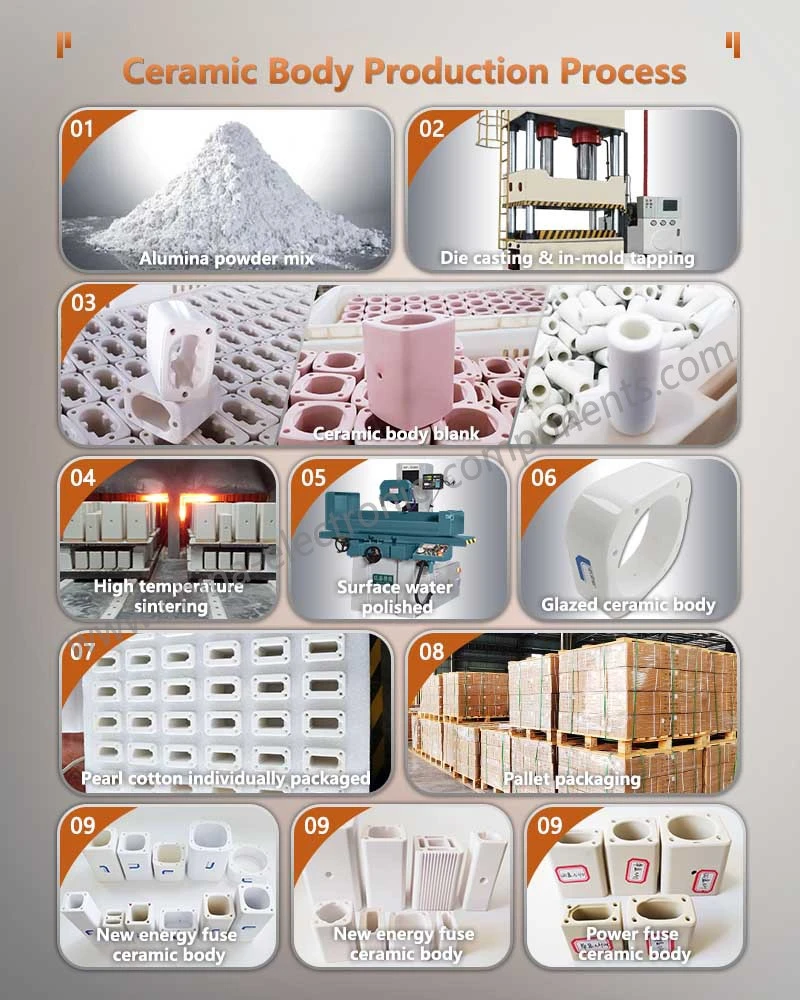
Ceramic Tubes for High-Voltage Automotive Fuses: Moving Toward Standardization and Precision Manufacturing
As new energy vehicle (NEV) platforms and charging infrastructure continue to evolve, fuse products are trending toward higher voltage ratings, more compact designs, and greater reliability. Since different vehicle models and electrical circuits have varying requirements for the dimensions, materials, and structures of ceramic tubes, manufacturing processes must be tailored to specific product specifications.
For instance, when selecting an alumina ceramic tube for a high-voltage automotive fuse, the material and dimensions must be determined based on the fuse's operating voltage, fault current, and installation environment. While a 95% alumina ceramic tube may be a viable material option for certain high-voltage applications, its suitability must be verified against specific requirements for insulation, thermal properties, and mechanical performance-overall performance cannot be judged solely by alumina content.
In DC fuses for NEVs, the insulated ceramic tube must function in tandem with the internal arc-extinguishing structure. The dimensional precision, control of surface defects, and material stability of the ceramic tube directly impact both the assembly and operational performance of the fuse. For ceramic tubes used in EV DC fuses, manufacturers must also ensure dimensional consistency across batches and maintain strict process control to meet the automotive industry's requirements for a stable supply of electrical components.
Structural variations also arise from different standard systems and product series. For example, ceramic tubes designed for British Standard (BS) series EV fuses must be engineered and manufactured in compliance with the relevant product standards, dimensional specifications, and electrical performance requirements. Similarly, for fuses used in charging equipment, the specifications for the ceramic tube-including its structure and dimensions-must be determined by considering factors such as charging power, voltage rating, short-circuit protection strategy, and installation conditions.
Procurement of Ceramic Components for Fuses: Focusing on Material, Dimensions, and Verification Capabilities
As the market for NEV fuses expands, the requirements for ceramic tubes have evolved beyond simple material designations and basic dimensions. During the selection phase, procurement and R&D teams should define the specific ceramic material grade, tube structure, dimensional tolerances, and end-processing requirements, taking into account the fuse's rated voltage, rated current, expected breaking capacity, operating temperature, and available installation space.
For customized projects, it is recommended to complete drawing reviews, material verification, sample dimensional inspection, and necessary electrical performance validation prior to mass production. Furthermore, key focus should be placed on evaluating the ceramic tube's surface integrity, dimensional consistency, batch-to-batch stability, and fitment with metal end-cap assemblies, ensuring that both the materials and the structure meet the design requirements of the final fuse.
For fuse manufacturing projects targeting new energy vehicles (NEVs), DC charging equipment, and energy storage systems, Apollo offers support in evaluating material and structural solutions for ceramic insulating tubes-based on the product drawings, material requirements, dimensional specifications, and operational conditions provided by the client. We are available for technical consultations covering sample development, precision machining, dimensional inspection, and mass production. Engineering, R&D, and procurement teams are invited to share drawings or technical specifications to discuss product suitability, manufacturing feasibility, and requirements for sample validation.
contact us
Send Inquiry