



Continuous Upgrades in Electronic Packaging Soldering Technology: High-Reliability Interconnection Processes Drive The Development Of Intelligent Manufacturing And High-Performance Electronics Industries
Jul 26, 2026
Leave a message
As electronic devices rapidly evolve toward higher integration, higher power density, and greater intelligence, soldering technology has become a critical foundational process influencing product performance and reliability in the electronics manufacturing sector. Across applications ranging from consumer electronics and automotive electronics to industrial controls and new energy equipment, high-precision soldering not only facilitates electrical connections between components but also determines the product's mechanical strength, heat dissipation capabilities, and long-term operational stability.
In recent years, the continuous upgrading of industries such as semiconductor packaging, power electronics, new energy vehicles, and intelligent manufacturing has imposed increasingly stringent demands on soldering processes. Traditional soldering methods are shifting toward micro-scale, high-reliability, automated, and eco-friendly manufacturing; meanwhile, new materials, advanced equipment, and digital inspection technologies are propelling electronic packaging soldering technology into a new stage of development.

Soldering Technology: A Core Pillar of Electronic Packaging Reliability
Within electronic packaging structures, solder joints serve not only to transmit signals and conduct current but also to provide mechanical fixation and facilitate heat transfer. As the operating environments for electronic products become increasingly complex, soldering quality has emerged as a crucial factor affecting the lifespan of electronic modules.
For automotive electronics, industrial control equipment, and new energy power systems, electronic components are often subjected to multiple stressors-such as temperature fluctuations, current surges, and mechanical vibrations-over extended periods. Defects at the solder interface can easily lead to increased contact resistance, localized overheating, and connection failure.
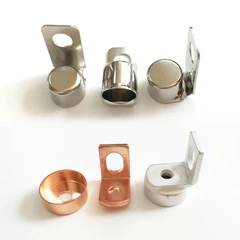
In the manufacturing of high-reliability electronic components, the quality of soldering for precision connection parts (such as contact tips) directly impacts current transmission stability and long-term service life. Optimizing material combinations, soldering parameters, and interface treatment processes can effectively mitigate the risk of performance degradation in connection zones.
In modern electronics manufacturing, soldering has evolved from a simple metal-joining method into a comprehensive technical system integrating materials science, thermodynamics, electromagnetic properties, and automated control.
High-Reliability Interconnect Technology Extends Electronic Device Lifespan
As vital connection nodes linking chips, substrates, and circuitry, solder joints possess mechanical reliability characteristics that directly influence the stable operation of the entire electronic system.
In real-world operating environments, differences in the coefficients of thermal expansion (CTE) between materials mean that soldering zones are continuously subjected to thermo-mechanical stress during repeated thermal cycling (heating and cooling). If the solder's microstructure is unstable, long-term cycling can lead to crack propagation, ultimately failing the electrical connection.
Consequently, advanced electronics manufacturing is placing increasing emphasis on optimizing solder materials and controlling interface structures. For instance, adjusting the proportions of elements such as tin, silver, and copper can refine the grain structure of solder joints and enhance resistance to thermal fatigue. Meanwhile, in high-current applications, utilizing connection materials with superior electrical conductivity helps reduce power loss and improve overall system efficiency.
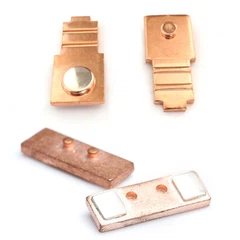
In the manufacturing of electrical connection components, silver-based soldered structures-such as brazed silver contacts-are widely employed in high-reliability applications due to their excellent electrical conductivity, wear resistance, and heat resistance.
Furthermore, in high-frequency and high-current environments, the soldered region must exhibit robust resistance to electromigration. As power densities rise, the prolonged flow of electrons can induce the migration of metal atoms, leading to the formation of internal voids and structural alterations. Consequently, optimizing solder material formulations and controlling microstructure can further enhance connection reliability.

Thermal Management Emerges as a Key Focus in Power Electronics Soldering
Driven by the rapid expansion of new energy vehicles, power electronics, and data center systems, the power density of electronic devices continues to rise, making heat dissipation capabilities a critical factor in packaging design.
In power semiconductor modules, the solder layer serves not only as an electrical connection but also as a vital pathway for transferring heat from the chip to the substrate and heat-dissipation structures. Voids, cracks, or material inhomogeneities at the solder interface increase thermal resistance, causing chip temperatures to rise and thereby compromising device efficiency and service life.
To meet the demands of high-power applications, novel soldering technologies are constantly evolving. Silver sintering technology, for example, utilizes metal particles bonded at high temperatures to form a stable structure; compared to traditional solders, it offers superior thermal conductivity and high-temperature resistance, effectively meeting the requirements for long-term power module operation.
In the manufacturing of power switchgear, composite contacts-such as bimetallic and trimetallic button contact overlays-leverage combinations of different metals to balance electrical conductivity, wear resistance, and mechanical strength, thereby supporting highly reliable electrical connections.
Simultaneously, thermal control capabilities within soldering processes are advancing. Precise control over temperature profiles, heating rates, and cooling processes helps minimize thermal stress and enhance the stability of the packaging structure.
The Trend Toward Miniaturization Drives Advances in Precision Soldering Technology
As chip sizes shrink and functional integration increases, electronic packaging is moving toward higher densities. This trend toward miniaturization demands soldering technologies that offer greater positional accuracy, a smaller heat-affected zone, and enhanced material adaptability. In the field of advanced packaging, solder joint sizes are continuously shrinking, transitioning from the traditional millimeter scale to the micrometer range. To meet the demands for connections with finer pitches and more complex structures, traditional welding methods face challenges regarding insufficient precision and excessively large heat-affected zones.
Technologies such as laser welding, thermocompression bonding, and precision resistance welding are increasingly being applied in high-density electronics manufacturing. Notably, electrical contact welding technology-which precisely controls welding energy and pressure to form stable bonds at metal contact interfaces-is well-suited for manufacturing electronic components that require high reliability.
In the realm of electrical contact manufacturing, contact metal welding processes enable high-strength connections between dissimilar metals, thereby enhancing contact durability and electrical conductivity stability.
Furthermore, as the trend toward integrating heterogeneous materials grows, welding processes must adapt to the need for joining copper, silver, nickel alloys, and specialized functional materials. Optimizing welding parameters and interface treatment techniques allows for reliable bonding between these diverse materials.
Intelligent Welding Drives Manufacturing Upgrades
With the digitalization of industry, welding production is shifting from a traditional experience-based model to a data-driven one.
Modern automated welding equipment integrates visual inspection, temperature monitoring, pressure feedback, and intelligent control systems to enable real-time monitoring of the welding process. The vast amount of process data generated during production helps manufacturers analyze trends in welding quality and detect potential issues proactively.
On intelligent production lines, automated systems can automatically adjust welding paths, durations, and energy inputs based on variations in product structure, thereby improving consistency across different production batches.
For complex electronic interconnect components, the brazing of electrical contacts-through precise control of heating cycles and filler materials-yields contact zones with superior mechanical strength and stable electrical performance, meeting the requirements for long-term operation.
Simultaneously, advancements in automated inspection technology have further elevated quality control standards. Techniques such as X-ray inspection, automated optical inspection (AOI), and 3D imaging enable the detection of internal defects that are difficult to identify via traditional methods, ultimately enhancing product reliability.
Green Manufacturing: A Key Trend in Welding Technology
As global manufacturing faces increasingly stringent environmental regulations, electronic welding technology is evolving toward lower pollution and reduced energy consumption.
The use of lead-free solders, low-volatility fluxes, and energy-efficient welding equipment is becoming the industry standard. By optimizing process workflows, lowering energy consumption, and reducing hazardous emissions, manufacturers are achieving a balance between production efficiency and environmental protection. In the field of electrical component manufacturing, the use of composite material structures-such as steel- or CuNi-backed contacts-improves material utilization efficiency while maintaining necessary mechanical and electrical conductivity properties.
Looking ahead, welding technology will increasingly integrate intelligent control, novel materials, and green manufacturing concepts to provide the electronics industry with connection solutions that are more reliable, efficient, and environmentally friendly.
Expanding Applications of Welding Technology in New Energy and Industrial Sectors
Driven by the rapid development of new energy vehicles (NEVs), energy storage systems, smart grids, and industrial automation equipment, the demand for highly reliable electronic connections continues to rise.
Powertrain systems, battery management systems, and power control modules in NEVs all require stable, reliable welded connections to ensure high-current transmission and long-term operational safety.
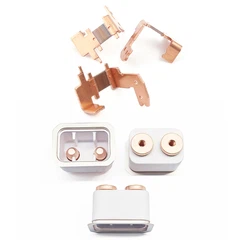
In the realm of electrical control, electrical contact kits utilize modular designs to enhance equipment assembly efficiency and ease of maintenance.
Meanwhile, high-performance contact materials meet the rigorous demands of applications involving frequent switching and high-load operation.
For low-voltage electrical appliances and industrial control equipment, low-voltage electrical contacts extend service life and improve operational stability through optimized material combinations and manufacturing processes.
As smart manufacturing, new energy technologies, and high-end electronic equipment continue to evolve, welding technology will progress toward greater precision, automation, and reliability.

Future Development Trends in Electronic Welding Technology
Electronic contact packaging and welding technologies are transitioning from traditional connection processes to comprehensive manufacturing technologies. Future development will focus on three key areas:
First, the application of new materials will continue to drive improvements in welding performance. Materials with high thermal conductivity, highly reliable alloys, and composite metal structures will increasingly meet the needs of high-power electronic devices.
Second, intelligent manufacturing will become a core production capability. Technologies such as artificial intelligence, data analytics, and automated control will enable more precise quality management throughout the welding process.
Finally, high-reliability connection technologies will play an increasingly vital role in sectors such as new energy vehicles, industrial automation, communication equipment, and new energy systems.
As electronic products continue to evolve toward higher performance, greater reliability, and miniaturization, welding technology will remain a fundamental process in the electronics manufacturing industry, providing critical support for next-generation smart devices and advanced manufacturing systems.
contact us

Send Inquiry