




China’s Automotive Start-Stop Battery Market Continues To Upgrade: EFB And AGM Technologies Evolve in Parallel, With A Focus On Lightweight Design And Cycle Performance
Nov 26, 2026
Leave a message
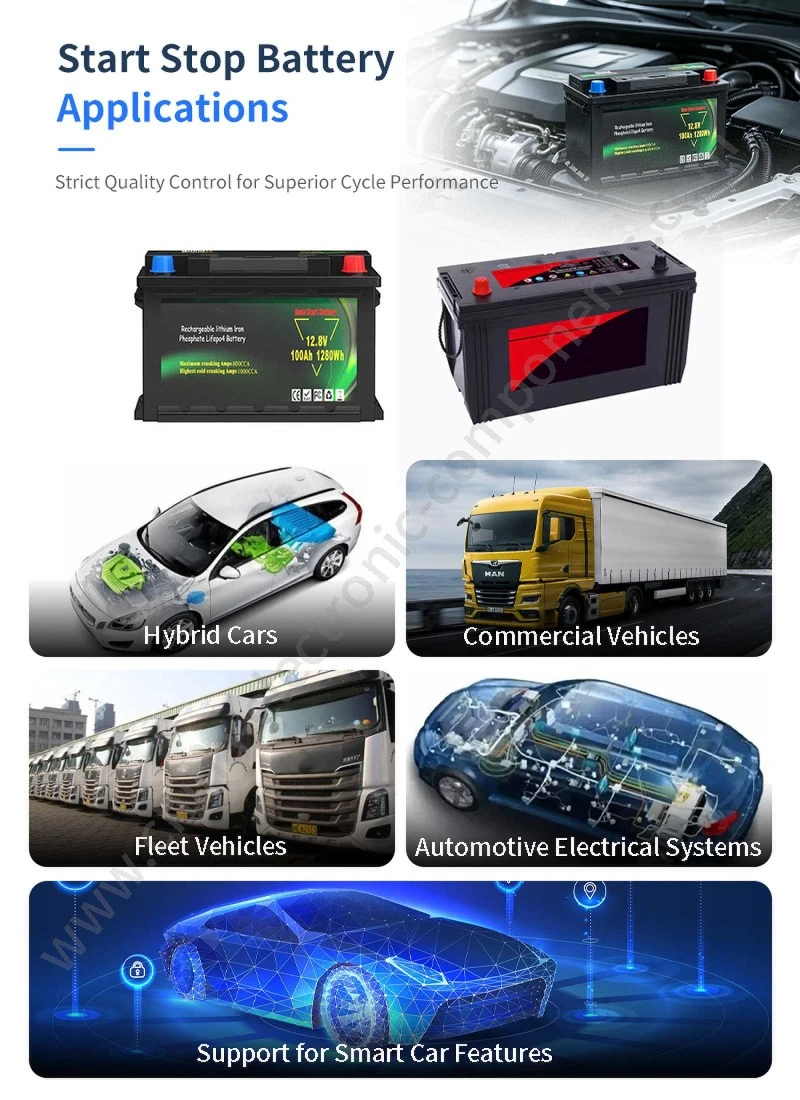
As automotive powertrains evolve toward greater energy efficiency, lower emissions, and increased intelligence, the adoption of automatic start-stop systems in conventional internal combustion engine (ICE) vehicles and hybrids continues to deepen. As a critical component of these systems, automotive start-stop batteries must provide a stable power supply under conditions involving frequent engine restarts, short-duration charging, and diverse temperature environments.
Their performance directly impacts the reliability of vehicle starting, the operation of onboard electrical systems, and the overall service life of the battery. Driven by both original equipment (OE) demand for new vehicles and the aftermarket replacement sector, the Chinese market for automotive start-stop batteries is shifting toward products that offer longer cycle life, rapid charging capabilities, and precise application-specific adaptation.
Proliferation of Start-Stop Systems Drives Growing Demand for Specialized Batteries
Automotive automatic start-stop systems reduce fuel consumption and exhaust emissions during idling by shutting off the engine when the vehicle is temporarily stopped and restarting it when the driver is ready to move off. Compared to conventional starter batteries, start-stop batteries must endure significantly more frequent charge-discharge cycles while simultaneously powering onboard electronic equipment when the engine is not running.
Consequently, traditional lead-acid starter batteries often struggle to meet the performance demands of high-frequency start-stop operation over the long term.
With the increasing number of electronic components in modern vehicles and the expansion of start-stop technology across a wider range of vehicle models, market requirements for specialized batteries have become more rigorous. Start-stop batteries are no longer merely basic components designed to crank the engine; they must now also deliver superior cycle durability, high charge acceptance, reliable cold-weather starting, and long-term operational stability.
In the aftermarket, both consumers and service providers are placing greater emphasis on ensuring that battery specifications align precisely with the vehicle's original electrical system. Factors such as battery capacity, cold-cranking amps (CCA), physical dimensions, terminal configuration, and charging control strategies are all critical considerations when selecting a replacement battery.
Continued Adoption of EFB Technology to Meet the Needs of Mainstream Start-Stop Vehicles
Enhanced Flooded Batteries (EFB) represent a key technological pathway in the current automotive start-stop battery market. By refining plate structures, active material formulations, and internal battery design, EFB technology offers improved cycle life and superior charge acceptance compared to conventional flooded lead-acid batteries, making them better suited to handle the heavy operational demands imposed by frequent start-stop cycles.
In mainstream internal combustion engine passenger vehicles and certain mild-hybrid models, EFB (Enhanced Flooded Battery) technology remains a strong market choice, thanks to its mature manufacturing process, favorable cost-effectiveness, and relatively stable performance. Products such as EFB "Carbon" start-stop batteries are typically optimized-focusing on electrode materials, carbon additives, and cycle performance-to enhance the battery's charge recovery capability during frequent start-stop operations.
From an application perspective, an EFB start-stop battery must be carefully matched to a vehicle's specific start-stop frequency, electrical load, and charging system parameters. For vehicles originally equipped with EFB technology, replacements should ideally meet the original equipment manufacturer (OEM) specifications; using an incompatible battery technology can negatively impact the start-stop function and shorten the battery's service life.
AGM Batteries for High-Load Applications
Absorbent Glass Mat (AGM) batteries utilize a design where an electrolyte is absorbed within glass fiber separators. This structure offers superior sealing, enhanced cycle performance, and high charge acceptance, making them well-suited for vehicles with high electrical loads and frequent start-stop cycles.
Compared to EFB, AGM batteries differ significantly in their construction and electrolyte management. They are generally designed for vehicles that demand higher cycle durability and a more stable power supply. Products such as "AGM Start-Stop Plus" or "AGM Stop-Start" batteries are primarily intended for vehicles originally configured with AGM technology, as well as for the corresponding replacement market.
It is important to note that an AGM battery is not a universal, direct replacement for all EFB batteries. Because vehicle models vary in their alternator control strategies, battery monitoring systems, and energy management logic, any replacement must adhere to the battery type and technical specifications mandated by the vehicle manufacturer. The suitability of an AGM battery for a start-stop vehicle should always be evaluated based on that specific vehicle's electrical architecture and operating conditions.
Product Specification Diversification: Capacity and Starting Performance as Key Selection Criteria
As vehicle platforms and onboard electrical systems become increasingly specialized, the specifications for start-stop batteries have also become more diverse. Vehicles vary in terms of engine displacement, start-stop frequency, power consumption of onboard equipment, and available installation space; consequently, battery capacity, cold-cranking capability, and physical dimensions must be specifically tailored to each application.
For instance, an EFB 12V 80Ah automotive starting battery is designed to meet requirements defined by a 12V voltage platform and an 80Ah capacity specification. When selecting such products for procurement or engineering purposes, one must look beyond nominal capacity and comprehensively evaluate factors including cold-cranking current, reserve capacity, cycle durability, charge acceptance, and operating temperature range. Furthermore, the battery's terminal configuration, mounting structure, and orientation must align with the design of the vehicle's battery compartment.
During product development, performance specifications for EFB automotive start-stop batteries are typically determined based on the target vehicle model and the intended market. For aftermarket replacement, it is essential to verify the original battery label, the vehicle owner's manual, and the requirements of the battery management system (BMS) to ensure that the replacement product meets all electrical and mechanical installation criteria.
Lithium-ion technology is being explored for lightweight applications, leading to a market landscape characterized by multiple competing technical pathways.
Beyond EFB and AGM technologies, lithium-based batteries are increasingly being explored for automotive starting and auxiliary power supply applications. With their high energy density and low weight, lithium batteries offer significant potential for vehicles that prioritize weight reduction and efficient space utilization. The emergence of lithium-ion starting batteries reflects growing market interest in new types of starting power technology.
However, lithium batteries differ from traditional lead-acid start-stop batteries in terms of voltage characteristics, charge management, low-temperature performance, and safety protection. When applied to automotive starting systems, a comprehensive design approach is required-integrating the cell chemistry, battery management system (BMS), overcurrent protection, temperature monitoring, and the vehicle's onboard charging system. Suitability cannot be determined solely based on weight or energy density.
In the current market, EFB and AGM remain the primary technical choices for automotive start-stop batteries, while lithium-ion technology is increasingly applied to specific vehicle models and auxiliary power requirements. These various technical pathways occupy distinct market positions, shaped by factors such as vehicle platform, cost targets, performance requirements, and operating environments.
Regional Market Demand Divergence: Focus on Low-Temperature Performance and Localized Support
The Chinese automotive industry is characterized by distinct regional clusters; consequently, the production, supply, and aftermarket demand for automotive start-stop batteries also exhibit regional variations. In East China, where the automotive manufacturing supply chain is highly concentrated-featuring a well-developed ecosystem of vehicle assembly, component supply, and after-sales service-there is a sustained demand for specific battery configurations, consistent quality, and reliable supply capabilities.
In South and Central China, as the supporting infrastructure for automotive components continues to strengthen, regional production and service networks for start-stop batteries are also maturing. In these markets, suppliers must not only meet fundamental performance requirements but also address factors such as product range coverage, delivery lead times, quality traceability, and after-sales support.
In regions such as North and Northeast China, where low temperatures are common during winter, there are heightened requirements for cold-start performance. Low-temperature environments affect the rate of internal electrochemical reactions and the available capacity of a battery, which in turn impacts a vehicle's ability to start. Therefore, product development for cold-climate regions must prioritize the evaluation of cold-cranking current, low-temperature discharge capacity, and low-temperature charging adaptability-all of which should be validated under real-world vehicle operating conditions.
Manufacturing Processes and Quality Control Influence Product Consistency
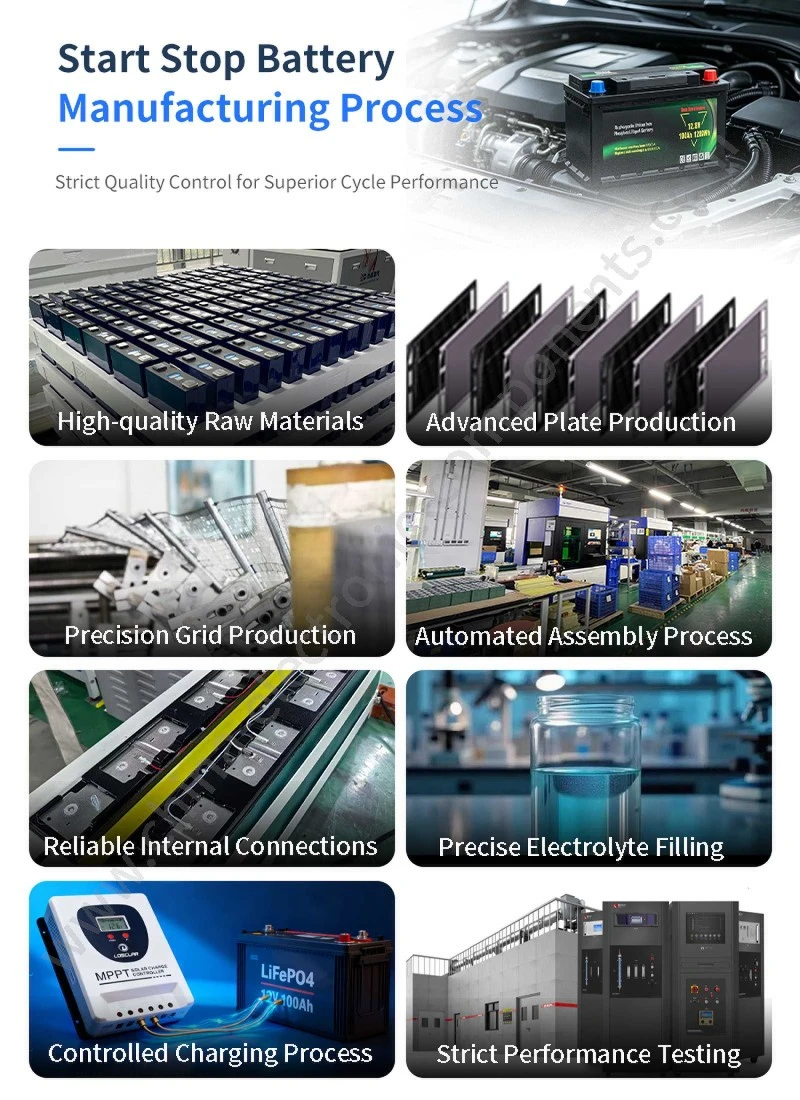
The performance of automotive start-stop batteries depends not only on electrode materials and internal structure but also, crucially, on quality control during the manufacturing process. Stages such as plate fabrication, active material coating, curing, separator assembly, casing sealing, and electrolyte management all directly influence a battery's capacity, internal resistance, cycle performance, and overall consistency.
For EFB (Enhanced Flooded Battery) products, the structure of the plates and the formulation of the active materials are key determinants of cycle life.
For AGM (Absorbent Glass Mat) batteries, critical factors include the liquid-absorption capacity of the glass-fiber separators, assembly quality, and the management of internal pressure. Furthermore, the battery casing must possess sufficient structural integrity, corrosion resistance, and sealing performance to withstand the vibrations and temperature fluctuations encountered during long-term vehicle operation.
During production and testing, manufacturers typically implement protocols covering capacity, cold-cranking performance, internal resistance, charge acceptance, cycle durability, and seal integrity. For maintenance-free (MF) batteries-such as those used in start-stop systems-special attention must also be paid to the sealing structure, venting design, and long-term performance stability. Meanwhile, the segmentation of product models and application scenarios has prompted manufacturers to optimize their material management, automated assembly processes, and quality traceability systems.
For product lines such as the EFB Powerline Start-Stop, EFB Start-Stop Plus, and other EFB variants, it is essential to define performance boundaries based on target markets and specific vehicle application requirements. Relying solely on product names to distinguish between models-without the support of corresponding technical specifications-should be avoided.
Supply Chain and Aftermarket Dynamics Reshape Industry Competition
As the market for automotive start-stop batteries matures, the focus of industry competition is shifting from a primary emphasis on price and production capacity toward a more comprehensive evaluation encompassing product performance, quality consistency, supply stability, and after-sales service capabilities.
In the original equipment manufacturer (OEM) market, automakers typically impose strict requirements regarding cycle durability, environmental adaptability, dimensional consistency, and batch-to-batch stability. Suppliers must possess robust, ongoing product validation capabilities and be prepared to conduct sample testing, performance verification, and quality management for mass production in alignment with specific vehicle project requirements.
In the aftermarket, the breadth of product specifications, supply chain reach, and the accuracy of vehicle fitment are equally critical. Products such as EFB start-stop batteries should be clearly labeled with their voltage, capacity, cold-cranking current, dimensions, terminal configuration, and applicable technical specifications. This clarity helps purchasers and service providers minimize the risk of selecting the wrong battery.
Furthermore, as China's battery manufacturing supply chain continues to mature, domestic enterprises are strengthening their capabilities across raw material sourcing, production equipment, quality testing, and product development. Growing demand for automotive start-stop batteries in overseas markets offers significant expansion opportunities for suppliers that maintain stable manufacturing processes and adhere to international quality management systems.
Procurement Considerations: From Product Specifications to Vehicle Fitment Validation
For automakers, component purchasers, and aftermarket distributors, the procurement of start-stop batteries should not be based solely on capacity or price. Instead, decisions should be informed by a comprehensive assessment of the target vehicle model, the start-stop system configuration, and the actual operating environment. Before finalizing a purchase, it is advisable to specify the battery's technical type, rated voltage, capacity, cold-cranking current, physical dimensions, terminal specifications, cycle life requirements, and operating temperature range. Additionally, it is essential to verify that the product complies with all safety and transportation regulations applicable to the target market.
For projects requiring custom development or volume-based supply, the engineering team must further define the battery structural design, material composition, charging management requirements, performance testing standards, and protocols for ensuring batch-to-batch consistency. Suppliers are expected to conduct specification assessments, sample validation, and feasibility analyses for mass production based on project technical documentation, ensuring that product performance aligns with the vehicle's electrical system.
If you are developing an automotive start-stop battery project, or if you need to source EFB, AGM, or other types of starter batteries, please provide details regarding the target vehicle model, technical drawings, capacity specifications, cranking current requirements, and projected procurement volumes. This will facilitate product selection, technical parameter confirmation, and sample validation, as well as the assessment of mass production and long-term supply strategies.
contact us
Send Inquiry