



Why has the Electron Beam Welded Shunt become a core component of smart metering?
Jun 30, 2026
Leave a message
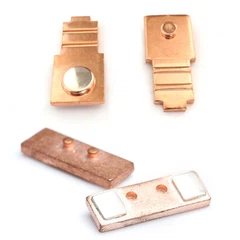
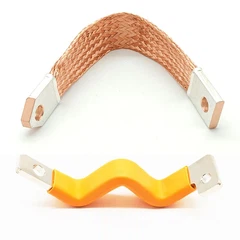
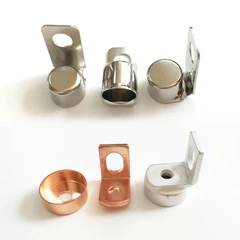
High-precision current sampling elements are the core foundational components of smart metering equipment. With the continued expansion of the smart home and smart grid industries, high-precision sampling solutions are becoming increasingly widespread. Globally, various metering terminals are demanding stringent standards for the long-term stability of sampling elements. The Electron Beam Welded Shunt, utilizing advanced vacuum welding technology, addresses the structural issues of traditional sampling elements, such as resistance drift and unstable contact, making it a core component for next-generation metering equipment.

Mainstream electronic metering equipment includes two types of current acquisition schemes: one relies on current transformers to acquire neutral current, and the other uses low-resistance sampling elements to detect live wire current. While power frequency magnetic fields do not interfere with current transformer operation, they can easily cause measurement deviations in ordinary sampling elements, leading to data distortion over long-term use. The Spot Welding for Manganin Shunt Resistor achieves metallurgical bonding between the alloy substrate and conductive terminals, with no oxide layer in the weld, significantly reducing the interference of magnetic fields on sampling accuracy and making it suitable for long-term use in complex outdoor electromagnetic conditions.
The sampling element is essentially an ultra-low resistance precision resistor. When load current passes through the element, a millivolt-level voltage drop is generated across its terminals, and this voltage drop varies according to Ohm's law. Different resistance values result in significantly different output sampling signals. Poor contact and welding defects continuously increase contact resistance, causing data distortion. The E-beam Welding Shunt uses high-energy beam concentrated welding, minimizing the heat-affected zone and ensuring controllable overall component deformation. This precisely locks in the nominal resistance value, guaranteeing long-term stable output of the sampling voltage signal.
The weak voltage signal generated by sampling is transmitted via signal lines to a filtering module. After first-order anti-aliasing processing, it is sent to the metering chip. The chip uses a fixed electrical formula to calculate the real-time current value, completing the full electrical quantity metering process. Additional impedance from weld gaps and oxide layers continuously amplifies sampling errors, leading to a sustained increase in metering deviation over long-term operation. The Manganin Shunt For Electronic Power uses no filler solder and has a dense, gapless weld, eliminating additional contact impedance at its source and maintaining consistent metering accuracy.
The smart grid, energy storage photovoltaic, and vehicle-mounted power distribution markets are expanding rapidly, driving continuous upgrades in the accuracy, temperature drift, and durability of metering equipment, while the manufacturing processes of sampling components are being iterated and optimized in tandem. Traditional brazed components are prone to high-temperature desoldering and resistance drift, failing to meet the requirements of 0.5-level high-precision metering equipment. Manganin Latching Relay for Single Phase exhibits superior low-temperature drift characteristics, withstanding high-current surges and lightning overloads, making it suitable for high-power metering terminals such as charging piles and energy storage inverters.
Outdoor and vehicle-mounted equipment faces complex operating conditions such as alternating high and low temperatures and mechanical vibrations. Ordinary sampling components are prone to weld cracking and resistance drift over time, significantly shortening the overall lifespan of the metering equipment. Industrial scenarios place stringent requirements on the vibration and thermal shock resistance of components; even minor measurement errors can cause deviations in energy consumption statistics. EBW Manganese Copper Shunt has weld strength approaching that of the base material, offering excellent vibration resistance and thermal shock resistance, making it suitable for long-term, uninterrupted metering operations across all scenarios.
The entire industry is simultaneously increasing its demand for miniaturized, high-precision, and low-cost metering equipment. Traditional solid alloy components consume large amounts of precious metals, and conventional welding structures struggle to balance performance and cost. The industry's R&D focus is increasingly shifting towards precision welding processes, optimizing welding structures to reduce precious metal usage. E-Beam Welding Manganin Electrical Shunt precisely controls the welding area, reducing alloy material loss and effectively controlling component production costs while meeting high-precision metering standards.

In summary, high-precision sampling elements are indispensable key components of intelligent metering systems, and the welding process directly determines the element's sampling accuracy, lifespan, and environmental adaptability. Faced with increasingly stringent metering standards across industries, upgrading welding processes and optimizing component structures is an inevitable trend. EBW Manganin Shunt for Electronic Meter, with its stable electrical performance and strong environmental adaptability, covers all metering scenarios, including electricity meters, photovoltaic systems, and automotive applications, making it the mainstream choice for upgrading metering equipment.
Conventional soldered sampling elements on the market generally suffer from drawbacks such as large temperature drift, weak overload resistance, and rapid long-term accuracy degradation. Our standardized, mass-produced Electron Beam Welded Shunt has undergone rigorous testing, including high and low temperature cycling, lightning strikes, and long-term aging. Resistance values can be customized to meet specific needs, accommodating sampling requirements from 30μΩ to 1200μΩ. All components comply with international metrological safety standards, ensuring stable mass production and providing a one-stop solution to the industry problem of insufficient sampling accuracy in metrology equipment. For sample testing, bulk purchasing, or customized parameter development needs, please feel free to contact us for selection and quotation.
contact us

Send Inquiry