





Why Energy Storage Cabinets are the Safety Heart of the New Energy Industry
Feb 08, 2026
Leave a message
In new energy systems, a structural contradiction always exists between the instability of the power generation side and the certainty of the power consumption side. Energy storage cabinets are the key equipment for resolving this contradiction. Whether it's photovoltaic, wind power, or industrial and commercial microgrids, electrical energy must undergo safe and controllable storage and release processes before it can truly be converted into usable energy. From a system perspective, battery energy storage cabinets not only undertake energy regulation functions but also directly determine the safety boundaries and operational reliability of the entire new energy system.

What is an Energy Storage Cabinet: A Core Node in New Energy Systems
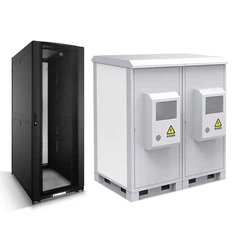
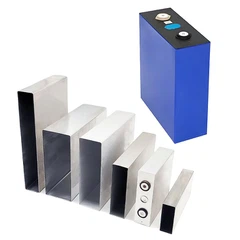
An energy storage cabinet is a highly integrated power storage and management device, typically composed of battery modules, a battery management system (BMS), a thermal management system, fire protection and safety protection units, and a structural shell. Its essential function is to establish a "buffer zone" between power generation and consumption, enabling the scheduling and controllability of electrical energy over time. In practical engineering, energy storage system cabinets are often regarded as the central equipment of new energy systems; once an anomaly occurs, the risk will rapidly amplify and affect the entire system.
The Core Value of Energy Storage Cabinets: More Than Just Electricity Storage, It's About "Stabilizing the System"
From a functional perspective, the primary role of energy storage cabinets is to balance electricity supply and demand. Through peak shaving and valley filling mechanisms, they store electrical energy during low-load periods and release it during high-load periods, improving the operational efficiency of the grid and the user side. In photovoltaic and wind power systems, energy storage cabinets can smooth power output, reducing the impact of fluctuations on the grid and enabling new energy power generation to have "predictability" and "dispatchability." In this process, the solar battery storage cabinet actually plays the role of a system stabilizer, rather than simply an energy container.

Why "Safety" is the Primary Attribute of Energy Storage Cabinets
Unlike traditional power distribution equipment, energy storage cabinets centrally store high-energy-density chemical power sources. Once out of control, the risks are far greater than those of ordinary electrical equipment. Therefore, the design logic of energy storage cabinets must prioritize safety, including cell consistency management, thermal runaway early warning, active or passive fire suppression, structural isolation, and explosion-proof design. Especially in outdoor or unattended scenarios, the safety capabilities of outdoor energy storage cabinets directly determine whether a project can operate long-term.
Energy Storage Cabinets and Their Safety Focuses Under Different Technical Routes
From a technical perspective, lithium-ion battery energy storage cabinets remain the mainstream, offering advantages such as high energy density, high efficiency, and system maturity. However, they are extremely sensitive to temperature and charge/discharge strategies. In contrast, flow batteries are inherently safer, but their systems are more complex and require higher initial investment. As system power density continues to increase, liquid cooling solutions are gradually becoming the trend. Liquid-cooled energy storage cabinets, through precise temperature control, significantly reduce the probability of thermal runaway and are being widely adopted in large-scale energy storage and high-safety-level projects.
Main Sources of Safety Risks Faced by Energy Storage Cabinets
The safety risks of energy storage cabinets mainly focus on three aspects. First, there is the risk of battery thermal runaway, usually caused by overcharging, localized overheating, or cell defects. Second, there are transportation and delivery risks; since energy storage cabinets are classified as hazardous materials under regulations, their logistics must comply with international standards. Third, there are installation and operating environment risks, such as high humidity, high temperature, or vibration environments, all of which can affect system lifespan and safety redundancy. For more integrated energy storage cabinets, system-level design capabilities become crucial for controlling these risks.
The "Heart" Attribute of Energy Storage Cabinets from a System Integration Perspective
In new energy projects, energy storage cabinets are not isolated entities but deeply coupled with inverters, EMS (Energy Management System), and grid interfaces. An anomaly in the energy storage system can trigger a chain reaction, leading to a site shutdown. Therefore, energy storage cabinets are often placed at the core of the system topology. Whether in industrial and commercial parks or remote microgrids, the reliability of the outdoor cabinet energy storage system determines the system's engineering feasibility.
The Long-Term Significance of Energy Storage Cabinets in the Transformation of the New Energy Structure
As the penetration rate of new energy continues to increase, energy storage is no longer an "optional configuration" but an integral part of the infrastructure. Especially with the continuous rise in the proportion of photovoltaic and wind power, energy storage cabinets undertake multiple tasks of absorption, regulation, and safety protection. Looking to the future, in multi-energy complementary scenarios, Solar Wind Energy Storage Cabinets will become an important physical carrier for the stable operation of new energy systems, and their safety level will continue to improve.
Conclusion
As new energy systems continue to evolve towards higher power, higher integration, and higher safety levels, the design and manufacturing capabilities of energy storage cabinets have become a crucial standard for measuring a supplier's technological prowess. We offer a variety of systematic solutions for different application scenarios, including Integrated Energy Storage Cabinet and Liquid Cooling Energy Storage Integrated Cabinet for Wind, covering industrial, commercial, outdoor, and new energy supporting scenarios. These solutions help customers achieve long-term stable operation of their energy systems while ensuring safety boundaries.
contact us

Send Inquiry