










Understanding Energy Storage Copper Busbars: Materials, Insulation, Technology, and Surface Finishing
Apr 08, 2026
Leave a message
In energy storage systems, copper busbars, as core conductive components, play a crucial role in current collection and distribution, and their performance directly impacts system efficiency, safety, and lifespan. From an engineering design perspective, energy storage copper busbars are not merely simple conductors, but system-level components integrating materials science, insulation design, electrical performance, and manufacturing processes. Structural forms, represented by the Battery Bus Bar, act as "power channels" in battery modules, battery clusters, and entire systems, and their design must balance conductivity, thermal management capabilities, and long-term reliability.
Regarding material selection, copper has become the mainstream choice due to its excellent conductivity. Commonly used T2 copper has a conductivity exceeding 58 MS/m, effectively reducing energy loss and controlling temperature rise, making it the preferred material for most energy storage systems. In high-end applications, higher-purity T1 copper can further reduce resistance loss, while T3 copper offers a cost-effective option in cost-sensitive scenarios. In contrast, while aluminum offers the advantage of lightweight design, its conductivity is only about 60% that of copper, typically requiring a larger cross-sectional area to meet current-carrying requirements, which poses a limitation in space-constrained systems. Therefore, in energy storage systems requiring high reliability, copper is typically the preferred material for insulated busbar designs.
In special environmental applications, such as high humidity, high salt spray, or high temperature conditions, higher demands are placed on copper busbar materials. Introducing alloying elements such as nickel and tin can significantly improve the corrosion and oxidation resistance of copper. For example, in coastal energy storage power stations, salt spray resistance is a key indicator, while in industrial high-temperature energy storage scenarios, it is necessary to ensure that the material maintains stable electrical performance under thermal stress conditions. These applications often incorporate a soft connection copper busbar structure to absorb stress changes caused by thermal expansion and mechanical vibration.
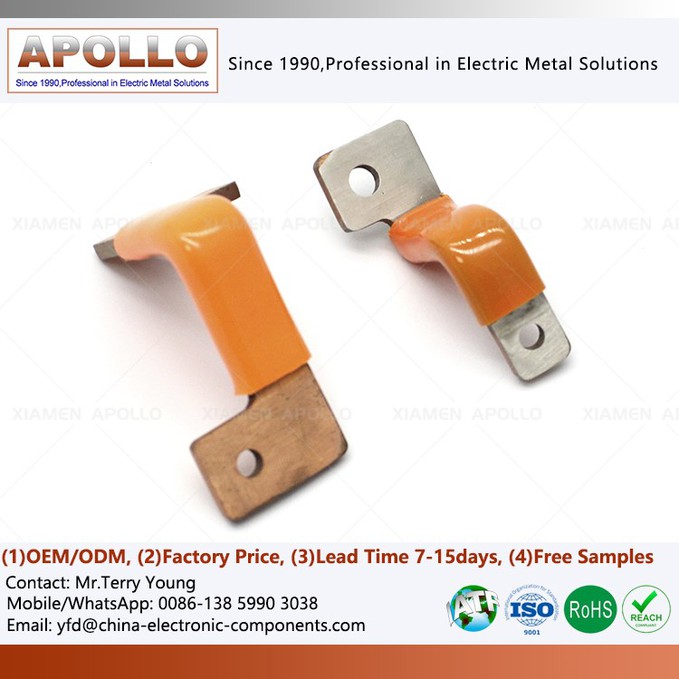
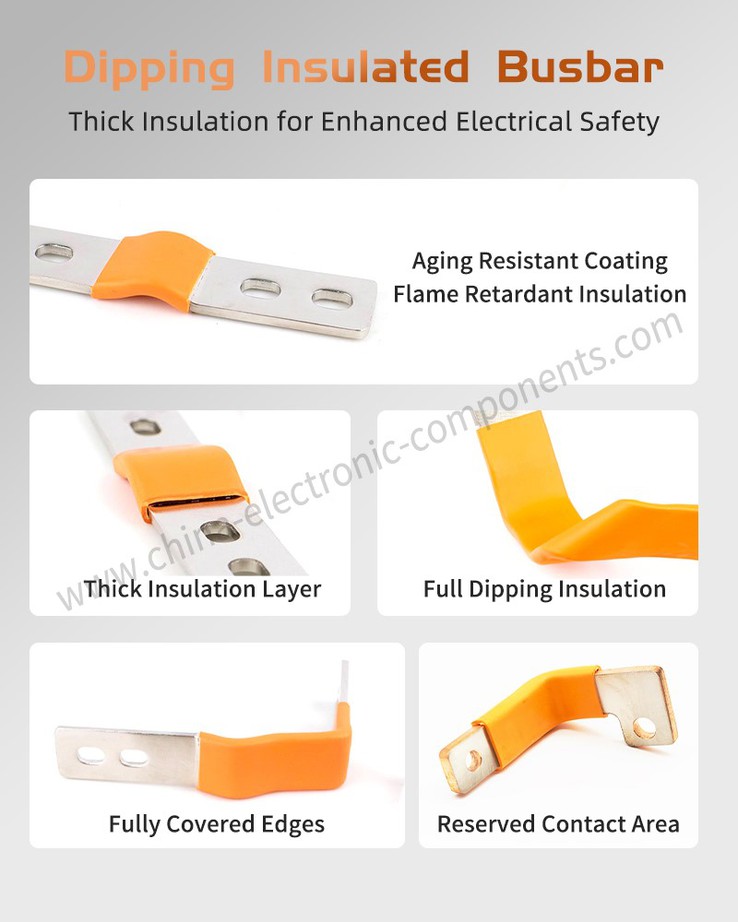
Insulation protection is another crucial aspect of energy storage copper busbar design, with the core objective of achieving electrical isolation and safety protection. PVC materials are widely used in copper busbar insulation due to their low cost and mature processing technology. The PVC dipping insulated busbar process can form a uniform and strongly adhered insulation layer on the conductor surface, meeting the basic insulation requirements of medium- and low-voltage energy storage systems. Meanwhile, for complex structural components, Insulated Custom Copper Bus Bar with PVC Dipping enables customized insulation coating, balancing structural adaptability and electrical safety.
In higher performance scenarios, such as high-voltage energy storage systems or applications with large temperature differences, materials like epoxy resin and silicone rubber provide higher levels of insulation and mechanical properties. This type of solution is typically used in Dip Insulated Busbar structures, maintaining stable performance over a wide temperature range. Furthermore, Busbar Isolation design must be integrated with system layout to avoid arcing risks and improve overall safety redundancy.
In terms of process implementation, dipping is one of the most mainstream insulation methods. By heating the copper busbar and immersing it in insulating material, a uniform coating is achieved, forming a PVC Dipped Insulated Bus Bar structure. This process is suitable not only for regular copper busbars but also for complex-shaped components, exhibiting good adhesion and consistency. In battery systems, PVC Dipping Insulated Battery Busbar Connectors are commonly used for inter-module connections, ensuring conductivity while improving assembly safety.
At the technical design level, current-carrying capacity and temperature rise control are key considerations for energy storage copper busbars. Current-carrying capacity depends not only on the material's conductivity but also on cross-sectional area, installation method, and heat dissipation conditions. By rationally designing the cross-sectional dimensions and arrangement, a stable temperature rise level can be ensured during long-term operation. Based on this, combining it with the Insulated Flexible Copper Bus Bar for Power Battery Pack structure can effectively improve the system's thermal adaptability and assembly flexibility.
Heat dissipation design is a crucial means of controlling temperature rise. Optimizing the copper busbar layout (e.g., vertical installation), surface treatment, and the application of auxiliary heat dissipation materials can significantly reduce operating temperature. In high-power energy storage systems, active cooling is often achieved by combining air cooling or liquid cooling systems. Furthermore, the busbar support structure design must also consider both heat dissipation and mechanical fixation functions to ensure the copper busbar remains stable under vibration and thermal cycling conditions.
Regarding connection technology, copper busbars typically use bolted or welded connections. Bolted connections facilitate maintenance and are suitable for modular systems; welded connections have lower contact resistance and are suitable for scenarios with high reliability requirements. For dynamic or vibrating environments, the Dipping Busbar for Connection structure offers better flexibility and stability, reducing the risk of connection failure.
Surface treatment significantly impacts copper busbar performance. Tin plating is one of the most common methods, forming a protective layer on the copper surface to improve oxidation resistance and solderability. For example, Tin Coated Insulated Flat Copper Bus Bars for Batteries are widely used in battery connection systems, ensuring conductivity while enhancing environmental adaptability. Furthermore, in demanding scenarios, nickel plating or composite plating, such as PVC Dipping Nickel Plated Copper Bus Bars for EV Batteries, can be used to further enhance corrosion and abrasion resistance.
Besides metal plating, processes such as Plastic Dipping Copper Busbars and Plastic Dipping Electric Copper Busbar Custom Made achieve additional protection through organic coatings, offering advantages such as low cost and process flexibility. These solutions are widely used in small to medium-sized energy storage projects and can also form composite protection systems with metal plating to extend service life.
In summary, the design of energy storage copper busbars is a multi-dimensional, collaborative optimization process. From material selection and insulation design to electrical performance and surface treatment, every step directly impacts the safety and efficiency of the system. As energy storage systems evolve towards higher voltage, higher current, and higher integration, the performance requirements for products such as Insulated Flexible Copper Bus Bars and PVC Coated Bus Bars are continuously increasing.
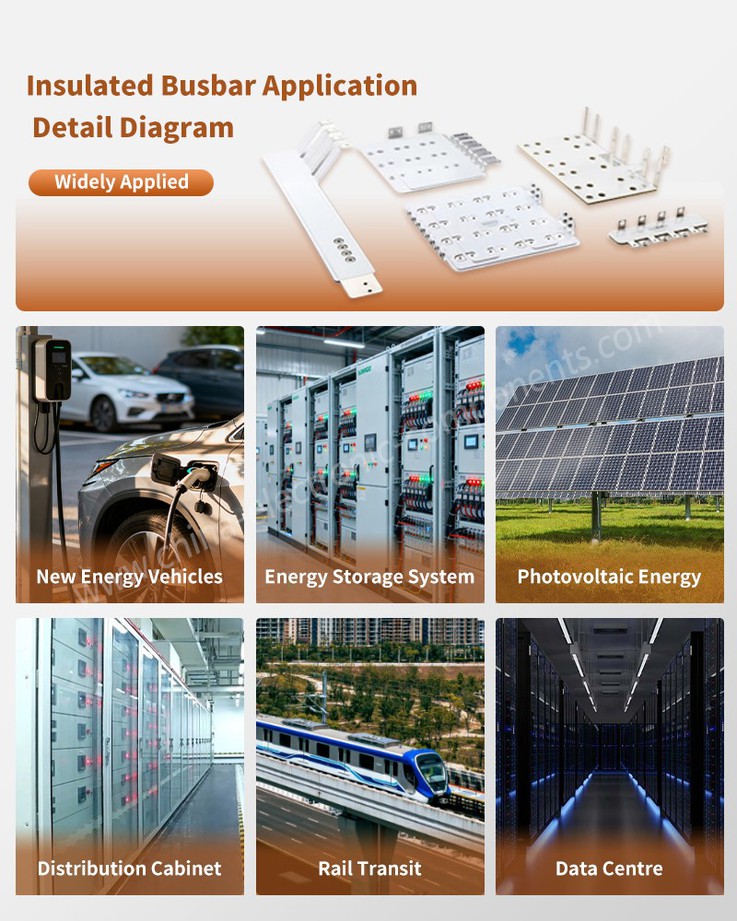
In practical engineering applications, high-quality copper busbar solutions not only need to meet standard parameters but also require customized design based on specific application scenarios. We offer a complete product portfolio covering PVC Dipped Laminated Flexible Copper, Dip Insulated Busbars, and various busbar isolation solutions for different energy storage system structures. This supports end-to-end optimization from material selection to process implementation, helping energy storage systems achieve higher efficiency, higher safety, and longer service life.
contact us
Send Inquiry