



Technical Analysis of Heat-Shrinkable Busbar Tubing: Material Structure, Insulation and Protection Principles, and Application Trends in Power Systems
Jul 15, 2026
Leave a message
The Vital Role of Heat-Shrinkable Busbar Tubing in Modern Power Systems
With the rapid development of new energy, power electronics, high-voltage power transmission and distribution, and smart grid technologies, the requirements for the safety, reliability, and long-term operational stability of electrical equipment have steadily increased. As core conductive components in power systems, busbars are responsible for high-current transmission and power distribution; their insulation performance directly impacts the operational safety of the equipment.
While traditional bare copper or aluminum busbar structures offer excellent conductivity, they are susceptible to environmental factors during long-term operation. Issues such as humidity, dust contamination, salt spray corrosion, mechanical impact, and insufficient phase-to-phase clearance can lead to degraded insulation, arcing, or even equipment failure.
Consequently, providing reliable insulation protection for busbars has become a crucial aspect of modern electrical engineering. Thanks to their superior insulation properties, ease of installation, and environmental adaptability, heat-shrinkable busbar tubes have emerged as essential protective materials for low- and medium-voltage power distribution equipment and new energy electrical systems.
In terms of material composition, heat-shrinkable busbar tubing typically utilizes cross-linked polyolefin materials. Irradiation cross-linking technology is employed to modify the molecular structure, thereby enhancing the material's heat resistance, mechanical strength, and dimensional stability. High-performance products feature a design that allows the tubing to shrink tightly onto the busbar surface upon heating, ensuring continuous insulation protection.
Compared to traditional insulation methods, the heat-shrink structure minimizes air gaps and increases insulation clearance while reducing the risk of short circuits caused by dust, moisture, or conductive contaminants. As a result, these tubes are widely used in power distribution cabinets, switchgear, new energy installations, and industrial control systems.

Structural Composition and Working Principle of Heat-Shrinkable Busbar Tubing
Heat-shrinkable busbar tubing is primarily composed of a polymeric insulating base material, functional additives, and a cross-linked structure. During manufacturing, the polymer material undergoes specialized processing to impart "memory" properties; upon heating during installation, the tubing reverts to its original dimensions, thereby tightly encapsulating the busbar.
Its core working principle involves three aspects:
First, physical encapsulation increases the creepage distance and air clearance between conductors, thereby enhancing the system's insulation rating. Secondly, the material's inherent voltage-withstanding properties help minimize the risks of partial discharge and arcing.
Finally, the sealing structure mitigates the impact of the external environment on the conductor surface, thereby enhancing the equipment's long-term operational reliability.
Heat-shrinkable busbar tubing can be engineered with varying thicknesses, shrink ratios, and temperature ratings to suit different application environments. For instance, high-voltage power distribution requires superior dielectric strength and stable long-term insulation performance, whereas applications in new energy vehicles and energy storage systems prioritize space efficiency, thermal cycling resistance, and vibration resistance.
Common insulation solutions on the market include busbar sleeves and insulating tubing; the appropriate type is selected based on factors such as busbar dimensions, voltage ratings, and equipment configuration.

Key Performance Characteristics of Heat-Shrinkable Busbar Tubing
1. Excellent Electrical Insulation Performance
The primary function of heat-shrinkable busbar tubing is to enhance electrical safety. By encapsulating the busbar conductor, it effectively prevents direct contact between adjacent conductors and reduces the risk of short circuits caused by the ingress of foreign objects.
In high-voltage or high-current systems, insulation materials must withstand not only the rated voltage but also long-term exposure to voltage fluctuations, transient surges, and environmental aging. Consequently, high-quality heat-shrink materials typically exhibit high dielectric breakdown strength and stable dielectric properties.
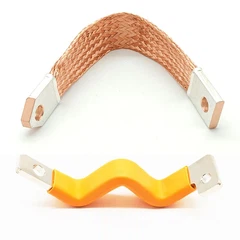
For example, in new energy battery systems and power electronics, the use of PVC-insulated copper busbars enhances the protection of conductive components, ensuring stable operation of the copper busbars even in demanding environments.
2. Superior Heat and Aging Resistance
During prolonged operation, busbars generate heat due to the flow of electric current. If the insulation material lacks adequate thermal resistance, repeated thermal cycling over time can lead to cracking, failure of the shrink fit, or a degradation in insulation performance.
High-quality heat-shrink materials undergo cross-linking processes that stabilize their molecular chains, allowing them to maintain robust mechanical strength at elevated temperatures.
Furthermore, material formulations often incorporate additives such as antioxidants and UV stabilizers, enabling the tubing to withstand outdoor conditions, high humidity, and long-term operational demands.
For energy storage systems, electric vehicles, and industrial power equipment, stable thermal performance is a critical factor in ensuring the longevity of the system.
3. Easy installation and enhanced production efficiency
Compared to traditional insulation methods, heat-shrinkable busbar tubing offers advantages such as high installation efficiency, a compact profile, and ease of maintenance.
Installation simply involves sliding the tubing over the busbar and applying heat evenly using a heat gun to shrink and secure it in place; no complex tools or extensive manual labor are required.
This method is particularly well-suited for automated production environments. For instance, in the powertrain systems of new energy vehicles-where EV battery connectors and related electrical components must balance space constraints with assembly efficiency-heat-shrink insulation solutions help manufacturers optimize their production processes.

contact us

Send Inquiry