






Structural Design and Performance Requirements of lithium cell Aluminum shell
Dec 30, 2025
Leave a message
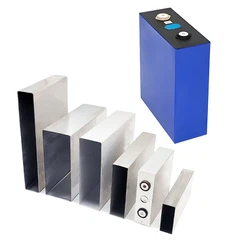
As lithium battery technologies continue to advance toward higher energy density and improved safety performance, the structural design of individual battery cells has gained increasing attention. The enclosure surrounding each cell is no longer a simple container, but a critical component influencing electrochemical stability, thermal behavior, and manufacturing consistency. Within this framework, the lithium cell Aluminum shell plays a fundamental role in enabling reliable and scalable lithium battery production across multiple application fields.

Functional Role of Aluminum Shells in Lithium Cells
Primary Structural Containment
At the cell level, the Pack Aluminum Housing serves as the main structural barrier that maintains electrode alignment and internal component stability during charging and discharging processes.
Protection Against External Stress
During transportation, assembly, and operation, the Aluminum Case for Lithium-ion Battery Pack protects internal materials from mechanical shock, vibration, and external pressure.
Support for Electrochemical Stability
By providing a stable physical environment, the Aluminum Battery Cases helps preserve internal electrochemical balance and reduces the risk of deformation-related performance degradation.

Material Properties and Performance Characteristics
Lightweight and High Strength
Aluminum alloys allow the lithium cell Aluminum shell to achieve a favorable balance between mechanical strength and low mass, supporting compact and high-energy cell designs.
Thermal Conductivity Advantages
Effective heat transfer is essential for lithium cell safety, and the Automotive Battery Aluminum Case contributes to thermal regulation by facilitating heat dissipation from active materials.
Corrosion and Environmental Resistance
Through appropriate alloy selection and surface treatment, the Aluminum Case for New Energy Cars maintains corrosion resistance under electrolyte exposure and varying environmental conditions.

Manufacturing Precision and Quality Control
Dimensional Accuracy Requirements
High-precision forming and machining processes ensure the Lithium Battery Aluminum Case meets strict dimensional tolerances necessary for automated cell assembly lines.
Consistency in Mass Production
Stable process control systems enable the Battery Aluminum Cases to maintain uniform quality across large production volumes, reducing variability in cell performance.
Compatibility with Sealing Processes
Design optimization allows the New Energy Aluminum Battery Cases to integrate effectively with sealing and welding operations, supporting reliable enclosure closure.

Application Scenarios and Industry Development Trends
Power Battery Cell Applications
In electric vehicle battery systems, the Aluminum Battery Casing supports high-capacity cell formats that require robust structural integrity and thermal performance.
Energy Storage Cell Deployment
Stationary energy storage solutions rely on the Battery Shell to provide long-term structural stability during extended charge-discharge cycles.
Future Cell Design Evolution
As battery technologies evolve, the Rechargeable Aluminum Shell is expected to adapt to new form factors and higher integration requirements within advanced lithium cell architectures.

Conclusion
As the lithium battery industry continues to pursue higher performance and enhanced safety, the lithium cell Aluminum shell remains a core structural element at the cell level. By combining lightweight material advantages, reliable mechanical protection, and manufacturing compatibility, aluminum shells will continue to support the scalable development of lithium battery technologies across automotive, energy storage, and industrial applications.
contact us

Send Inquiry