










Lithium-ion Battery Recycling Industry: Opportunities and Challenges in a Market Exceeding 10 Billion Yuan
Feb 14, 2026
Leave a message
Against the backdrop of the ongoing national new energy strategy, new energy vehicles and energy storage systems are rapidly expanding. As a core component, the full lifecycle management of power batteries is becoming increasingly prominent. With early-stage power batteries entering their retirement phase, the lithium-ion battery recycling industry is transitioning from its incubation period to a window of opportunity for large-scale development. The demands surrounding battery structural safety and packaging reliability are further driving the importance of key components such as automotive battery aluminum cases and battery shells in the recycling and remanufacturing system.

Current Industry Development Status: Retirement Wave Approaching, Recycling Scale Accelerating
Lithium-ion batteries are mainly used in new energy vehicles, energy storage systems, and consumer electronics, with power batteries holding a dominant position. With the continuous high-speed growth of the new energy vehicle industry since 2012, the total number of power batteries installed in vehicles has rapidly increased, resulting in a definite growth trend in the scale of retired batteries. Power batteries typically have a service life of 5-8 years, meaning that early-stage batteries are gradually entering a concentrated retirement phase, directly driving the expansion of the lithium-ion battery recycling market demand.
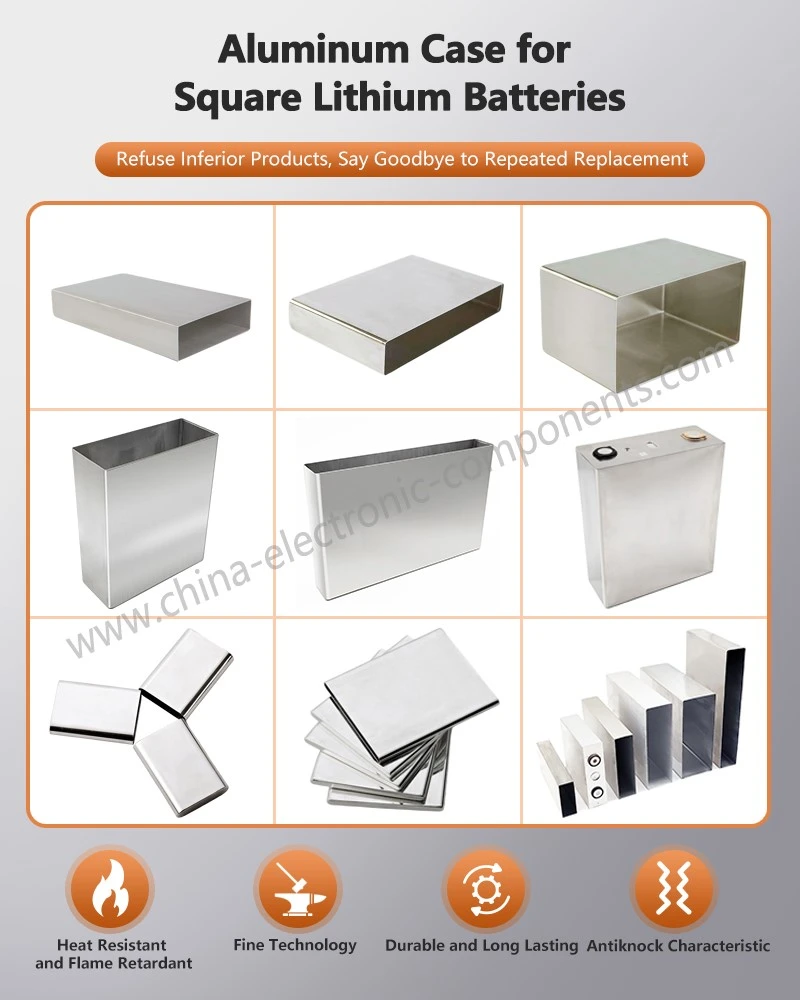
In this process, the integrity of the battery structure and the safety of disassembly become critical fundamental conditions. Lithium Battery Aluminum Cases and Power Battery Shells play a vital role in protecting the cells and reducing transportation and disassembly risks at the initial stage of recycling, directly impacting subsequent cascade utilization and regeneration.
Economic Value and Environmental Significance of Recycling
Waste lithium batteries contain high-value metals such as lithium, nickel, cobalt, and manganese, as well as potentially environmentally hazardous substances like electrolytes. Improper disposal can have long-term impacts on soil, water bodies, and human health. Standardized recycling not only enables the reuse of valuable metals but also significantly reduces the intensity of primary mineral resource extraction and carbon emissions.
From a resource perspective, the metal materials and structural components (such as aluminum casings) in batteries have high recycling value.
Aluminum Battery Casings and Rechargeable Aluminum Shells can achieve a high proportion of regeneration in the recycling system, helping to form a closed-loop material system and improving the overall resource utilization efficiency of the industry.
Technical Paths for Cascaded Utilization and Recycling
Power batteries enter the retirement stage when their capacity decays to approximately 80% of their original capacity, but they still possess some usability. When the remaining capacity is between 20% and 80%, cascaded utilization can be achieved through screening and recombination, for applications in low-speed electric vehicles, distributed energy storage, or home energy storage systems. When the capacity falls below 20%, the battery enters the recycling stage, recovering metal resources through dismantling and metallurgical processes.
In this process, square cells and their structural forms are more conducive to large-scale dismantling and sorting. Lithium Batteries Square Aluminum Shell and Prismatic Cell Aluminum Battery Case have good structural compatibility and standardization advantages in the cascaded utilization stage.
Recycling Processes and Core Technology Directions
The core technology of lithium battery recycling focuses on the cathode material processing stage. The mainstream industry approach typically employs a combined process of "physical dismantling + hydrometallurgy": the front end uses discharge, dismantling, crushing, and sorting to achieve preliminary material classification, while the back end uses hydrometallurgy to extract metals such as lithium, nickel, cobalt, and manganese.
Materials such as aluminum and copper in the battery casing and current collector are relatively easy to recycle. Among these, the dismantling efficiency and material purity control of Lithium-ion Battery Aluminum Shell and EV Car Battery Shell directly impact the overall recycling cost and metal recovery rate.
Industry Chain Structure and Business Model Characteristics
The main participants in the lithium battery recycling industry include vehicle manufacturers, battery manufacturers, professional third-party recycling companies, and collaborative alliances. Different models have their own characteristics in terms of channel control, technological capabilities, and operational complexity. Overall, the coverage of the recycling network and the maturity of recycling technology constitute the core competitiveness of enterprises.
Regarding industry chain collaboration, the stability of upstream waste battery sources determines the sustainability of the recycling business, while downstream cathode material companies are the main demanders of recycled products. As industry chain collaboration deepens, the standardization of battery structural components, such as Battery Aluminum Cases and New Energy Aluminum Battery Cases, will further affect the efficiency and consistency of the recycling system.
Continuously Improving Policy Environment and Industry Standards
In recent years, policies and industry standards related to the full lifecycle management of power batteries have been continuously improved, covering aspects such as design, coding and traceability, recycling and transportation, cascade utilization, and regeneration. Standards have set clear requirements for the recovery rate of key metals, driving the industry towards high recovery rates, low pollution, and standardization.
Under policy guidance, the requirements for disassembly and material recyclability in the battery design stage are constantly increasing. Structural components such as the Power Battery Cover Plate must meet safety requirements while also considering the needs of downstream recycling and remanufacturing.
Industry Risks and Uncertainties
Despite the broad market prospects, the lithium battery recycling industry still faces multiple risks, including changes in the pace of policy support, intensified industry competition, competition for recycling channels, fluctuations in metal prices, safety production management, and uncertainties in the development of alternative technologies. These factors may affect corporate profitability, investment return cycles, and long-term development.
In this context, improving the structural safety, consistency, and recyclability of battery systems has become an important means of reducing systemic risks, and the importance of Aluminum Cases for New Energy Cars in ensuring the safety of batteries throughout their entire lifecycle is increasingly prominent.
Conclusion: From Recycling Systems to the Long-Term Value of Structural Components
The lithium battery recycling industry is entering a critical stage of large-scale and standardized development. Its essence is not only resource reuse but also a crucial link in the closed loop of the new energy industry chain. As power batteries evolve towards higher energy density, longer lifespan, and higher safety, the design and manufacturing quality of battery structural components will directly impact recycling efficiency, the feasibility of secondary use, and overall industry costs.
Under this trend, focusing on the structural safety and packaging reliability of power battery systems, we continuously concentrate on optimizing the materials and processes of core components such as Battery Shell and Power Battery Shell, striving to provide more stable and sustainable structural solutions for the entire lifecycle of new energy batteries.
contact us
Send Inquiry