



Current Status and Development Prospects of Laser Welding Technology for Power Batteries
Jan 07, 2026
Leave a message
Against the backdrop of the rapid development of the new energy vehicle industry, power batteries, as the core energy unit of the entire vehicle system, directly determine the overall vehicle performance level through their safety, reliability, and consistency. From individual cells to modules and then to the entire battery pack, welding quality is one of the key factors affecting battery life, safety performance, and yield in large-scale manufacturing. Among various welding methods, laser welding, due to its high energy density, high precision, and high automation capabilities, has become an indispensable key process in power battery manufacturing.

Structural Characteristics of Power Batteries and Welding Technology Requirements
To meet the development needs of lightweight and high-energy density in new energy vehicles, aluminum alloy materials are commonly used for power battery structural components. Components such as cell casings, covers, and busbars typically use 1-series or 3-series aluminum alloys, which possess good conductivity, corrosion resistance, and formability. In some areas requiring high conductivity, copper or aluminum-copper composite materials are used.
However, aluminum alloys themselves have high chemical reactivity, high thermal conductivity, and high coefficient of linear expansion, and their surface easily forms a dense oxide film, making them highly susceptible to defects such as porosity, spatter, bursts, and hot cracks during welding. Furthermore, in aluminum-copper dissimilar material joining, brittle intermetallic compounds may form, reducing joint strength. These material properties place extremely high demands on the energy control, forming stability, and consistency of the welding process.
Application of Laser Welding in Power Battery Manufacturing
Power battery manufacturing typically involves three main stages: cell, module, and pack. The external casing of the battery pack primarily provides structural support and protection, usually using thicker aluminum alloy profiles, and its welding is mainly done using arc welding or friction stir welding.
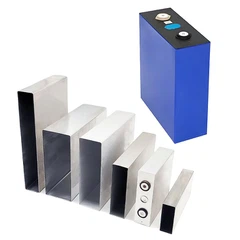
In contrast, the internal components of cells and modules are small in size, have precise structures, and require tight weld spacing, making it difficult for traditional welding methods to balance welding quality and production speed. Laser welding, with its high power density, good accessibility, and non-contact processing characteristics, has become the preferred process for battery cell casings, covers, explosion-proof valves, busbars, and other components. It is widely used in aluminum-cased prismatic battery structures, such as power battery cover plates, lithium-ion battery cover plates, and lithium battery aluminum cases.

Current Status of Laser Welding for Battery Casings and Covers
Battery casings and covers are primarily used to seal the electrolyte and provide stable structural support for the internal electrodes. The welding quality directly determines the battery's sealing performance and pressure resistance. Common materials include Al3003 aluminum alloy, with a thickness typically ranging from 0.3 to 0.5 mm. This area often employs composite laser or ring laser welding processes.
In actual production, these welds are prone to defects such as incomplete penetration, porosity, collapse, and spatter. By rationally controlling the heat input, welding speed, and laser energy distribution, the penetration depth can be effectively stabilized, and the pressure resistance requirements met. With technological advancements, pulse waveform modulation and continuous high-speed laser welding have gradually become mainstream solutions, significantly improving production efficiency while enhancing weld uniformity.
To further improve the internal quality of the weld, galvanometer scanning welding and laser oscillation technology have been introduced into battery casing welding. Dynamic stirring of the molten pool accelerates bubble escape and refines the grain structure, thereby improving the mechanical properties and sealing reliability of the weld joint. These processes are widely used in the manufacture of structural components such as prismatic cell aluminum shells and aluminum battery covers.
Technical Challenges of Laser Sealing Welding for Explosion-Proof Valves
Explosion-proof valves are critical components in power battery safety systems. When the internal pressure of the battery abnormally increases, controlled rupture releases gas, preventing thermal runaway and explosion. Explosion-proof valves are typically made of pure aluminum sheets, only 0.08–0.1 mm thick, and are extremely sensitive to welding heat input.
During laser welding, excessively high power density can easily lead to overheating and perforation of the explosion-proof valve, while violent gas escape from the molten pool can cause pore defects. By optimizing the laser waveform design, introducing a short-duration peak value at the initial stage of welding to improve material absorption, and gradually reducing energy output in subsequent stages, burn-through can be effectively avoided while ensuring weld integrity.
Furthermore, strengthening pre-welding cleaning to reduce residual oil and moisture, and controlling assembly gaps through a reasonable welding sequence, are important means to reduce porosity defects. These process optimization measures have been successfully applied in structures such as the Lithium Battery Top Cap anthe d top lid for prismatic battery cells.
Development Trends of Laser Welding for Aluminum-Shell Power Batteries
With the rapid expansion of the new energy vehicle and energy storage markets, the demand for high-consistency and high-reliability welding processes for power batteries continues to increase. The future development direction of laser welding technology mainly focuses on the following aspects:
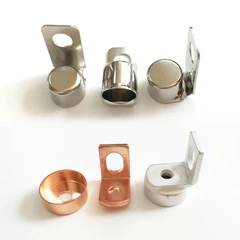
First, the application of laser sources with higher power density and more precise energy control to meet the welding needs of thinner and more complex structures; second, online monitoring and closed-loop control of the welding process to improve welding stability by real-time detection of the molten pool state; and third, process optimization for joining dissimilar materials such as aluminum and copper to meet the development needs of new battery structures and composite material components such as Copper and Aluminum Bimetal Bipolar Plates.
Meanwhile, with the continued widespread adoption of prismatic battery structures in new energy vehicles, the standardization and large-scale application of laser welding processes for components such as aluminum alloy prismatic battery cases, battery aluminum housings, and rechargeable aluminum shells will become an important direction for technological evolution in the industry.

Conclusion
Laser welding technology has been deeply integrated into the entire process of power battery manufacturing, providing crucial support for achieving high safety, high consistency, and high efficiency production. With the continuous evolution of material systems, structural design, and manufacturing pace, laser welding will continue to play a core role in the field of aluminum-cased power batteries and will demonstrate broader application prospects in the future new energy industry.
contact us

Send Inquiry