







Charging cabinets and charging piles: a comparison of their advantages
Mar 04, 2026
Leave a message
With the continuous expansion of new energy infrastructure, charging cabinets and charging piles have become two important energy replenishment solutions for electric vehicles. They differ significantly in power levels, application scenarios, safety design, and operation and maintenance logic. Understanding the technical positioning of these different devices helps in rationally planning the battery charging station architecture in actual projects, achieving a balance between safety and economy.

Regarding charging efficiency, charging piles are typically designed for new energy vehicles, especially DC fast charging systems, with power levels reaching tens to hundreds of kilowatts, capable of replenishing a large amount of energy to electric vehicles in a short time. Typical fast charging equipment can boost the battery to about 80% in approximately 30 minutes, suitable for scenarios with high turnaround efficiency requirements.
Common forms include wall-mounted chargers and floor-standing chargers; the former is suitable for space-constrained areas, while the latter is suitable for centralized deployment in public stations. In contrast, charging cabinets are mainly designed for electric bicycles or removable battery systems, with a single compartment typically having a power of several hundred watts. They achieve centralized management through multi-compartment parallel connection, and their structure is more similar to a charging dock.
In terms of applicable scenarios, charging piles are widely deployed in public parking lots, highway service areas, commercial complexes, and gas stations, forming city-level or highway network-level energy replenishment systems. This represents a typical extension of the Battery Charging Cabinet for Electric Vehicles solution. Charging cabinets, on the other hand, are more suitable for concentrated parking areas such as communities, campuses, factories, and logistics parks, and are particularly suitable for electric bicycles, electric tricycles, and battery swapping operations. By centrally deploying modular charging cabinets, flexible expansion and zoned management can be achieved, improving site utilization.

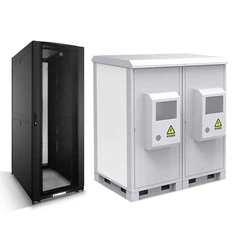
Regarding safety design, both types of equipment must comply with stringent electrical safety regulations. Charging piles are generally equipped with overvoltage, undervoltage, overcurrent, short circuit, and leakage protection functions, combined with a back-end monitoring system to ensure stable operation. Their core power supply structure is often integrated inside the power supply cabinet, and power conversion and control are achieved through standardized charging modules. In addition to basic electrical protection functions, charging cabinets emphasize cabinet structural safety, with common designs including flame-retardant materials, forced ventilation systems, and temperature monitoring mechanisms. For specialized application environments, reinforced versions such as Dustproof, Waterproof, or Explosion-proof charging cabinets can be adopted to meet complex operating conditions.
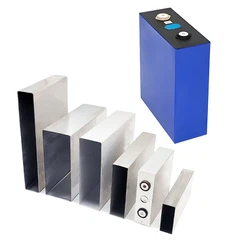
In terms of management and operation, modern charging infrastructure generally integrates intelligent control systems. Charging piles typically achieve remote monitoring, data statistics, and price management through cloud platforms, supporting mobile operation and suitable for large-scale commercial operation. Charging cabinets emphasize centralized management and user identification functions, enabling start-stop control through QR code scanning, card swiping, or backend authorization. Some systems can integrate a Battery Management System to monitor battery charging and discharging status in real time, combining Battery Charging Cabinet Power Management technology to achieve power allocation and anomaly warnings, thereby improving overall operational safety and energy efficiency.
Regarding space utilization, a single charging pile occupies a relatively limited area, but if a centralized charging station is built, space must be reserved for vehicle parking and passage, resulting in a larger overall land area. In contrast, charging cabinets are typically vertical or modular structures, occupying less space and can be arranged along walls or corners to form high-density charging areas. The Custom Charging Cabinet solution allows for customized design based on site dimensions, while the high-strength Charger Enclosure structure ensures long-term stable operation of the equipment in both indoor and outdoor environments.

In summary, charging piles are more suitable for high-power, rapid charging scenarios and are the core equipment of public charging systems for new energy vehicles; charging cabinets are more suitable for low-power, multi-terminal centralized management scenarios, offering significant advantages in communities and light electric vehicle sectors. The two types of equipment are not substitutes but complementary solutions for different voltage levels and application scenarios.
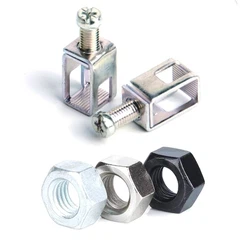
In the field of new energy supporting equipment, we focus on manufacturing high-reliability structural components and functional components, providing high-strength cabinet structures, electrical connection components, and customized metal parts support for various charging systems. Whether it's high-power public charging equipment or multi-compartment centralized management charging systems, we can provide structural optimization and manufacturing support solutions based on application environment and technical requirements, helping customers build a safe, stable, and scalable charging infrastructure system.
contact us

Send Inquiry