










Analysis of the Material Properties, Manufacturing Process, and Applications of Copper Busbars
Mar 13, 2026
Leave a message
In modern electrical and energy systems, highly conductive materials are crucial for ensuring stable power transmission. Copper busbars, as a high-purity copper conductor, are widely used in power equipment, new energy systems, and electronics manufacturing due to their excellent electrical and thermal conductivity, as well as good processing performance. As a key conductor component, copper busbars are commonly used in various Electrical Bus Bar systems, serving as an important structural material for achieving stable current distribution.
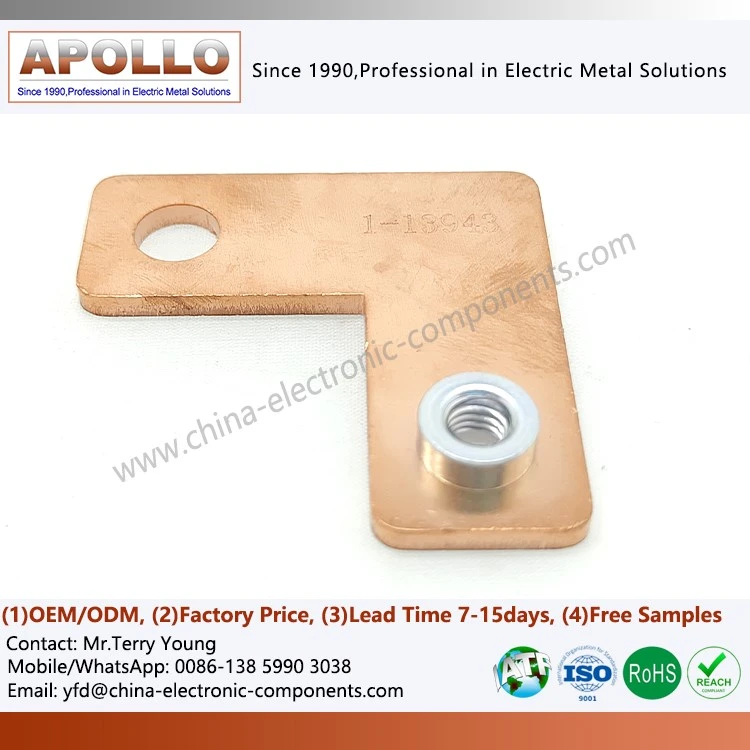
Copper busbars typically refer to rolled pure copper materials with a copper content of 99.9% or higher. Their dense internal crystal structure provides good mechanical strength while ensuring electrical performance. In electrical connection systems, copper busbars not only handle high current transmission but also form a stable BusBar Electrical structure network within the equipment, enabling efficient current distribution among different electrical units.
Core Material Advantages of Copper Busbars
The reason why copper busbars have become an irreplaceable conductor material in power systems is primarily due to their superior material properties. First, its resistivity is approximately 1.75 × 10⁻⁸ Ω·m, which is relatively low among common metallic conductors, thus significantly reducing power loss. In power systems, high-current conductors typically employ Electrical Copper BusBar structures to ensure long-term stable current transmission.
Second, copper busbars possess extremely high thermal conductivity, with a thermal conductivity coefficient of approximately 401 W/(m·K). This characteristic allows for rapid heat dissipation during the operation of electrical equipment, preventing performance degradation due to localized overheating. Stable heat dissipation is particularly important for the long-term operation of power busbars in large electrical equipment or power distribution systems.
Furthermore, copper busbars exhibit good ductility and processing adaptability, with an elongation exceeding 40%. This material property allows for secondary processing through various methods such as stamping, bending, or welding, thereby forming busbar copper conductor assemblies adapted to different electrical structural requirements.

Industry Standards and Product Specifications for Copper Busbars
According to relevant material standards, copper busbars are typically classified according to their mechanical properties, including soft, semi-hard, and hard states. Materials in different states possess varying properties in terms of mechanical strength and machinability; therefore, selection must be based on actual operating conditions in specific applications.
Common specifications for copper busbars range from 5mm to 100mm in thickness and 20mm to 400mm in width. For power equipment manufacturers, appropriate dimensional design ensures the conductor cross-sectional area meets current-carrying requirements while minimizing energy loss. In large-scale power systems, structurally stable bus bar electric conductors typically require strict control over conductor dimensions and surface quality.
High-quality copper busbars should have a uniform rose-red appearance, free from obvious oxide spots, inclusions, or cracks. A high-quality surface not only enhances the material's conductivity but also ensures a stable contact interface during assembly, meeting the safety requirements of critical grounding systems such as ground bus bars.
Manufacturing Process and Quality Control of Copper Busbars
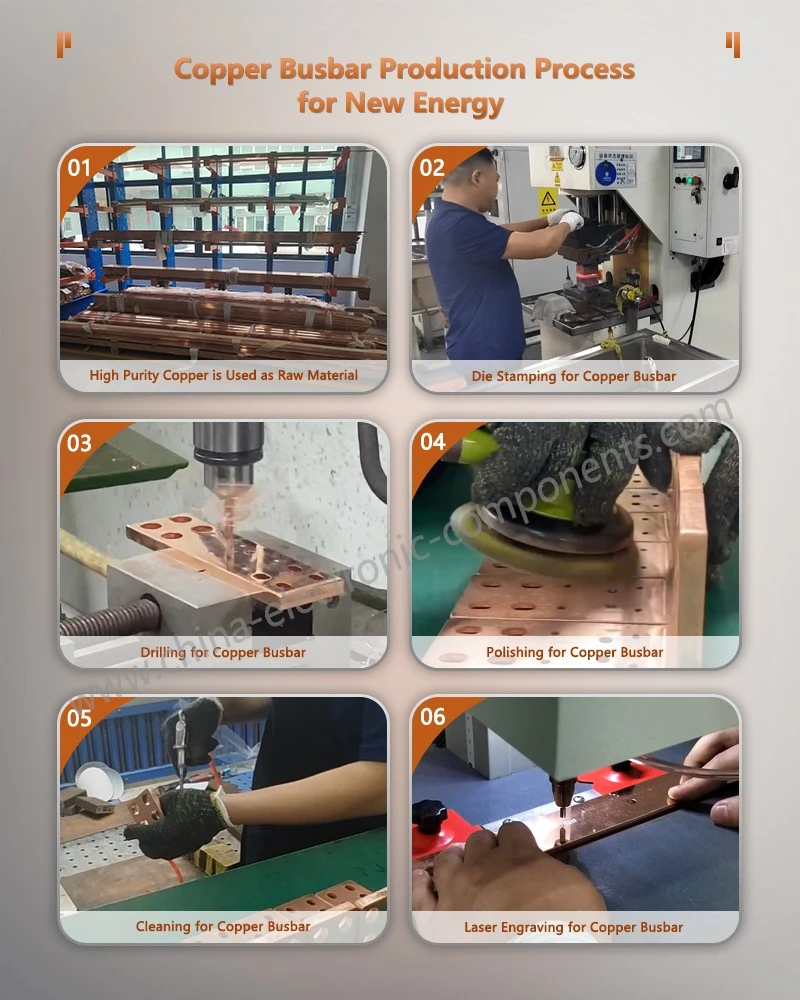
Modern copper busbar production typically employs continuous casting and rolling processes. This method ensures material purity while improving production efficiency. The production process usually includes multiple stages such as electrolytic copper smelting, continuous casting, hot rolling, cold rolling, and annealing. By precisely controlling each process parameter, a uniform grain structure within the copper busbar can be ensured, thereby improving overall conductivity.
During the high-temperature smelting stage, the copper molten temperature is typically controlled at around 1150℃ to ensure complete melting and the formation of a stable ingot structure. Subsequently, hot rolling and cold rolling processes are used to gradually reduce the thickness, achieving the designed dimensional accuracy. High-precision rolling technology is particularly crucial for manufacturing high-performance High Voltage Busbar products.
During the annealing stage, controlling the annealing temperature and cooling profile eliminates internal stresses, keeping the grain size within a reasonable range. A stable grain structure significantly improves the material's mechanical stability during long-term operation, ensuring the Busbar Voltage system maintains stable performance under high-current conditions.
Typical Applications of Copper Busbars
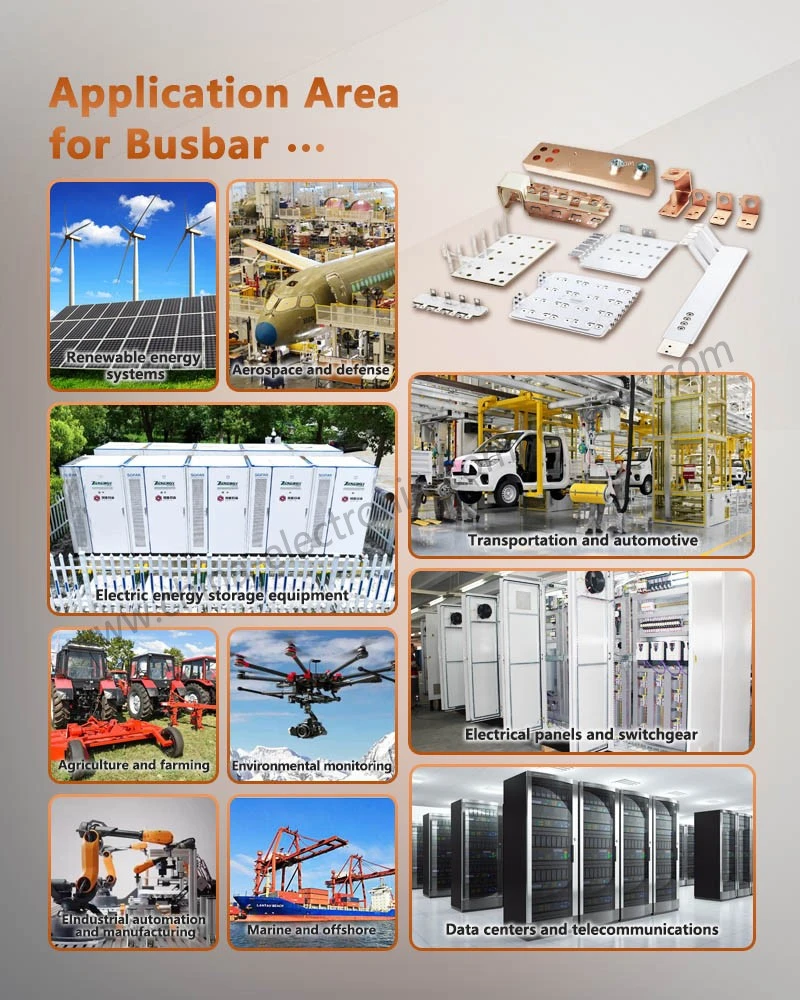
In power systems, copper busbars are a vital component of power distribution equipment. Distribution cabinets, switchgear, and transformers typically require high-current-carrying conductors for current distribution, and a reliable Power Bar Busbar can effectively improve the overall efficiency of the power system.
With the rapid development of the new energy industry, copper busbars play a crucial role in photovoltaic inverters, battery storage systems, and electric vehicle charging equipment. These systems typically require high-current operating environments, necessitating the use of high-quality electrical copper busbars to ensure stable current transmission.
In the electronics manufacturing field, copper materials are also widely used in heat dissipation structures and precision conductor components. For example, in high-performance communication equipment, data center servers, and 5G base station equipment, copper solid busbars with stable conductivity can improve heat dissipation efficiency while ensuring electrical performance.
Key Considerations for Purchasing and Selecting Copper Busbars
When selecting copper busbars, the first step is to calculate the current-carrying capacity based on the actual application. The larger the conductor cross-sectional area, the higher the allowable current. A well-designed busbar ensures long-term stable operation of the electrical system and reduces energy loss. Reliable high-voltage busbar design is particularly important in high-power electrical equipment.
Secondly, the mechanical properties of the material should be considered. For equipment that needs to withstand dynamic loads or vibration environments, materials with higher strength should be selected. In complex wiring structures, materials with better flexibility are more suitable to form stable electrical conductive connections in the busbar. In addition, the supplier's manufacturing capabilities and quality control system are also key factors to be evaluated during the procurement process. Busbar manufacturers with advanced production equipment and testing capabilities can provide more stable product quality, thereby ensuring the safe operation of electrical systems.
Industry Development Trends
With the rapid development of the new energy industry, electric vehicles, and energy storage systems, the demand for high-performance conductor materials continues to grow. Future power equipment will increasingly rely on high-precision, high-conductivity copper conductor structures to meet the ever-increasing current density requirements.
In high-end applications, such as new energy vehicle power systems and energy storage devices, copper busbars not only need excellent conductivity but also higher processing precision and structural reliability. In these high-current application environments, stable and reliable high-current contacts and copper busbar conductor structures will become an important part of electrical system design.
Meanwhile, with the development of materials technology, new copper alloys and composite conductor materials are constantly emerging, providing more design options for electrical conductor systems. However, in applications with high conductivity and high reliability requirements, pure copper conductors remain the mainstream material for busbar copper structures.
About Our Products
As a professional supplier of electrical conductor solutions, we have long focused on the research and development, and manufacturing of high-performance copper conductors and electrical connection components. Our products cover a wide range of specifications of Electrical Bus Bars, high-precision Copper Solid Bus Bars, and customized Power Bus Bar components, widely used in new energy, power equipment, industrial automation, and energy storage systems. With stable manufacturing processes and a rigorous quality control system, we can provide global customers with highly reliable Bus Bar electrical conductivity solutions to meet the application requirements of high-current and high-voltage electrical systems.
contact us

Send Inquiry