










Analysis of Insulation Materials for Laminated Busbars: Selection and Application of Flexible and Rigid Insulation
Jun 16, 2026
Leave a message
With the development of new energy vehicles, energy storage systems, rail transit, and industrial power equipment, laminated busbars are widely used due to their low inductance, high reliability, and compact structure. Whether it's an EV busbar, a car battery busbar, or an industrial-grade capacitor busbar system, the choice of insulation material directly affects the product's electrical performance, service life, and safety level.
For modern automotive busbar systems, the insulation layer not only serves as conductor isolation but also needs to meet requirements for heat resistance, voltage resistance, flame retardancy, and long-term reliable operation. Therefore, a thorough understanding of the characteristics of flexible and rigid insulation materials is crucial for busbar design and selection.
Common Insulation Materials for Laminated Busbars
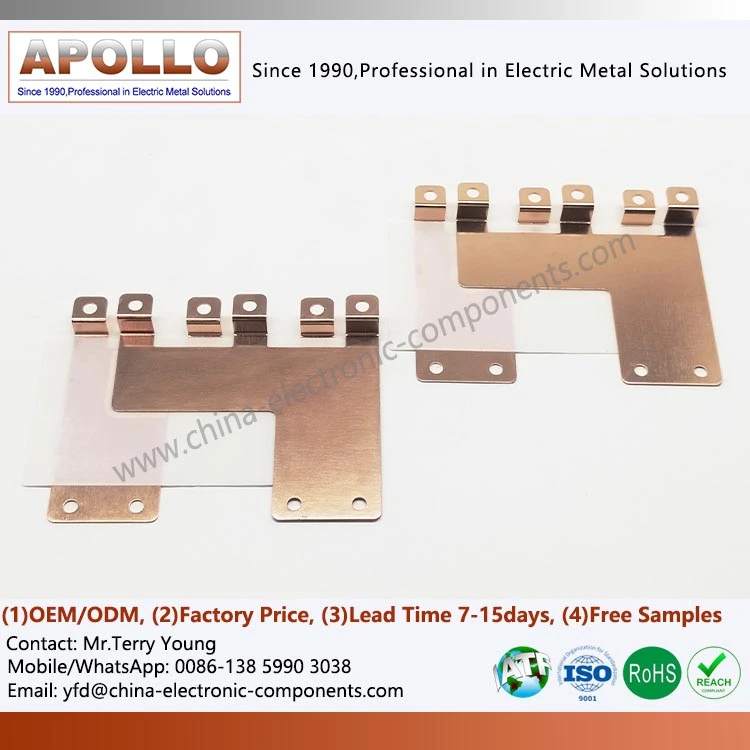
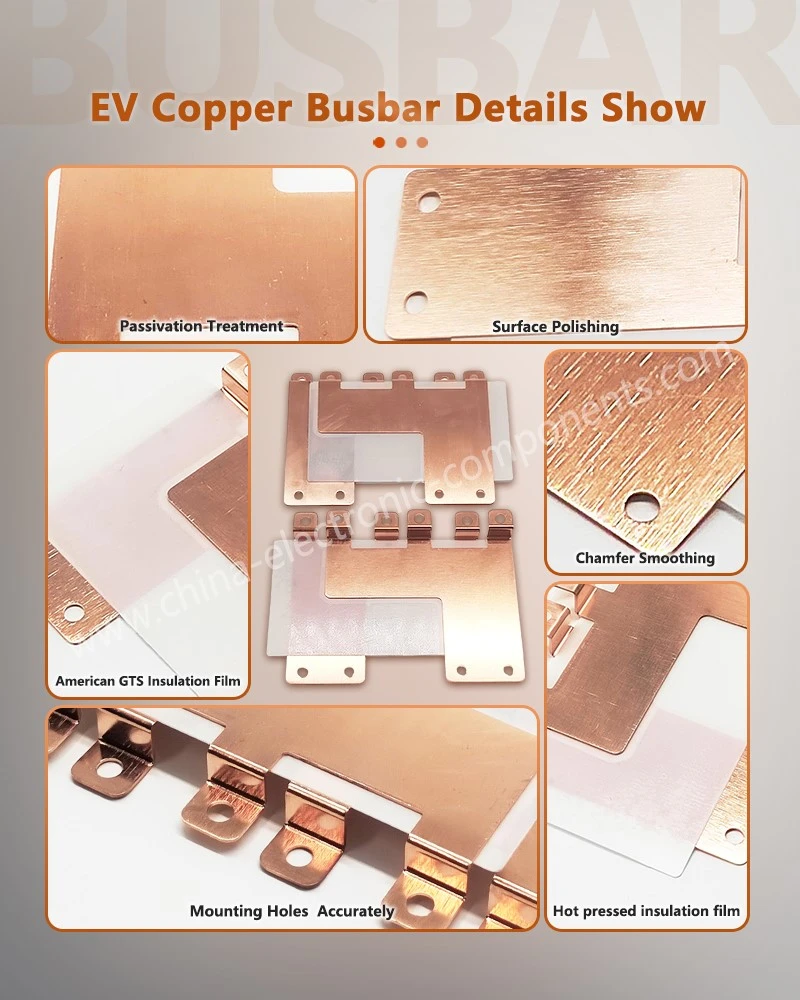
Currently, most laminated busbars employ a flexible thin-film insulation structure, tightly bonding the insulation film to the copper conductor through a lamination process. This process effectively reduces conductor spacing, improves system integration, and ensures excellent busbar insulation performance.
Polyester (PET) Insulation Material
PET is one of the most widely used insulation materials, holding a significant market share in the automotive busbar PET insulation field. Its main characteristics include:
Long-term operating temperature up to 105℃; High elongation, typically exceeding 100%, suitable for complex bending structures; Good mechanical toughness and molding performance; High relative tracking index (CTI); Available in various thicknesses to meet different voltage levels; Excellent flame retardant properties, meeting the requirements of industrial and automotive applications.
In new energy vehicle power systems, PET insulation layers are widely used in EV battery busbars, Automotive Ground Bus Bars, and Auto Bus Bar products.
Polyimide (PI) Insulation Material
PI is a high-performance, high-temperature resistant insulation material with a continuous operating temperature typically exceeding 200℃.
Compared to PET, PI has the following characteristics:
Superior high-temperature resistance; Excellent inherent flame retardancy; Higher mechanical rigidity; More suitable for welding processes; Relatively higher cost; Lower CTI than PET.
Therefore, in applications requiring the welding of capacitors, power modules, or connectors, PI material is frequently used in New Energy Vehicle Film Capacitor Busbars and some busbars for Power Capacitor products.
Differences between Flexible and Rigid Insulation
Flexible insulation is primarily used for insulating the surface of copper conductors, forming a complete insulation structure through lamination.
Its advantages include:
It allows for the complete sealing of conductor edges;
It is suitable for complex three-dimensional structural designs;
It effectively reduces system size;
It facilitates mass production and automated manufacturing.
Rigid insulation, on the other hand, is mainly used for spacing and support between different conductor layers.
For high-voltage systems, flexible insulation alone often cannot meet the requirements for electric field distribution and partial discharge control; therefore, rigid insulation materials are needed to increase the insulation distance.
Typically:
Approximately 1mm of insulation spacing is required for every 1kV increase in operating voltage;
The higher the operating voltage, the greater the thickness of the rigid insulation;
High-voltage systems typically use glass fiber reinforced polyester boards as the structural insulation layer.
In high-voltage busbar design, rigid insulation is a crucial component ensuring long-term stable operation, while low-voltage busbar automotive systems typically do not require additional, heavy rigid insulation structures.
Important Parameters Affecting Insulation Material Performance
Relative Temperature Index (RTI)
RTI is an important indicator of the long-term heat resistance of insulation materials.
The Relative Tracking Index (RTI) is defined as:
The temperature at which the mechanical and electrical properties of a material decrease to 50% of their initial values after approximately 20,000 hours of long-term operation.
For long-term operating busbar electric vehicle systems, RTI directly impacts product lifespan.
Generally:
For every 10°C decrease in temperature, insulation lifespan approximately doubles;
For every 10°C increase in temperature, insulation lifespan may be shortened by approximately half.
Therefore, when designing a Tin Plated Copper BusBar for EVs, both thermal management solutions and insulation material grades must be considered comprehensively.
Relative Tracking Index (CTI)
CTI reflects the material's surface resistance to tracking.
When equipment is exposed to humid, polluted, or high-voltage environments for extended periods, a higher CTI value effectively reduces the risk of surface creepage.
For industrial energy storage systems, DC Capacitor Busbars, and large Capacitor Laminating Busbars, CTI is a crucial parameter affecting safety design.
PET materials typically have higher CTI ratings and are therefore more widely used in high-voltage applications.
Elongation represents a material's ability to maintain its insulation properties under tension.
This parameter directly affects:
Bending performance;
Conductor edge wrapping quality;
Sealing process stability;
Long-term mechanical reliability.
PET materials typically have an elongation of over 100%, while PI materials are around 70%. Therefore, PET is more suitable for complex copper conductor lamination processes.
Differences in Insulation Requirements Between Industrial and Automotive Applications
Industrial Power Systems
Industrial equipment's requirements for busbars primarily focus on high voltage and long lifespan.
Typical characteristics include:
Operating voltage typically between 1000V and 6000V;
Strict requirements for partial discharge control;
Requirement for increased rigid insulation structures;
High creepage distance requirements;
Service life of 20 to 25 years or more.
Therefore, high-voltage energy storage equipment, rail transportation, and large-scale power distribution systems tend to use high CTI materials and thicker insulation structures for distribution busbars.
New Energy Vehicle Systems
New energy vehicle applications place greater emphasis on lightweighting, space utilization, and cost control.
Typical characteristics include:
Voltage levels are generally below 800V;
Lower requirements for partial discharge;
Typically employing flexible laminated insulation structures;
More sensitive to weight and volume;
Lifespan is generally 5 to 10 years.
Therefore, products such as BusBar Cars, Automotive Power Connectors, and Tin-plate Busbar Automotives increasingly utilize PET or PI insulation solutions to meet compact design requirements.
Other Insulation Solution Development Trends
Besides laminated insulation technology, powder coating insulation is also a common solution.
This process achieves overall insulation protection by forming an epoxy resin coating on the conductor surface, and is particularly suitable for structurally complex single conductors.
Its advantages include:
Can cover complex geometries;
Suitable for non-laminated conductors;
Good corrosion resistance;
Can meet some low-voltage application requirements.
However, for Automotive BusBar and busbar electric vehicle applications requiring low inductance and high power density, laminated insulation technology remains the mainstream solution.
Summary
Insulation materials are a crucial component determining the performance of laminated busbars. PET and PI, as the most common flexible insulation materials, each have their advantages in different application scenarios. For high-voltage industrial systems, RTI, CTI, and rigid insulation structures need to be considered comprehensively, while for the new energy vehicle sector, the focus is more on lightweight design, space utilization, and production efficiency.
With the development of EV busbars, capacitor busbars, and new energy power electronic devices, insulation material technology will continue to upgrade, providing safer and more efficient solutions for future high-power, high-reliability electrical connection systems.
contact us
Send Inquiry