



Analysis of common silver contact materials: How to choose silver alloy contacts suitable for different electrical equipment?
Jun 04, 2026
Leave a message
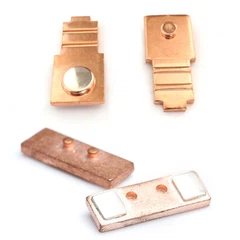
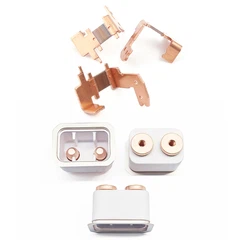
In low-voltage electrical appliances, relays, circuit breakers, contactors, and industrial control systems, silver contact materials directly affect the product's conductivity, lifespan, and operational reliability. Due to varying requirements for arc resistance, weldability, conductivity, and mechanical strength across different applications, the industry has developed a variety of silver-based contact materials.
This article will systematically introduce common types of silver and silver alloy contacts and their characteristics, helping engineers and purchasing personnel better understand the performance differences among various silver electrical contacts.
Pure Silver Contacts (Ag)
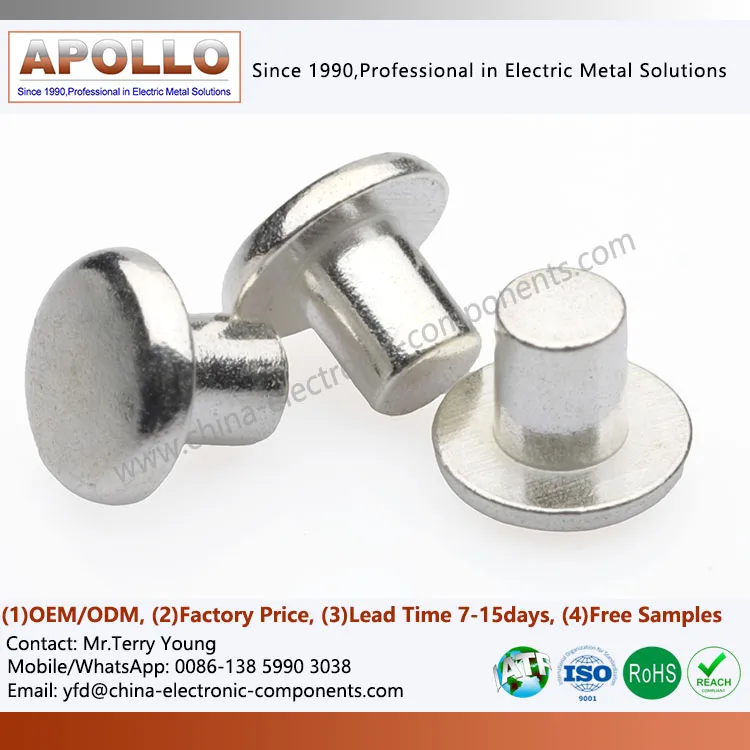
Pure silver contacts possess extremely high conductivity and thermal conductivity, exhibiting extremely low and stable contact resistance among all contact materials. They also possess good weldability and machinability, making it easy to manufacture electrical silver contact points of various shapes.
Some products utilize a fine-grained silver process, improving the grain structure through trace elements, thereby enhancing mechanical strength and temperature resistance while maintaining conductivity.
Pure silver is widely used in:
Silver contacts for switches
Miniature relays
Thermostats
Timers
Automatic control equipment
Pure silver contacts, often referred to as pure silver solid contacts, are one of the most common basic materials in the field of small-capacity electrical appliances.
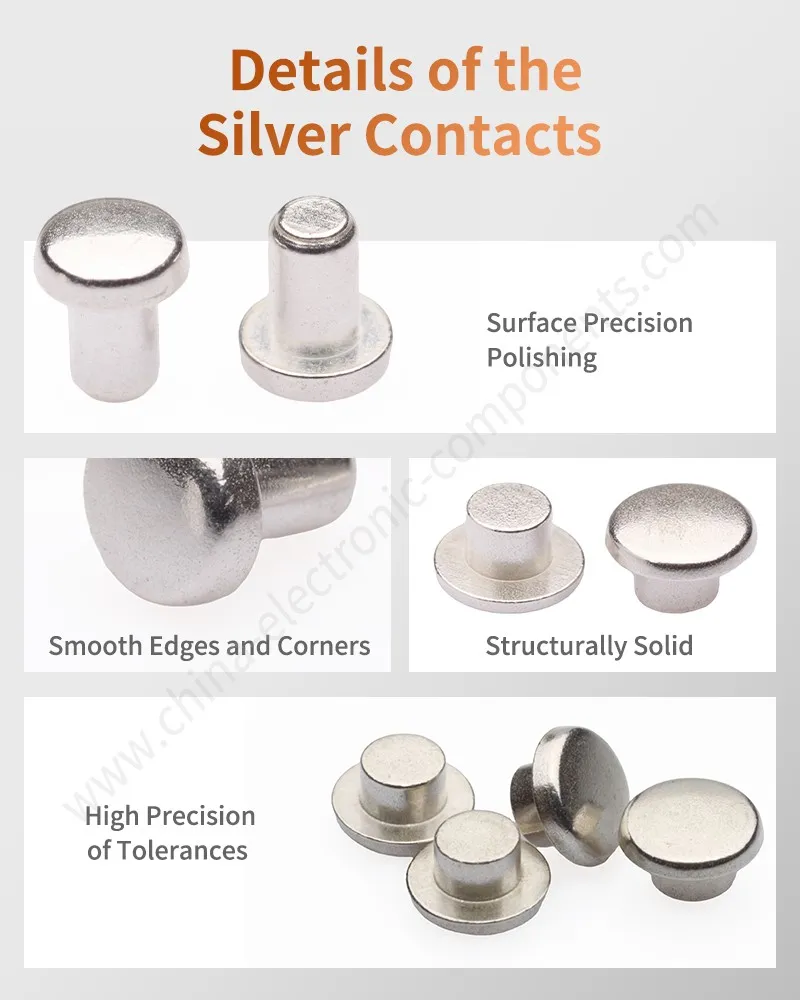
Silver-nickel contacts (AgNi)
Silver-nickel materials are composite materials formed by adding a certain proportion of nickel to a silver matrix, balancing conductivity and mechanical strength.
Silver nickel contacts have the following characteristics:
Excellent conductivity
Low and stable contact resistance
Minimum electrical wear
Less material migration under DC conditions
Higher mechanical strength than pure silver
Due to their excellent overall performance, silver nickel solid contacts are widely used in:
Silver contacts for relays
Miniature contactors
Automatic switches
Protective switches
Precision instruments
In the field of industrial automation, AgNi electrical contacts for contactors have become one of the commonly used solutions.
Silver-cadmium oxide contacts (AgCdO)
Silver-cadmium oxide was long considered a contact material with excellent overall performance.
The main advantages of Silver Cadmium Oxide Contact include:
Excellent arc resistance
Good resistance to arc erosion
Stable conductivity
Good resistance to mechanical wear
Suitable for high current applications
This type of Silver cadmium oxide solid contact is mainly used in:
Silver contacts for Breakers
Power relays
Molded case circuit breakers
AC contactors
Industrial control switches
With increasingly stringent environmental regulations, the industry is gradually adopting more environmentally friendly alternative materials.
Silver Tin Oxide Contact (AgSnO₂)
Silver tin oxide is one of the most important environmentally friendly contact materials currently available.
Silver Tin Oxide Contact does not contain harmful cadmium and possesses:
Excellent resistance to arc erosion
Good thermal stability
Long service life
Good load adaptability
In many applications, Silver tin oxide solid contact has become an important alternative to traditional AgCdO materials.
Typical applications include:
Silver contacts for MCCB
Air circuit breakers
Motor protectors
Residual current circuit breakers
High-power relays
With the development of new energy and smart power distribution industries, its application scope continues to expand.
Silver zinc oxide contacts (AgZnO)
Silver zinc oxide is one of the environmentally friendly silver-based materials.
Silver zinc oxide solid contact possesses:
Good electrical and thermal conductivity
High heat resistance
Excellent resistance to welding
Good arc resistance
Because it does not contain toxic heavy metals, its application in green electrical products is gradually increasing.
Mainly used in:
Relays
Contactors
Microswitches
Home appliances
Industrial control equipment
Silver copper contacts (AgCu)
Silver copper material is a silver alloy contact formed by adding copper to a silver matrix.
Adding copper can significantly improve:
Resistance to burn-off
Resistance to material migration
Mechanical strength
Economy
While maintaining good electrical conductivity.
Silver-copper contacts are widely used in:
Wall switches
Power tools
Push-button switches
Photoelectric switches
Industrial control equipment
In some applications, they can even replace solid silver contacts, thus reducing costs.
Silver-tin-indium oxide contacts (AgSnO₂In₂O₃)
Silver-tin-indium oxide has been a rapidly developing new environmentally friendly material in recent years.
This material has:
Higher hardness
Stronger resistance to welding
Superior resistance to burn-off
Good resistance to arc erosion
Excellent DC load performance
It performs particularly well in automotive electronics and new energy equipment.
Main application areas include:
Low-voltage circuit breakers
Industrial relays
Automotive contactors
Starters
Intelligent power distribution equipment: How to choose the right silver contact material?
Different silver-based materials are suitable for different operating conditions. There is no absolutely optimal material, only the most suitable solution.
Generally speaking:
For low current and high conductivity requirements, a pure silver solid contact can be selected.
For requirements on wear resistance and mechanical life, silver-nickel contact can be selected.
Silver Tin Oxide Contacts are suitable for high-current breaking scenarios.
High-reliability industrial equipment typically utilizes environmentally friendly silver oxide series of silver electrical contacts.
For equipment with special structural requirements, customized electrical contact solutions can be designed.
In the modern low-voltage electrical industry, products such as Silver contacts for Relay, Silver contacts for Switch, and Silver contacts for Breaker widely employ various silver-based composite materials to achieve the optimal balance between conductivity, mechanical life, and cost.
Conclusion
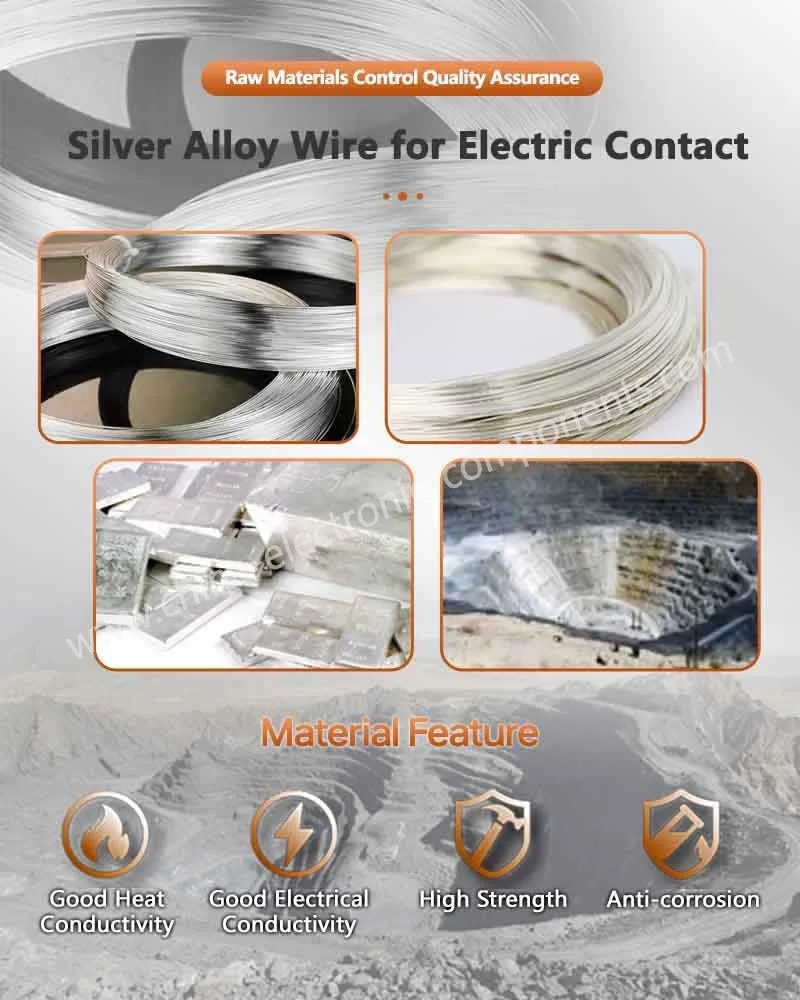
Silver contact materials are core functional components in electrical connection systems, and their performance directly affects the safety, reliability, and lifespan of equipment. From pure silver to silver-nickel, silver-tin oxide, and other environmentally friendly silver alloys, various silver electrical contacts possess their own unique performance advantages. With the development of new energy, electric vehicles, industrial automation, and smart power distribution markets, high-performance electrical contacts for industrial applications are driving the continuous upgrading of silver alloy contact technology, providing more stable and reliable electrical connection solutions for modern electrical equipment.
contact us
Send Inquiry