










Analysis of Stainless Steel Fastener Manufacturing Process and Materials: From Production Technology to Performance and Application
Jun 04, 2026
Leave a message
Development and Application of Stainless Steel Fasteners
Stainless steel fasteners are an important component of modern industrial connection systems, widely used in construction engineering, power equipment, new energy systems, rail transportation, communication equipment, and industrial automation. With the development of cold heading technology, surface treatment technology, and materials metallurgy technology, stainless steel fasteners have gradually replaced traditional machining methods, achieving higher production efficiency and more stable product quality.
Common products include stainless steel screws, hex bolts, nuts, washers, and various custom connectors. These products, with their excellent corrosion resistance and mechanical strength, can maintain long-term stable operation even in complex environments.
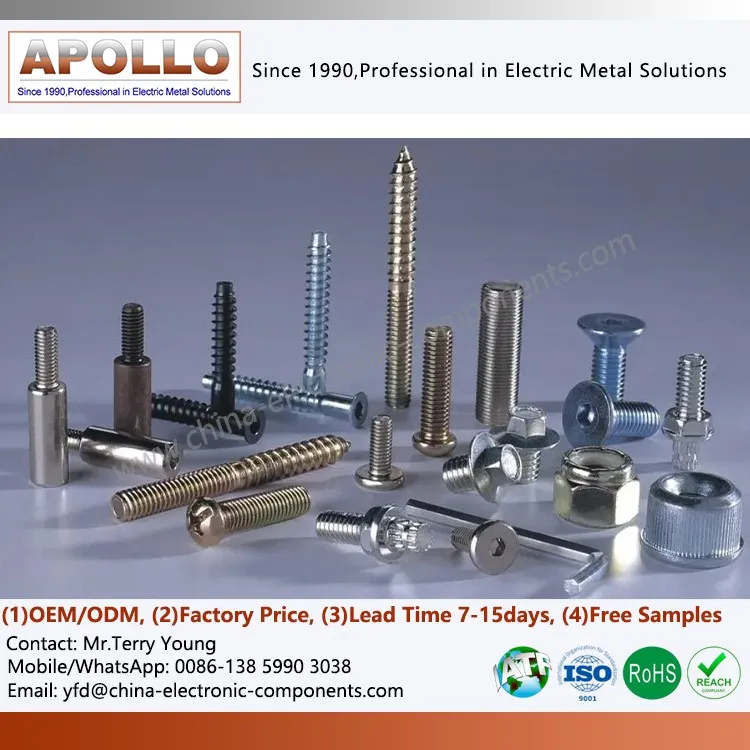
Main Manufacturing Processes of Stainless Steel Fasteners
Raw Material Pretreatment
Before production begins, the steel surface needs to be cleaned to remove oil, oxides, and impurities. A good surface condition helps in the formation of a lubricating film, improving the quality of wire drawing and cold heading.
For manufacturing high-precision steel screws, the surface quality of the raw material directly affects the subsequent forming accuracy and product consistency.
Surface Lubricating Film Treatment
Due to the strong oxidation resistance of stainless steel, a traditional lubricating layer does not easily form on its surface. Therefore, chemical coating or inorganic salt treatment is typically used in the production process to reduce the coefficient of friction during wire drawing and cold heading.
A high-quality lubricating film can reduce die wear and improve the forming efficiency of complex structures such as stainless steel pan head screws.
Wire Drawing Modification Process
The wire drawing process processes the raw wire to dimensions suitable for cold heading production. This process not only affects the dimensional accuracy of the material but also impacts subsequent mechanical properties.
In manufacturing machine screws with Phillips heads, precision electronic screws, and small-sized fasteners, the quality of wire drawing directly affects the thread forming effect and product strength.
Cold Heading vs. Warm Heading
Cold heading is currently the most common production method for stainless steel fasteners, using multi-station equipment to complete head forming, shank processing, and pre-formed structure manufacturing in one go.
For larger-sized Flanged Hexagon Head Bolt Screws or high-strength connectors, warm heading may be used to reduce material deformation resistance and improve finished product quality.
Compared to traditional cutting processes, cold heading technology offers advantages such as high material utilization, high production efficiency, and superior mechanical properties.
Thread Machining and Post-Processing
Formed fasteners require processes including thread rolling, heat treatment, passivation, and surface cleaning.
For example, during the machining of flat-head hexagon socket stainless steel screws, it is crucial to ensure that the thread accuracy, head size, and surface finish meet design requirements to satisfy precision assembly needs.
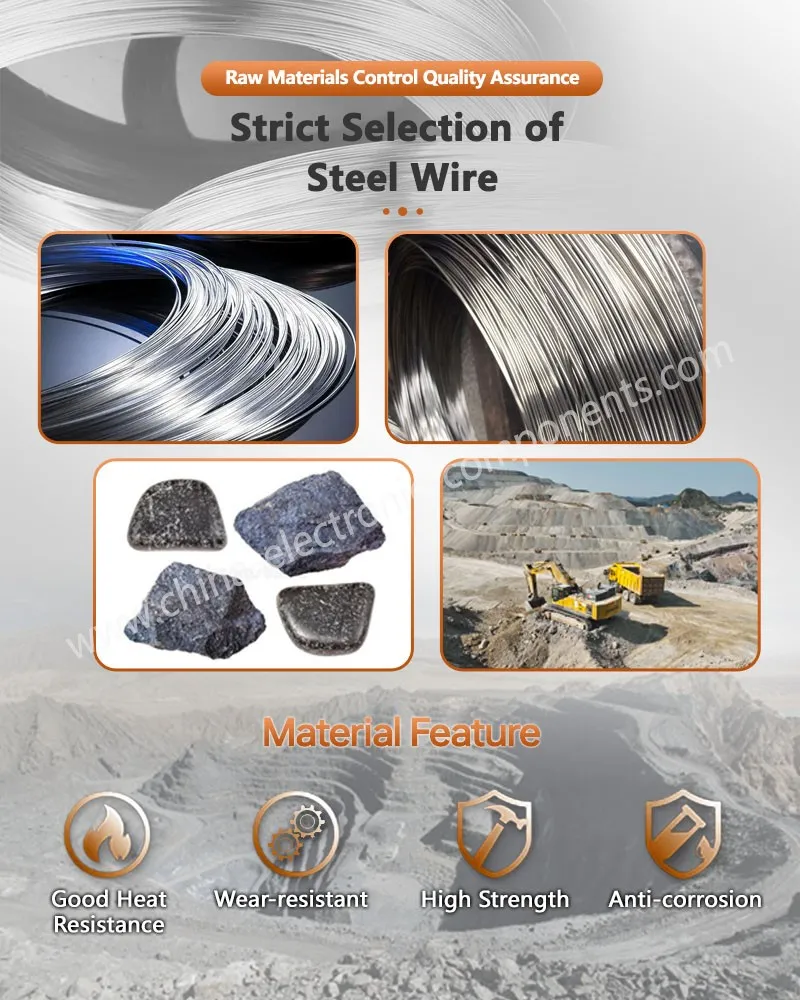
Corrosion Resistance Mechanism of Stainless Steel
The corrosion resistance of stainless steel primarily stems from chromium. When the chromium content in the steel reaches a certain proportion, a dense passivation film forms on the surface, effectively isolating the substrate from external corrosive agents.
Besides chromium, alloying elements such as nickel, molybdenum, titanium, and nitrogen also affect the corrosion resistance, strength, and machinability of stainless steel.
Therefore, different grades of stainless steel are selected for different applications. For example, molybdenum-containing materials are often used in marine environments, while 304 series materials are more commonly used in general industrial environments to manufacture standard parts such as M10 304 Stainless Steel Hex Bolt Screw Nut Flat Washer Combination.
Common Stainless Steel Material Classifications
Ferritic Stainless Steel
Ferritic stainless steel has good oxidation resistance and stress corrosion resistance, exhibits significant magnetism, and is relatively inexpensive.
This type of material is commonly used in the manufacture of architectural decorative parts, automotive parts, and some stainless steel sheet metal screws.
Martensitic Stainless Steel
Martensitic stainless steel can achieve high hardness and wear resistance through heat treatment.
Typical applications include high-strength mechanical fasteners, tool parts, and some stainless steel set screws.
Austenitic Stainless Steel
Austenitic stainless steel is the most widely used type of stainless steel, possessing excellent corrosion resistance, weldability, and formability.
A large number of SS screws, electronic equipment fasteners, and new energy equipment connectors on the market are made of austenitic stainless steel.
Austenitic stainless steel can achieve further strength enhancement through cold work hardening to meet the requirements of high-load conditions.
Precipitation Hardening Stainless Steel
Precipitation hardening stainless steel combines high strength with corrosion resistance and can achieve excellent mechanical properties through aging treatment.
Its applications include aerospace, high-end equipment manufacturing, and special-specification M6 Hexagon Socket Head Screw 304 Stainless Steel Knurling products.
Duplex Stainless Steel
Duplex stainless steel possesses both austenitic and ferritic microstructures, exhibiting outstanding resistance to pitting corrosion, intergranular corrosion, and stress corrosion.
Therefore, it is widely used in marine engineering, chemical equipment, and high-reliability connection systems.
Special Application Fasteners Introduction
With the development of new energy, power, and automation equipment, more and more functional fasteners are being used in system integration.
For example:
The M10 Clamp Wire Terminal is commonly used for wire connections in power distribution systems.
The M8 Socket Head Cap Screws Terminal with Spacer is widely used for fixing electrical terminals.
The Hexagon Head Machine Screw Metric Thread Flat Spring Lock Washer Bolt 304 Stainless Steel allows for integrated installation of bolts, spring washers, and flat washers.
The Set Screw with Hollow Head Bolt Base is suitable for equipment positioning and mechanical locking applications.
These products ensure connection reliability while also improving assembly efficiency.
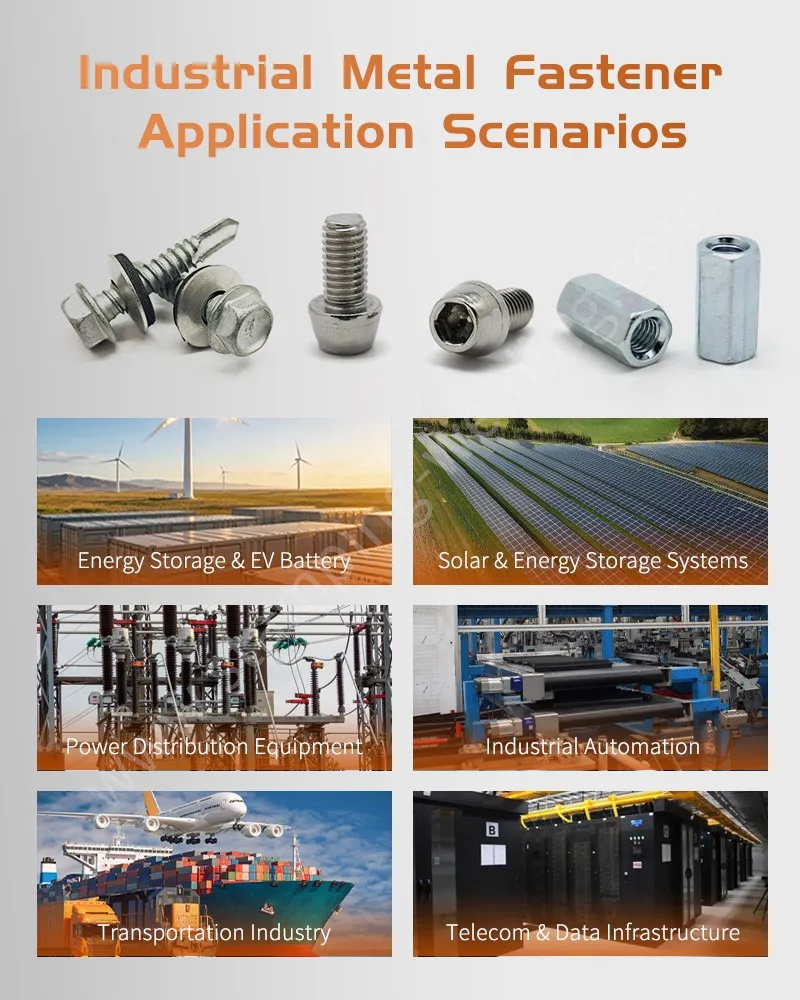
Stainless Steel Screw Selection for Different Environments
Depending on the application environment, appropriate types of stainless steel fasteners should be selected:
Countersunk flat-head screws and ordinary machine screws are commonly used for indoor building and equipment installation.
Stainless self-drilling screws can be used for metal sheet connections to reduce pre-drilling steps.
Stainless steel cladding screws are typically used for outdoor curtain wall projects.
Stainless steel roofing screws are commonly used for roofing system installation.
Stainless steel trim screws can be used for wood structure decoration projects.
Stainless steel drywall screws are suitable for gypsum board fixing.
Stainless steel tapcon structural products can be selected for concrete substrate installation.
Stainless steel license plate screws are frequently used in vehicle and equipment nameplate installation.
100mm stainless steel screws also have a wide application value in large structural connection projects.
Conclusion
The development of stainless steel fasteners is inseparable from the continuous progress of material technology, cold heading technology, and heat treatment processes. From ordinary stainless steel screws to high-performance industrial connectors, different products need to be rationally selected based on the application environment, mechanical performance requirements, and corrosion resistance level. A thorough understanding of the properties and manufacturing processes of stainless steel not only helps improve product quality but also provides a solid guarantee for equipment reliability and service life.
contact us
Send Inquiry